
Loading, please wait...
LOT 0708
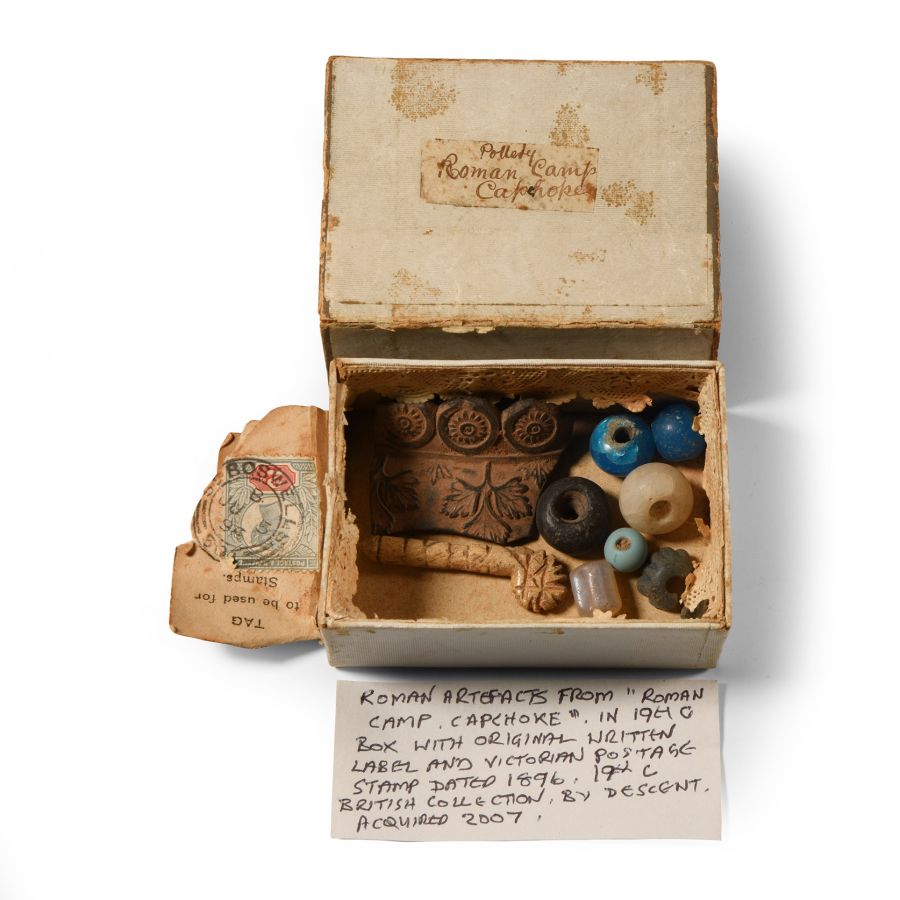
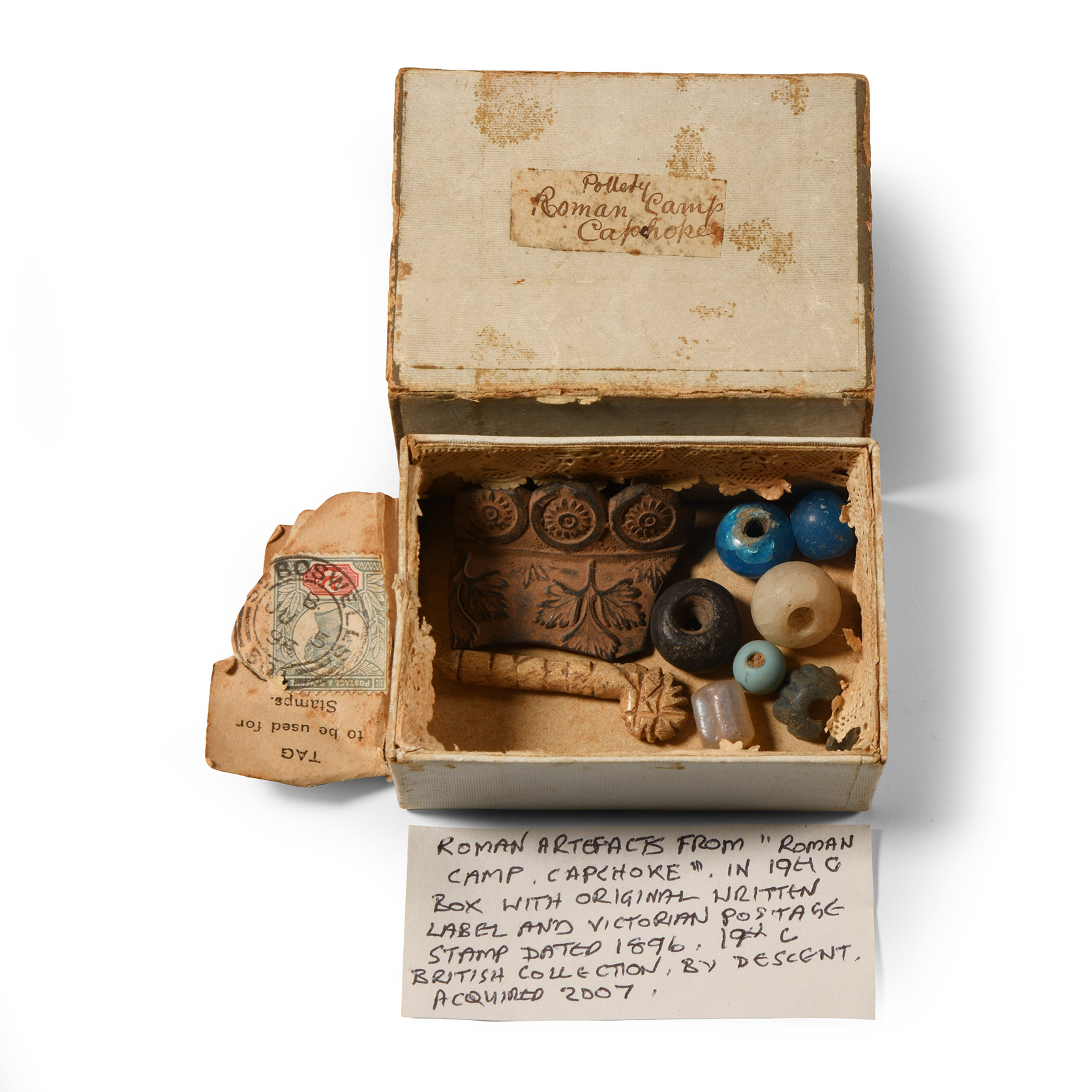
Roman 'Camp Capchoke' Artefact Collection
1ST-4TH CENTURY A.D.
3 1/8 x 2 3/8 x 1 3/8 in. (48 grams total, 79 x 59 x 34 mm).
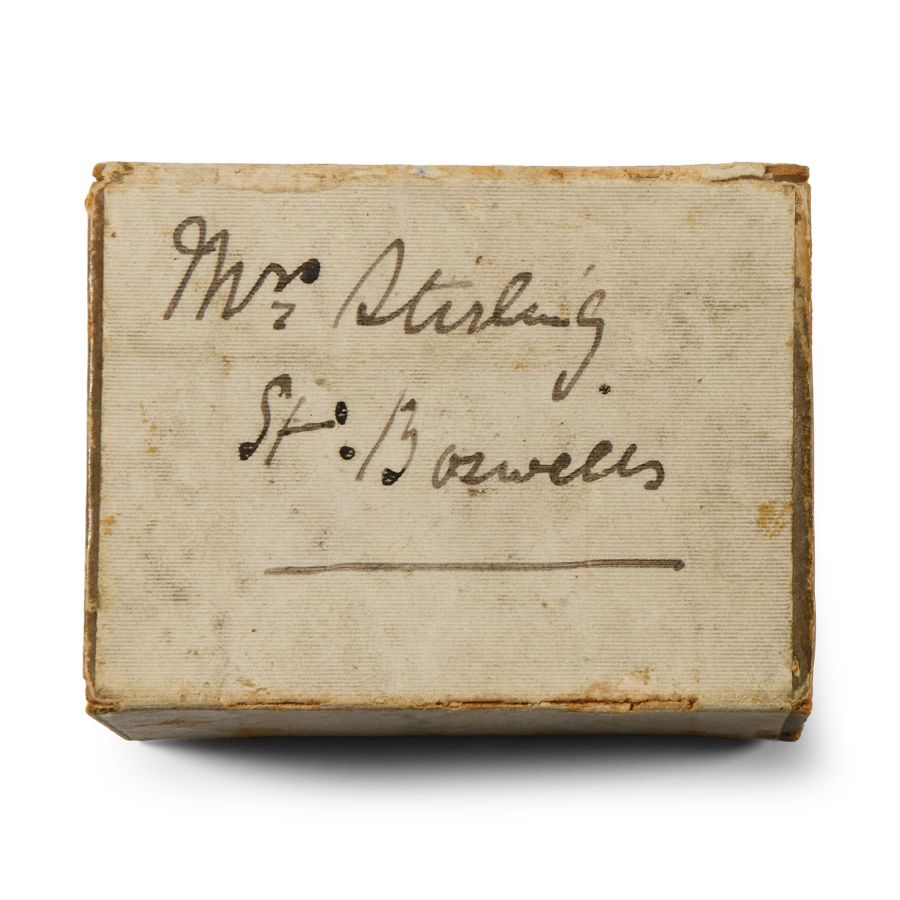
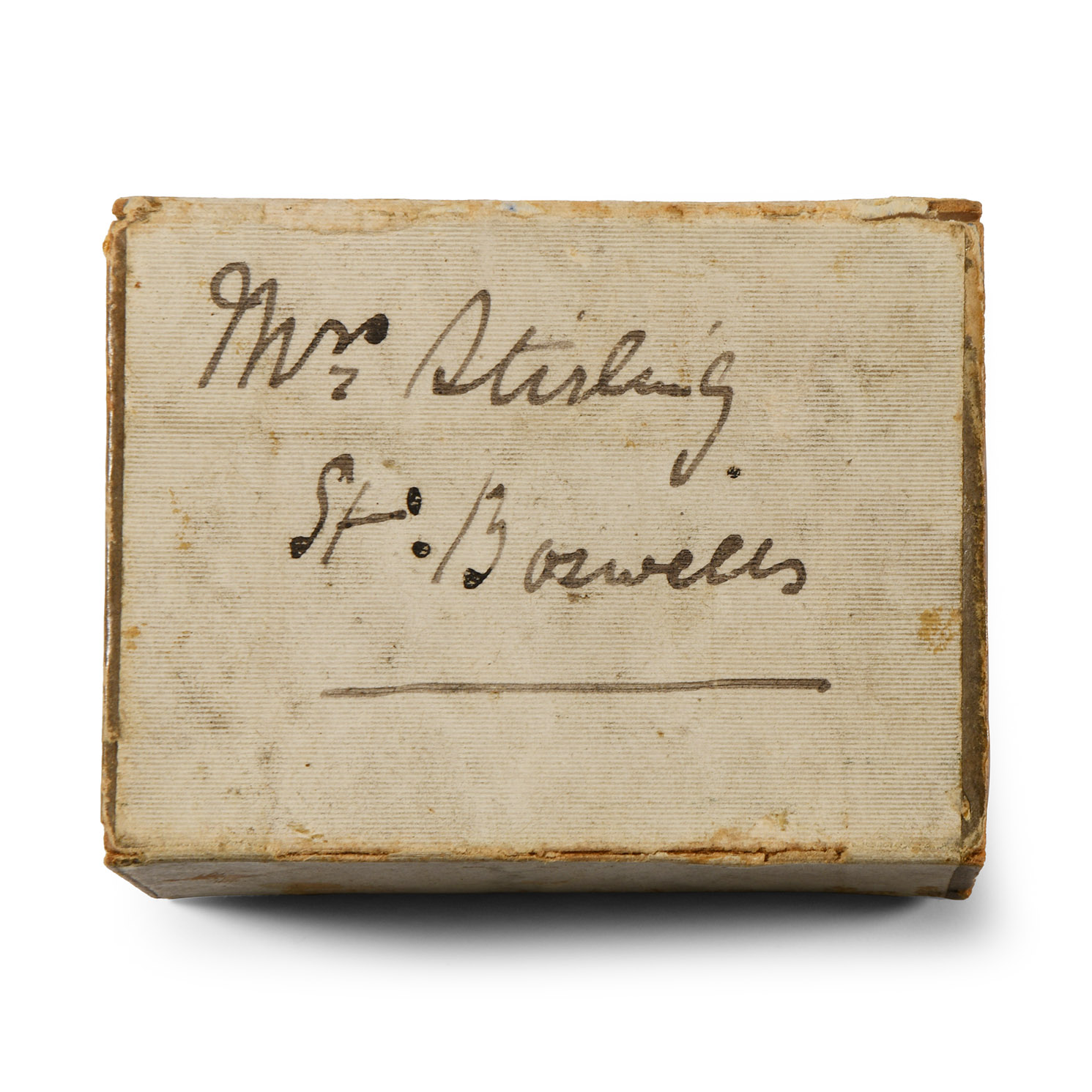
Including fragment of greyware pottery rim, glass oblate and other beads, a bone phallus amulet and other items; with late 19th century handwritten label 'Pottery / Roman Camp/ Capchoke' and 'Mr Stirling / St Boswells' inked to verso, along with postage tag attached with Victorian postage stamp stamped 'St Boswells 5th July 1896'. [No Reserve]
ProvenanceFound at Camp Capchoke in the 19th century.
From the collection of Mr Stirling of St Boswells, UK, circa 1896, thence by descent.
Ian Wilkinson collection, Nottinghamshire, UK, formed since 1985.
Accompanied by a handwritten provenance note.
Cf. Crummy, N., Greep, S., Hassall, M., Henig, M., Major, H., Webster, G., Wild, J.P., Colchester Archaeological Report 2: the Roman small finds from excavations in Colchester 1971-1979, Colchester, 1983, fig.32, no.524, for similar.
FootnotesSt Boswells is situated a few miles from Melrose, Scotland. Gadrooned beads like the ones here illustrated are found in 1st and 2nd century contexts and seem to have been introduced into this country at the conquest. Most are made of turquoise frit, which often decays to white. The dark blue glass here illustrated finds a perfect parallel with a specimen found in Colchester.
CONDITIONTimeLine Auctions follows a vetting process to ensure the authenticity and legality of all items, reinforcing our commitment to integrity and responsible trading. Each antiquity, antique, and coin lot undergoes thorough examination by a vetting committee of at least ten external specialists, professional trade association members, scientists, and archaeologists: Our Vetting Process
AUCTIONS:
TimeLine is a leading auction house specialising in antiquities, ancient art, collectables, natural history, coins, medals, and books. Our auctions offer museums, collectors, historians, and enthusiasts the opportunity to acquire unique and historically significant pieces.
-
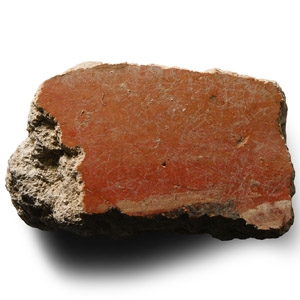
Roman 'Pompeii Red' Fresco Wallplaster
1st century A.D.Sold for (Inc. bp): £72
Fragment of wall plaster with rendered surface painted red with yellow and white detailing to the edge; impression of timber laths to the reverse; old inked inscription: 'SIDI BOU ALI' to verso. 234 grams, 11.3 cm
Acquired early 1900s. Swiss family collection. Acquired at Birmingham Coin & Antiquities Fair, circa 2004. Ian Wilkinson collection, Nottinghamshire, UK.
The ancient city of Sousse (today Sidi Bou Ali) was the Roman centre of Ulssipira, famous for its wonderful mosaics. However, as across Roman Tunisia, remains of frescoed houses have also been preserved. The ‘Pompeian red’ was used for walls as well as columns, such as those in the ‘house of the red columns’, Acholla, where the peristyle was formed by a narrow courtyard with stuccoed columns painted red. -
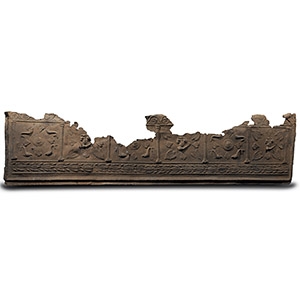
Roman Lead Coffin Panel with Sphinx, Medusa and Dolphins
2nd-3rd century A.D.Sold for (Inc. bp): £1,690
Decorated with stamped patterns including dolphins, gorgoneion, sphinx, floral patterns, motifs with ivy leaves and vertical columns dividing the field into panels. 33.2 kg, 1.72 m
Acquired 1970s-early 1990s. Property of a North American collector. London collection, 2016.
There were many ways of burying bodies during the Roman Empire. Although the majority were buried without coffins, there is evidence for wooden coffins, lead-framed wooden coffins, tile burials and lead and stone coffins. This item belongs to types widespread in the Eastern Mediterranean. The panel is decorated with a columned structure, and within each section are symbols of the outer-world, including gorgons, sphinx and dolphins. The sphinx, having a human head and breasts, legs and paws of a lion, and wings of a bird, was generally associated with protecting imperial tombs and temples. The roundels featuring the head of Medusa, known for her potent gazes that could turn one to stone, was favoured on sarcophagi and architectural ornaments because it was believed that her image would protect those within. The dolphin was considered to ferry the souls of the dead to the afterlife. Very often these sarcophagi were connected by a pipe to the ground above so that mourners could pour offerings into the grave. -
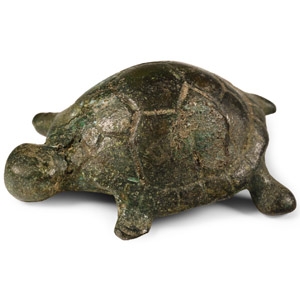
Roman Bronze Tortoise Statuette
1st century B.C.-2nd century A.D.Sold for (Inc. bp): £286
Modelled in the round with domed shell with incised plate detailing. 27.9 grams, 36 mm
Ex German art market, 2000s. Acquired from an EU collector living in London. From the collection of Surrey, UK, gentleman.
