
Loading, please wait...
LOT 0927
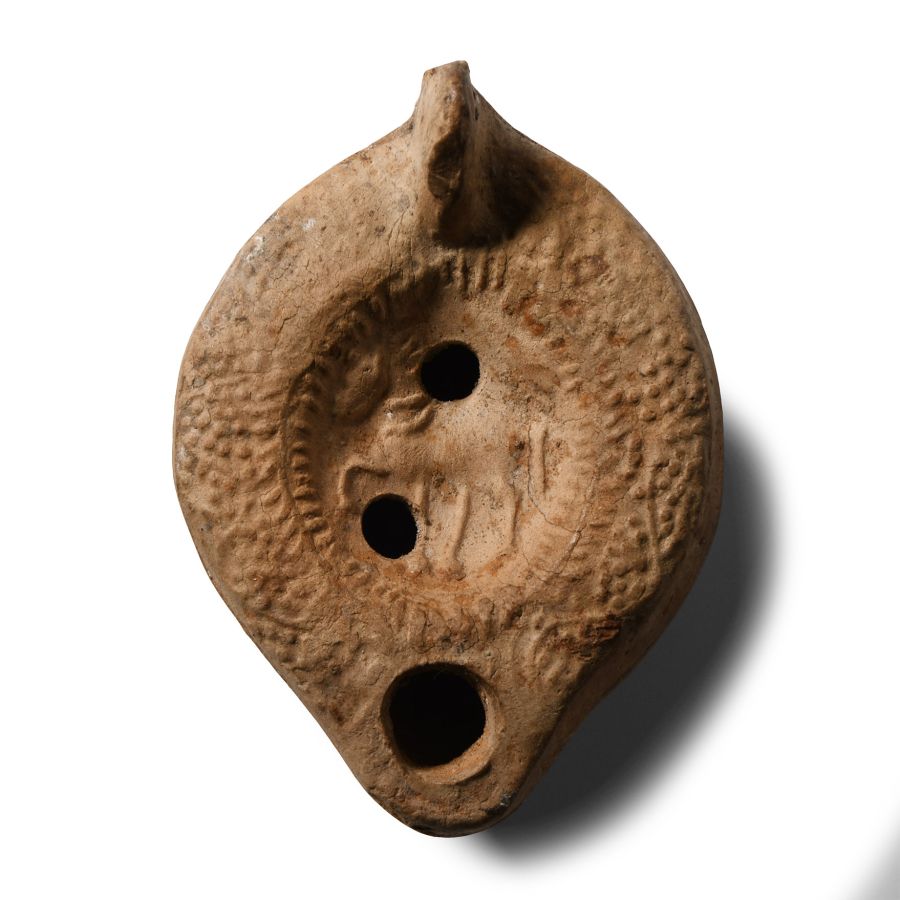
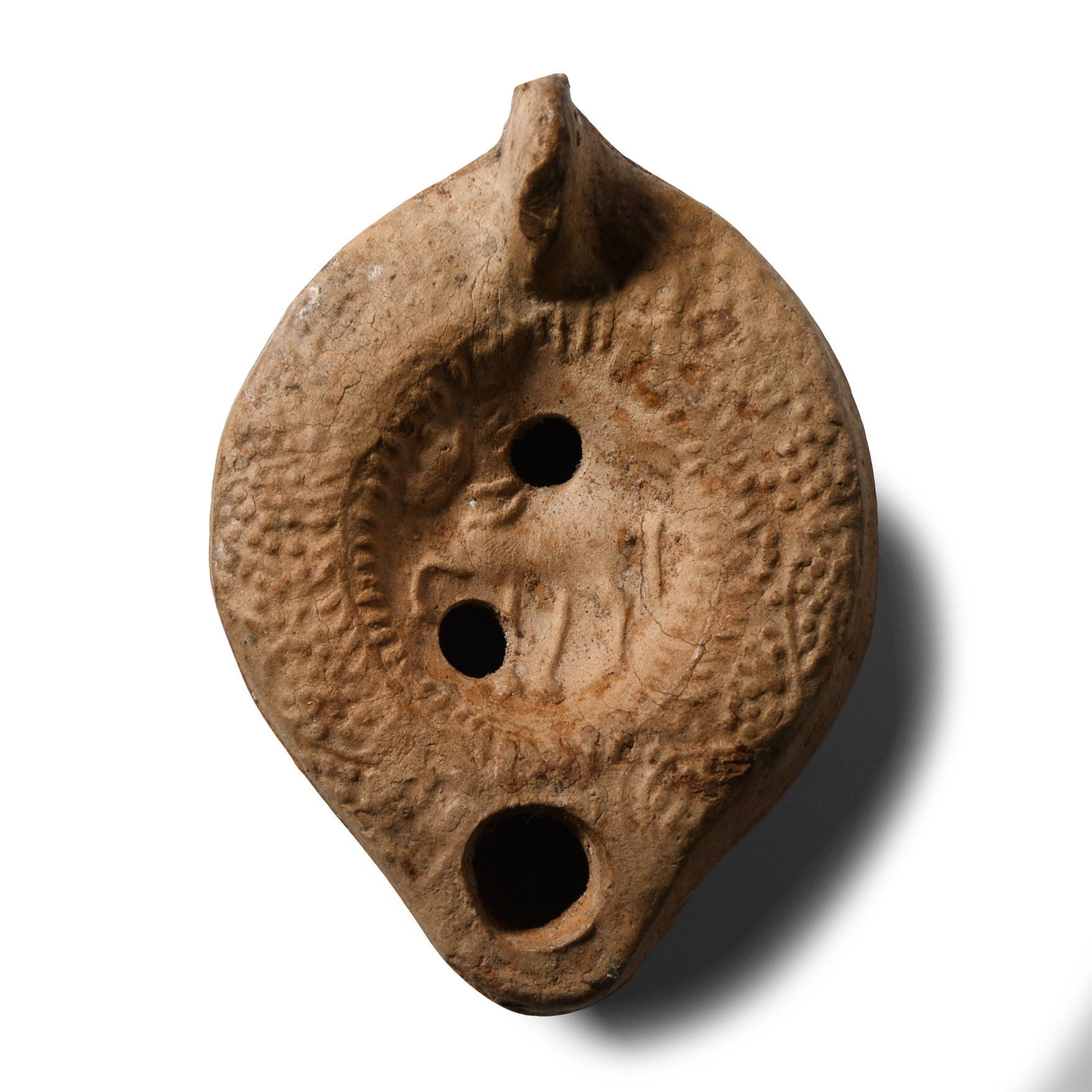
Roman Buffware Oil Lamp with Horse and Rider
CIRCA 2ND CENTURY A.D.
2 7/8 in. (44 grams, 73 mm).
Comprising a ring handle, filling-hole and air hole in lower discus; the discus with a horse advancing left mounted by a cavalryman with a flying cloak. [No Reserve]
ProvenanceFrom a collection acquired on the UK art market from various auction houses and collections mostly before 2000.
From an important Cambridgeshire estate; thence by descent.
Cf. Bussière, J., Lindros Wohl, B., Ancient Lamps in the J. Paul Getty Museum, Malibu, nos. 278-279, for the types (Bussiere form D I 3).
FootnotesThe main charateristic of the type (Bussiere form D I 3) is the form of the nozzle, which is tangent to the lamp rim (nozzle form Bussiere 3).
CONDITIONTimeLine Auctions follows a vetting process to ensure the authenticity and legality of all items, reinforcing our commitment to integrity and responsible trading. Each antiquity, antique, and coin lot undergoes thorough examination by a vetting committee of at least ten external specialists, professional trade association members, scientists, and archaeologists: Our Vetting Process
AUCTIONS:
TimeLine is a leading auction house specialising in antiquities, ancient art, collectables, natural history, coins, medals, and books. Our auctions offer museums, collectors, historians, and enthusiasts the opportunity to acquire unique and historically significant pieces.
-
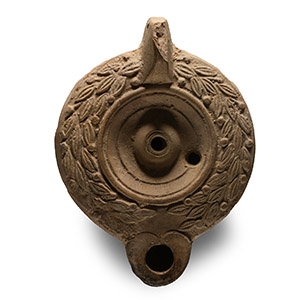
Roman Terracotta Oil Lamp with Wreath
2nd-3rd century A.D.Sold for (Inc. bp): £260
Lug handle to rear, deep discus with a dome filling hole, another filling hole to the side; wide shoulder with low-relief laurel wreath; low basal ring and incised maker's mark in Greek letters (ΗΙϹΧΛ). 138 grams, 11.8 cm
Acquired on the European art market, 1980s. English private collection.
This form of lamps is characterised by their shoulder decoration - a laurel wreath. This decoration may be treated realistically or be stylised. Both groups appear on lamps found in Italy. The hypothesis that they might only be African imports is contradicted by the signature on many lamps of L.C A E S A E, a prolific Italic lamp maker (late Antonine and early Severan); his products are scarce in North Africa. -
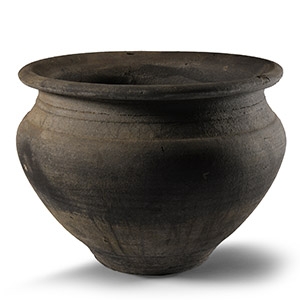
Large Roman 'Upchurch' Greyware Storage Jar
2nd century A.D.Sold for (Inc. bp): £845
With everted rim and decorative geometric band to the shoulder. 1.98 kg, 28 cm wide
Found Upchurch Marshes, Kent, UK, in the 1980s. Ex Winter Collection, Kent, UK.
The Roman pottery kilns on what are now the tidal marshes at Upchurch, Kent, are justly famed as a thriving pottery production area with many kiln and related sites. The London clay in this area is of fine quality and was thus suitable for pottery making. With the rise in the sea level, the area is now mostly inundated and, as tidal forces erode the silts, pottery (often 'seconds'), is sometimes exposed. The soft muds and general inaccessibility of the area make collection difficult. -
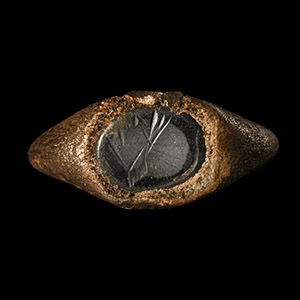
Roman Silver Ring with Profile Bust Gemstone
Circa 2nd century A.D.Sold for (Inc. bp): £91
With later inset stone intaglio of a profile helmetted bust. 2.95 grams, 21.16 mm overall, 16.87 mm internal diameter (approximate size British H 1/2, USA 4, Europe 6.81, Japan 6)
Acquired between the 1960s-early 1990s. From an old UK private collector from Worthing, West Sussex, UK. Property of K.P., a Cornish lady collector, UK.
