
Loading, please wait...
_900x900.jpg "Roman Bronze Wild Boar Chariot Fitting Pair")
_200x200.jpg "Roman Bronze Wild Boar Chariot Fitting Pair")
_900x900.jpg "Roman Bronze Wild Boar Chariot Fitting Pair")
_200x200.jpg "Roman Bronze Wild Boar Chariot Fitting Pair")
.jpg "Roman Bronze Wild Boar Chariot Fitting Pair")
.jpg "Roman Bronze Wild Boar Chariot Fitting Pair")
LOT 0171
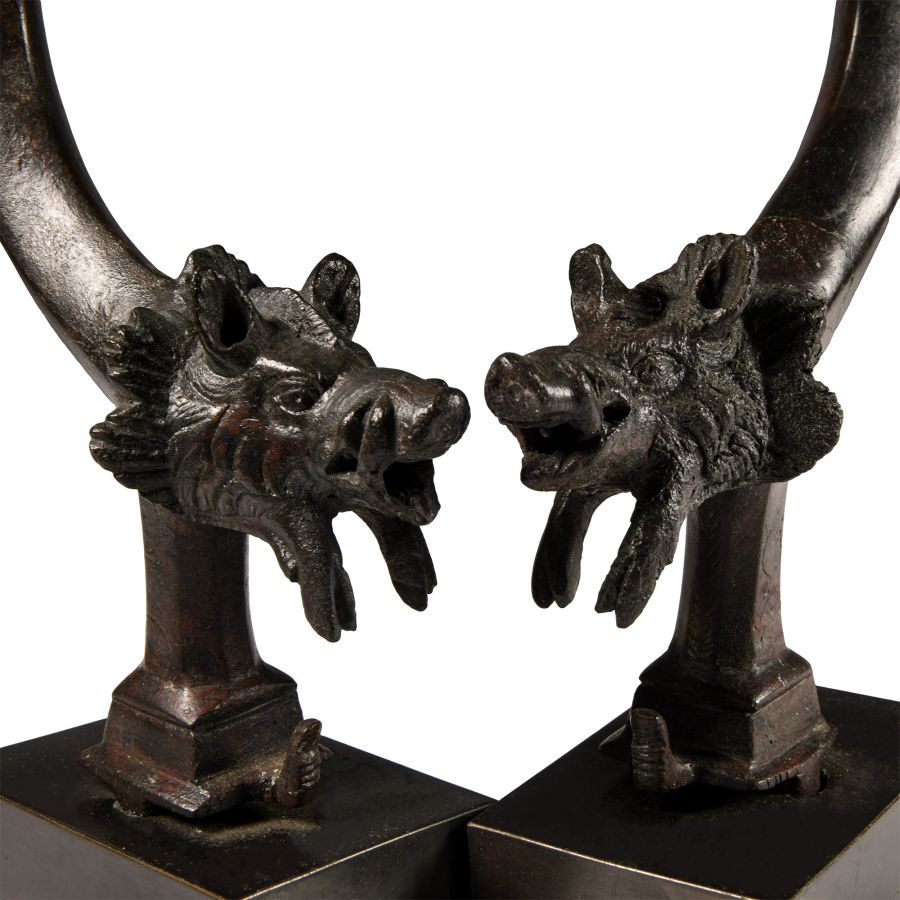
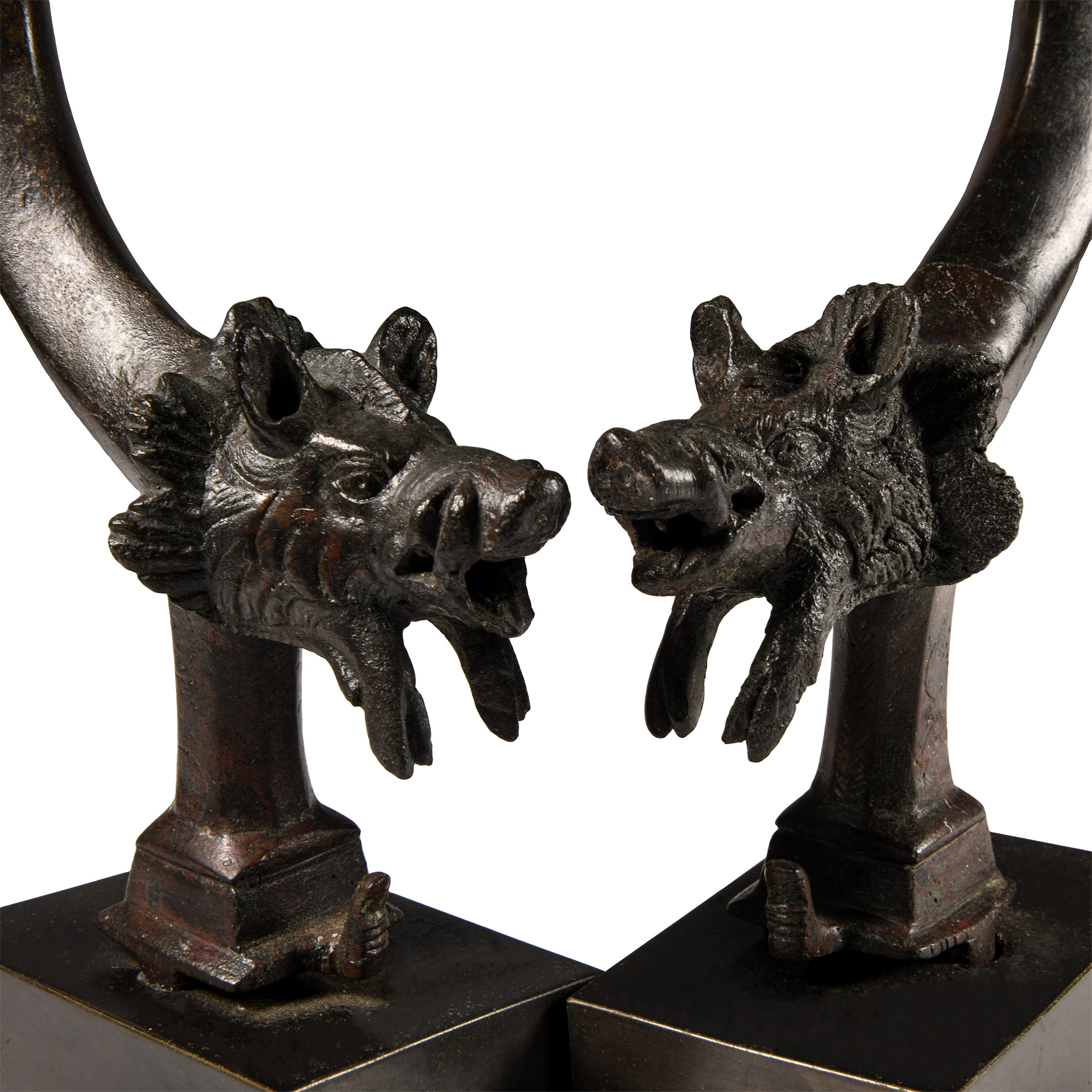
Roman Bronze Wild Boar Chariot Fitting Pair
CIRCA 2ND-3RD CENTURY A.D.
8 7/8 in. (1.13 kg total, 22.5 cm high including stand).
Matched pair of chariot fittings, each formed as the head and forelegs of a boar with open mouth and prominent tusks, developing to a crescentic square-section body with knop finial, supported on a column and square-section tiered base; mounted on custom-made display stands. [2, No Reserve]
ProvenanceEx Ancient Art, North London, UK.
From a collection acquired on the UK art market from various auction houses and collections mostly before 2000.
From an important Cambridgeshire estate; thence by descent.
This lot has been checked against the Interpol Database of stolen works of art and is accompanied by search certificate no.12058-212073.
Cf. chariot fittings in the form of the foreparts of horses in the British Museum, London, under accession no.1873,0820.165; a very similar example is visible in the Museum of Stara Zagora, Bulgaria, in two bronze decorations with boar's head from a chariot found in Trite Mogili locality, cf. V.I.Ignatov, Funeral complexes with carts in the Roman province of Thrace (mid 1st - 3rd century c.), Sofia, 2018, pl.26, for this one and other similar examples (especially 6.3.1.3.1).
FootnotesThe fittings were possibly part of a decoration of a Thraco-Roman chariot. Sometimes the ends of the yokes were covered with bronze toppers geometrically shaped or decorated with figures of a lion, a wild boar (our example), a goat, etc. Often, instead of these toppers, there were the so-called bronze distributors. Some were without decoration and others had geometric decoration. The most common ones were those sculpted as two opposing panthers (rarely lions).
CONDITIONTimeLine Auctions follows a vetting process to ensure the authenticity and legality of all items, reinforcing our commitment to integrity and responsible trading. Each antiquity, antique, and coin lot undergoes thorough examination by a vetting committee of at least ten external specialists, professional trade association members, scientists, and archaeologists: Our Vetting Process
AUCTIONS:
TimeLine is a leading auction house specialising in antiquities, ancient art, collectables, natural history, coins, medals, and books. Our auctions offer museums, collectors, historians, and enthusiasts the opportunity to acquire unique and historically significant pieces.
-
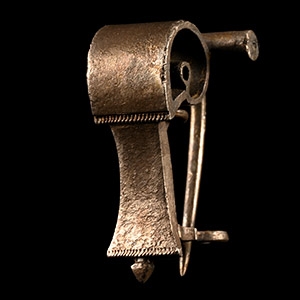
Roman Military Silver Knee Brooch
2nd century A.D.Sold for (Inc. bp): £325
Of 'knee type pattern' incorporating a 90 degree bend, the front plate with additional edge-notched decoration, complete with original pin. 16 grams, 34.7 mm
Ex Ancient Art, Eastpole Farm House, London, N14, early 2000s. From the private collection of Antony John Scammell (1937-2019). Accompanied by a copy of a certificate of authenticity from Ancient Art, London, UK. -
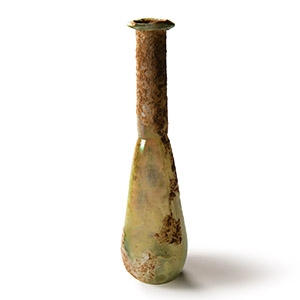
Roman Pale Blue Glass Unguentarium
1st-2nd century A.D.Estimate: £100 - 140 (+bp*)
Opening Bid: £50
With piriform lower body, extended cylindrical neck and flange rim; iridescent surfaces. 25.4 grams, 12 cm
Acquired 1980-2015. Ex Abelita family collection. -
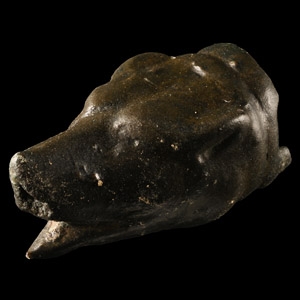
Roman Bronze Bear-Head Dagger Pommel
1st-2nd century A.D.Sold for (Inc. bp): £59
Hollow-formed with acute lower jaw, triangular muzzle, gusset and rounded rim to the socket-mouth. 29.5 grams, 44 mm
Property of a Gloucestershire, UK, collector. Property of an East Sussex, UK, gentleman.
