
Loading, please wait...
LOT 0776
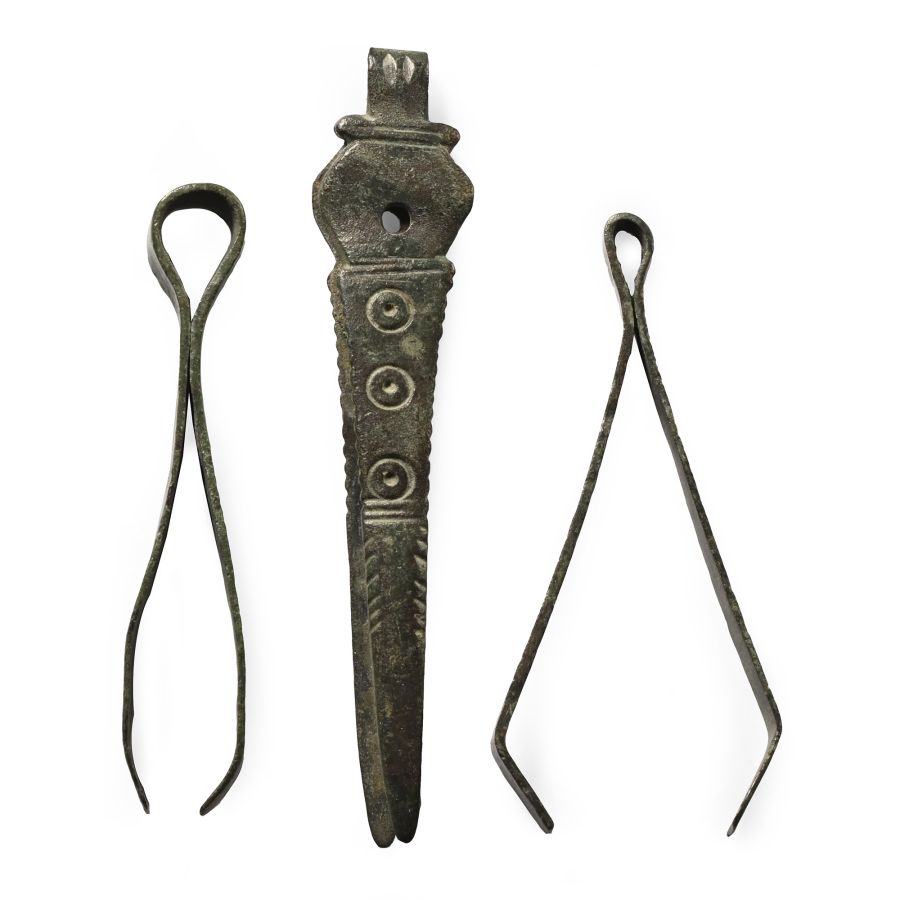
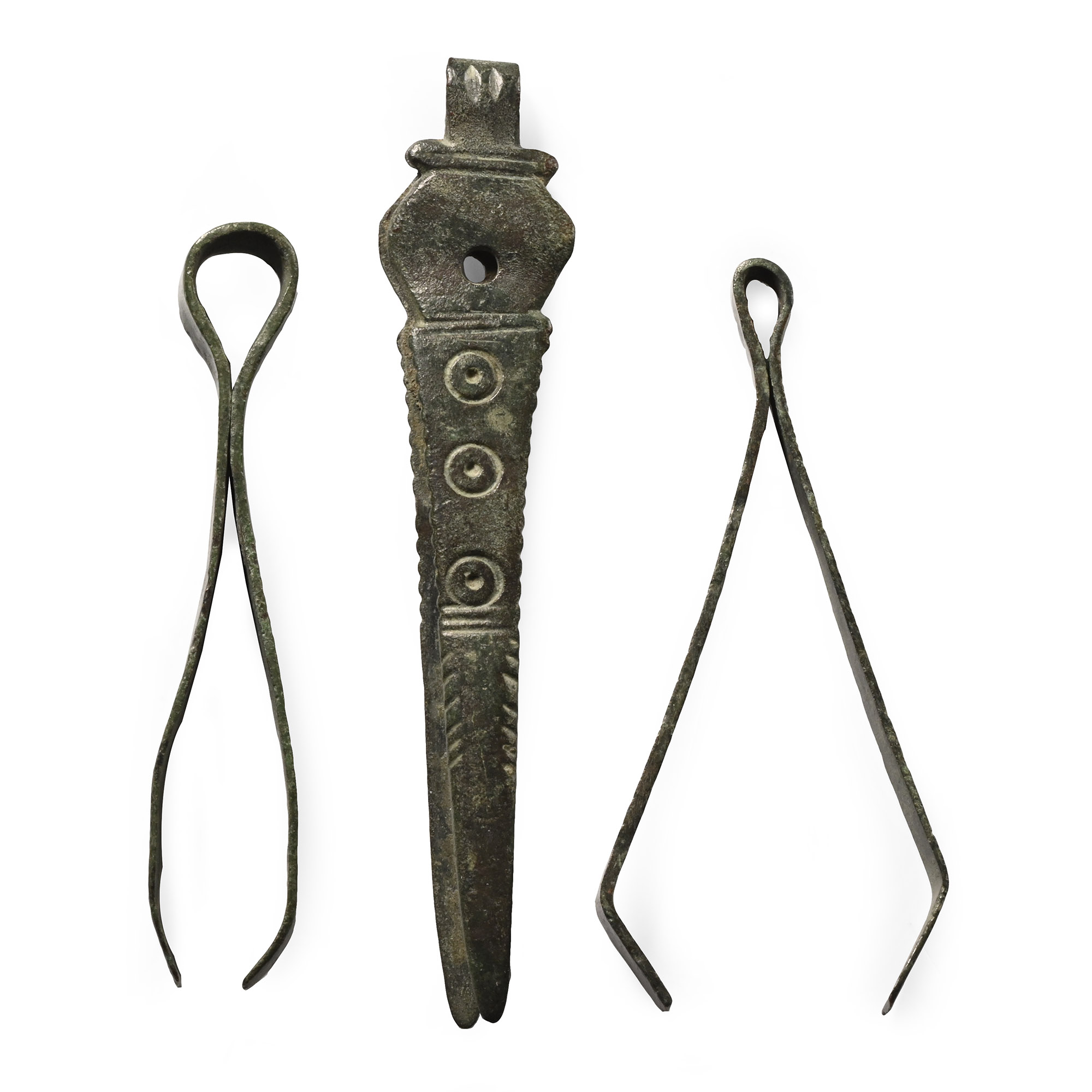
Roman Bronze Tweezer Collection
1ST-4TH CENTURY A.D.
2 1/8 - 2 3/4 in. (14.5 grams total, 54-70 mm).
Comprising: two with rectangular-section arms; one with tapering, pointed arms decorated with ring-and-dot motifs and hatching to the edges, pierced terminals. [3]
ProvenanceEx German art market, 2000s.
Acquired from an EU collector living in London.
From the collection of a Surrey, UK, gentleman.
This lot is accompanied by an illustrated lot declaration signed by the Head of the Antiquities Department, Dr Raffaele D'Amato.
TimeLine Auctions follows a vetting process to ensure the authenticity and legality of all items, reinforcing our commitment to integrity and responsible trading. Each antiquity, antique, and coin lot undergoes thorough examination by a vetting committee of at least ten external specialists, professional trade association members, scientists, and archaeologists: Our Vetting Process
AUCTIONS:
TimeLine is a leading auction house specialising in antiquities, ancient art, collectables, natural history, coins, medals, and books. Our auctions offer museums, collectors, historians, and enthusiasts the opportunity to acquire unique and historically significant pieces.
-
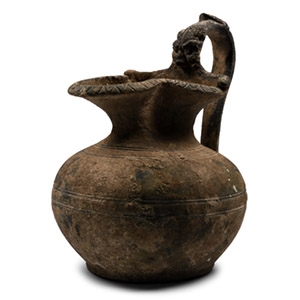
Roman Vessel with Actor's Mask Handle
Early 3rd century A.D.Estimate: £3,000 - 4,000 (‡+bp*)
Opening Bid: £1,440
A squat jar in lead-rich copper-alloy with concentric rings to the base, bulbous body, trefoil mouth with egg-and-dart detailing, strap handle with vine-leaf detailing, actor's mask at the lower end and a lion's head with open mouth at the other. 695 grams, 13.2 cm
Acquired on the Swiss art market, 2001. Private European collection. Accompanied by an academic report by Dr Raffaele D'Amato. This lot has been checked against the Interpol Database of stolen works of art and is accompanied by search certificate number no.12586-232162. This lot has been cleared against the Art Loss Register database, and is accompanied by an illustrated lot declaration signed by the Head of the Antiquities Department, Dr Raffaele D'Amato. -
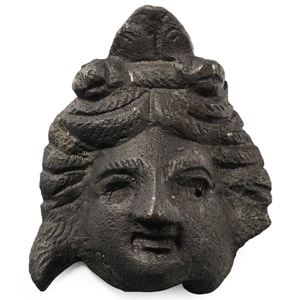
Roman Bronze Theatrical Mask of Dionysus
Circa 2nd century A.D.Sold for (Inc. bp): £98
Modelled in the half-round with large eyes and hair arranged in orderly curls, vine leaf and rosettes on the top of the head. 45.4 grams, 54 mm
Ex German art market, 2000s. Acquired from an EU collector living in London. From the collection of a Surrey, UK, gentleman. This lot is accompanied by an illustrated lot declaration signed by the Head of the Antiquities Department, Dr Raffaele D'Amato. -
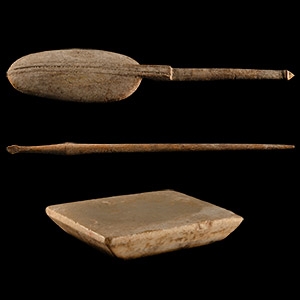
Roman Stone Palette and Bone Implement Group
1st-4th century A.D.Sold for (Inc. bp): £156
The rectangular palette with bevelled edges, accompanied by a bone spoon and probe implement. 152 grams total, 7.5-15.5 cm
Acquired early 1990s. Ex private American collection; thence by descent. Private collection since 1998. This lot is accompanied by an illustrated lot declaration signed by the Head of the Antiquities Department, Dr Raffaele D'Amato.
