
Loading, please wait...
LOT 0815
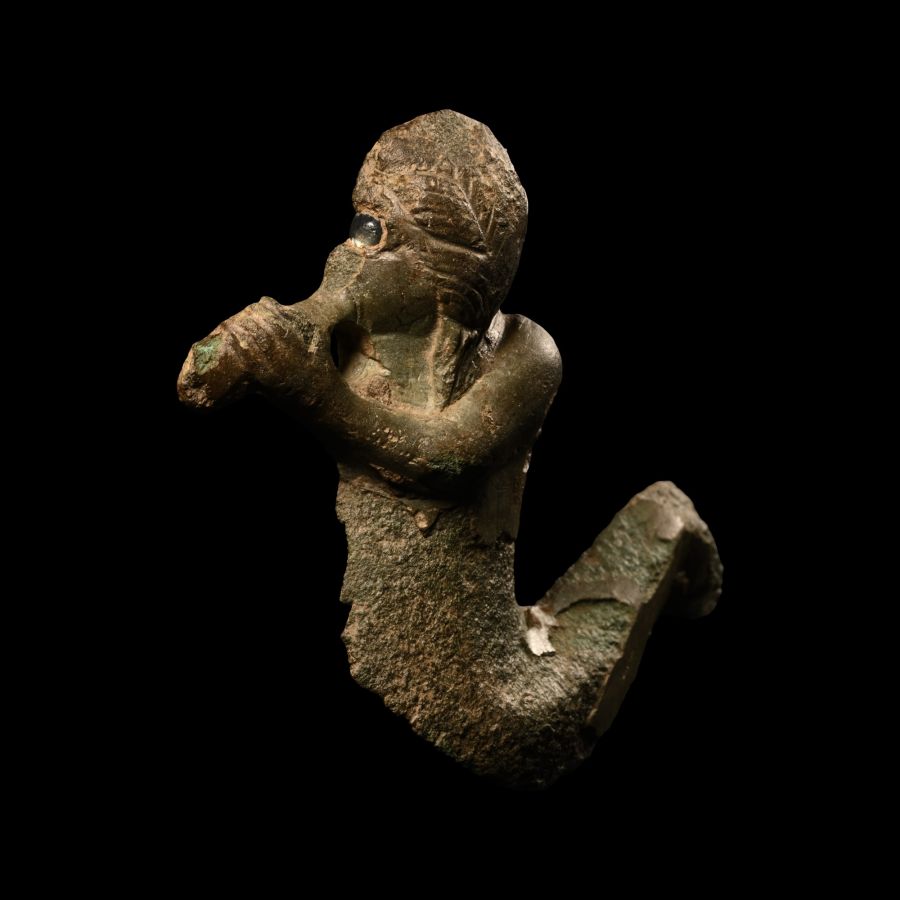
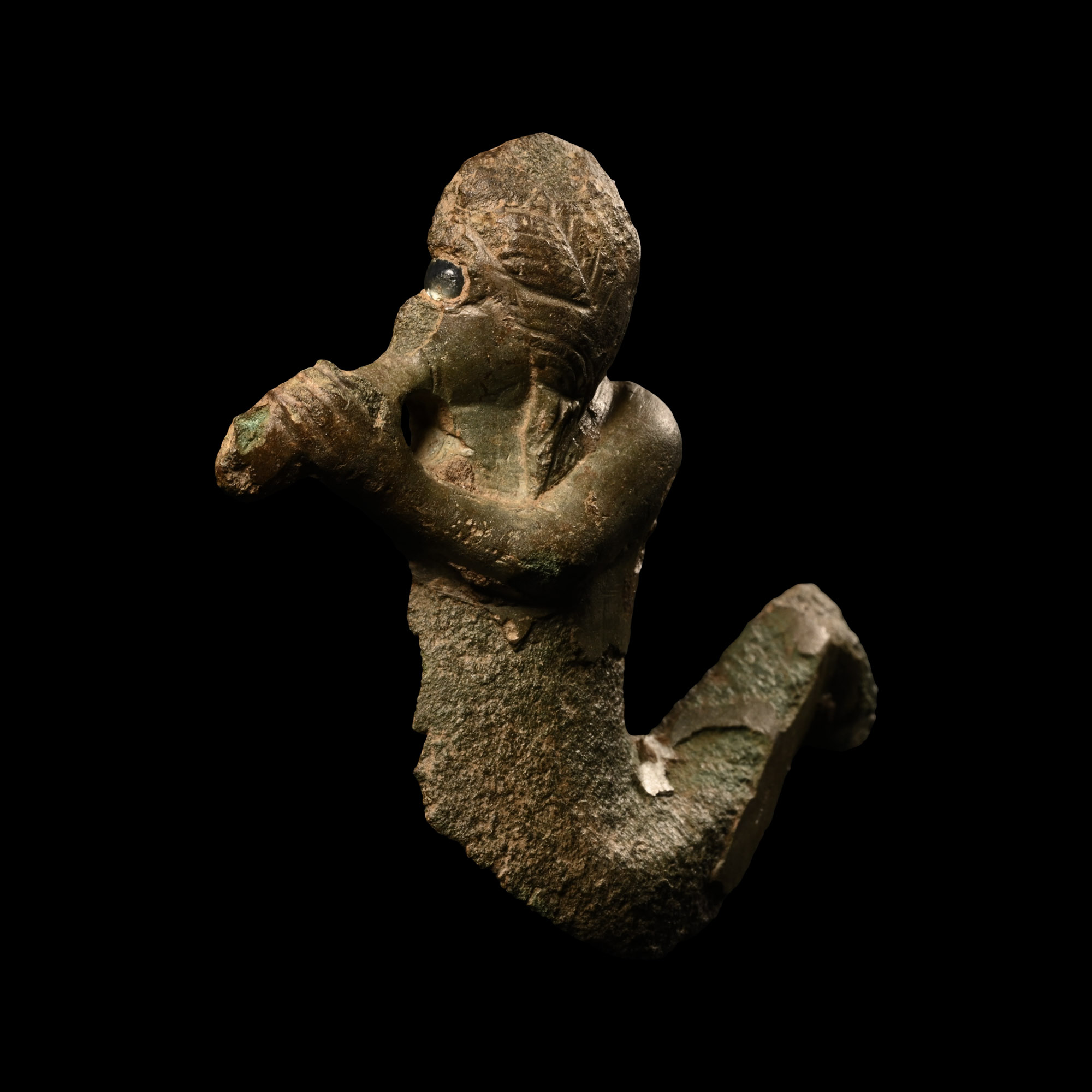
Roman Bronze Triton Mount
1ST-2ND CENTURY A.D.
2 3/4 in. (31.6 grams, 70 mm).
Long haired, human face with detailed scaly fish body, glass insert preserved in the eye, in the act of blowing to a seashell. [No Reserve]
ProvenanceFrom the collection of the famous author, writer and speaker, Gordon Bailey, Essex, UK; formed since 1968.
PublishedBailey, G., Detector Finds 6, Greenlight Publishing, Witham, 2008, pp.93 and 96, fig.C16.47 and C16.57.
FootnotesThe Triton is in the typical position of playing an empty shell. The mount was an exceptional piece, with the eyes filled with glass, and would have decorated an ornate bowl or vessel.
CONDITIONTimeLine Auctions follows a vetting process to ensure the authenticity and legality of all items, reinforcing our commitment to integrity and responsible trading. Each antiquity, antique, and coin lot undergoes thorough examination by a vetting committee of at least ten external specialists, professional trade association members, scientists, and archaeologists: Our Vetting Process
AUCTIONS:
TimeLine is a leading auction house specialising in antiquities, ancient art, collectables, natural history, coins, medals, and books. Our auctions offer museums, collectors, historians, and enthusiasts the opportunity to acquire unique and historically significant pieces.
-
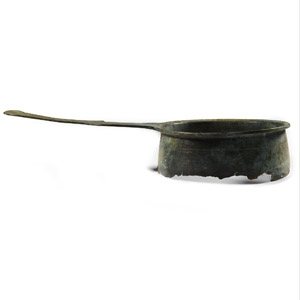
Large Roman Bronze Skillet
2nd-3rd century A.D.Sold for (Inc. bp): £247
With a deep bowl, everted rim with a rounded lip, flat-section handle with lateral spurs and oval finial. 352 grams, 35.8 cm
From a collection acquired on the UK art market from various auction houses and collections mostly before 2000. From an important Cambridgeshire estate; thence by descent. -
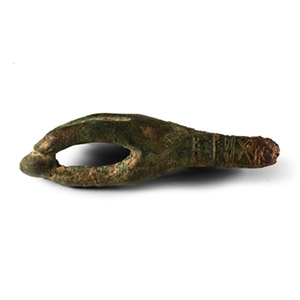
Roman Bronze Key Handle in the Shape of a Hand Holding Fruit
1st-3rd century A.D.Estimate: £700 - 900 (+bp*)
Opening Bid: £350
Formed as a lady's right hand with thumb and forefinger extended to hold a grape; iron shank to the wrist. 157 grams, 10.1 cm
Ex Cambridgeshire, UK, collection, 1990s. -
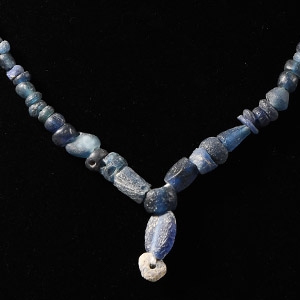
Roman Blue Glass Bead Necklace String
1st-4th century A.D. and laterSold for (Inc. bp): £26
Restrung designer necklace of graduated annular and tubular beads with a milky blue oval pendant. 15.07 grams, 38 cm
Acquired 1980-2015. Ex Abelita family collection.
