
Loading, please wait...
LOT 0867
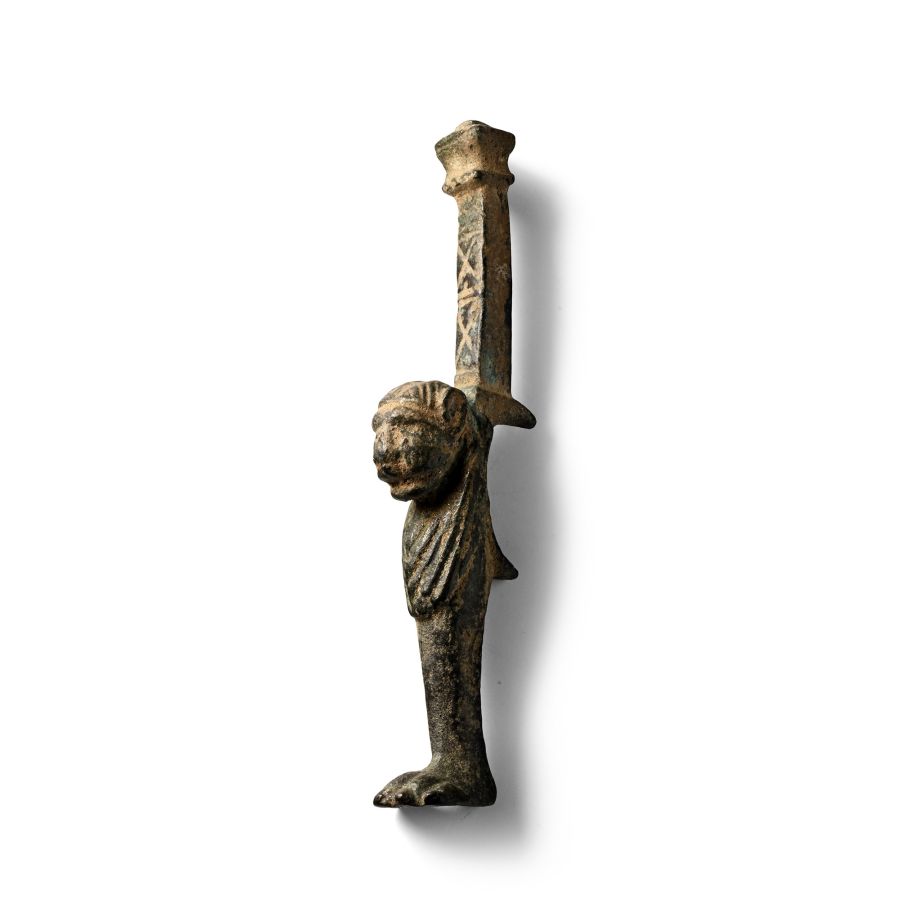
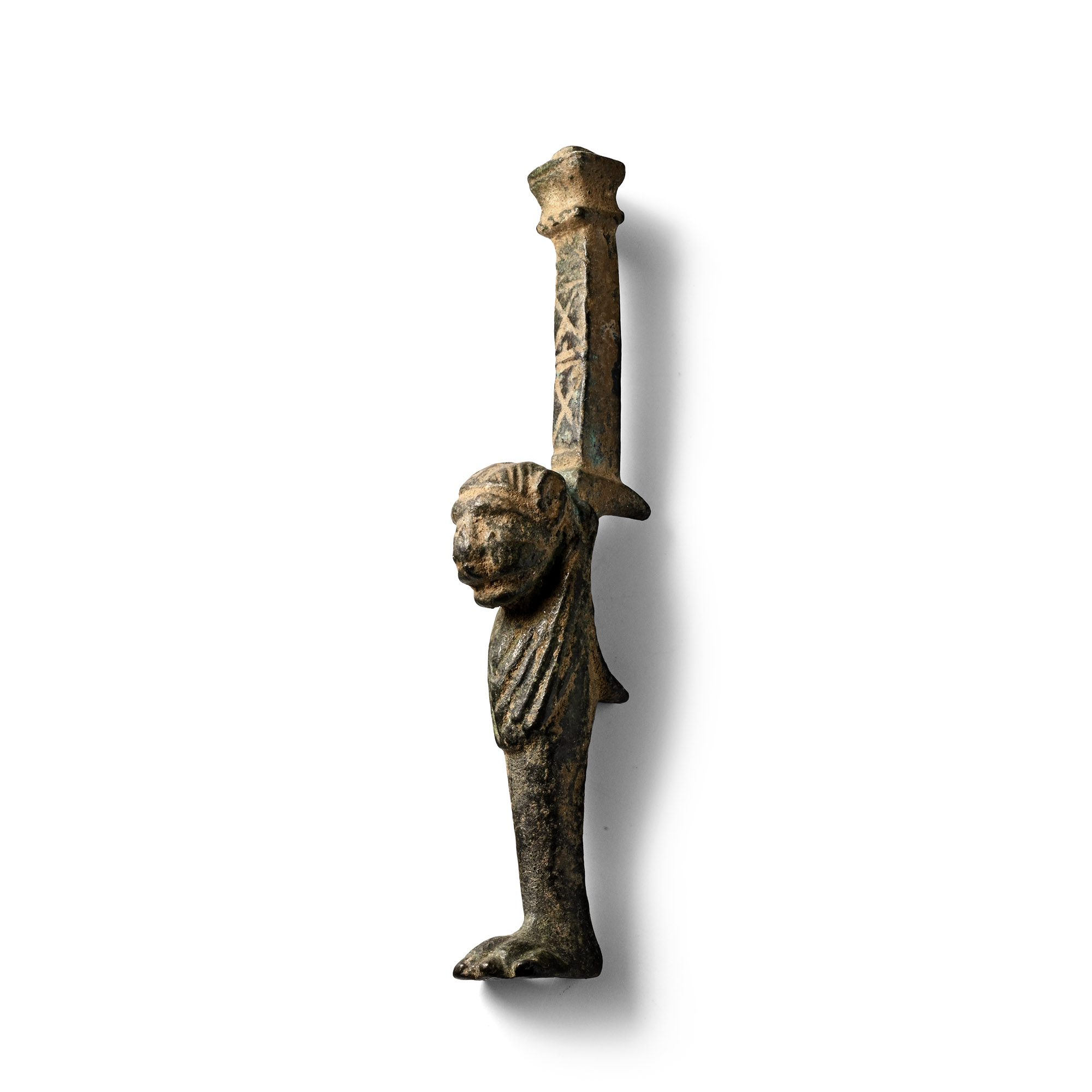
Roman Bronze Tray Leg with Lion
1ST-4TH CENTURY A.D.
3 3/4 in. (54 grams, 97 mm).
Comprising: square-section shank with tapering finial and lug, incised geometric ornament; C-shaped socket with lion-mask to the outer face, lion's leg and claw at the base. [No Reserve]
ProvenanceFound Gloucestershire, UK.
LiteratureCf. similar wooden example in the collection of the British Museum under accession no.1996,0928.1.
CONDITIONTimeLine Auctions follows a vetting process to ensure the authenticity and legality of all items, reinforcing our commitment to integrity and responsible trading. Each antiquity, antique, and coin lot undergoes thorough examination by a vetting committee of at least ten external specialists, professional trade association members, scientists, and archaeologists: Our Vetting Process
AUCTIONS:
TimeLine is a leading auction house specialising in antiquities, ancient art, collectables, natural history, coins, medals, and books. Our auctions offer museums, collectors, historians, and enthusiasts the opportunity to acquire unique and historically significant pieces.
-
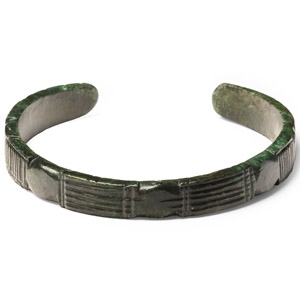
Roman Decorated Bronze Bracelet
2nd-4th century A.D.Sold for (Inc. bp): £111
Penannular body with rounded finials, segmented linear decoration on the upper face. 30.48 grams, 62 mm
From a private Tyneside collection, formed since the early 2000s. -
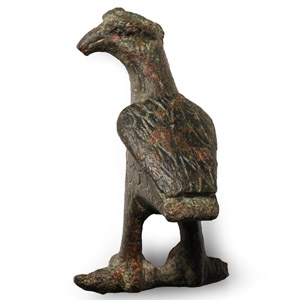
Roman Bronze Eagle Statuette
1st century A.D.Sold for (Inc. bp): £104
Standing on an integral base with its wings folded, and head turned, hooked beak, incised feather detailing to the body and wings. 45 grams, 51 mm
Ex DRG Coins and Antiquities, Bishops Stortford, Essex, UK. From the private collection of a West London, UK, gentleman, formed since the early 2000s. Accompanied by a handwritten dealer's ticket. -
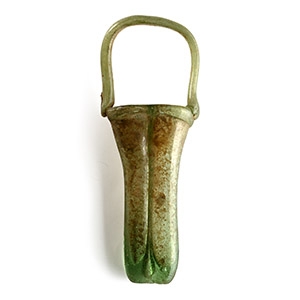
Roman Green Glass Double Unguentarium
Circa 4th century A.D.Sold for (Inc. bp): £234
With rolled rim and large applied loop handle above. 58 grams, 14.6 cm
Acquired Christie's, London, 6 May, 1982, no.14 (part). From a private Wiltshire, UK, collection. Accompanied by a copy of the relevant Sotheby's catalogue pages.
