
Loading, please wait...
LOT 0740
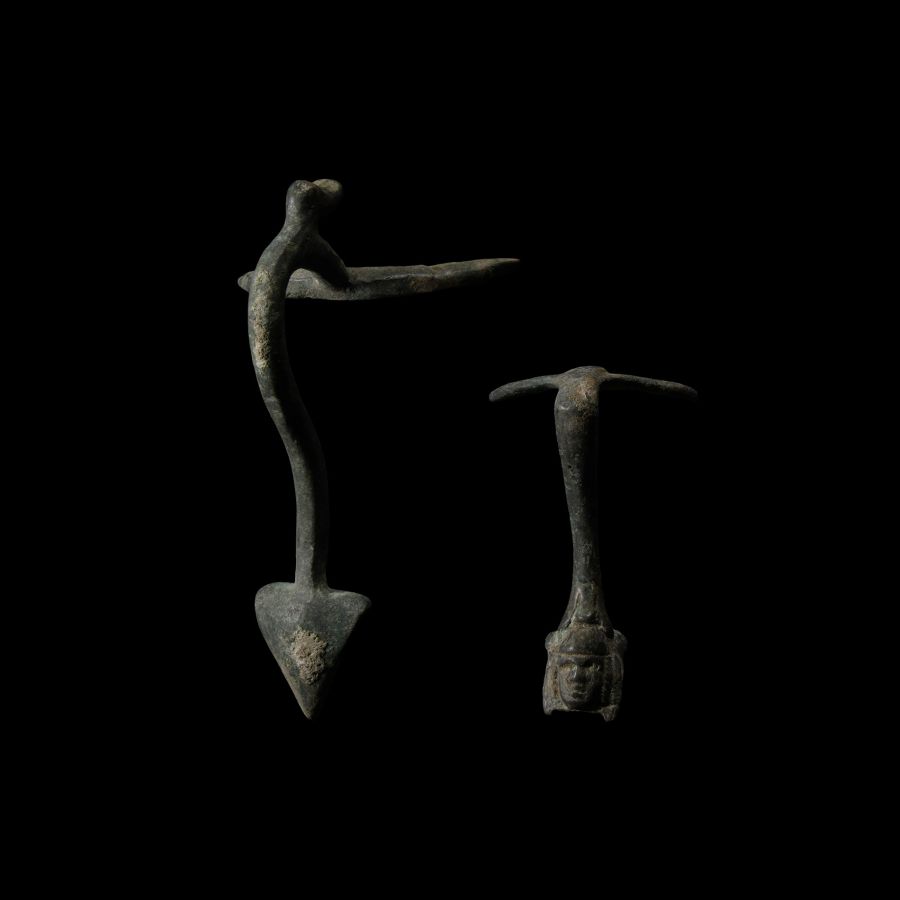
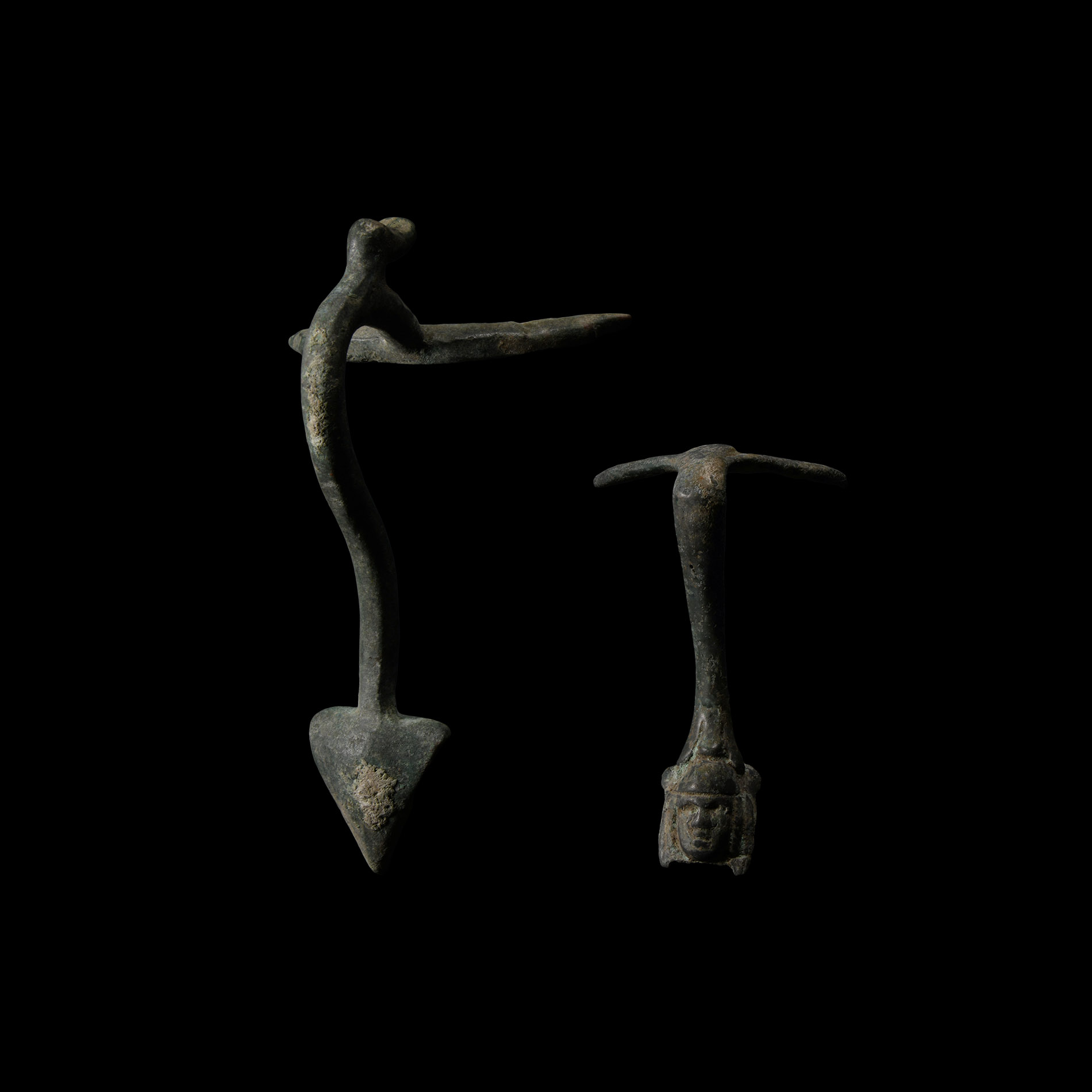
Roman Bronze Tankard Handle Group
CIRCA 1ST-4TH CENTURY A.D.
4 1/2 - 7 in. (411 grams total, 11.4-18 cm).
Comprising two differently sized handles, one featuring a female mask, the other with a leaf-shaped terminal and stylised duck's head to the apex of the bow. [2]
ProvenanceAcquired 1990s-early 2000s.
East Anglian private collection.
TimeLine Auctions follows a vetting process to ensure the authenticity and legality of all items, reinforcing our commitment to integrity and responsible trading. Each antiquity, antique, and coin lot undergoes thorough examination by a vetting committee of at least ten external specialists, professional trade association members, scientists, and archaeologists: Our Vetting Process
AUCTIONS:
TimeLine is a leading auction house specialising in antiquities, ancient art, collectables, natural history, coins, medals, and books. Our auctions offer museums, collectors, historians, and enthusiasts the opportunity to acquire unique and historically significant pieces.
LOT 0740
Roman Bronze Tankard Handle Group
Estimate £100 - 140€120 - 160 (for guidance only)$140 - 190 (for guidance only)
-
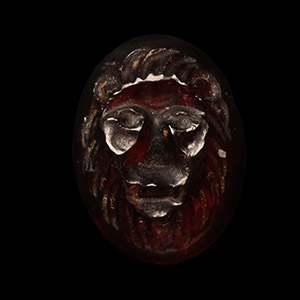
Roman Gemstone with Lion Face
3rd-4th century A.D.Sold for (Inc. bp): £715
The animal depicted incuse on domed face of a polished garnet cabochon; accompanied by a museum-quality impression. 0.73 grams, 12 mm
UK private collection before 2000. UK art market. Property of a London gentleman. -
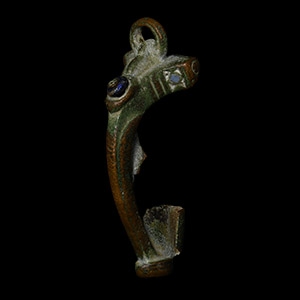
Roman Bronze Headstud Brooch
1st-2nd century A.D.Sold for (Inc. bp): £59
Displaying pale blue enamel panels to the shoulders, blue glass bead to the bow and elliptical lug to the footplate; partial remains of pin lug and catchplate. 18.7 grams, 56 mm
From an important Mayfair, London, UK collection, before 2012; item 2049. -
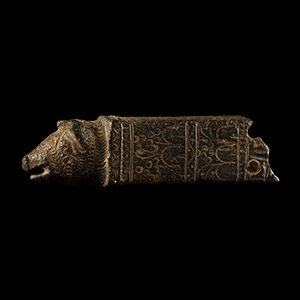
Roman Bronze Knife Handle with Boar's Head
1st-2nd century A.D.Sold for (Inc. bp): £390
The stylised boar's head projecting from the terminal of the tapering rectangular-section handle, two registers of incised ornament to both broad faces and 'scale' detailing to the narrow edges. 19.2 grams, 50 mm
‘The Ancient Menagerie Collection’ formerly the property of a Cambridgeshire lady, collected since the 1990s and acquired from auctions and dealers throughout Europe and the USA, now ex London collection.
