
Loading, please wait...
LOT 0177
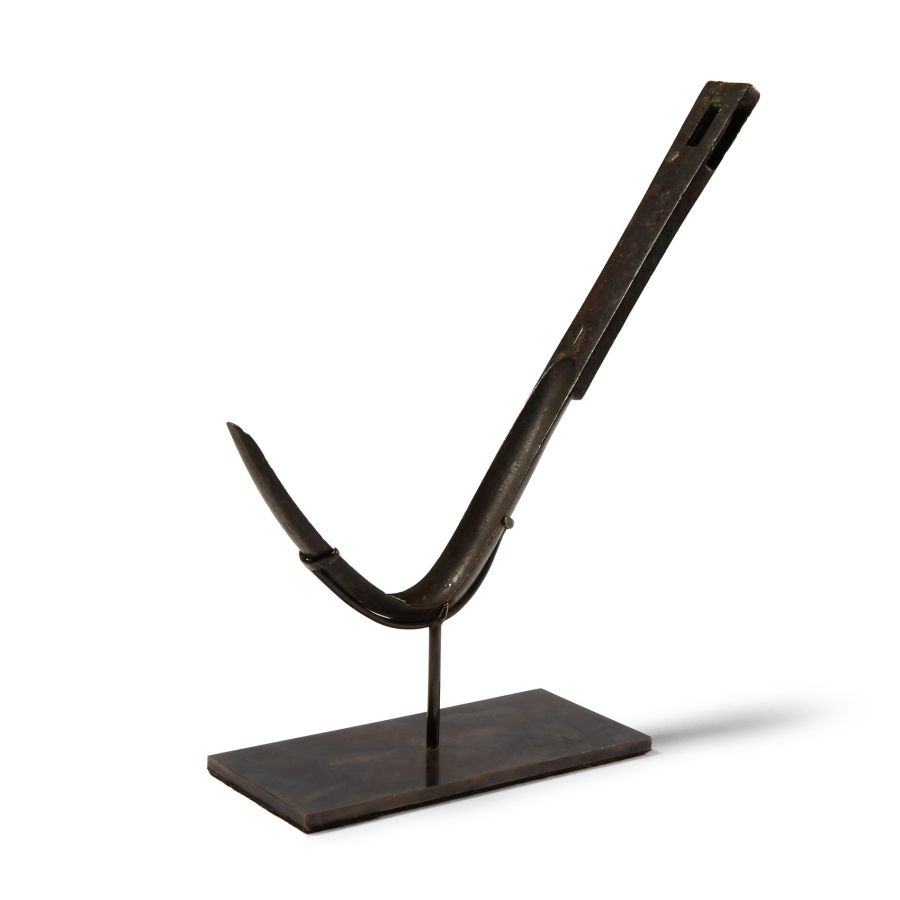
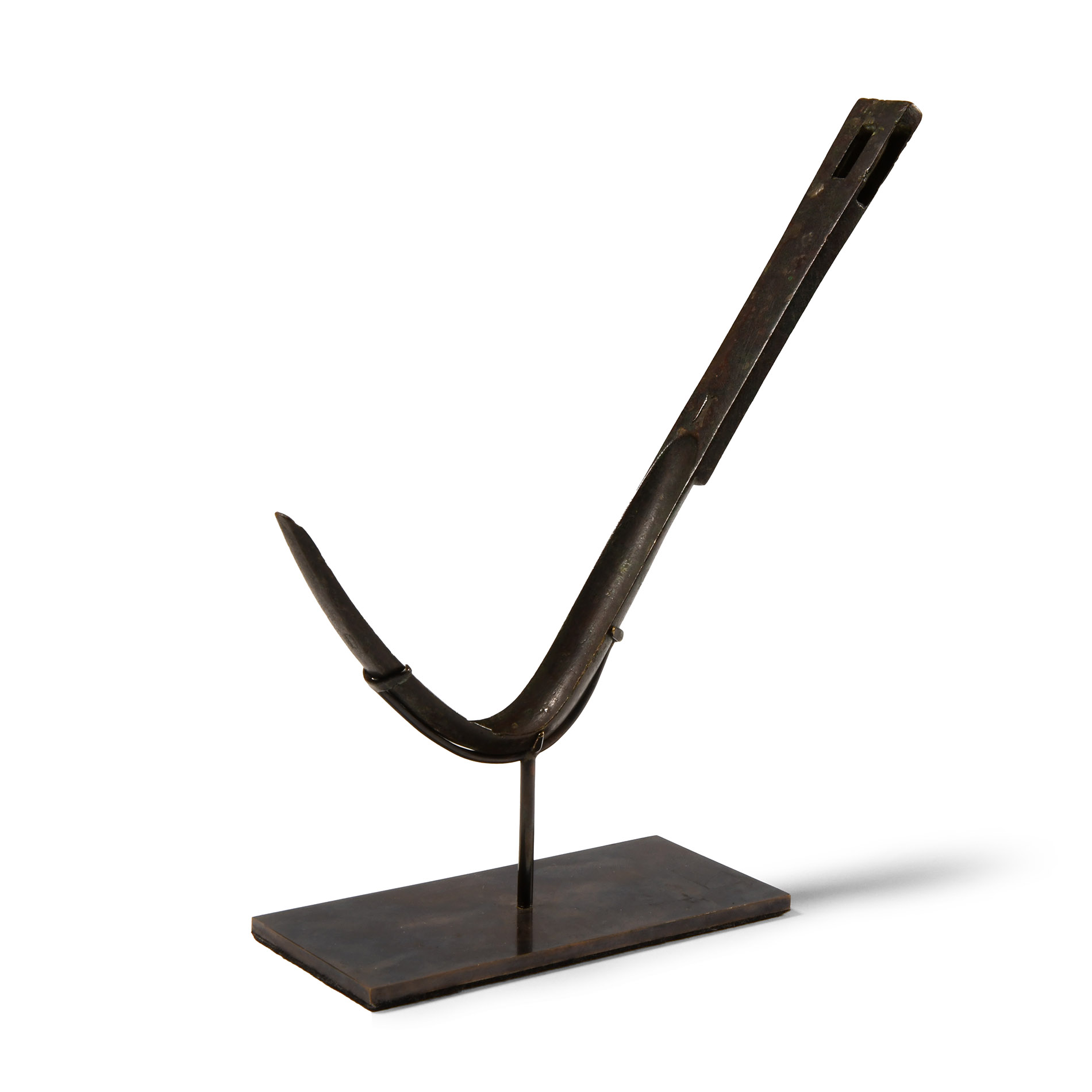
Roman Bronze Strigil
1ST-2ND CENTURY A.D.
8 in. (394 grams total, 20.5 cm high including stand).
With C-section profile to the blade, rectangular handle with openwork slots to the upper end, impressed fishtail motif at the lower; mounted on a custom-made stand.
ProvenanceEx Louis-Gabriel Bellon (1819?-1899), France.
Acquired from Jack-Philippe Ruellan, 4 April 2009, no.279.
Accompanied by a copy of a French cultural passport no.111441.
Cf. Roach Smith, C., The Antiquities of Richborough, Reculver and Lymne in Kent, London, 1850, for type.
CONDITIONTimeLine Auctions follows a vetting process to ensure the authenticity and legality of all items, reinforcing our commitment to integrity and responsible trading. Each antiquity, antique, and coin lot undergoes thorough examination by a vetting committee of at least ten external specialists, professional trade association members, scientists, and archaeologists: Our Vetting Process
AUCTIONS:
TimeLine is a leading auction house specialising in antiquities, ancient art, collectables, natural history, coins, medals, and books. Our auctions offer museums, collectors, historians, and enthusiasts the opportunity to acquire unique and historically significant pieces.
-
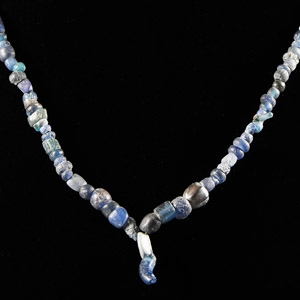
Roman Deep Blue Glass and Other Bead Necklace String
1st century A.D. and laterSold for (Inc. bp): £52
Assorted old blue glass beads restrung to a Y-shape with a crescentic-shaped pendant. 16.1 grams, 50 cm long
UK gallery, early 2000s.
The mass production of glass in Ancient Rome prompted the development of glass jewellery of unique qualities. The ancient Romans considered jewellery to be an essential accessory, being a public display of the wealth of high social classes. Roman jewellery at first followed trends set by the Etruscans, using gold and glass beads, but as the power and spread of the Roman Empire increased, jewellery designs became increasingly elaborate, incorporating elements from different cultural styles. -
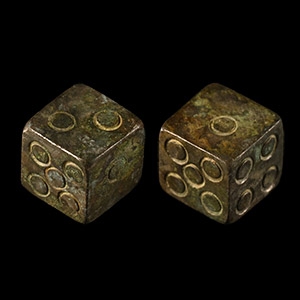
Roman Silver Gaming Dice Pair
1st-4th century A.D.Sold for (Inc. bp): £624
Each cuboid with ring-and-dor markings disposed: 1:6, 2:4, 3:5. 11 grams total, 8.55 mm
Ex German art market, 2000s. Acquired from an EU collector living in London. From the collection of Surrey, UK, gentleman. -
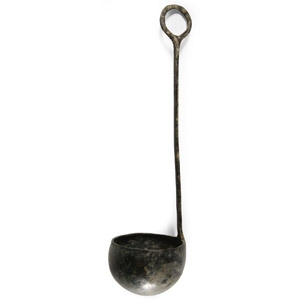
Roman Bronze Ladle with Loop Handle
2nd-3rd century A.D.Sold for (Inc. bp): £338
With deep bowl, integral square-section handle and loop finial. 66 grams, 23 cm
UK private collection before 2000. UK art market. Property of a London gentleman.
This type of ladle was used for libations of wine to the gods during sacrifices. The shape of the simpulum was that of a small cup, with a single elongated handle. The material of which it was made varied according to the wealth of the altar; there were specimens in silver; some were of brass and others made of wood or terracotta. This simpulum or simpuvium is often found depicted on Roman medals or coins, like a denarius of Augustus (2 B.C.-2 A.D.).
