
Loading, please wait...
LOT 0637
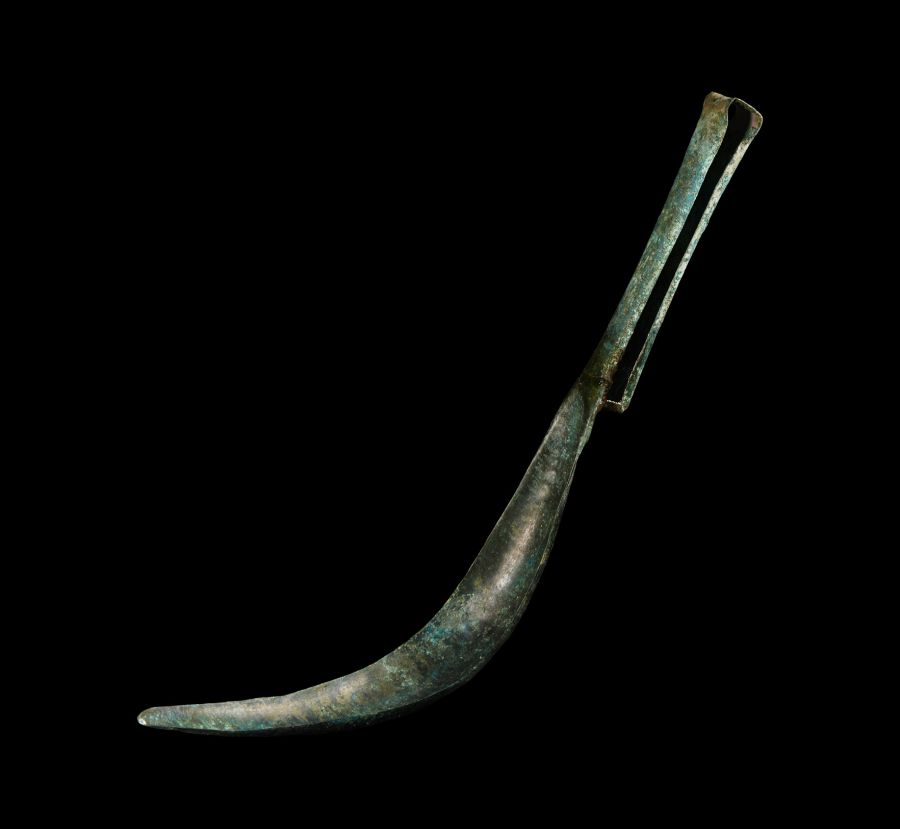
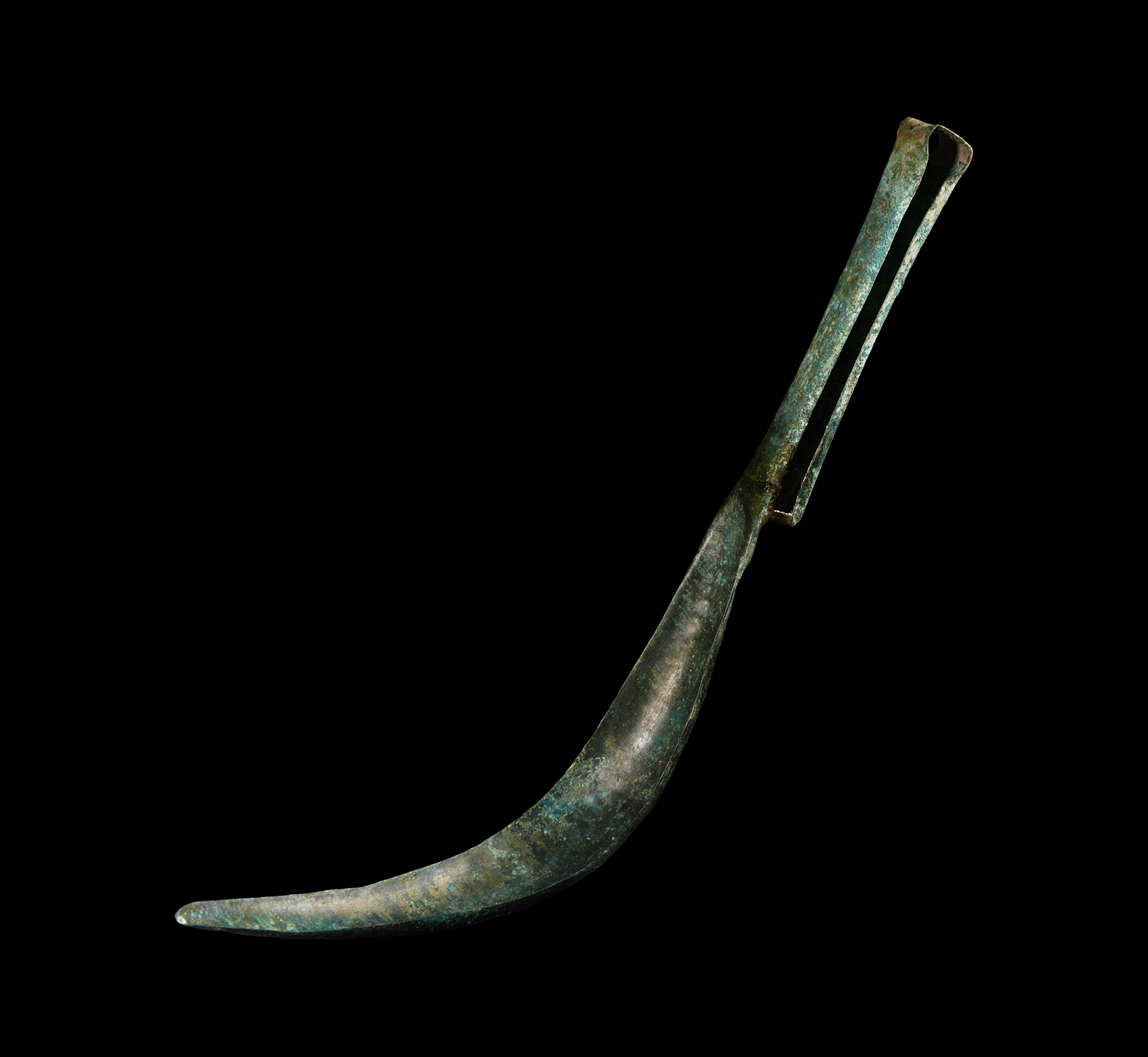
Roman Bronze Strigil
CIRCA 1ST CENTURY A.D.
9 1/4 in. (50 grams, 23.5 cm).
Comprising a shallow U-section curved head and rectangular handle folded at the top to create a suspension loop to reverse; repaired.
ProvenanceAcquired on the German art market around 2000.
From the collection of a Surrey, UK, gentleman.
Cf. The Metropolitan Museum, New York, accession number 74.51.5468, for similar.
CONDITIONTimeLine Auctions follows a vetting process to ensure the authenticity and legality of all items, reinforcing our commitment to integrity and responsible trading. Each antiquity, antique, and coin lot undergoes thorough examination by a vetting committee of at least ten external specialists, professional trade association members, scientists, and archaeologists: Our Vetting Process
AUCTIONS:
TimeLine is a leading auction house specialising in antiquities, ancient art, collectables, natural history, coins, medals, and books. Our auctions offer museums, collectors, historians, and enthusiasts the opportunity to acquire unique and historically significant pieces.
-
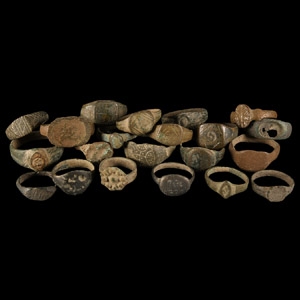
Roman to Post Medieval Bronze Ring Collection
1st-19th century A.D.Sold for (Inc. bp): £143
Including trumpet-bezel, banded-hoop, vesica-bezel and other types. 56 grams total, 16-26 mm
Acquired on the German art market around 2000. From the collection of a Surrey, UK, gentleman. -
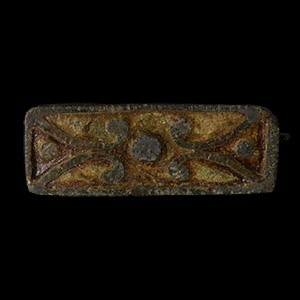
Roman Bronze Enamelled Plate Brooch
2nd-3rd century A.D.Sold for (Inc. bp): £65
Complete with sprung pin and catchplate to reverse; the rectangular plate with reserved scroll decoration on enamelled fields. 2.98 grams, 29 mm
Part of a collection formed in the 1970s-1980s. Ex private UK collection. -
.jpg)
Roman Gold Ring with Carnelian Cameo of Eros
Early 3rd century A.D.Estimate: £1,200 - 1,700 (+bp*)
Opening Bid: £480
Composed of a convex hoop with expanding angled shoulders, oval bezel set with carnelian cameo gemstone carved with the head and face of Eros with pinched features and centrally-parted hair; a marriage. 7.09 grams, 21.79 mm overall, 17.87 mm internal diameter (approximate size British H 1/2, USA 4, Europe 6.81, Japan 6)
Acquired 1990s-early 2000s. East Anglian private collection.
This ring belongs to the typology of gold rings with gem (Type II, Variant I) of Ruseva-Slokoska classification.
