
Loading, please wait...
LOT 0821
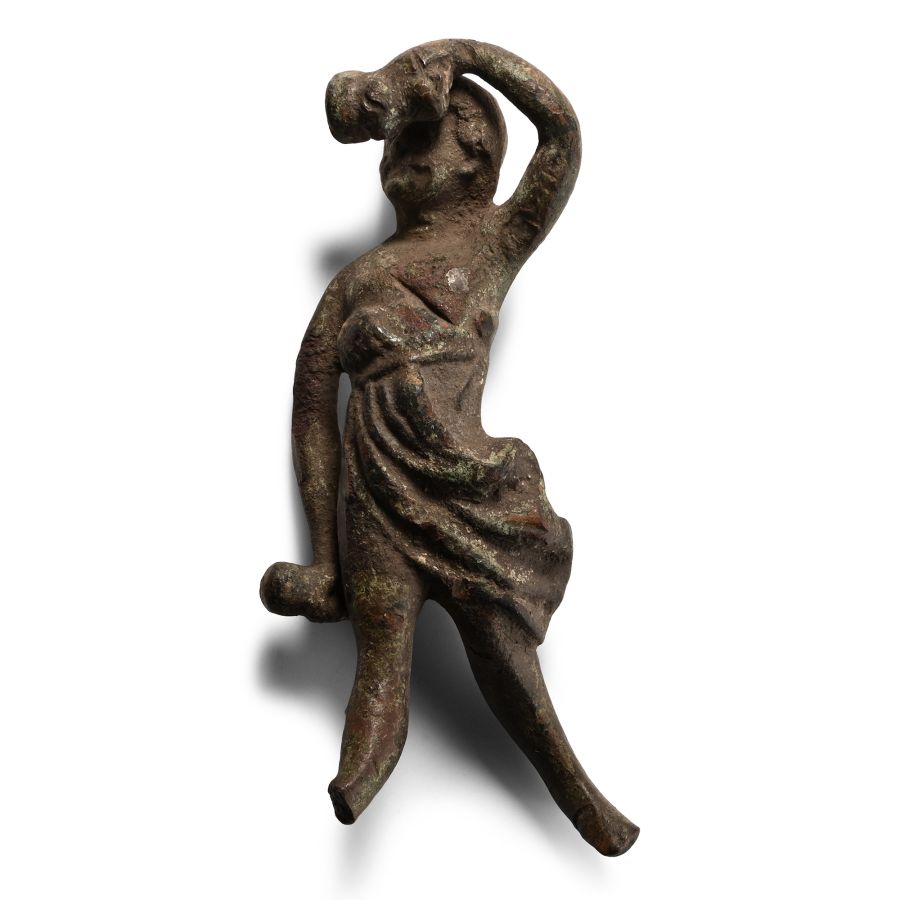
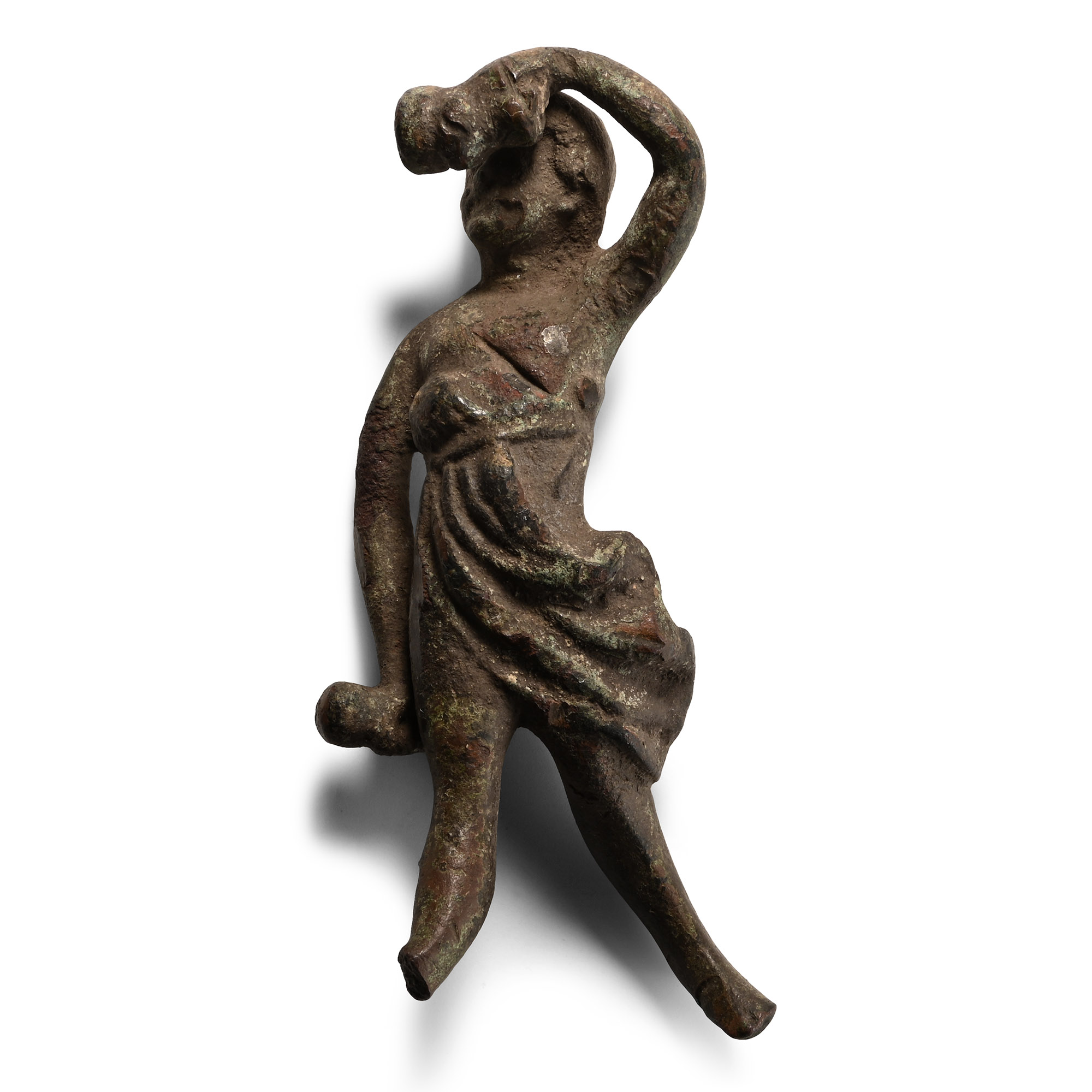
Roman Bronze Statuette
2ND-4TH CENTURY A.D.
3 3/4 in. (121 grams, 94 mm).
Modelled in the round, Bacchante standing, wearing a loose chiton gathered beneath the breasts, a drinking vessel in each hand. [No Reserve]
ProvenanceEx T Hall collection, 1990s.
LiteratureCf. Rolland, H., Bronzes Antiques de Haute Provence, Paris, 1965, item 328, for type.
CONDITIONTimeLine Auctions follows a vetting process to ensure the authenticity and legality of all items, reinforcing our commitment to integrity and responsible trading. Each antiquity, antique, and coin lot undergoes thorough examination by a vetting committee of at least ten external specialists, professional trade association members, scientists, and archaeologists: Our Vetting Process
AUCTIONS:
TimeLine is a leading auction house specialising in antiquities, ancient art, collectables, natural history, coins, medals, and books. Our auctions offer museums, collectors, historians, and enthusiasts the opportunity to acquire unique and historically significant pieces.
-
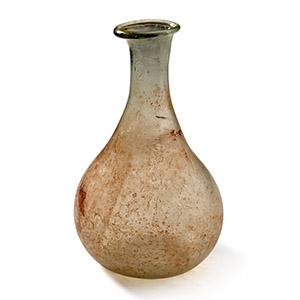
Roman Light Green Glass Flask
Circa 1st century A.D.Sold for (Inc. bp): £234
Comprising a piriform body with dimple base, tapering tubular neck with pinched and everted rim. 68 grams, 16 cm
From an important collection of glass, London, UK, 1990s. -
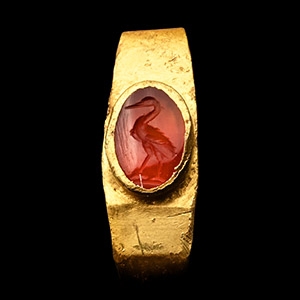
Roman Gold Ring with Stork Gemstone
2nd-3rd century A.D.Sold for (Inc. bp): £1,040
Comprising a D-shaped hoop with angled shoulders, raised oval bezel set with a carnelian intaglio bearing the image of a standing stork on a baseline. 3.19 grams, 19.79 mm overall, 18.06 x 11.63 mm internal diameter (approximate size British E, USA 2 1/4, Europe 2.41, Japan 2)
From a Dunmow, UK, collection; formed from 1970. -
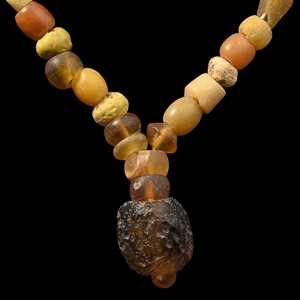
Roman Yellow Glass Bead Necklace String
1st-4th century A.D. and laterSold for (Inc. bp): £65
Restrung designer necklace string of fusiform, oblate and other types with facetted centrepiece. 25 grams, 35.8 cm
London, UK, collection, 2000s.
