
Loading, please wait...

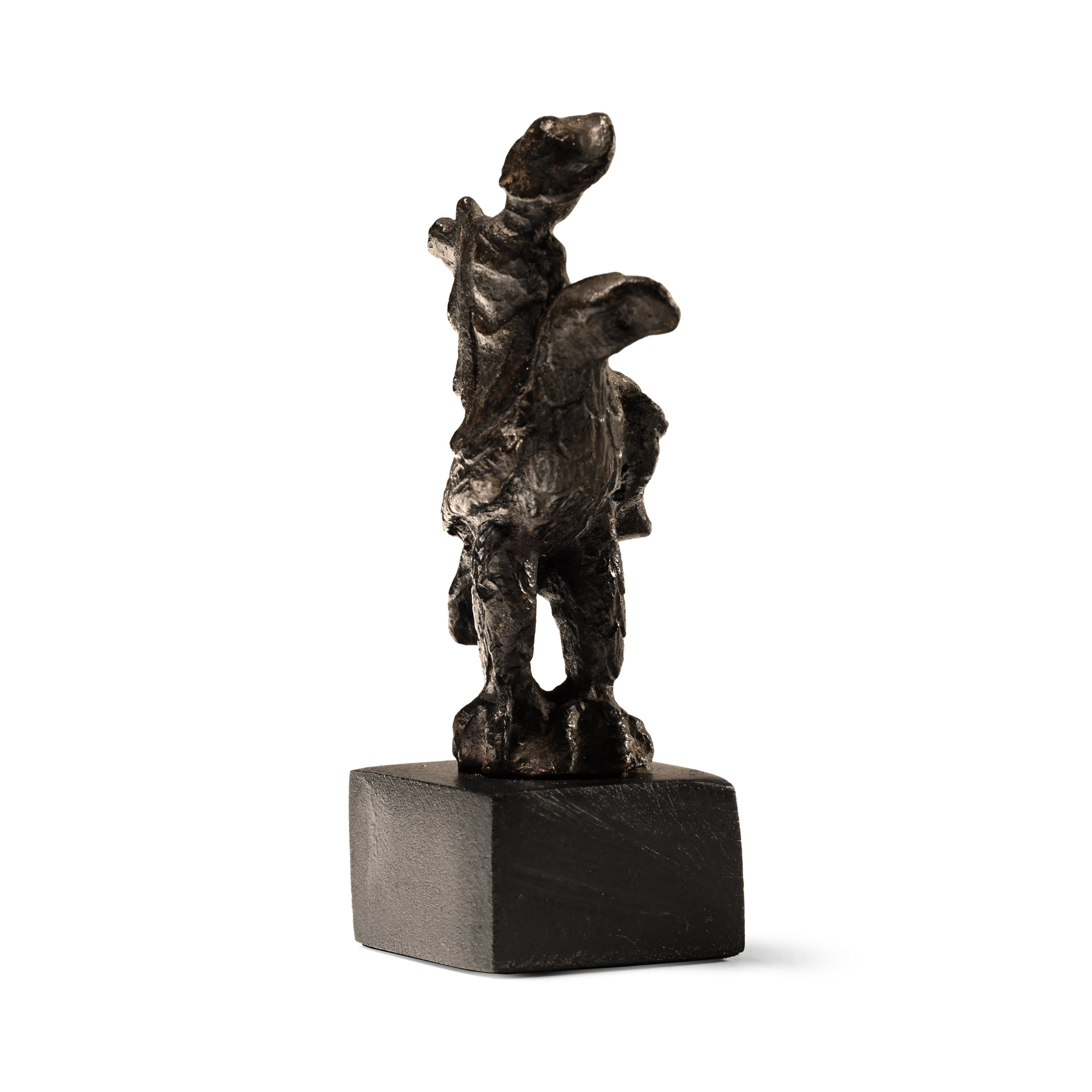
LOT 0122
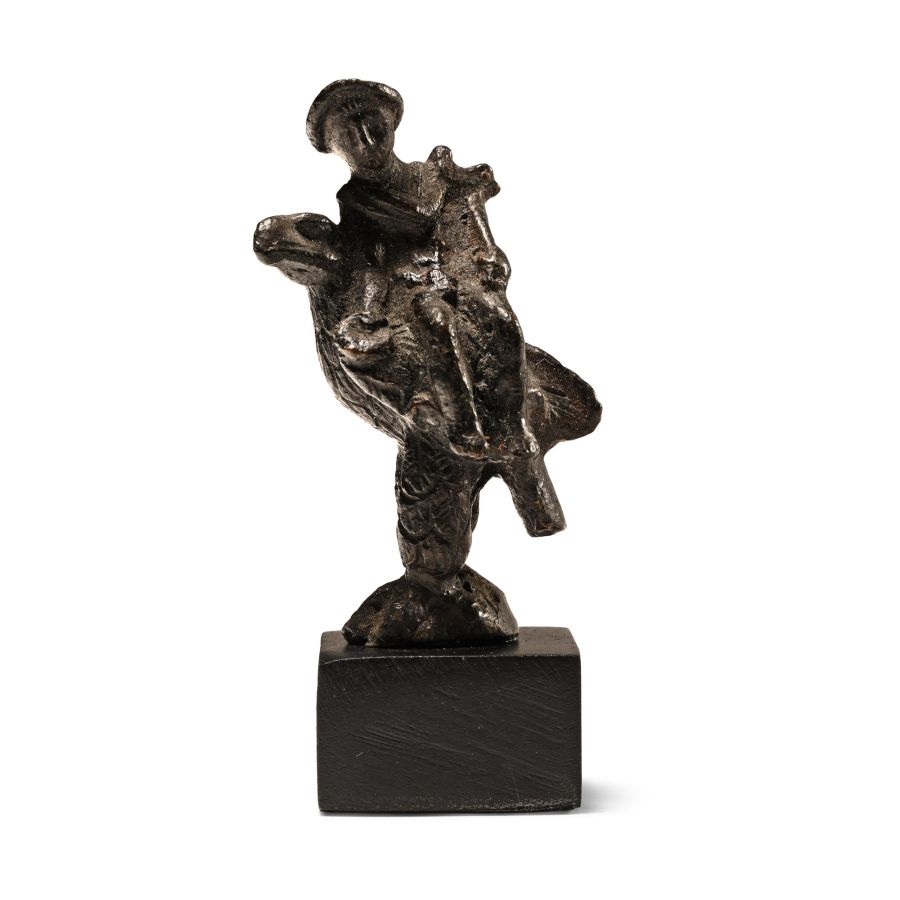
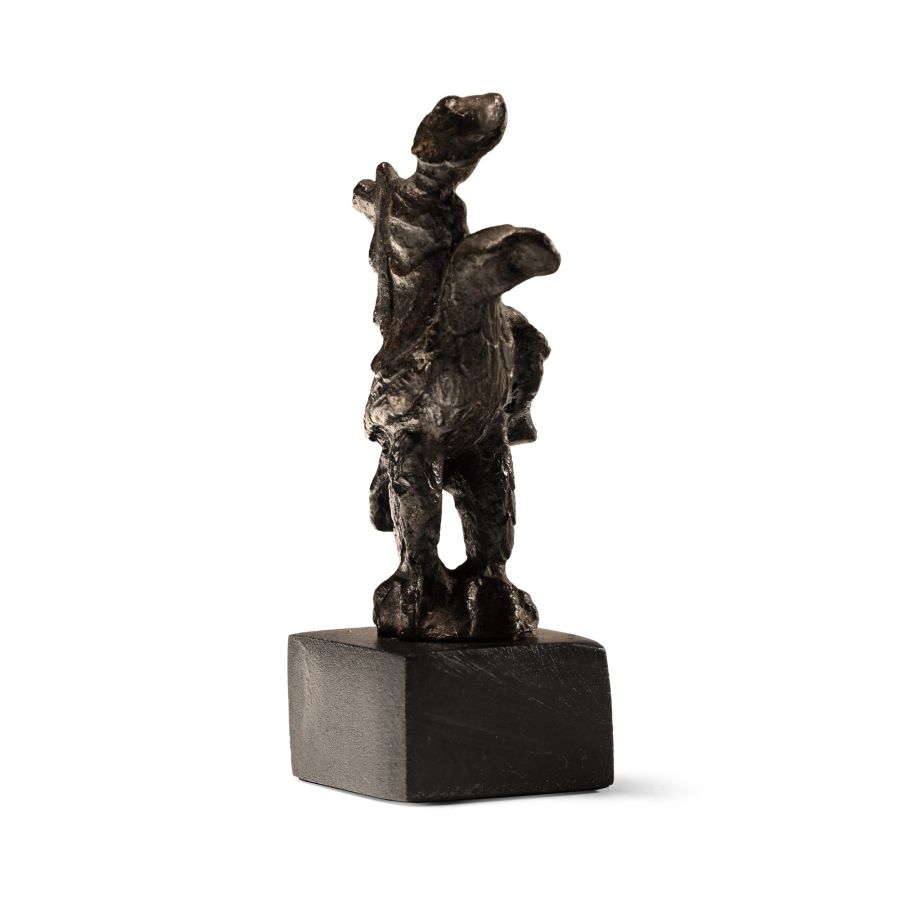
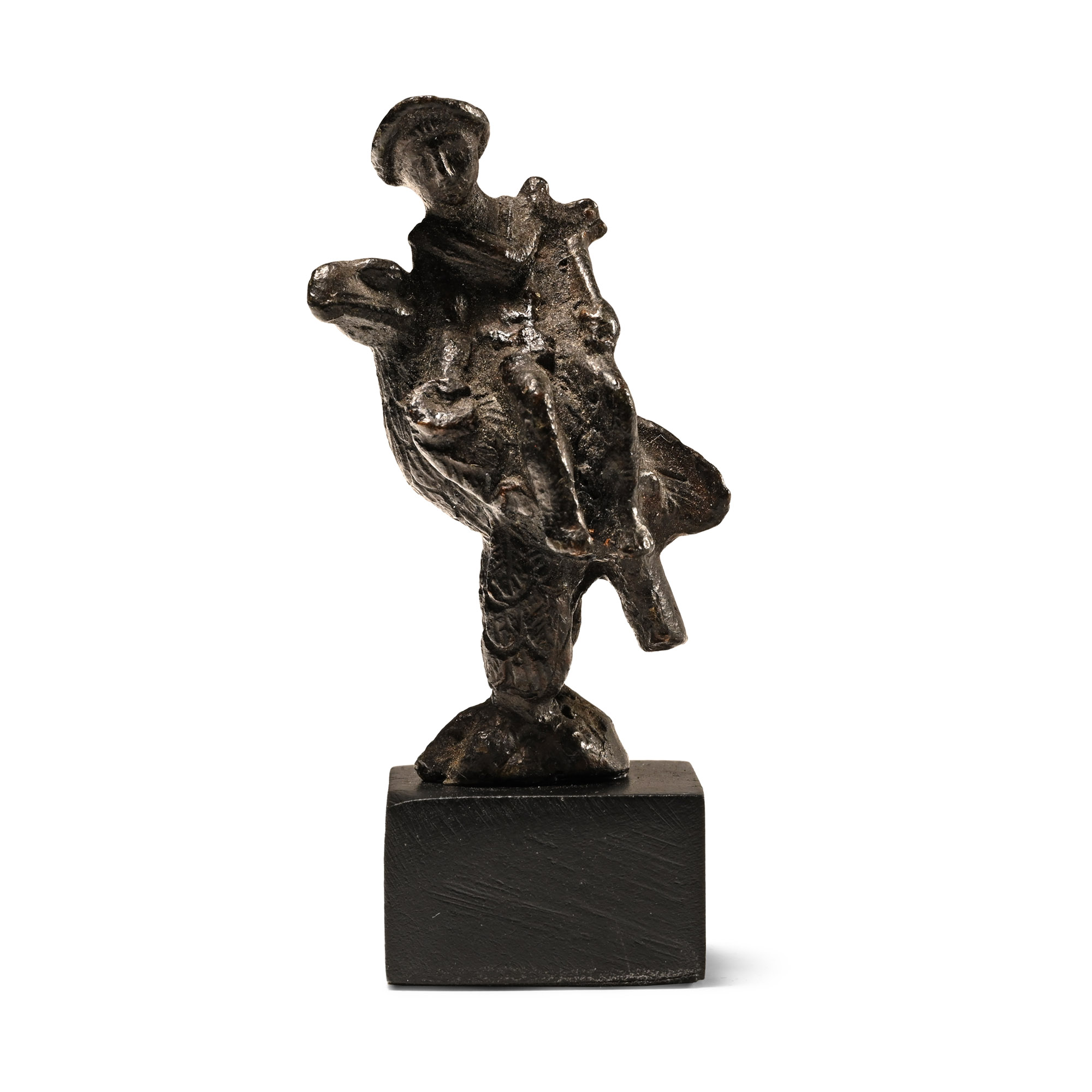
Roman Bronze Statuette of Young Mercury on the Eagle of Jupiter
2ND CENTURY A.D.
2 5/8 in. (63.3 grams total, 68 mm including stand).
Modelled in the round as a figure of an eagle perching with its head turned to the right; on its back, the god Mercury with caduceus on his left arm and petasos on his head; mounted on a custom-made stand. [No Reserve]
ProvenanceFrom a collection acquired on the UK art market from various auction houses and collections mostly before 2000.
From an important Cambridgeshire estate; thence by descent.
Cf. Rolland, H., Bronzes Antiques de Haute Provence, Paris, 1965, item 51 (Mercury with caduceus).
FootnotesThe figure of the messenger-god Mercury seated on the pinion of the eagle possibly relates to a mythic incident. Similar imagery was used in respect of Jupiter in scenes where the god was supposed to welcome a newly-deified emperor into the pantheon: see Metropolitan Museum of Art accession no. 32.142.2, for a sardonyx instance of this motif.
CONDITIONTimeLine Auctions follows a vetting process to ensure the authenticity and legality of all items, reinforcing our commitment to integrity and responsible trading. Each antiquity, antique, and coin lot undergoes thorough examination by a vetting committee of at least ten external specialists, professional trade association members, scientists, and archaeologists: Our Vetting Process
AUCTIONS:
TimeLine is a leading auction house specialising in antiquities, ancient art, collectables, natural history, coins, medals, and books. Our auctions offer museums, collectors, historians, and enthusiasts the opportunity to acquire unique and historically significant pieces.
LOT 0122
Roman Bronze Statuette of Young Mercury on the Eagle of Jupiter
Sold for (Inc. bp): £260
-
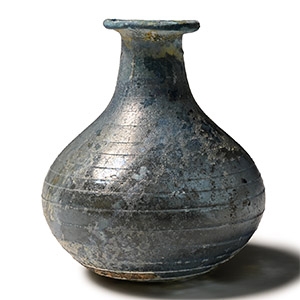
Roman Blue Glass Flask with Trail
3rd-4th century A.D.Estimate: £500 - 700 (+bp*)
Opening Bid: £250
Piriform in profile with slight dimple to base, squat body, tubular neck with flared and rolled mouth; fine applied spiral trail from shoulder to base. 8 grams, 62 mm
From an important London, UK, collection, 1970-1990s. -
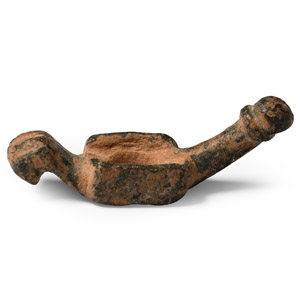
Roman Bronze Phallic Dagger Quillon
1st-2nd century A.D.Estimate: £120 - 170 (+bp*)
Opening Bid: £60
With a rectangular plaque with central void, phallus to one short edge and a stylised fist to the other. 25.5 grams, 55 mm
Acquired 1980-2015. Ex Abelita family collection. -
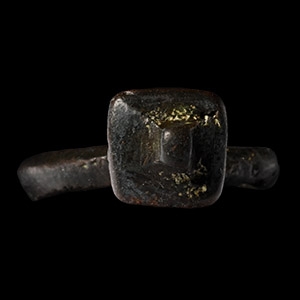
Roman Bronze Architectural Ring
4th-6th century A.D.Sold for (Inc. bp): £39
Narrow D-section hoop with inverted pyramid to the bezel and knop finial. 4.375 Grams, 29.97 mm.
Acquired on the UK art market. Property of a Essex, UK, collector. Accompanied by an old typed information card.
