
Loading, please wait...

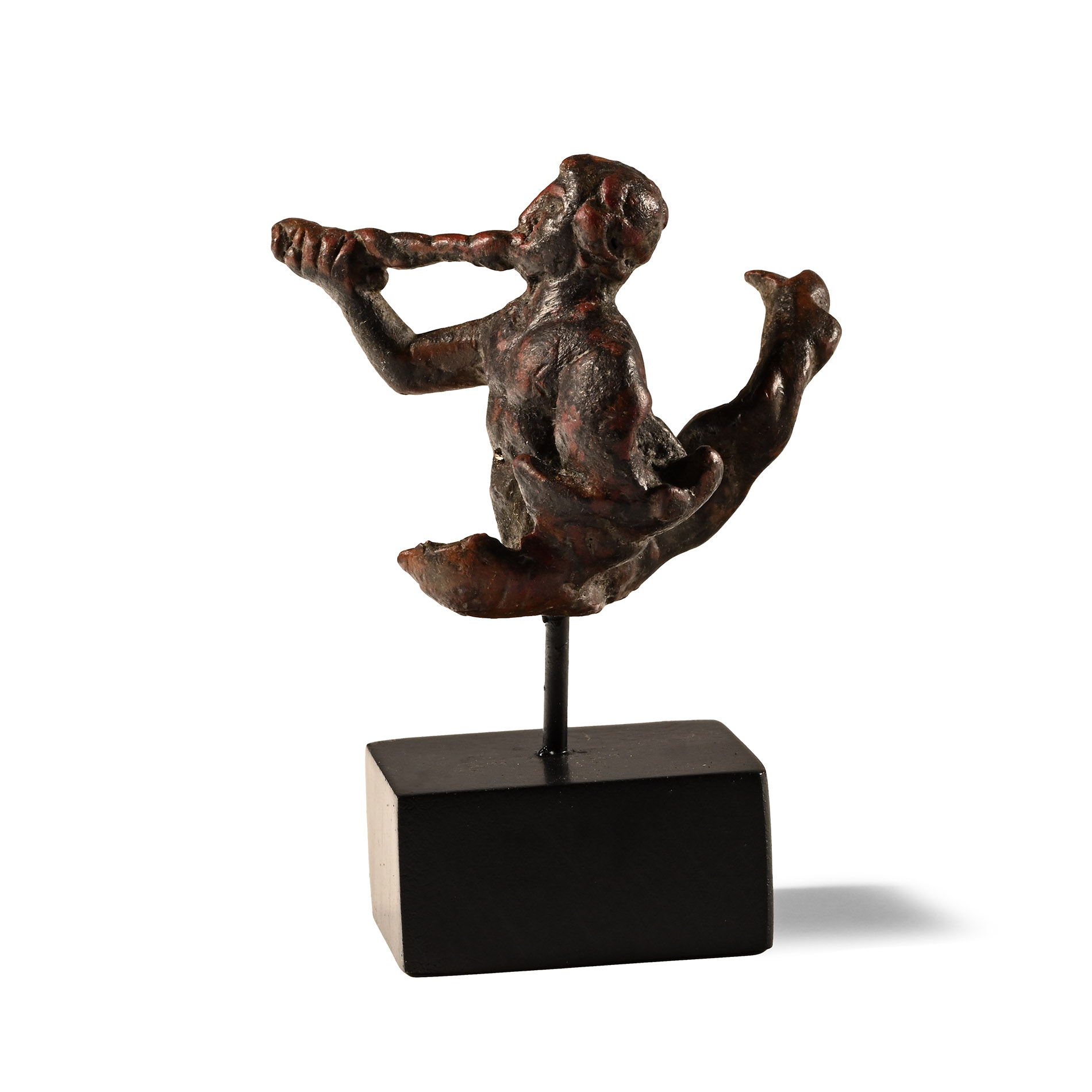
LOT 0130
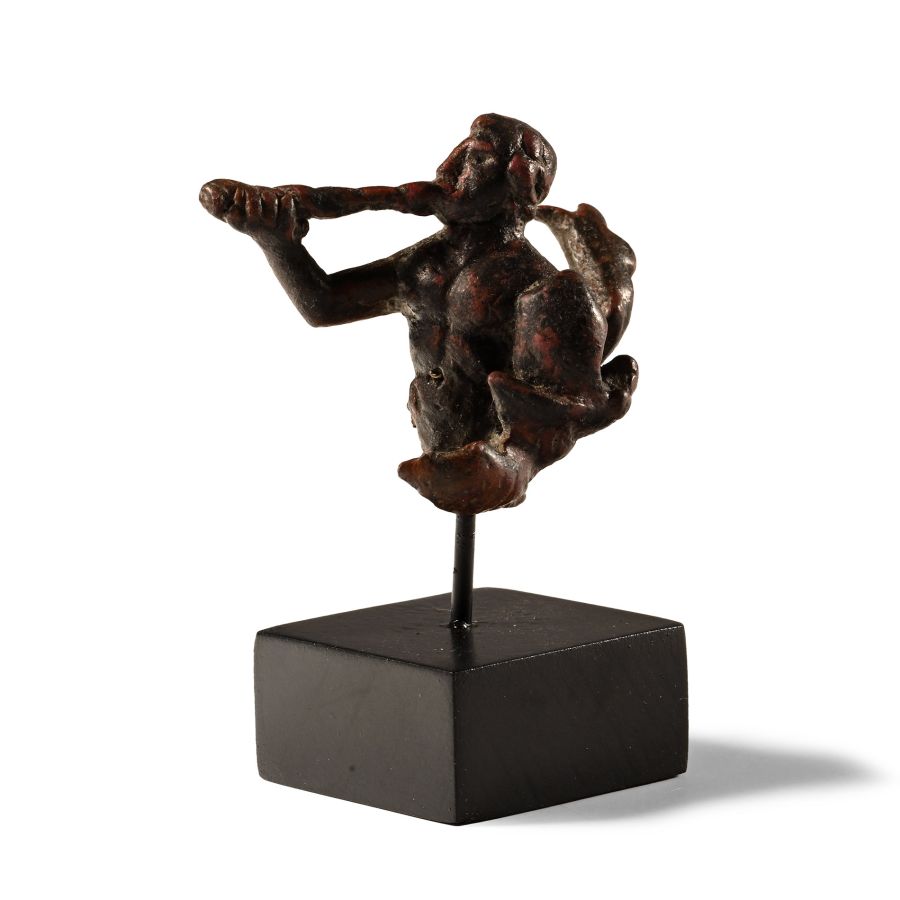
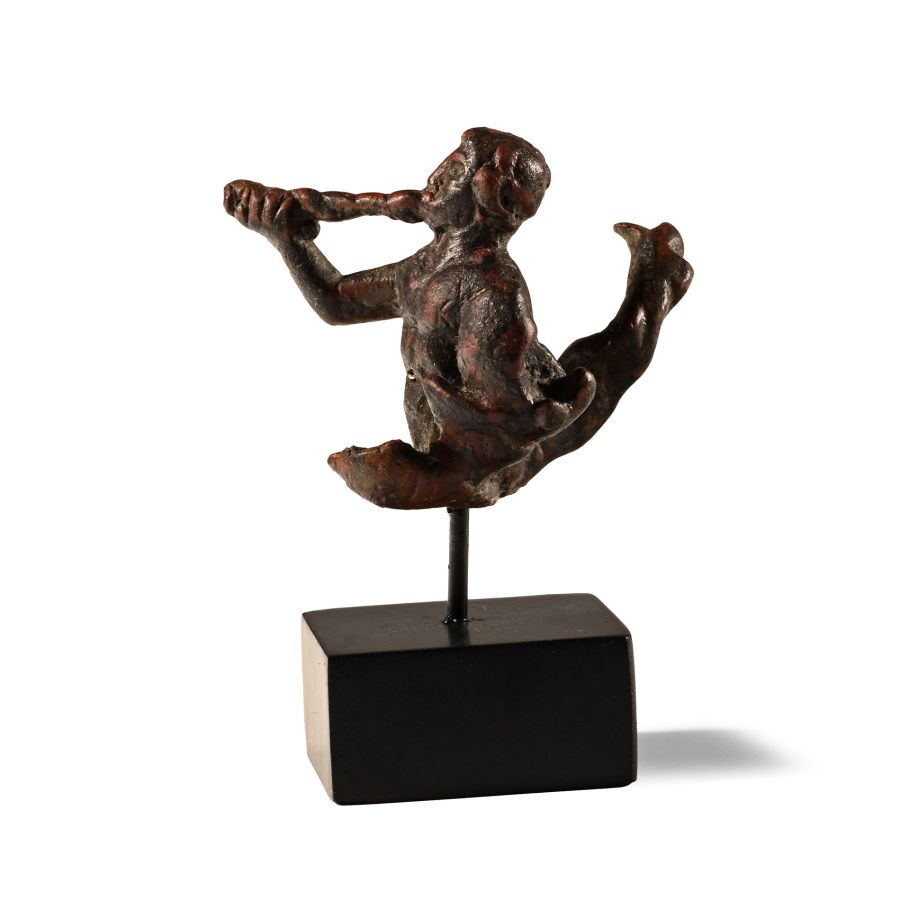
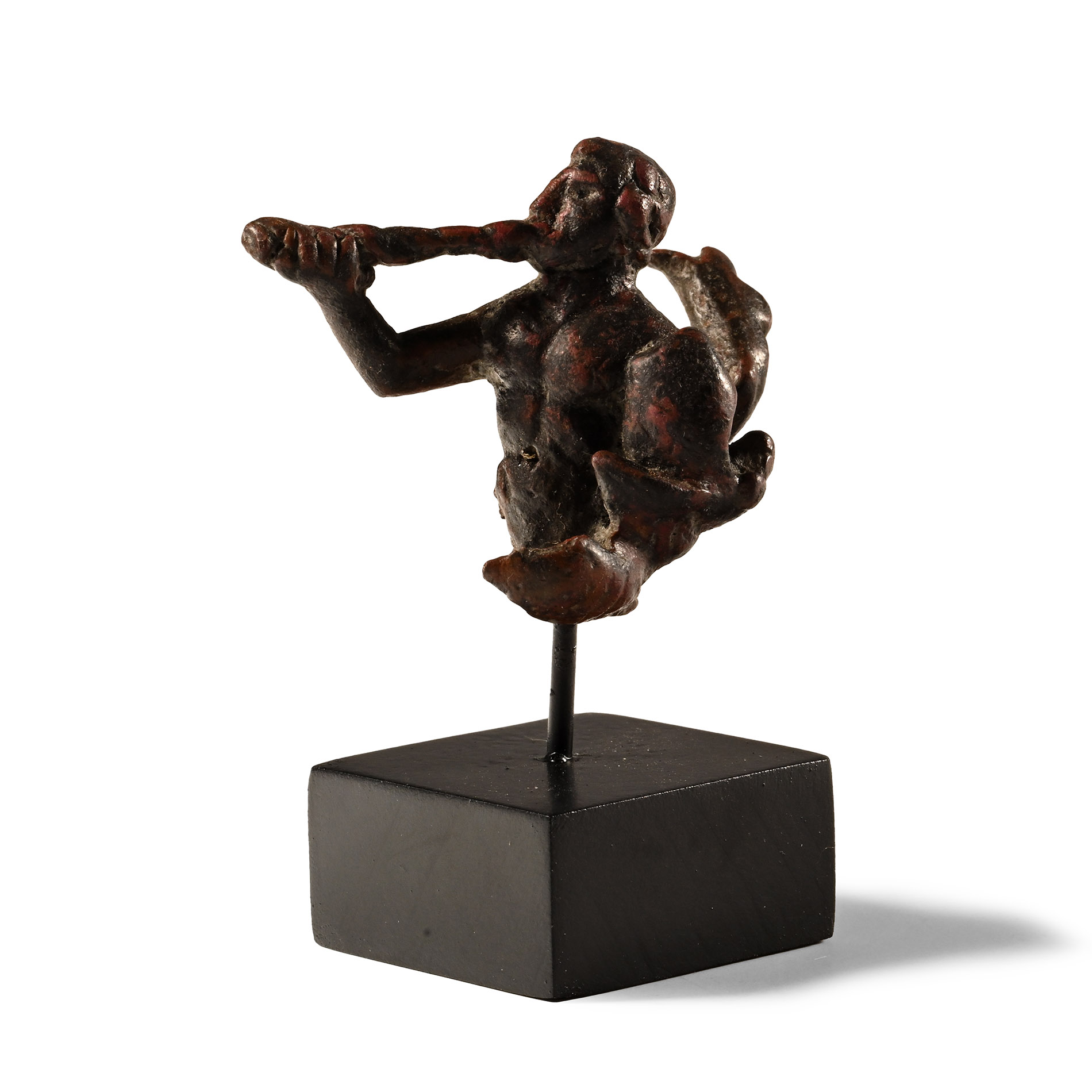
Roman Bronze Statuette of Triton Sounding a Horn
1ST-2ND CENTURY A.D.
2 1/2 in. (65 grams total, 64 mm including stand).
Bare-chested with fish-tail extending to the rear, raising a periwinkle-shell horn to his lips; left arm supporting a ship under sail; mounted on a custom-made display stand. [No Reserve]
ProvenanceFrom a collection acquired on the UK art market from various auction houses and collections mostly before 2000.
From an important Cambridgeshire estate; thence by descent.
Cf. Rolland, H., Bronzes Antiques de Haute Provence, Paris, 1965, item 324, for type.
FootnotesThe small statuette was possibly part of a scene representing Poseidon and Amphitrite. The riches of the sea and the dangers of navigation were merged by the ancients into a famous myth known as the wedding procession between Poseidon and the Nereid Amphitrite. Involved in the procession were nereids, tritons and hippocampi.
CONDITIONTimeLine Auctions follows a vetting process to ensure the authenticity and legality of all items, reinforcing our commitment to integrity and responsible trading. Each antiquity, antique, and coin lot undergoes thorough examination by a vetting committee of at least ten external specialists, professional trade association members, scientists, and archaeologists: Our Vetting Process
AUCTIONS:
TimeLine is a leading auction house specialising in antiquities, ancient art, collectables, natural history, coins, medals, and books. Our auctions offer museums, collectors, historians, and enthusiasts the opportunity to acquire unique and historically significant pieces.
-
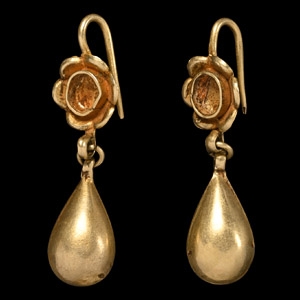
Roman Gold Drop Earring Pair
3rd-4th century A.D.Sold for (Inc. bp): £624
Matched pair, each an ellipsoid cell with rosette surround, hook to the reverse, hollow teardrop dangle below. 4.17 grams total, 37-38 mm
Ex European private collection, 1990s. Acquired from a London, UK, gallery. property of an Essex gentleman. -
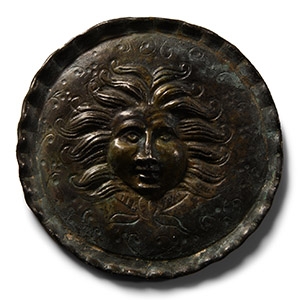
Roman Silver Phalera with Medusa
1st-2nd century A.D.Sold for (Inc. bp): £936
Discoid with fluted rim, central raised gorgoneion within scrolled tendrils. 13.8 grams, 59 mm
Ex German art market, 2000s. Acquired from an EU collector living in London. From the collection of Surrey, UK, gentleman.
Military phalerae with representations of Medusa or the Gorgoneion were popular among the Roman army. They decorated horse harnesses and officers' armour. They were also used as appliqués for scabbards, caskets, or other items in military use. Our phalera is classical in style, recalling the style of the Gorgoneia of the Nemi's ship, and it could also have been used as decorative item for furniture. -
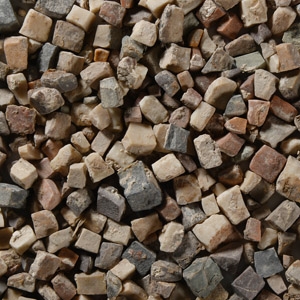
Roman Mosaic Stone Tesserae Group
1st-4th century A.D.Sold for (Inc. bp): £20
A mixed group of over hundred single tesserae of various colours and sizes. 130 grams total, 1-14 mm
Acquired 1980-2015. Ex Abelita family collection.
