
Loading, please wait...
LOT 0112
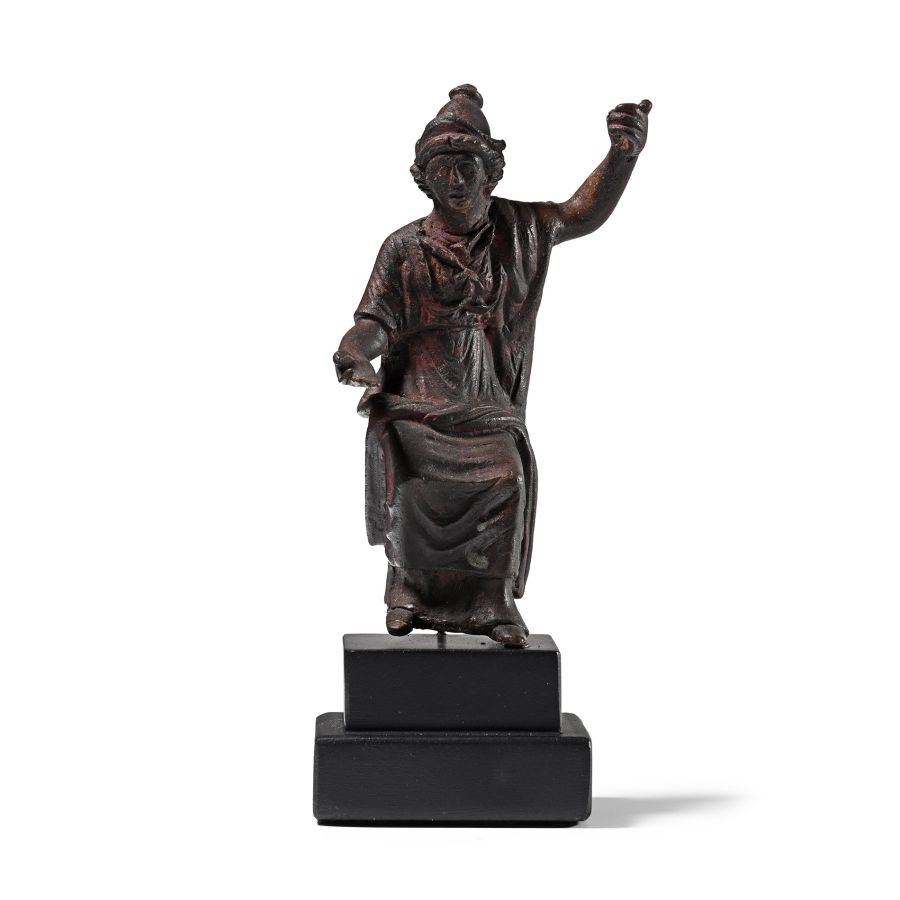
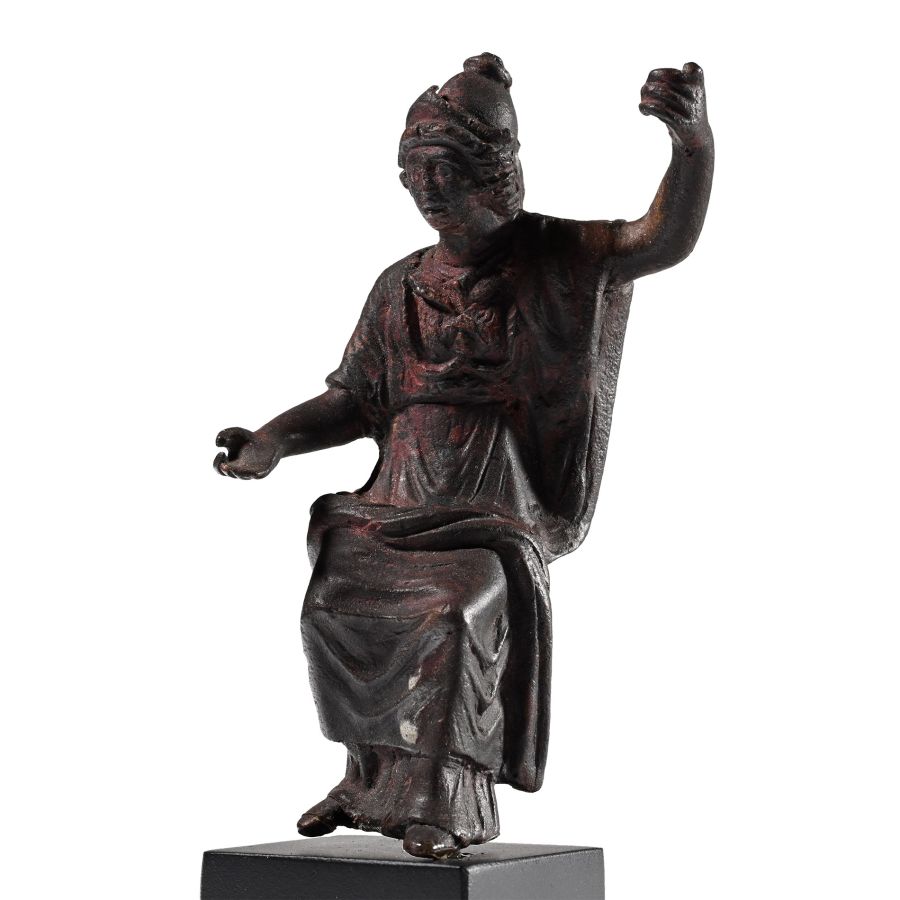
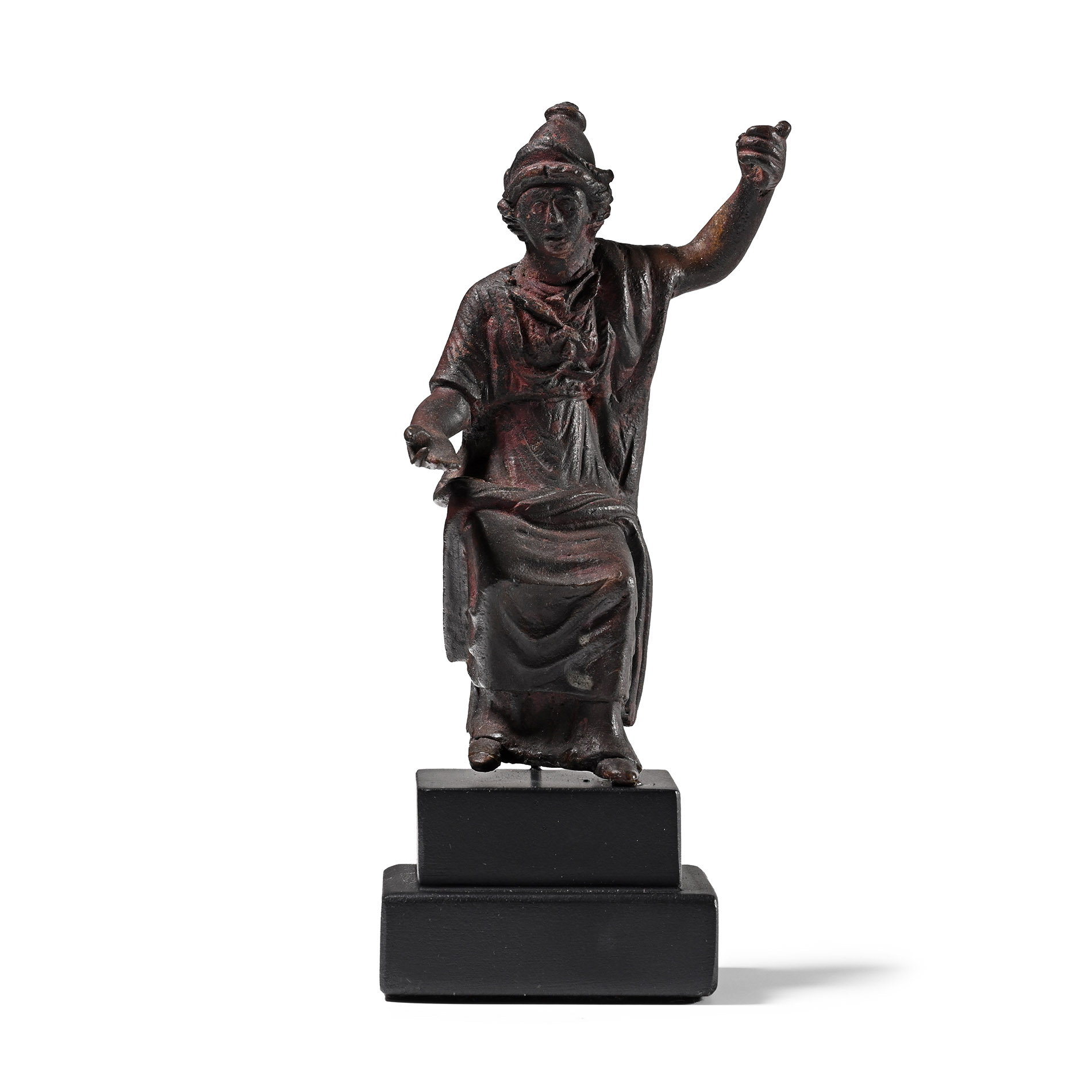
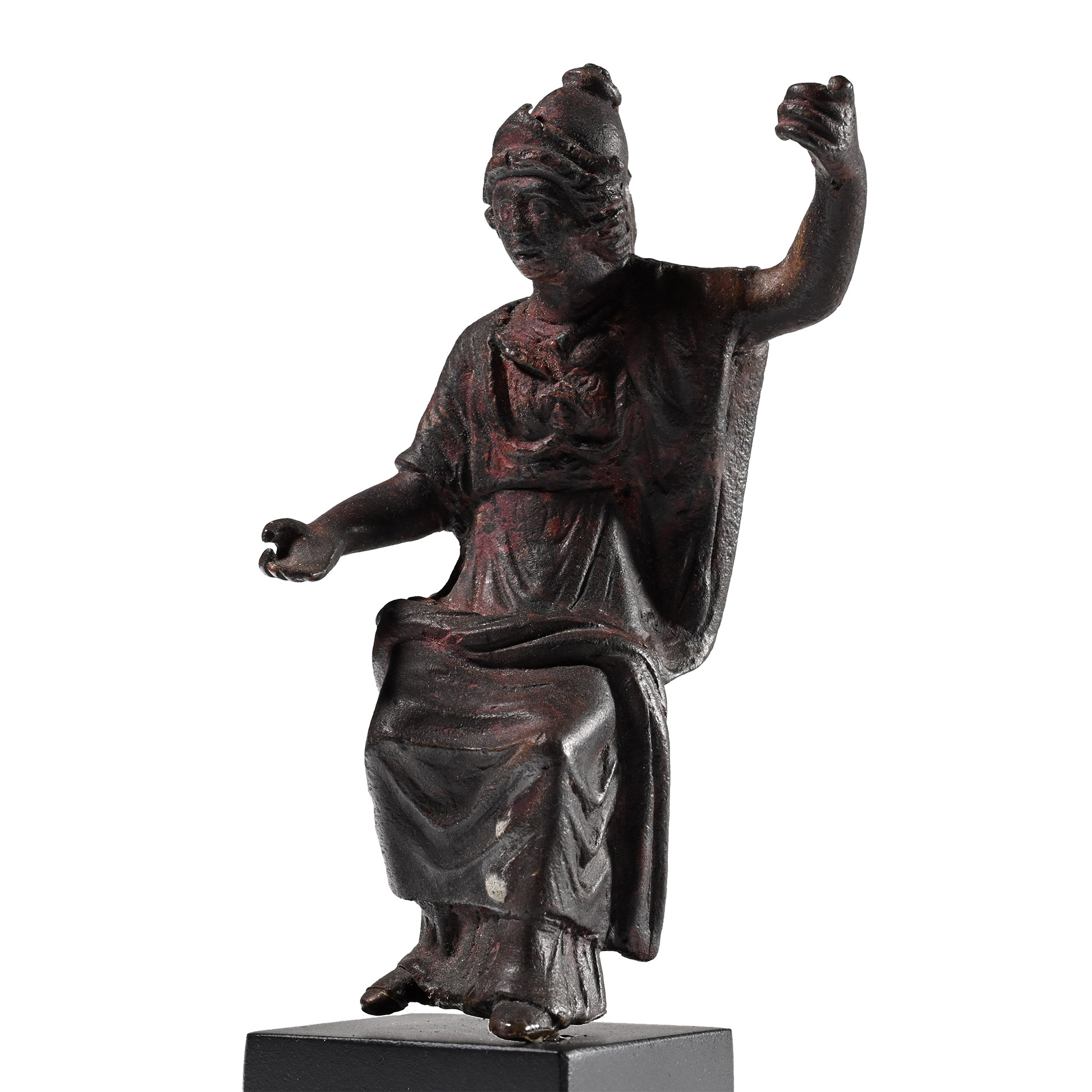
Roman Bronze Statuette of Minerva
2ND-3RD CENTURY A.D.
3 1/2 in. (717 grams total, 91 mm including stand).
Modelled in seated pose, wearing a stylised Corinthian helmet, breastplate with gorgoneion motif, draped stola; right hand extended to support a patera, left hand raised holding the shaft of a spear (absent); hollow to the reverse underside; repaired; mounted on a custom-made stand. [No Reserve]
ProvenanceFrom a collection acquired on the UK art market from various auction houses and collections mostly before 2000.
From an important Cambridgeshire estate; thence by descent.
Exhibited at the Harwich Museum, Harwich, Essex, UK, 19th June-9th September 2024; accompanied by a copy of a photograph of the artefacts on display.
LiteratureCf. Rolland, H., Bronzes Antiques de Haute Provence, Paris, 1965, item 67, for type.
CONDITIONTimeLine Auctions follows a vetting process to ensure the authenticity and legality of all items, reinforcing our commitment to integrity and responsible trading. Each antiquity, antique, and coin lot undergoes thorough examination by a vetting committee of at least ten external specialists, professional trade association members, scientists, and archaeologists: Our Vetting Process
AUCTIONS:
TimeLine is a leading auction house specialising in antiquities, ancient art, collectables, natural history, coins, medals, and books. Our auctions offer museums, collectors, historians, and enthusiasts the opportunity to acquire unique and historically significant pieces.
-
Roman Sheet-Gold Phalera Cover with Imperial Bust
4th-6th century A.D.Sold for (Inc. bp): £338
Discoid ornamental appliqué with raised border enclosing an imperial bust in profile, shown bearded and wearing a diadem and a military cloak. 4.78 grams, 64 mm
Acquired in the early 1990s. From the collection of a London antiquarian. Accompanied by an academic report by Dr Raffaele D'Amato.
The subject is represented as an Imperator or a field general, recalling the image of a victorious emperor. Such iconography was widely in use in the late Roman Empire, and even adopted on the coins of Gothic rulers of Ostrogothic Italy. -
Roman to Medieval Bronze Ring Collection
1st-16th century A.D.Sold for (Inc. bp): £143
Including a broad hoop type with flared rims, a wire type with coils, an ellipsoid bezel type with low-relief horse and others. 30.9 grams total, 20-26 mm
UK private collection before 2000. Acquired on the UK art market. Property of a London gentleman. -
.jpg)
Large Transparent Roman Glass Bottle
2nd-4th century A.D.Sold for (Inc. bp): £624
With large piriform body and dimpled base; funicular, waisted neck and rolled rim. 85 grams, 19 cm high
Acquired in the 1970s, thence by descent 2012. Private UK collection, Cambridge, UK. Property of an East Sussex, UK, gentleman.
