
Loading, please wait...
LOT 0134
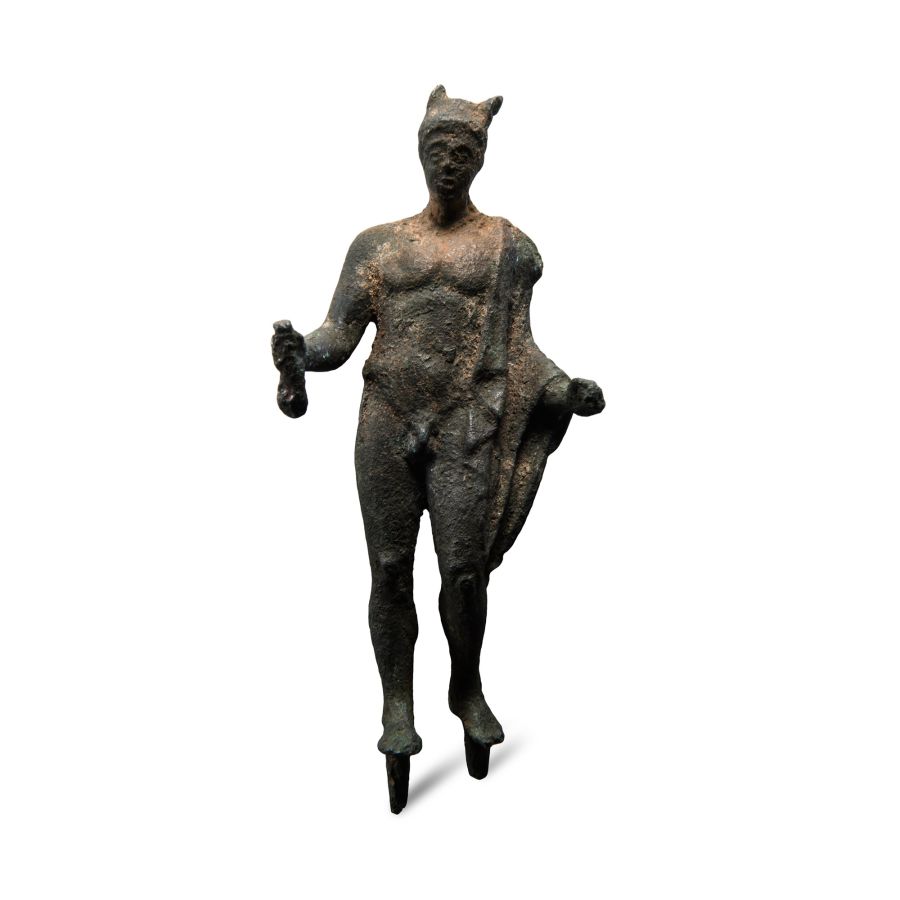
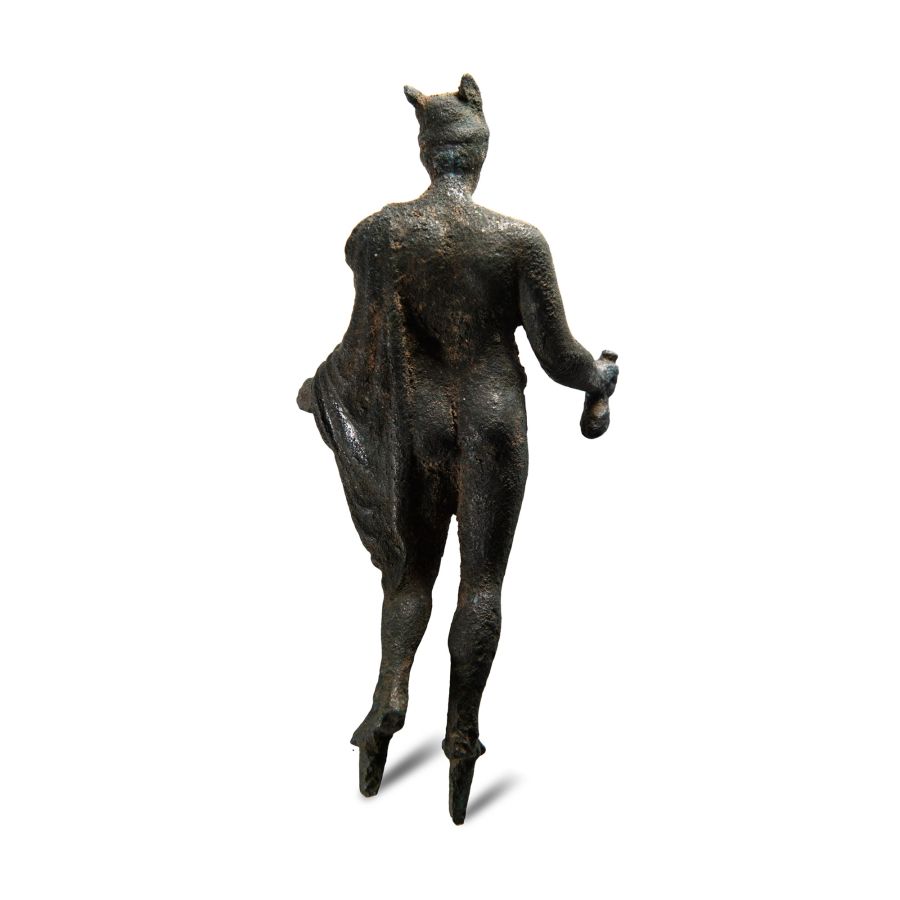
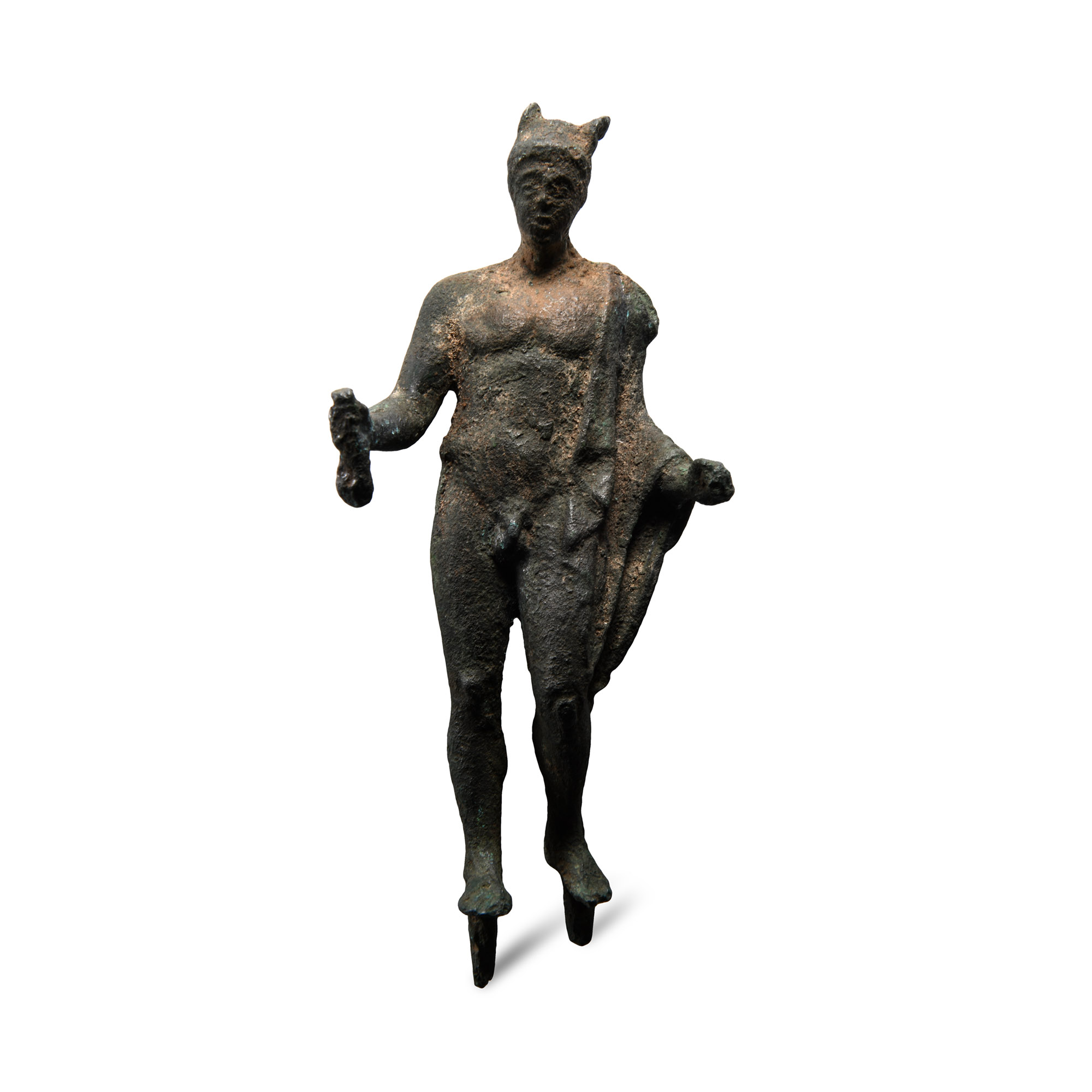
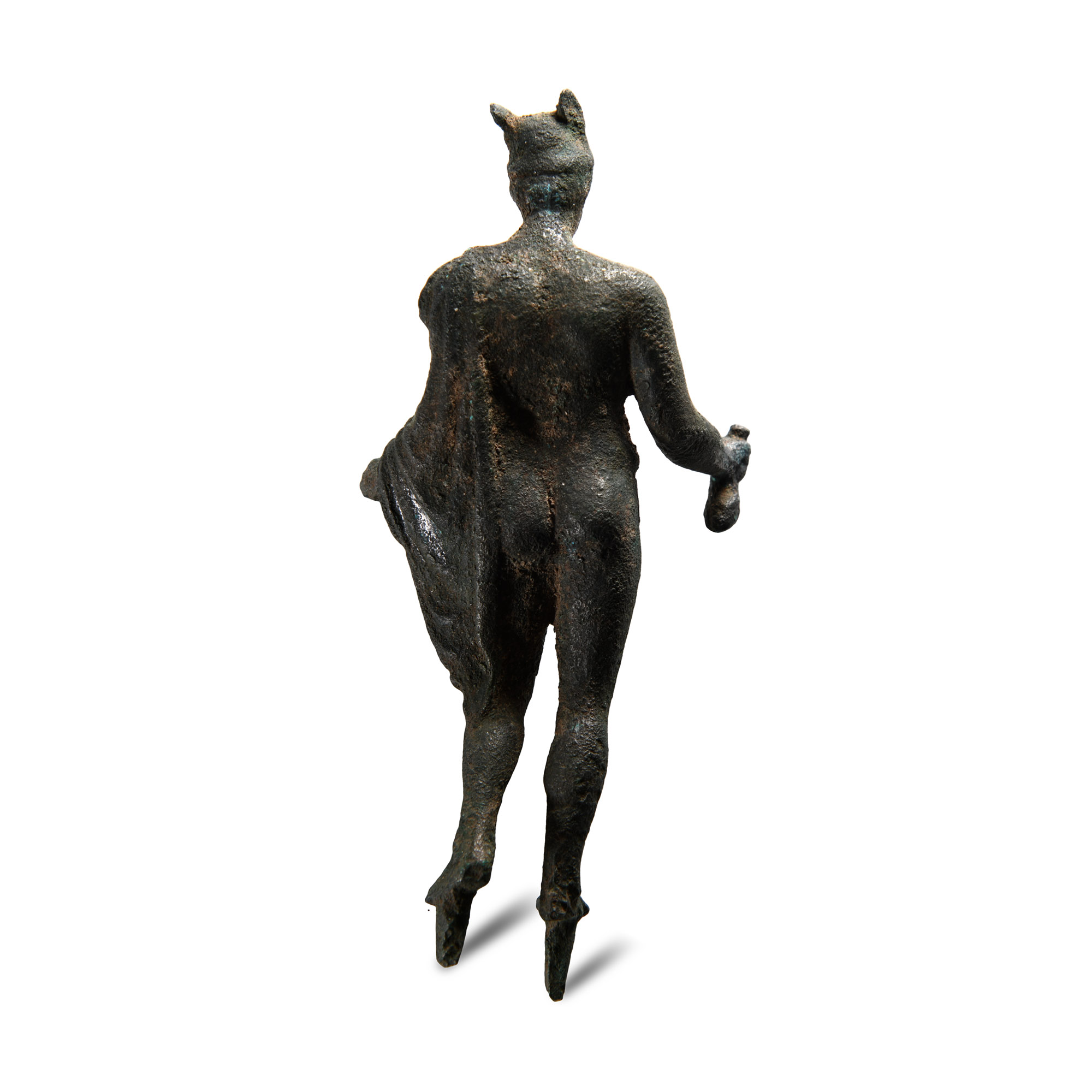
Roman Bronze Statuette of Mercury
1ST-2ND CENTURY A.D.
5 in. (209 grams, 12.6 cm).
Modelled standing nude wearing the winged petasos and with a bag of coins in his extended right hand, mantle over his left shoulder; attachment peg to the underside of each foot.
ProvenanceEnglish private collection.
LiteratureCf. Rolland, H., Bronzes Antiques de Haute Provence, Paris, 1965, item 27, for type.
CONDITIONTimeLine Auctions follows a vetting process to ensure the authenticity and legality of all items, reinforcing our commitment to integrity and responsible trading. Each antiquity, antique, and coin lot undergoes thorough examination by a vetting committee of at least ten external specialists, professional trade association members, scientists, and archaeologists: Our Vetting Process
AUCTIONS:
TimeLine is a leading auction house specialising in antiquities, ancient art, collectables, natural history, coins, medals, and books. Our auctions offer museums, collectors, historians, and enthusiasts the opportunity to acquire unique and historically significant pieces.
LOT 0134
Roman Bronze Statuette of Mercury
Estimate £700 - 900€810 - 1,040 (for guidance only)$950 - 1,220 (for guidance only)
-
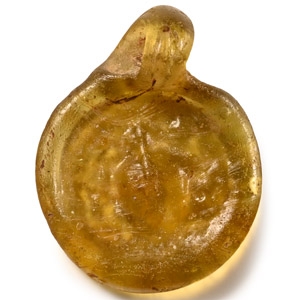
Late Roman Glass Frog Pendant
Mid 5th-6th century A.D.Sold for (Inc. bp): £117
Discoid with integral loop, impressed image of a frog in plan. 1.86 grams, 24 mm
Collected from 1970-1999. From the collection of the late Mr S.M., London, UK. -
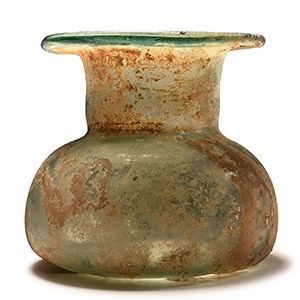
Roman Glass Candlestick Bottle
1st century B.C.-2nd century A.D.Sold for (Inc. bp): £221
A bulbous light blue bottle with dimpled base, wide neck and flared rim. 130 grams, 87 mm
Ex London, UK, collection, 1980-1990s.
A similar vessel was found in the cave 19-4 of Zikhron Yosef at Jerusalem. The shape suggests its use as candlestick or short jar. Small globular bottles, piriform bottles, or small bottles with long, narrow necks (today called candlestick bottles) held perfumes or other precious oils and replicated the shapes found in pottery, alabaster, and stone. -
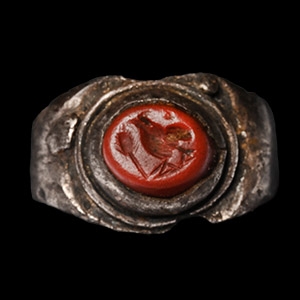
Roman Silver Ring with Cockerel Gemstone
2nd-3rd century A.D.Sold for (Inc. bp): £312
With broad hoop, plaque with cell and applied wire collar, inset jasper cabochon with intaglio bird and teasel motif. 4.58 grams, 20.55 mm overall, 17.07 mm internal diameter (approximate size British K, USA 5 1/4, Europe 9.95, Japan 9)
UK private collection before 2000. Acquired on the UK art market. Property of a London gentleman.
