
Loading, please wait...

LOT 0118
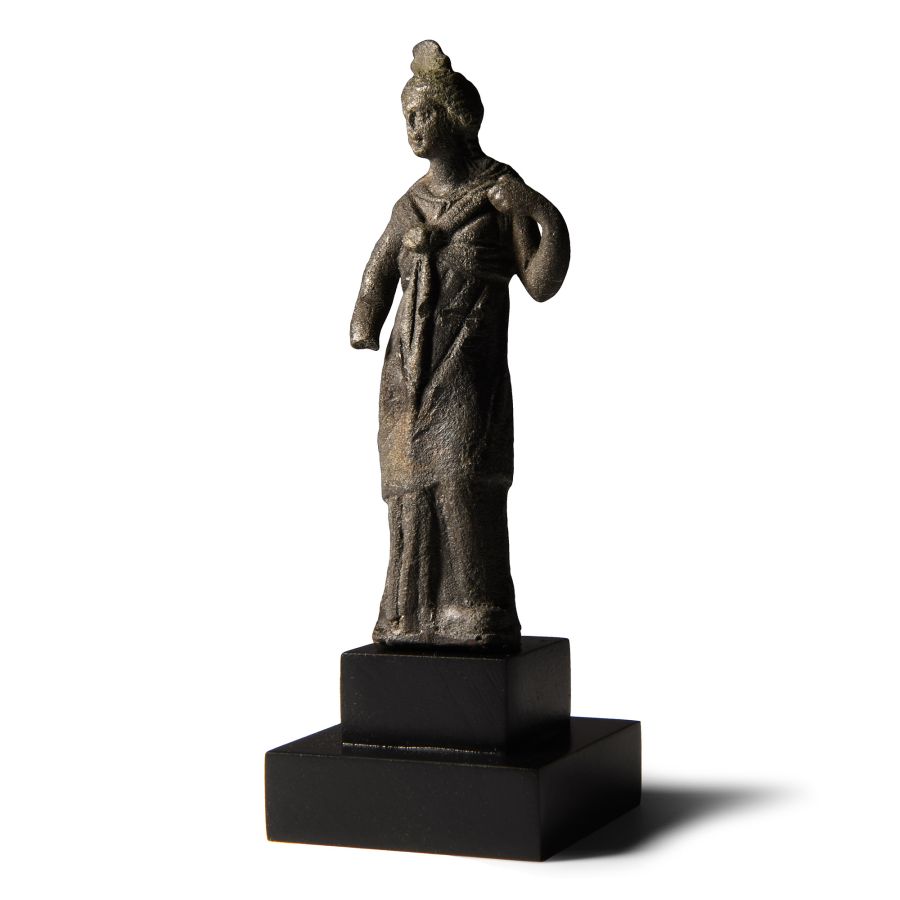
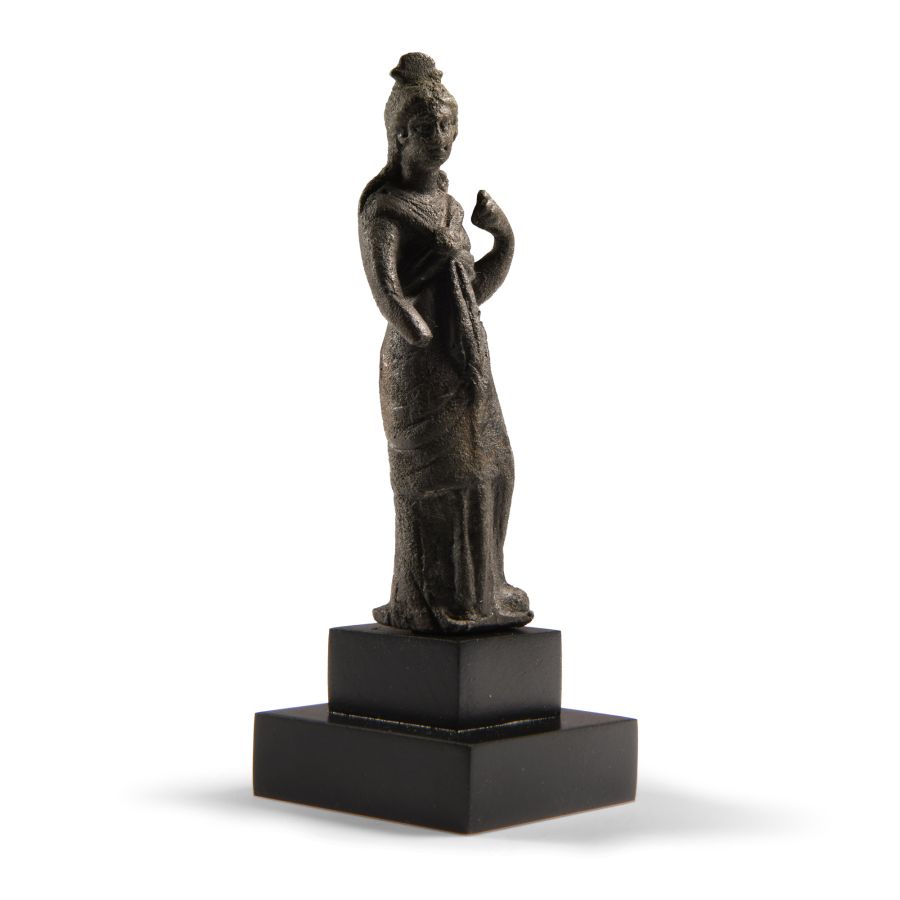
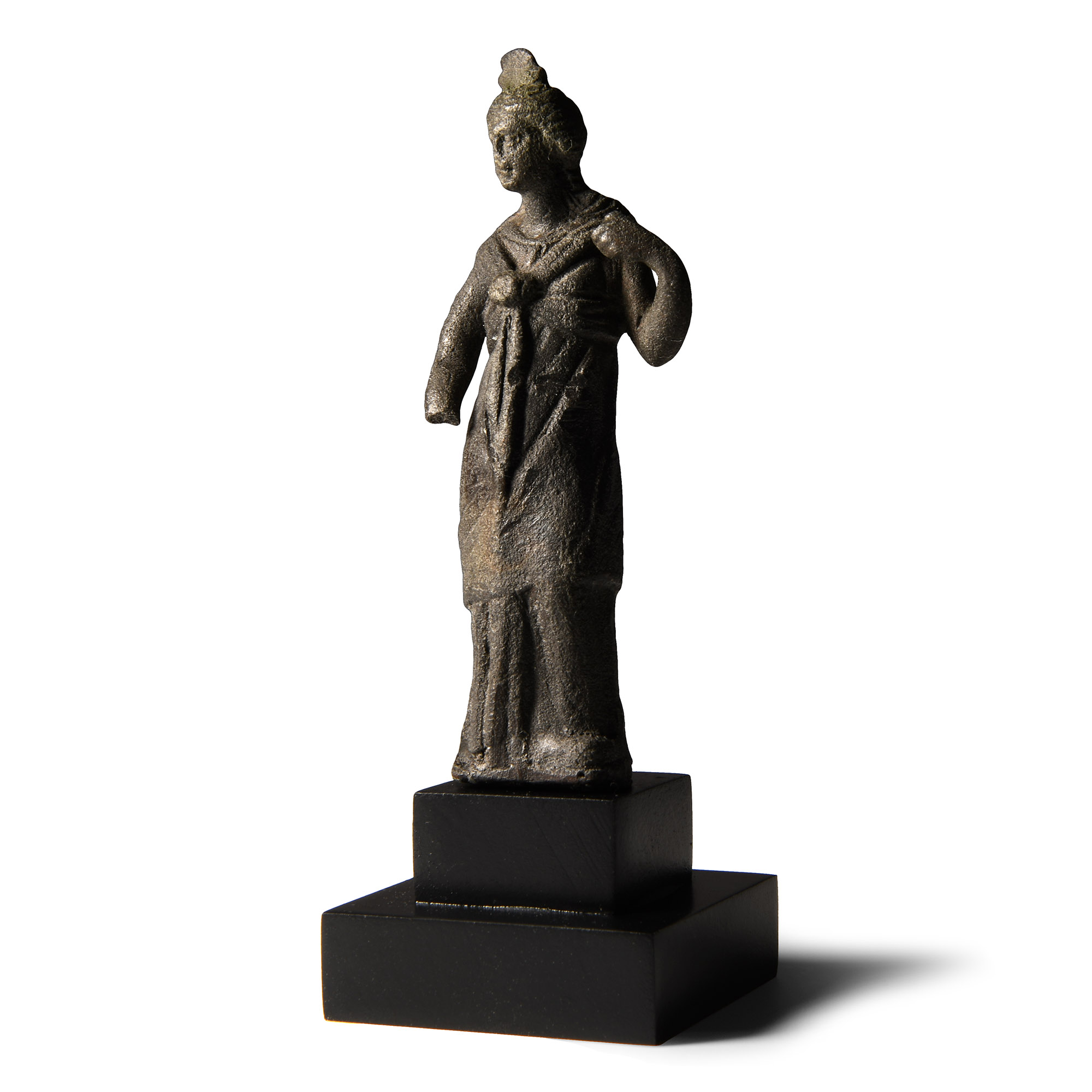
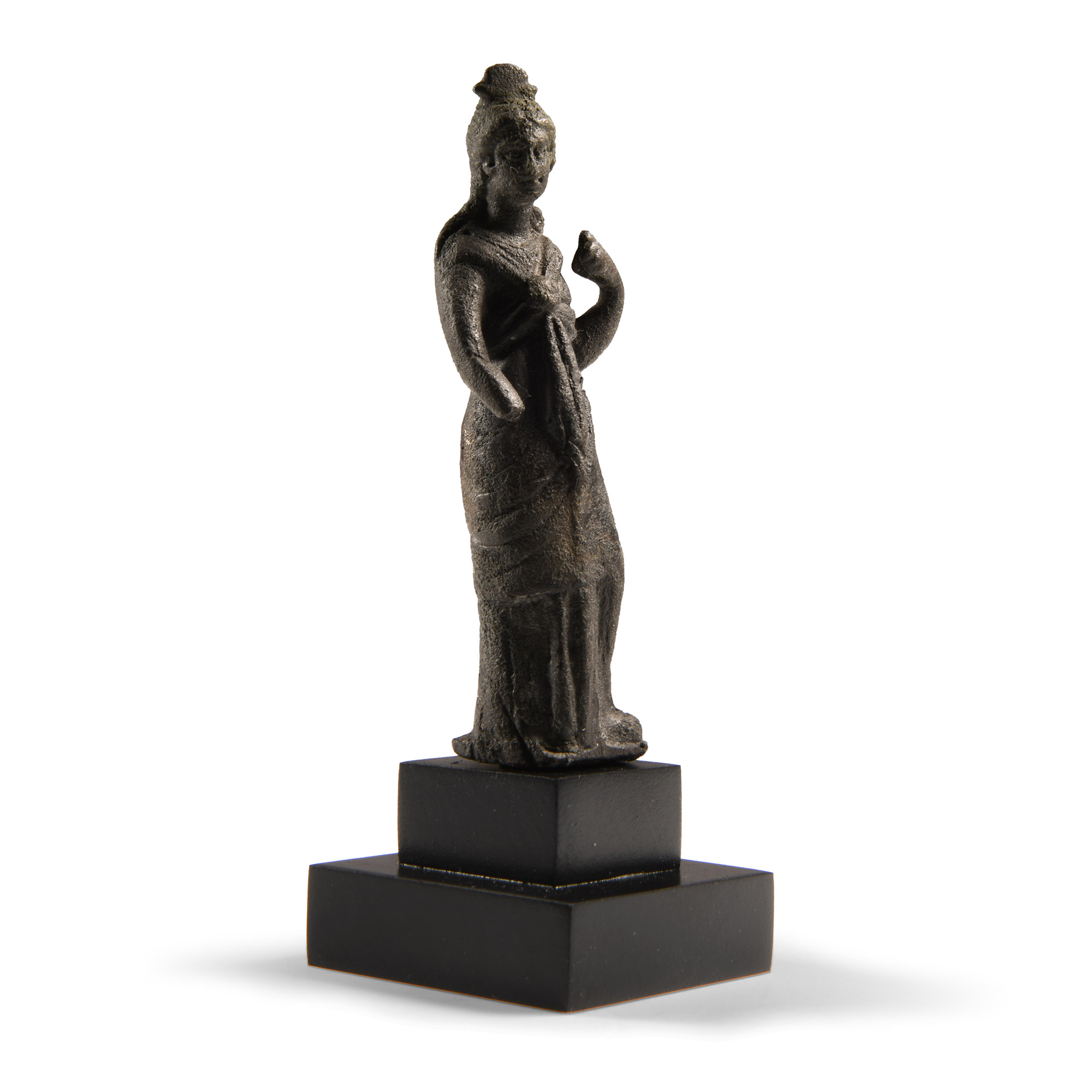
Roman Bronze Statuette of Isis
1ST-3RD CENTURY A.D.
5 1/4 in. (280 grams total, 13.3 cm including stand).
The goddess standing, wearing an Ionic chiton and himation secured by a characteristic knot tied between her breasts, the folds cascading to the floor; her left hand modelled open and held above her breast; her centre-parted wavy locks fastened with a band, pulled back in a chignon at the nape of her neck and surmounted by a hair-comb; mounted on a custom-made display stand. [No Reserve]
ProvenanceFrom a collection acquired on the UK art market from various auction houses and collections mostly before 2000.
From an important Cambridgeshire estate; thence by descent.
Cf. Boucher, S., Tassinari, S., Bronze Antiques du Musée de la civilisation Gallo-Romaine a Lyon, 1. Inscriptions, Statuaire, Vaisselle, Lyon, 1976, nos.20-21,38 (Fortuna and Isis-Fortuna); also Descamps-Lequime, S, 'Acquisitions' in La Revue des musées de France. Revue du Louvre, 2, 2016, p.91, fig. 109, no.109, Louvre inventory Br 6045.
FootnotesStatuettes of Fortuna, the goddess of chance, were evidently popular during the Roman Imperial times judging by the large number that have been found, and with the advent of the cult of Isis within the Roman Empire, the two divinities were identified as a single goddess.
CONDITIONTimeLine Auctions follows a vetting process to ensure the authenticity and legality of all items, reinforcing our commitment to integrity and responsible trading. Each antiquity, antique, and coin lot undergoes thorough examination by a vetting committee of at least ten external specialists, professional trade association members, scientists, and archaeologists: Our Vetting Process
AUCTIONS:
TimeLine is a leading auction house specialising in antiquities, ancient art, collectables, natural history, coins, medals, and books. Our auctions offer museums, collectors, historians, and enthusiasts the opportunity to acquire unique and historically significant pieces.
-
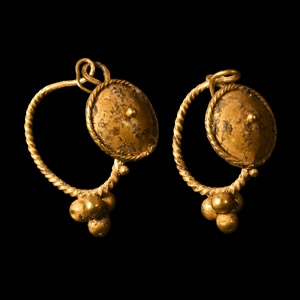
Roman Gold Earring Pair with Bosses
Circa 1st-2nd century A.D.Sold for (Inc. bp): £442
Comprising a matched pair of delicate earrings, each with a large circular boss with a central granule and fine filigree surrounding the perimeter, pyramidal cluster of granules to the base; twisted hook with a hook-and-loop closure. 1.01 grams total, 20 mm
From the collection of a London lady, UK. Accompanied by an old collection ticket. -
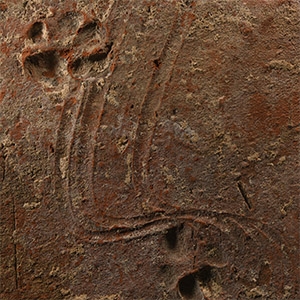
Romano-British 'Lympne Castle Roman Fort' Terracotta Tile with Roman Dog Pawprints
3rd-4th century A.D.Sold for (Inc. bp): £468
Substantial tegula with pawprints from a dog; with old collector's note. 3.28 kg, 23.5 x 24 cm
Found Lympne Castle, Kent, UK. From the collection of a late East Anglian teacher and antiquarian who retired to the Isle of Wight, UK. He amassed a large collection of objects between the 1960s-1980s. Accompanied by an original old collection display card.
Lympne Castle was built close to the former Roman fort of Portus Lemanis, incorporating curated elements from the ruins of the fort. The Roman structure formed part of the Litus Saxonicum ('Saxon Shore') a series of coastal fortifications erected in the 3rd century to deter raiding from the coastlands across the North sea. -
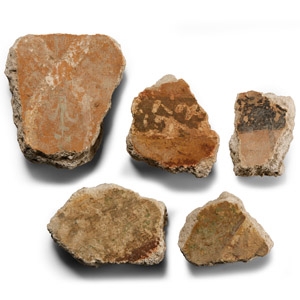
Roman Fresco Wall Plaster Collection
1st century A.D.Sold for (Inc. bp): £111
Fragments of wall plaster with rendered surface painted red with white detailing to the edge; impression of timber laths to the reverse. 598 grams total, 66-98 mm
Acquired in the 19th century. Ex Jeger collection, Switzerland.
These small fragments seem to belong to the second style of Roman painting, red panels representing highlight and shadow, decorated with vegetal interlaces. Some panels were probably framed by a red grenade fillet. A fragment shows alternate blue and red colour over a cream background, maybe pertinent to a socle.
