
Loading, please wait...


LOT 0115
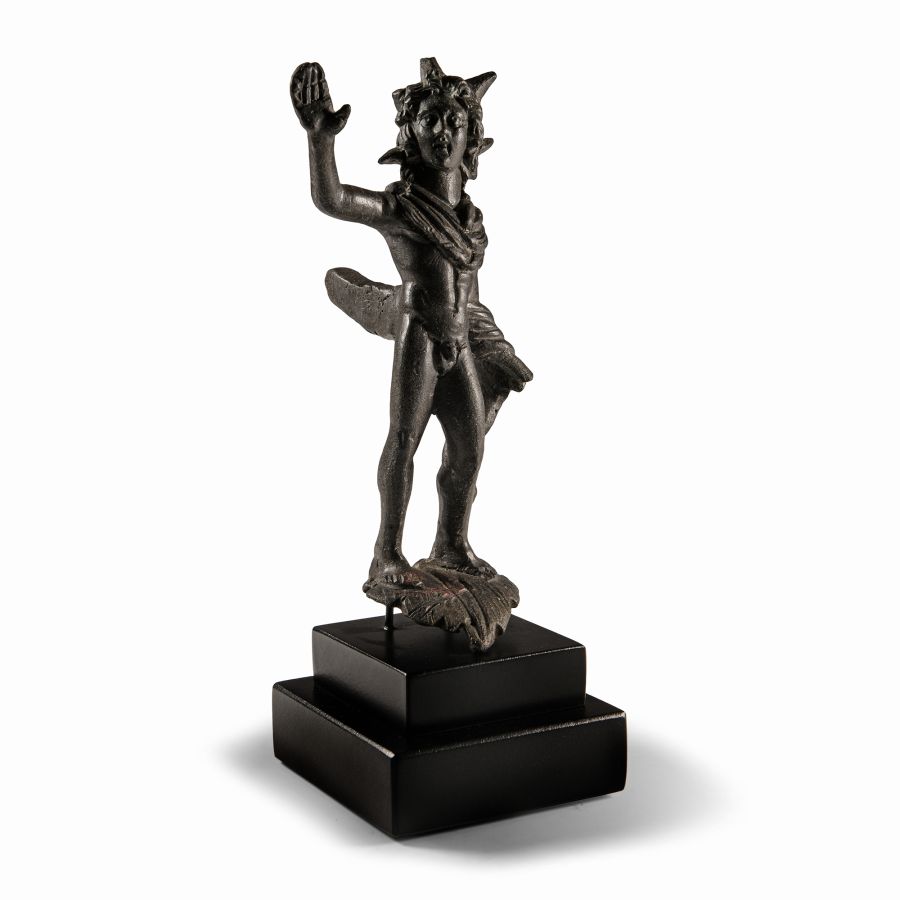
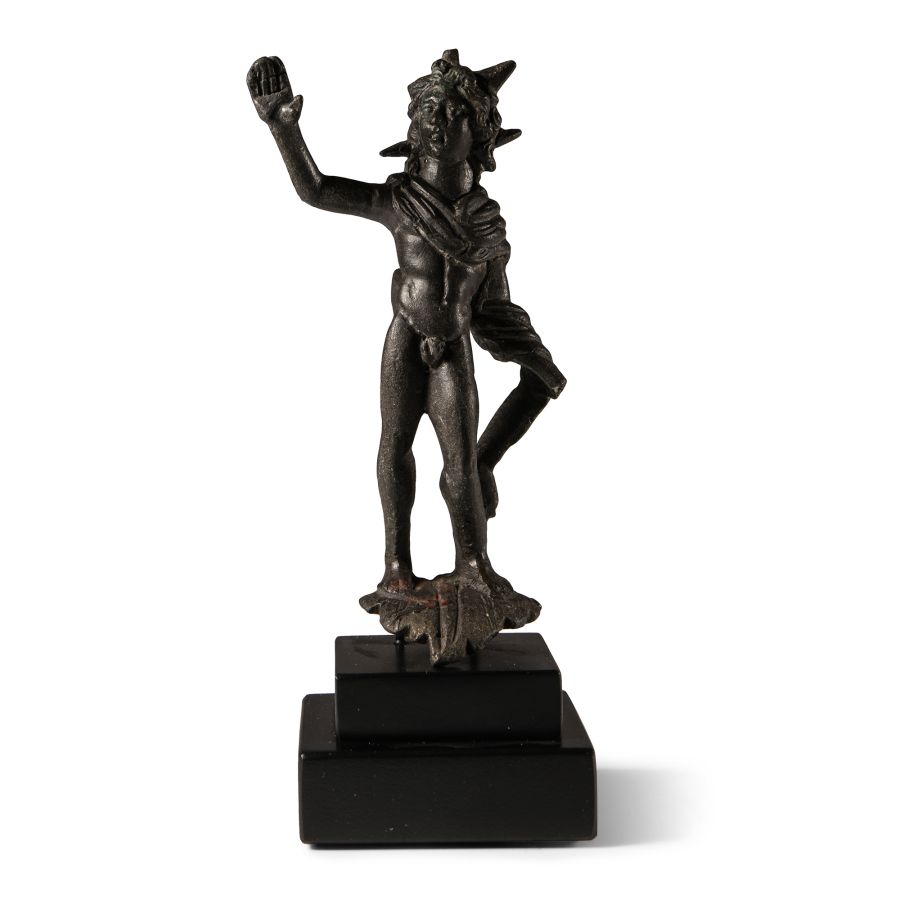
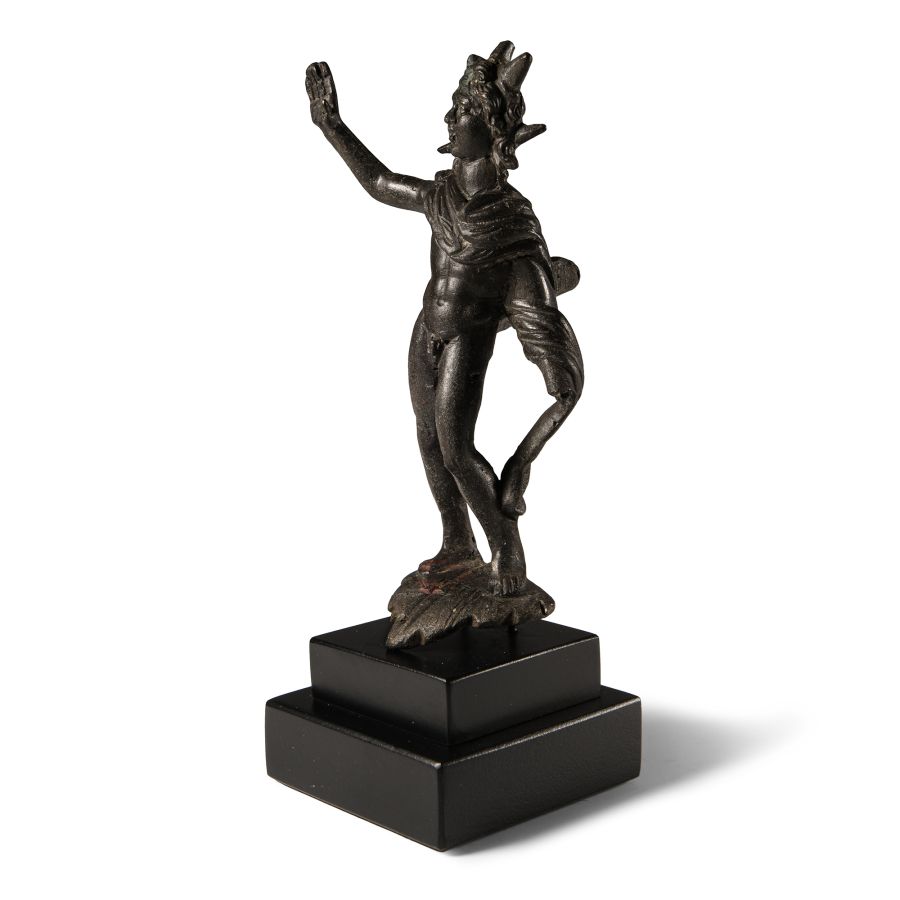
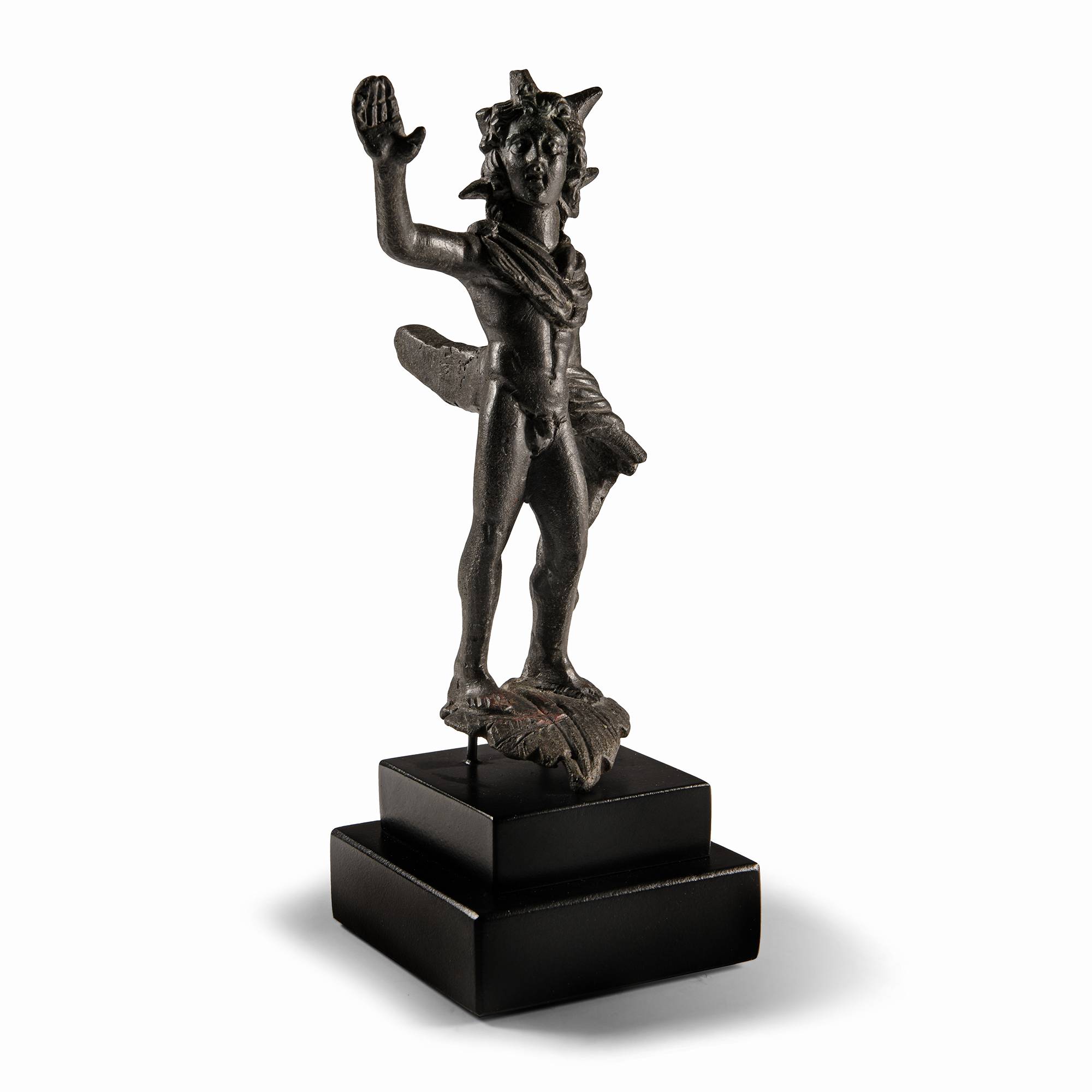
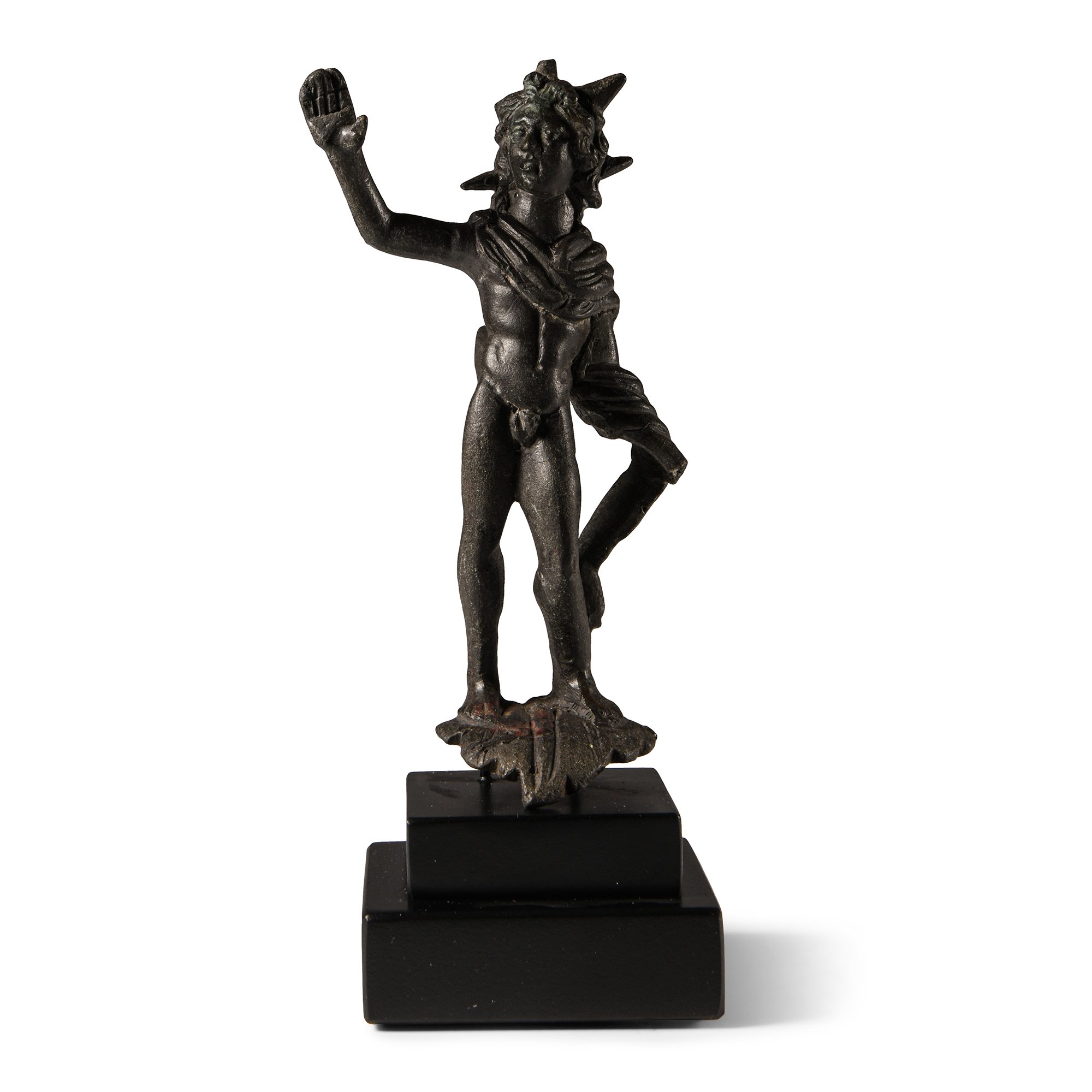
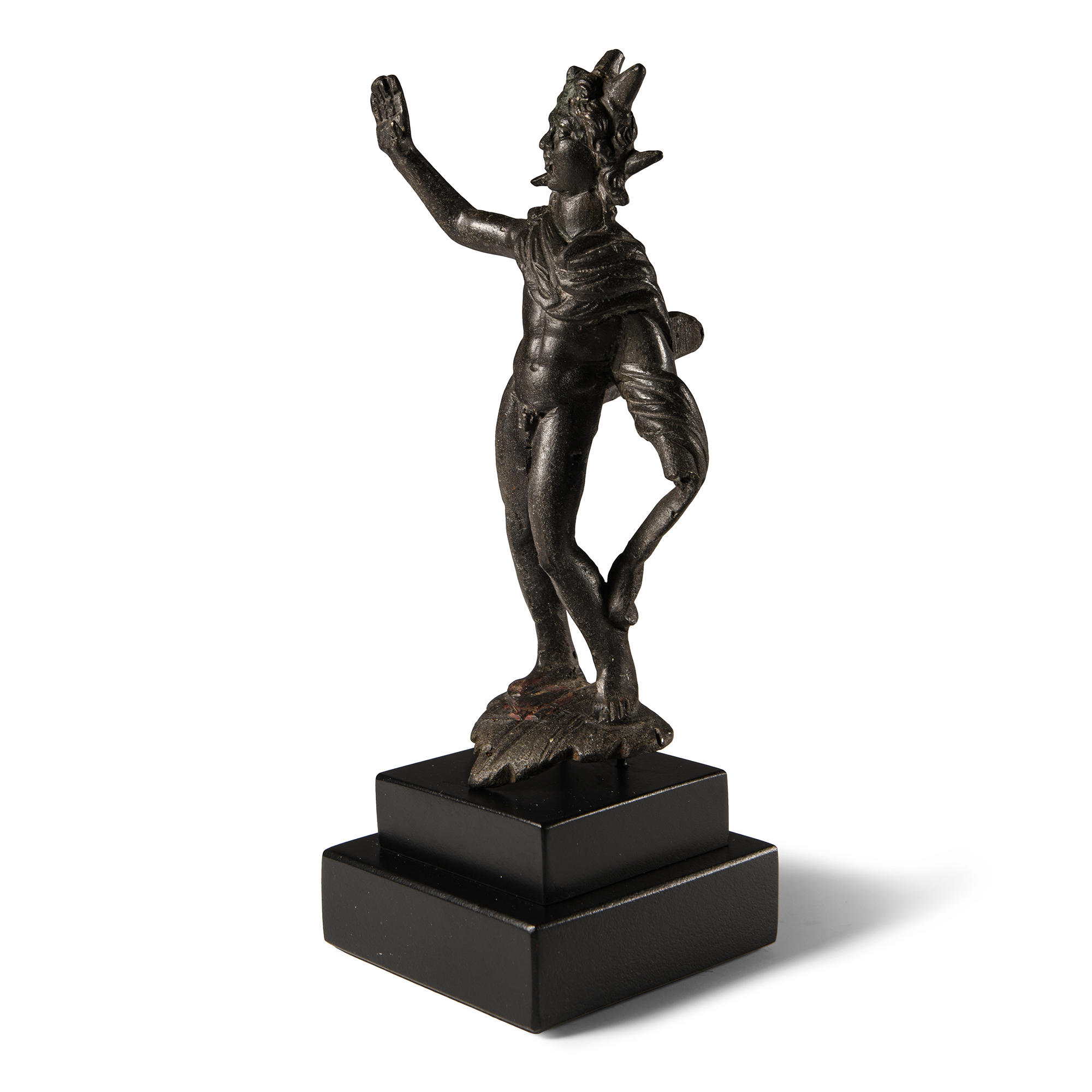
Roman Bronze Statuette of Helios-Alexander
2ND-3RD CENTURY A.D.
6 1/8 in. (583 grams total, 17.5 cm including stand).
The god standing nude on an ivy-leaf base in contrapposto pose with right arm extended and hand held palm-outwards; mantle pinned at the right shoulder and wrapped around the bent left arm; the head held erect with soft rounded facial features and luxuriant curls, diadem with radiating spikes representing beams of light; mounting stud to the reverse; mounted on a custom-made display stand. [No Reserve]
ProvenanceFrom a collection acquired on the UK art market from various auction houses and collections mostly before 2000.
From an important Cambridgeshire estate; thence by descent.
Exhibited at Harwich Museum, Harwich, Essex, UK, 14th March-9th June 2024; accompanied by a copy of a photograph of the artefact on display.
LiteratureCf. Durham, E., Metal Figurines in Roman Britain, vol. 2, Reading, 2010, pl.60, for a full-length figure from Lakenheath, England, with similar features; cf. also De Ridder, A., Les bronzes antiques du Louvre, 1, Les figurines, Paris, 1913, p.129, pl.62, no.1059, for identical.
FootnotesThe cult of Helios-Apollo intensified in the third century A.D. and the adoration of Sol Invictus, with the radiate crown, was often linked to that of Mithras, the god of legions, whose symbol was the bull. Under Emperor Aurelian, the Sol Invictus became the main god, protector of Rome and the Roman state.
CONDITIONTimeLine Auctions follows a vetting process to ensure the authenticity and legality of all items, reinforcing our commitment to integrity and responsible trading. Each antiquity, antique, and coin lot undergoes thorough examination by a vetting committee of at least ten external specialists, professional trade association members, scientists, and archaeologists: Our Vetting Process
AUCTIONS:
TimeLine is a leading auction house specialising in antiquities, ancient art, collectables, natural history, coins, medals, and books. Our auctions offer museums, collectors, historians, and enthusiasts the opportunity to acquire unique and historically significant pieces.
-
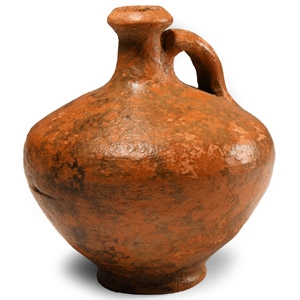
Roman Terracotta Wine Flagon
1st-4th century A.D.Sold for (Inc. bp): £117
Of squat profile with narrow flared foot, broad shoulder, single strap handle and trumpet-shaped mouth. 202 grams, 11 cm high
Ex German art market, 2000s. Acquired from an EU collector living in London. From the collection of Surrey, UK, gentleman. -
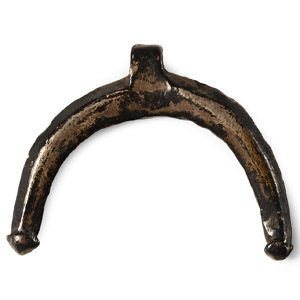
Roman Silver Lunar Pendant
1st-4rd century A.D.Sold for (Inc. bp): £59
Square-section crescent with suspension loop to the apex, bulb finials. 2.84 grams, 27 mm
From the collection of C. Sullivan, London, UK, 1990s. -
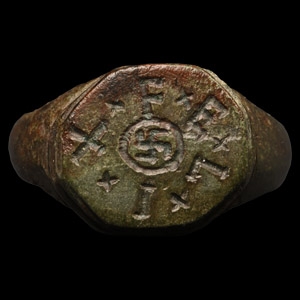
Roman Bronze Ring with FELIX and Gammadion
4th-5th century A.D.Sold for (Inc. bp): £260
Tiered disc bezel with central gammadion within a ring, surrounded by '+F+E+L+I+X' legend (in Latin, 'happy' or 'fortunate'). 8.11 grams, 24.40 mm overall, 18.18 mm internal diameter (approximate size British P 1/2, USA 7 3/4, Europe 16.86, Japan 16)
Ex German art market, 2000s. Acquired from an EU collector living in London. From the collection of Surrey, UK, gentleman.
The ring was probably a gift to wish happiness and good luck, the inscription being a short form of 'utere felix'.
