
Loading, please wait...

LOT 0140
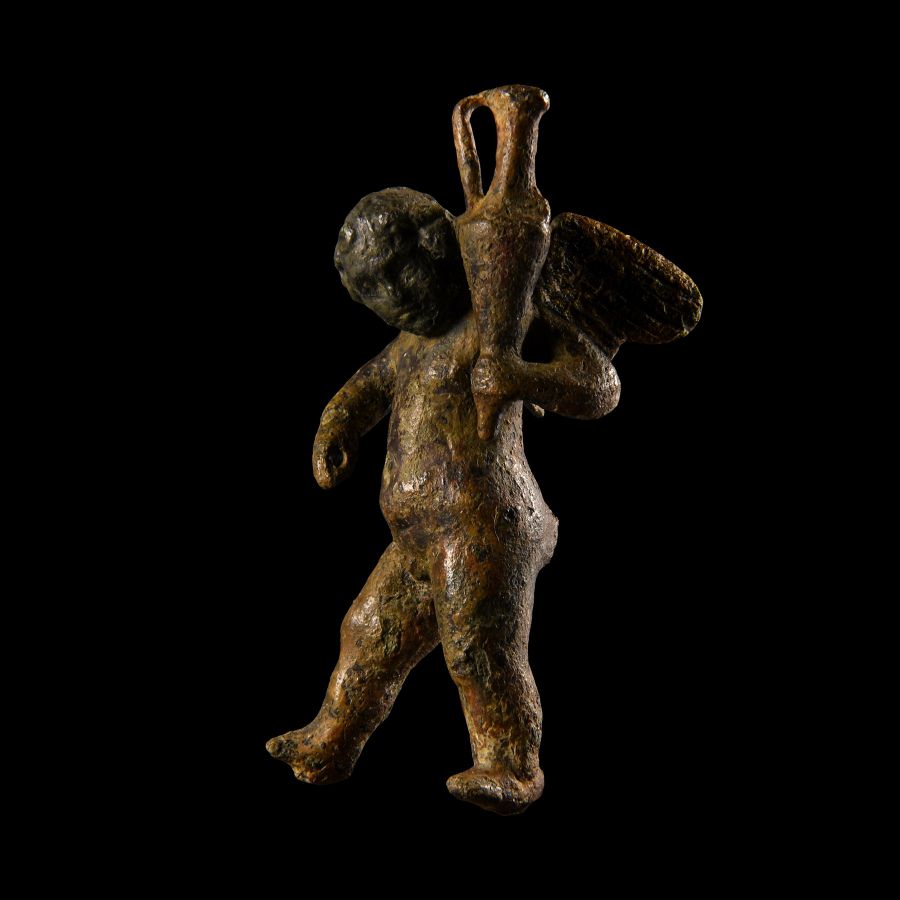
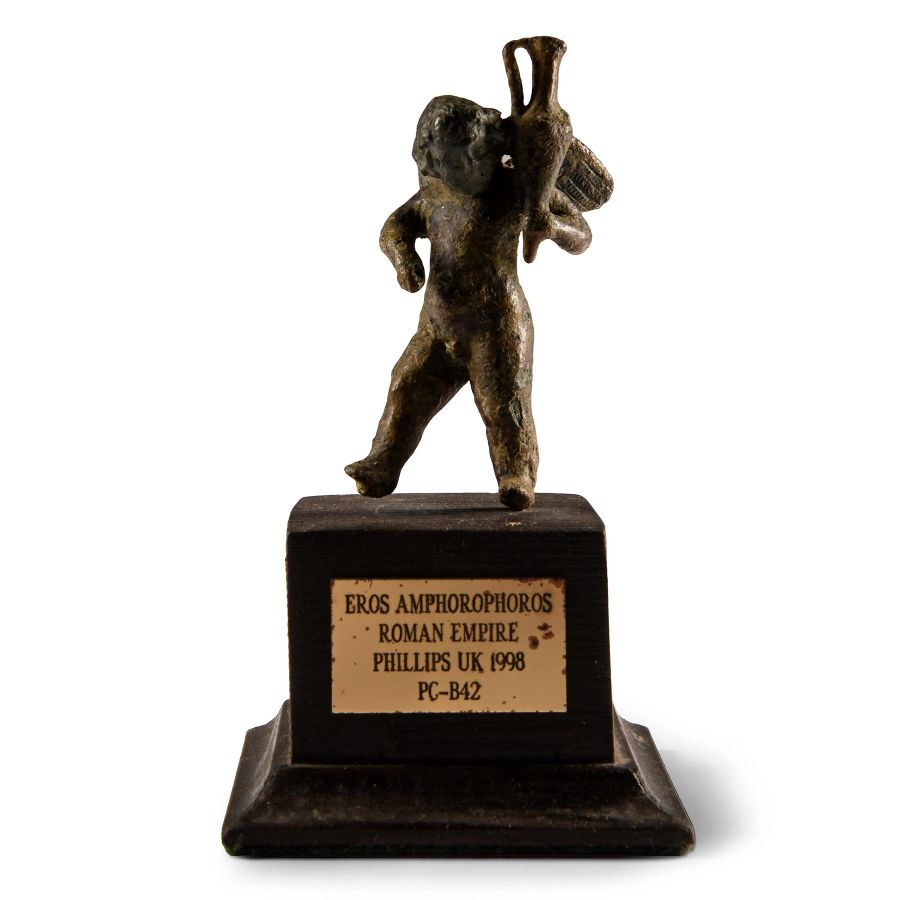
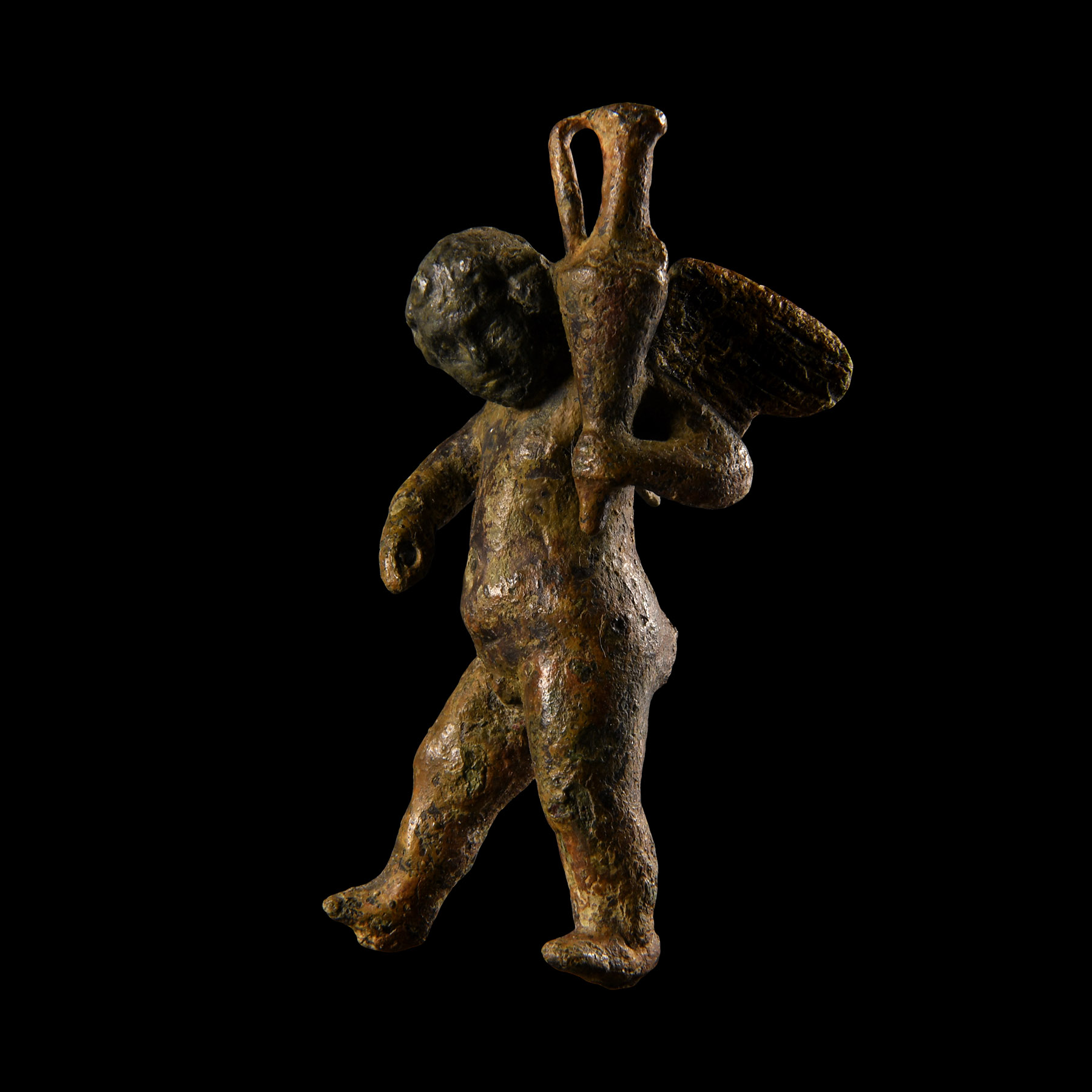
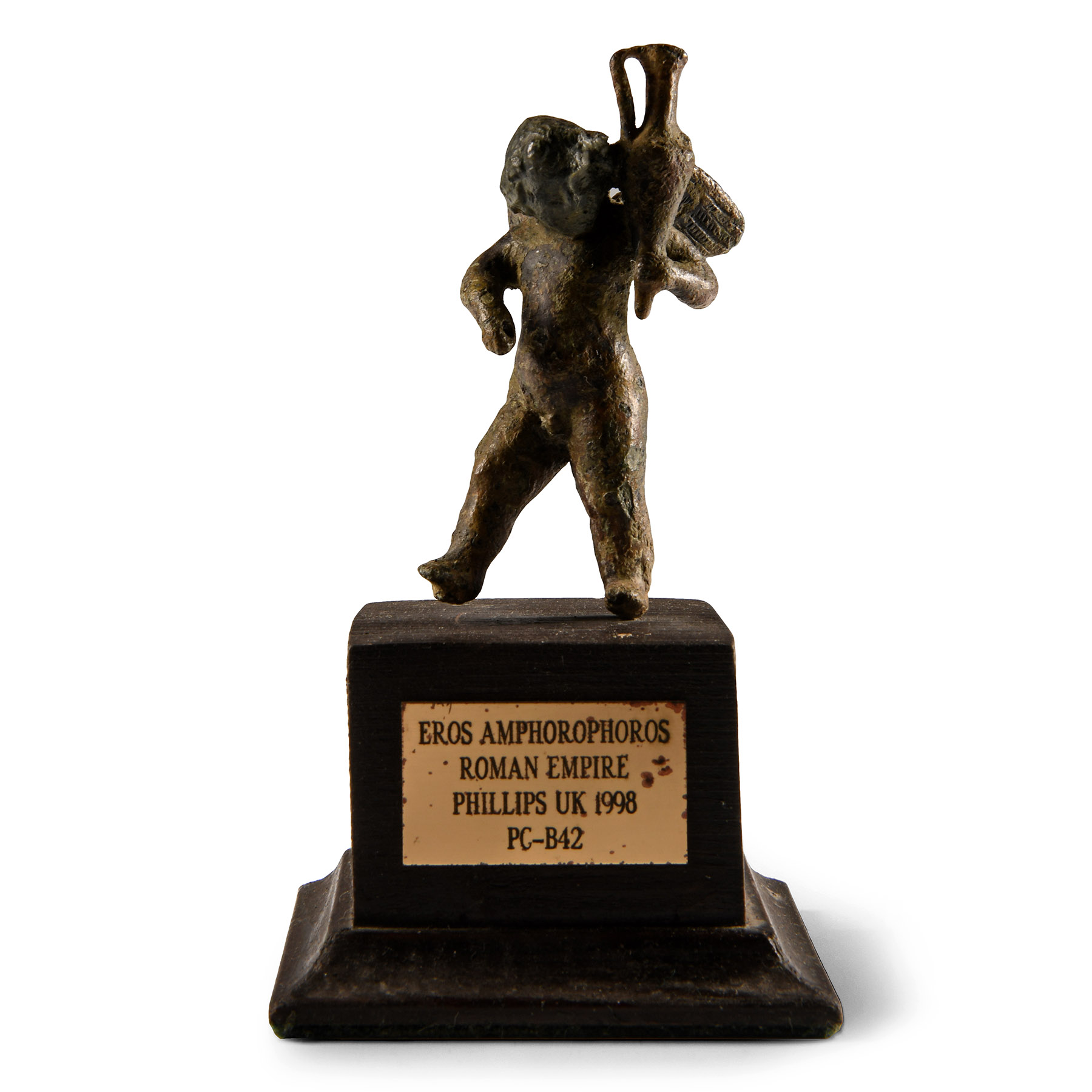
Roman Bronze Statuette of Eros
CIRCA 1ST-2ND CENTURY A.D.
2 in. (160 grams total, 12.5 cm including stnad).
Eros modelled in the round, advancing, carrying an amphora on his left shoulder, wings spread to the rear, right hand open to accept a bow(?); mounted on a custom-made stand with brass nameplate. [No Reserve]
ProvenanceEx Phillips UK in 1998.
From a collection acquired on the UK art market from various auction houses and collections mostly before 2000.
From an important Cambridgeshire estate; thence by descent.
Cf. Durham, E., Metal Figurines in Roman Britain, vol. 2, Reading, 2010, pl.44, for type.
CONDITIONTimeLine Auctions follows a vetting process to ensure the authenticity and legality of all items, reinforcing our commitment to integrity and responsible trading. Each antiquity, antique, and coin lot undergoes thorough examination by a vetting committee of at least ten external specialists, professional trade association members, scientists, and archaeologists: Our Vetting Process
AUCTIONS:
TimeLine is a leading auction house specialising in antiquities, ancient art, collectables, natural history, coins, medals, and books. Our auctions offer museums, collectors, historians, and enthusiasts the opportunity to acquire unique and historically significant pieces.
-
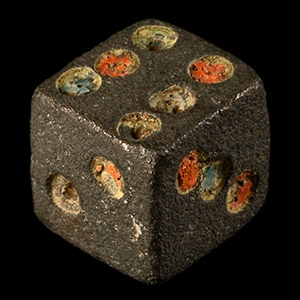
Romano-British Enamelled 'Gloucester' Bronze Gaming Dice
Circa 2nd century A.D.Sold for (Inc. bp): £598
Cuboid with enamel-filled spots disposed 1:6, 2:5, 3:4. 9 grams, 10.7 mm
Found at Gloucester, UK. Ex N. Du Quesne Bird collection. From the important private collection of dice and gaming pieces of Colin Narbeth, London, UK, collection no.23. Accompanied by a Colin Narbeth catalogue identification card. -
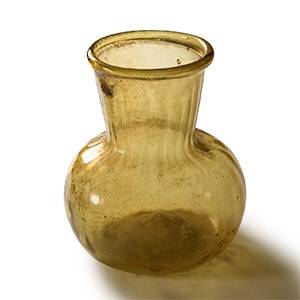
Roman Ribbed Glass Vessel
3rd-4th century A.D.Sold for (Inc. bp): £195
With globular body, vertical ribbing, broad funicular mouth with rounded rim. 33 grams, 62 mm
Acquired 1980-2015. Ex Abelita family collection. -
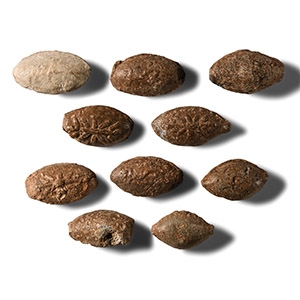
Roman Lead Sling Shot Projectile Collection
1st century B.C.-2nd century A.D.Sold for (Inc. bp): £585
Comprising ten lentoid-section glandes, five with impressed stylised 'fulmen' (thunderbolt) of Jupiter. 384 grams total, 18-36 mm
Acquired in Europe in 1990. European private collection.
The missiles of ovoid shape belong to type Ia of the Völling classification. The sling (funda) with its lead missiles (plumbea pondera or glandae) and stone (lapides) was used by special funditores, illustrated on Trajan’s Column where they are simply dressed in broad tunics with no armour, but carry a shield. A fold in their cloak, or sagulum, acted as an ammunition bag. The effectiveness of the slingers was unquestionable and much appreciated, especially against elephants. Celsus, writing towards the end of the 2nd century A.D., described how a slingshot wound was more dangerous and harder to treat than one inflicted by an arrow.
