
Loading, please wait...
LOT 0831
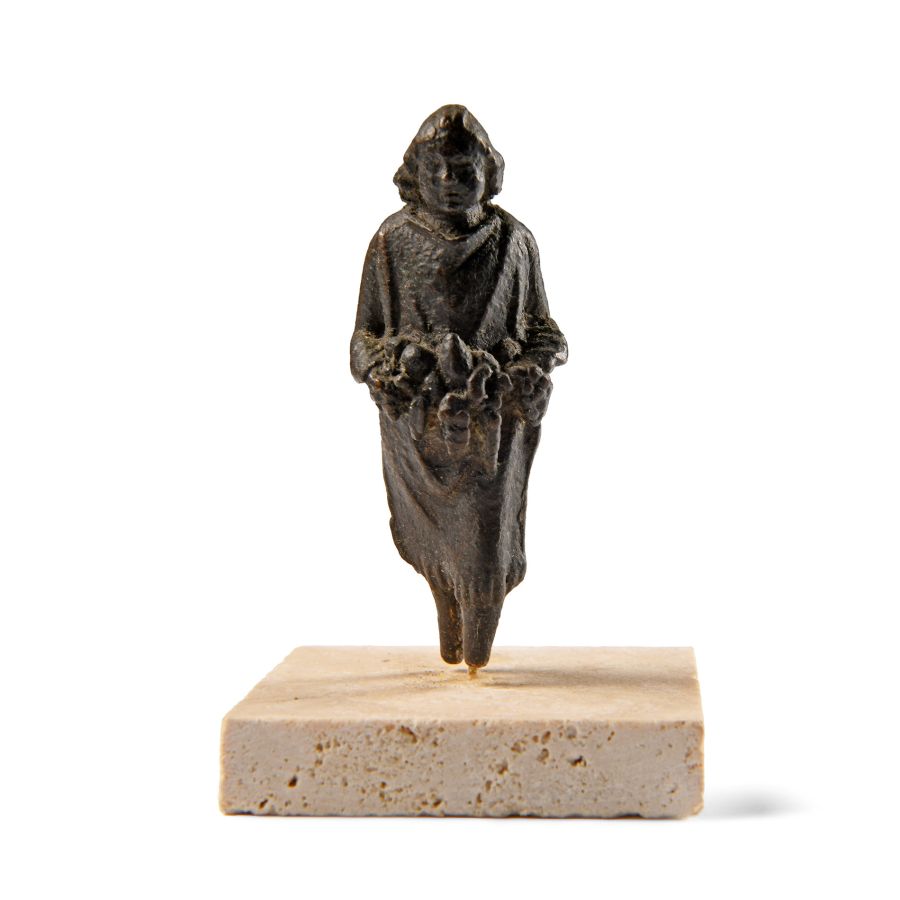
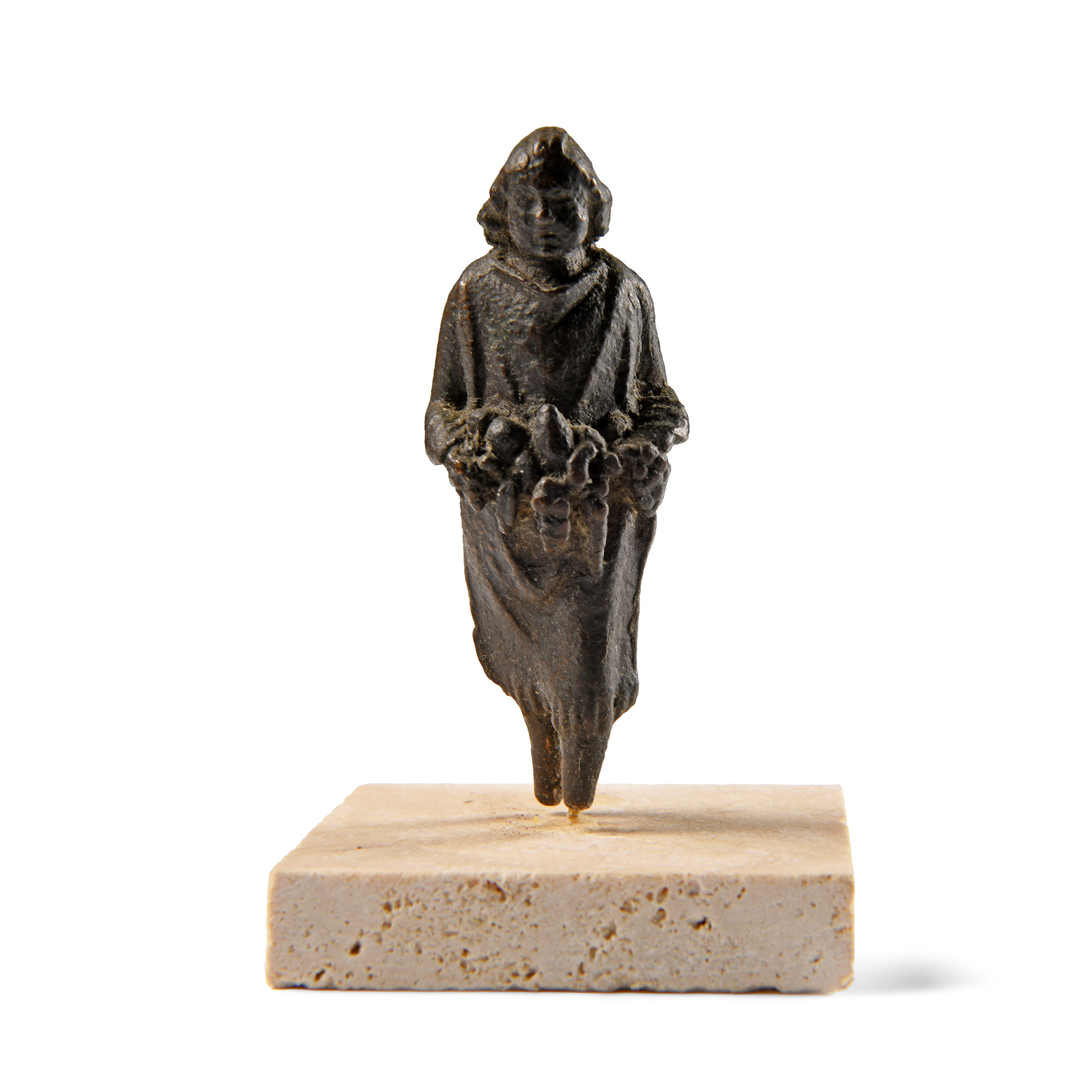
Roman Bronze Statuette of Attis
2ND-3RD CENTURY A.D.
3 in. (137 grams total, 78 mm high including stand).
Figure standing with left leg advanced, wearing a simple fringed robe clasped at each shoulder; tight-fitting cap with ridge to the top, abundant hair descending to the shoulders; hands to the hips supporting a quantity of bunches of grapes and other fruit; mounted on a custom-made stand. [No Reserve]
ProvenanceFrom a collection acquired on the UK art market from various auction houses and collections mostly before 2000.
From an important Cambridgeshire estate; thence by descent.
TimeLine Auctions follows a vetting process to ensure the authenticity and legality of all items, reinforcing our commitment to integrity and responsible trading. Each antiquity, antique, and coin lot undergoes thorough examination by a vetting committee of at least ten external specialists, professional trade association members, scientists, and archaeologists: Our Vetting Process
AUCTIONS:
TimeLine is a leading auction house specialising in antiquities, ancient art, collectables, natural history, coins, medals, and books. Our auctions offer museums, collectors, historians, and enthusiasts the opportunity to acquire unique and historically significant pieces.
-
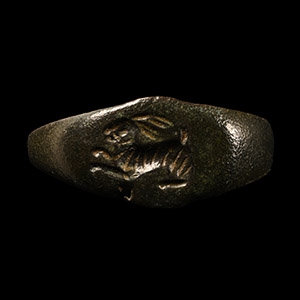
Roman Bronze Ring with Rabbit
3rd century A.D.Sold for (Inc. bp): £234
With integral ellipsoid bezel, intaglio crouching rabbit motif. 2.63 grams, 20.35 mm overall, 18.78 mm internal diameter (approximate size British P 1/2, USA 7 3/4, Europe 16.86, Japan 16)
Ex German art market, 2000s. Acquired from an EU collector living in London. From the collection of Surrey, UK, gentleman. -
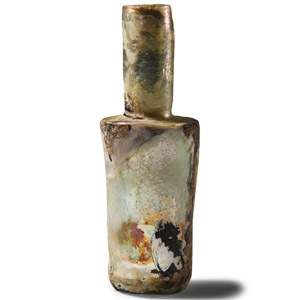
Roman Iridescent Glass Perfume Vessel
1st-4th century A.D.Sold for (Inc. bp): £59
Tall tubular flask with flat shoulder and rim, dimple to the base; iridescent surface. 28 grams, 97 mm
From an old Suffolk, UK, collection, 1990s. Property of an Essex gentleman. -
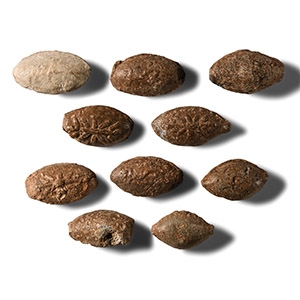
Roman Lead Sling Shot Projectile Collection
1st century B.C.-2nd century A.D.Sold for (Inc. bp): £585
Comprising ten lentoid-section glandes, five with impressed stylised 'fulmen' (thunderbolt) of Jupiter. 384 grams total, 18-36 mm
Acquired in Europe in 1990. European private collection.
The missiles of ovoid shape belong to type Ia of the Völling classification. The sling (funda) with its lead missiles (plumbea pondera or glandae) and stone (lapides) was used by special funditores, illustrated on Trajan’s Column where they are simply dressed in broad tunics with no armour, but carry a shield. A fold in their cloak, or sagulum, acted as an ammunition bag. The effectiveness of the slingers was unquestionable and much appreciated, especially against elephants. Celsus, writing towards the end of the 2nd century A.D., described how a slingshot wound was more dangerous and harder to treat than one inflicted by an arrow.
