
Loading, please wait...

LOT 0116
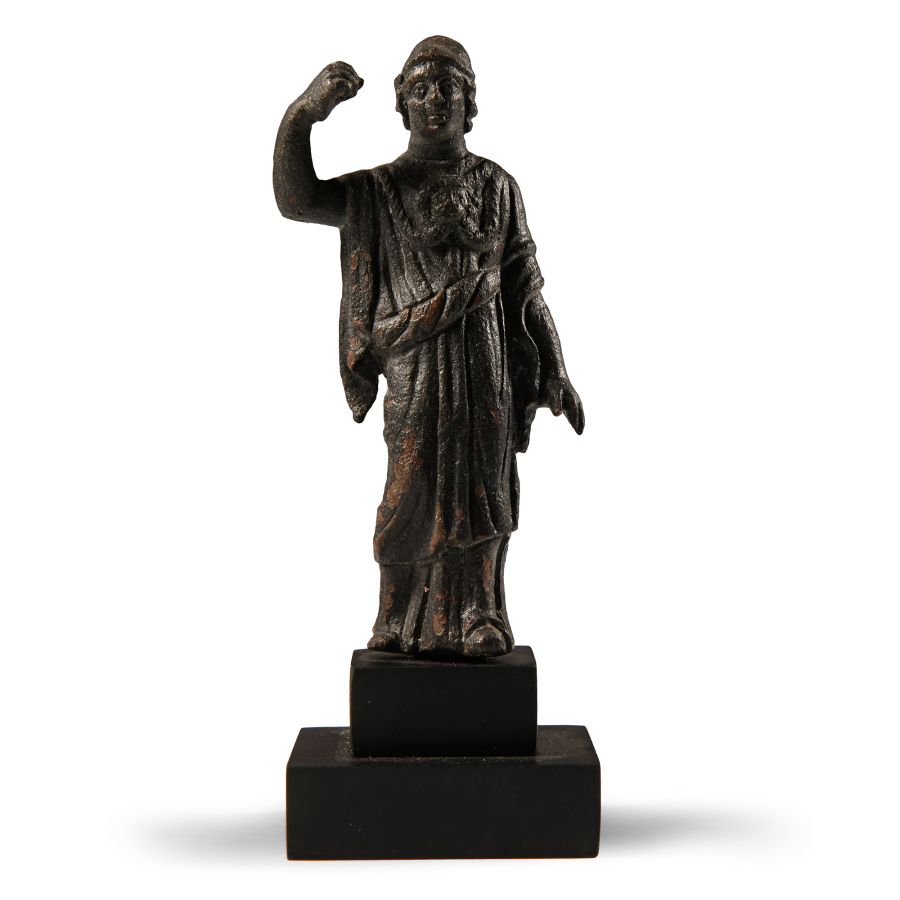
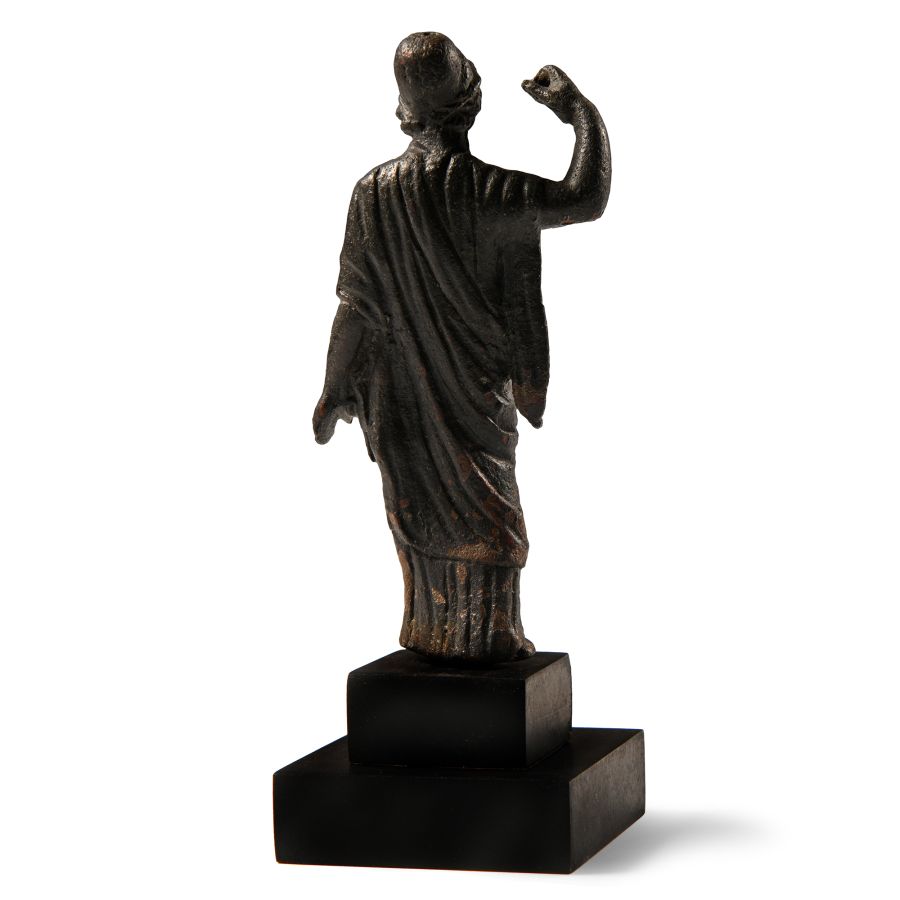
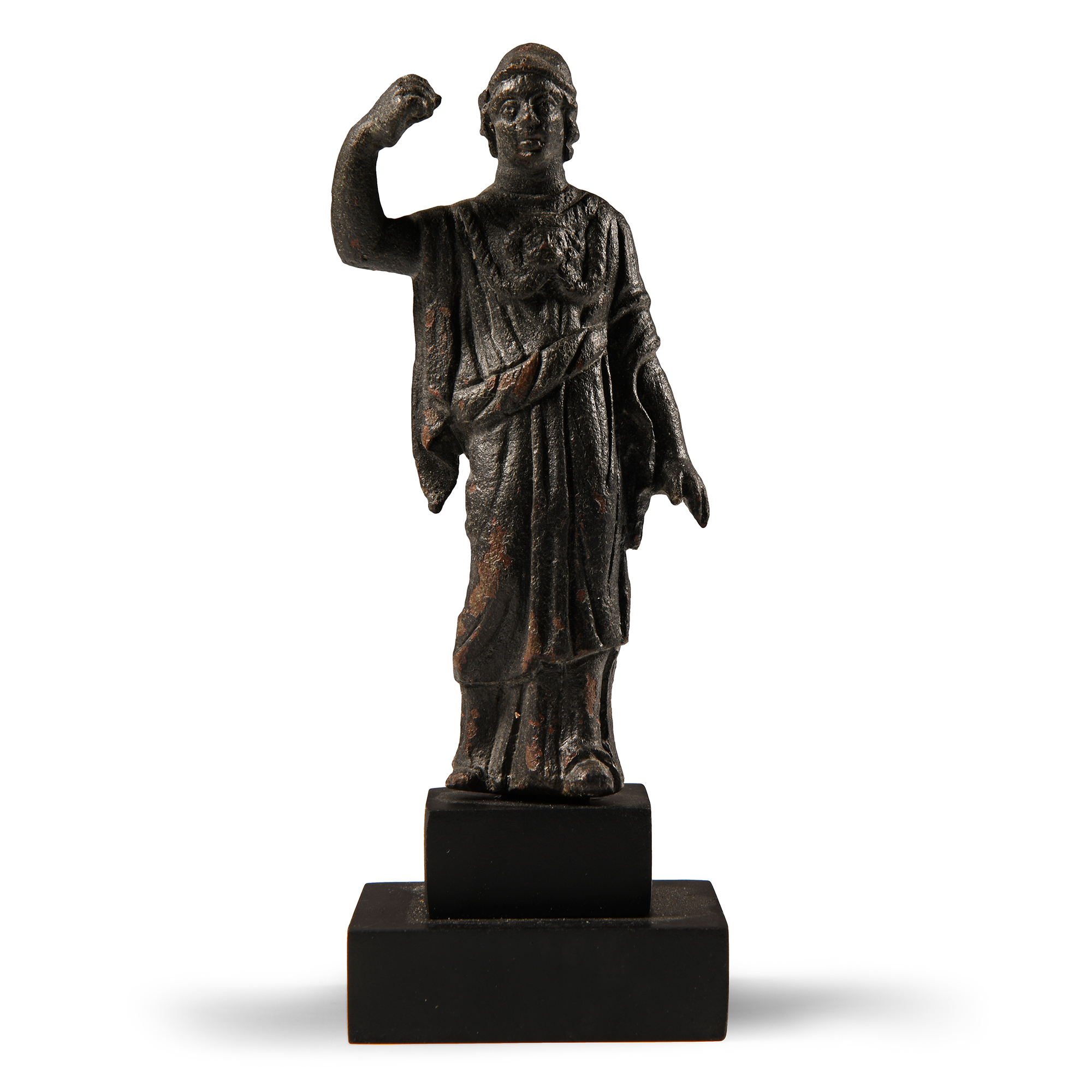
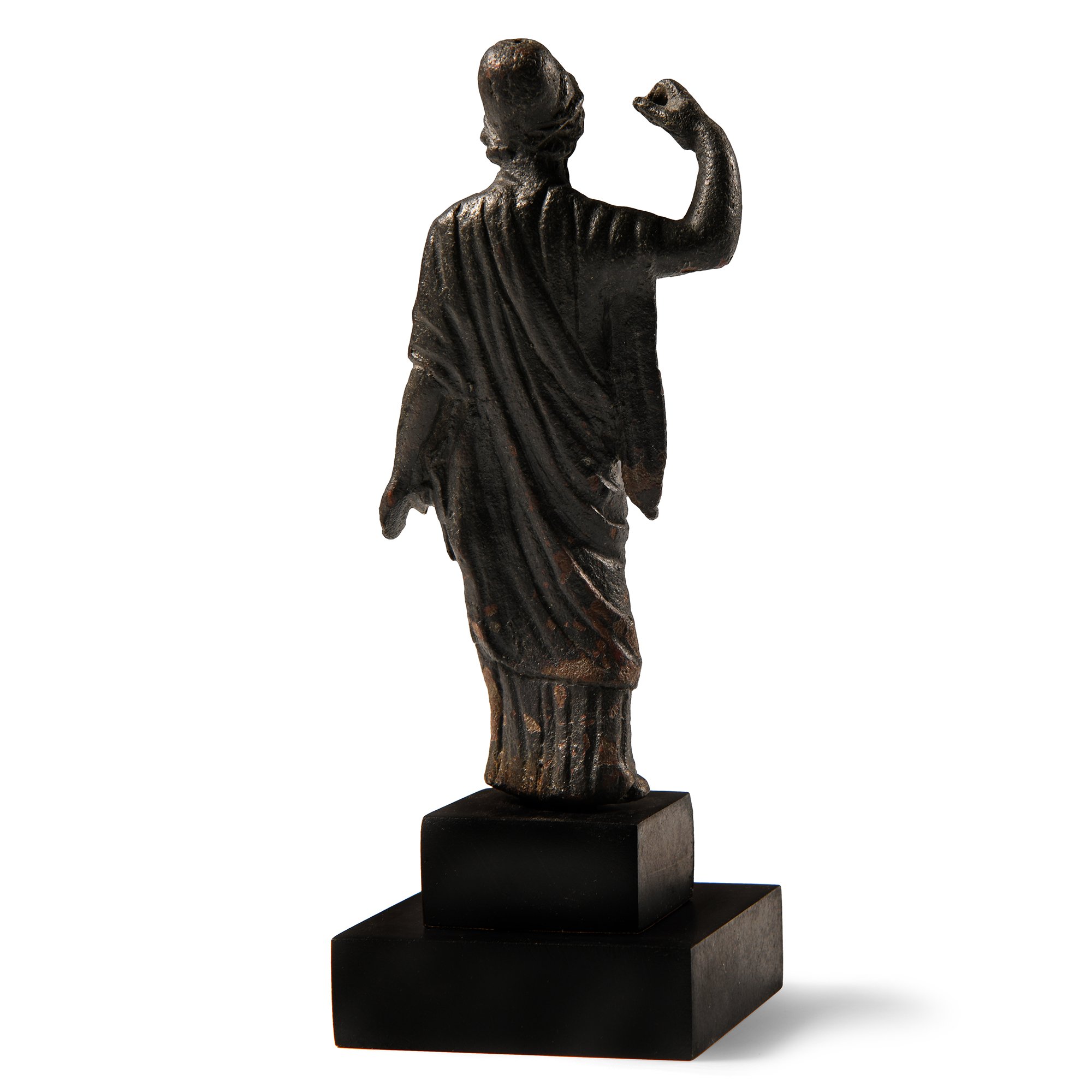
Roman Bronze Statuette of Athena
2ND-3RD CENTURY A.D.
5 1/8 in. (279 grams total, 13 cm including stand).
Standing erect in contrapposto pose, wearing a floor-length himation and with the gorgoneion medallion on her chest; Corinthian helmet on her head tilted backwards to reveal her face; right arm raised and bent with open hand to accept a spear-shaft; mounted on a custom-made display stand. [No Reserve]
ProvenanceFrom a collection acquired on the UK art market from various auction houses and collections mostly before 2000.
From an important Cambridgeshire estate; thence by descent.
Exhibited at Harwich Museum, Harwich, Essex, UK, 14th March-9th June 2024; accompanied by a copy of a photograph of the artefact on display.
LiteratureCf. Reinach, S., Repertoire de la statuarie Grecque et Romaine, Paris, 1930, pp.276ff., for the type; Rolland, H., Bronzes Antiques de Haute Provence, Paris, 1965, item 67, for similar.
FootnotesThe figure is a hybrid based on representation of Roman Minerva, closely associated with Greek Athena. The missing attributes are the spear and the shield, according to the type of Minerva of Firenze (Reinach, 1930, p.278).
CONDITIONTimeLine Auctions follows a vetting process to ensure the authenticity and legality of all items, reinforcing our commitment to integrity and responsible trading. Each antiquity, antique, and coin lot undergoes thorough examination by a vetting committee of at least ten external specialists, professional trade association members, scientists, and archaeologists: Our Vetting Process
AUCTIONS:
TimeLine is a leading auction house specialising in antiquities, ancient art, collectables, natural history, coins, medals, and books. Our auctions offer museums, collectors, historians, and enthusiasts the opportunity to acquire unique and historically significant pieces.
-
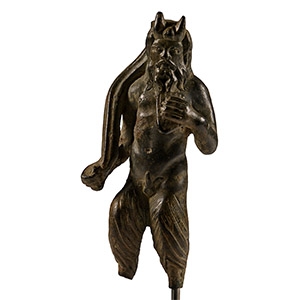
Roman Bronze Figure of Pan
1st-early 2nd century A.D.Sold for (Inc. bp): £4,290
The god standing nude supporting a cornucopia on his right shoulder and a syrinx in his left hand; ithyphallic with furry legs and short tail; mounted on a custom-made stand. 323 grams total, 16.5 cm including stand
Acquired from Sasson Ancient Art, Jerusalem, Israel, in 2008. From the Keane private collection, Kent, UK. Accompanied by an original signed certificate of authenticity, export approval, and invoice (US $9,500.00), from Sasson Ancient Art. Accompanied by a copy of the Israel Antiquities Authority export licence. This lot has been checked against the Interpol Database of stolen works of art and is accompanied by a search certificate number no.12100-216768 -

Roman and Other Bead Necklace
1st-4th century A.D. and laterSold for (Inc. bp): £104
Restrung designer necklace with oblate, tubular and other beads, with an Indian furnace-wound swirled bead at the centre. 17.6 grams, 42 cm
Acquired on the London, UK, art market in the 1990s. Ex London, UK, gallery. -
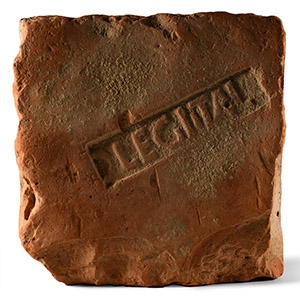
Roman Terracotta LEG I ITAL Legionary Stamped Tile
Late 1st century A.D.Sold for (Inc. bp): £572
A rectangular block with stamped mark 'LEGT I ITAL' (Legio I Italica) for 1st Legion 'Italic'; with collector's label 'Roman brick made by the Ist Italica Legion at Olpia Oescus on the lower Danube, one of Trajan's strategic bases prior to the invasion of Dacia in 106 AD. LEG I ITAL' 4.35 kg, 19 cm
From the collection of a late East Anglian teacher and antiquarian who retired to the Isle of Wight in Hampshire, UK. He amassed a large collection of objects between the 1960s-1980s. Accompanied by a previous catalogue identification card.
The Legio I Italica ("of Italy") was a Roman legion formed by Nero on September 20, 66 or 67 AD and active until the 5th century AD. Its emblems were the boar and sometimes the bull. There are many sources which name army officials employed in supervision of the construction and reconstruction of temples, baths, city walls, towers and gates. CIL VIII 2728, for example, is a letter by evocatus Augusti who was sent to solve engineering problems on a badly surveyed aqueduct at Saldae in the province of Numidia. Pliny (Epistulae X 17b, 39, 41, 61) repeatedly requested an army architect to be sent from Lower Moesia to help inspect some Bithynian building projects. Therefore it is not strange that tiles marked as belonging to a legion should be found all over the provinces.
