
Loading, please wait...



LOT 0132
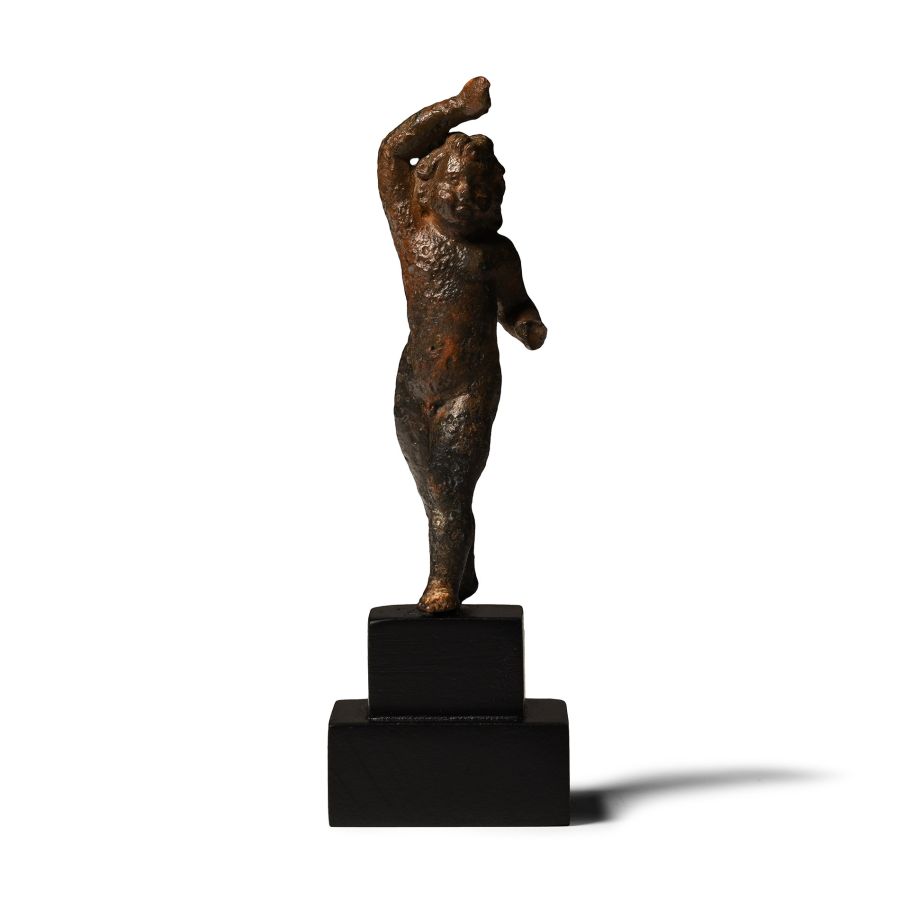
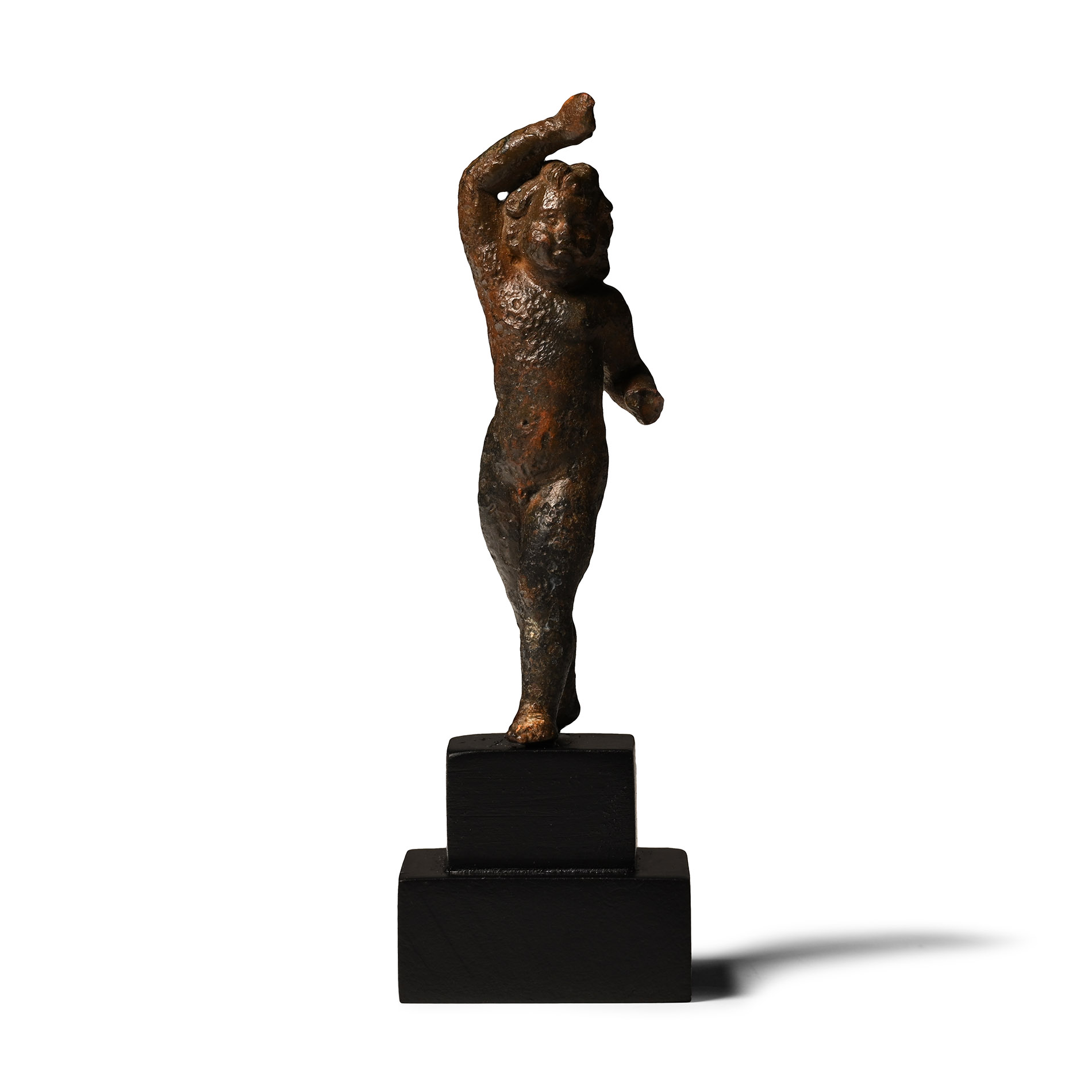
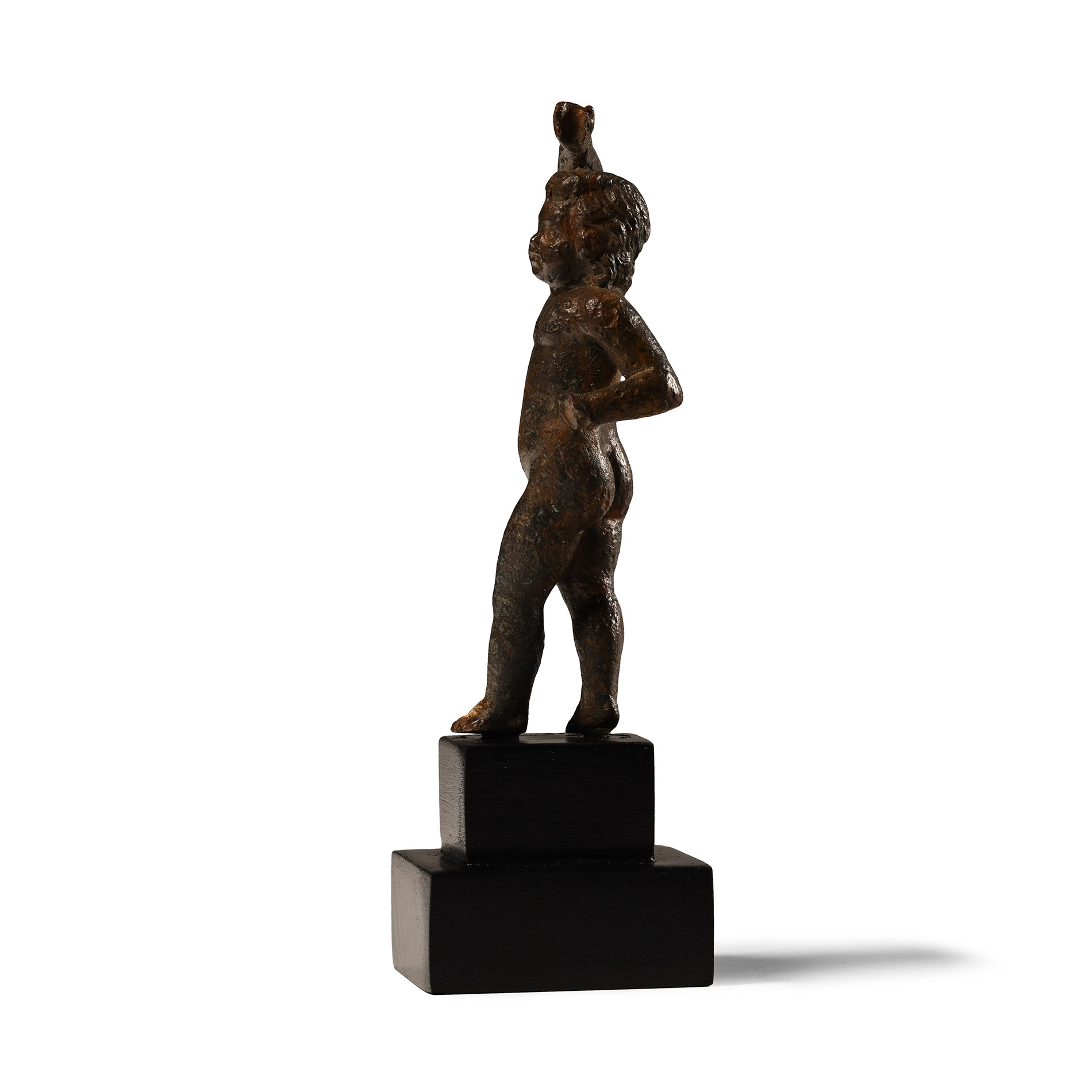
Roman Bronze Statuette of a Putto
1ST-2ND CENTURY A.D.
4 1/4 in. (104 grams total, 10.9 cm including stand).
Modelled in the round, standing nude with one arm raised above the head and the other bent, probably from a larger ensemble of figures; mounted on a custom-made display stand. [No Reserve]
ProvenanceFrom a collection acquired on the UK art market from various auction houses and collections mostly before 2000.
From an important Cambridgeshire estate; thence by descent.
Cf. Rolland, H., Bronzes Antiques De Haute Provence, Paris, 1965, items 112-118; see Reinach, S., Répertoire de la statuaire Grecque et Romaine, Paris, 1897, p.430, item 9.
FootnotesThe figure lacks the small dorsal wings which are normally present on a putto, although the curled locks of hair are typical of the type. During the Roman imperial period, children were widely represented in the art of both the public and private spheres. Images of both mortal and divine children appeared in the artworks and furnishings of the home, on the tomb monuments and burial containers associated with the funerary realm.
CONDITIONTimeLine Auctions follows a vetting process to ensure the authenticity and legality of all items, reinforcing our commitment to integrity and responsible trading. Each antiquity, antique, and coin lot undergoes thorough examination by a vetting committee of at least ten external specialists, professional trade association members, scientists, and archaeologists: Our Vetting Process
AUCTIONS:
TimeLine is a leading auction house specialising in antiquities, ancient art, collectables, natural history, coins, medals, and books. Our auctions offer museums, collectors, historians, and enthusiasts the opportunity to acquire unique and historically significant pieces.
-
Large Roman Aegean Terracotta Amphora
Early 3rd century B.C.Sold for (Inc. bp): £1,950
Tall and with a narrow base, two sturdy ribbed strap handles and a conical neck with a stepped profile; restored. 7.8 kg, 69 cm
From a collection acquired on the UK art market from various auction houses and collections mostly before 2000. From an important Cambridgeshire estate; thence by descent. -
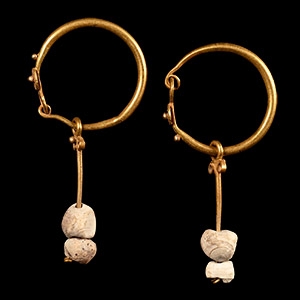
Roman Gold Earring Pair with Beads
Circa 2nd century A.D.Estimate: £400 - 600 (+bp*)
Opening Bid: £222
Comprising a matched pair of hoop earrings with loop closure, a coiled plaque next to the closure with a decorative pellet; each with a pendant drop with scrolls to each side of the loop, set with two white beads. 6.13 grams total, 48 mm each
Previously in a Japanese collection. From a South coast, UK, collection. -
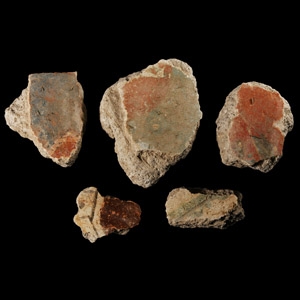
Roman Fresco Wall Plaster Collection
1st century B.C.Sold for (Inc. bp): £33
Second style, painted in red, blue and cream, one with leaf motifs. 622 grams total, 5.7-11.6 cm
Acquired in the 19th century. Ex Jeger collection, Switzerland.
These small fragments, showing similarities with fragments of Pompeii, seem to belong to the second style of Roman painting, red panels profiled with black lines representing highlight and shadow. The panels were probably framed by a green fillet. A couple of fragments show two fields in alternated red and blue.
