
Loading, please wait...
LOT 0711
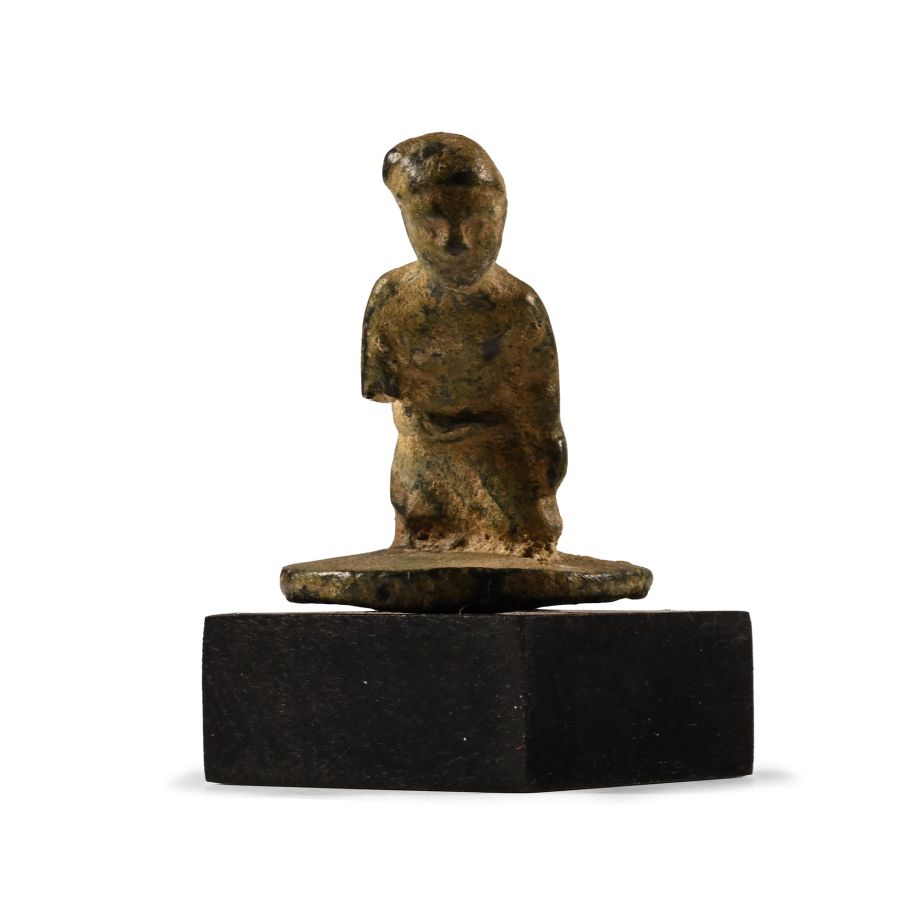
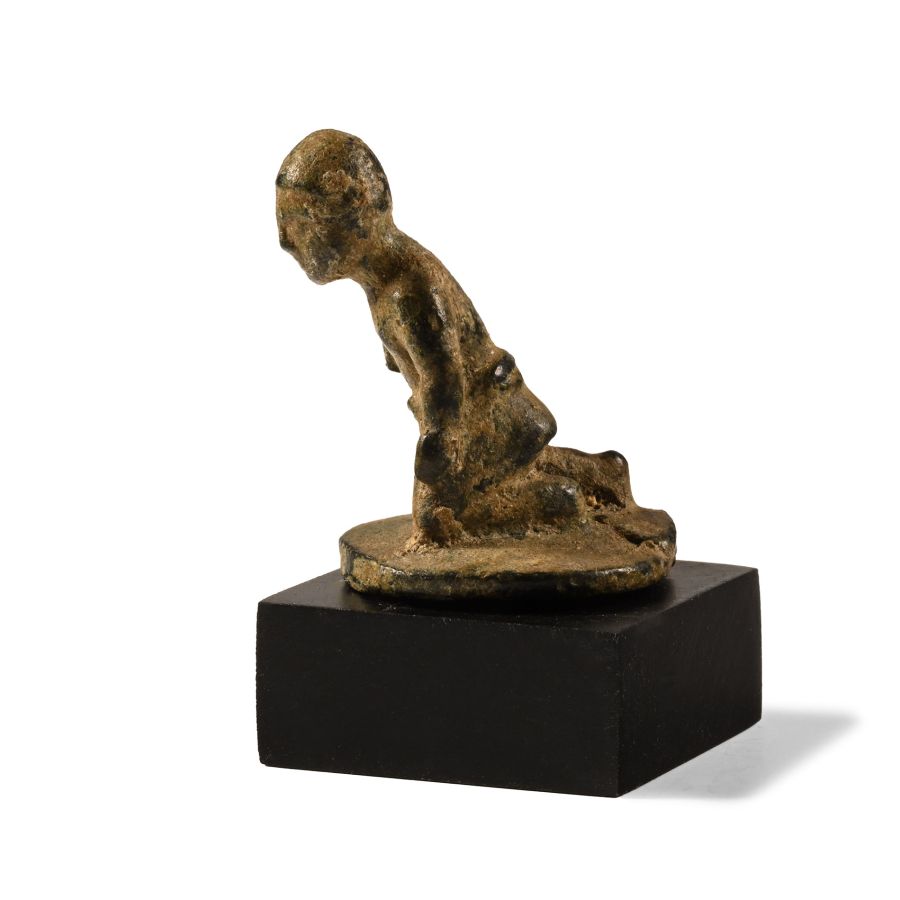
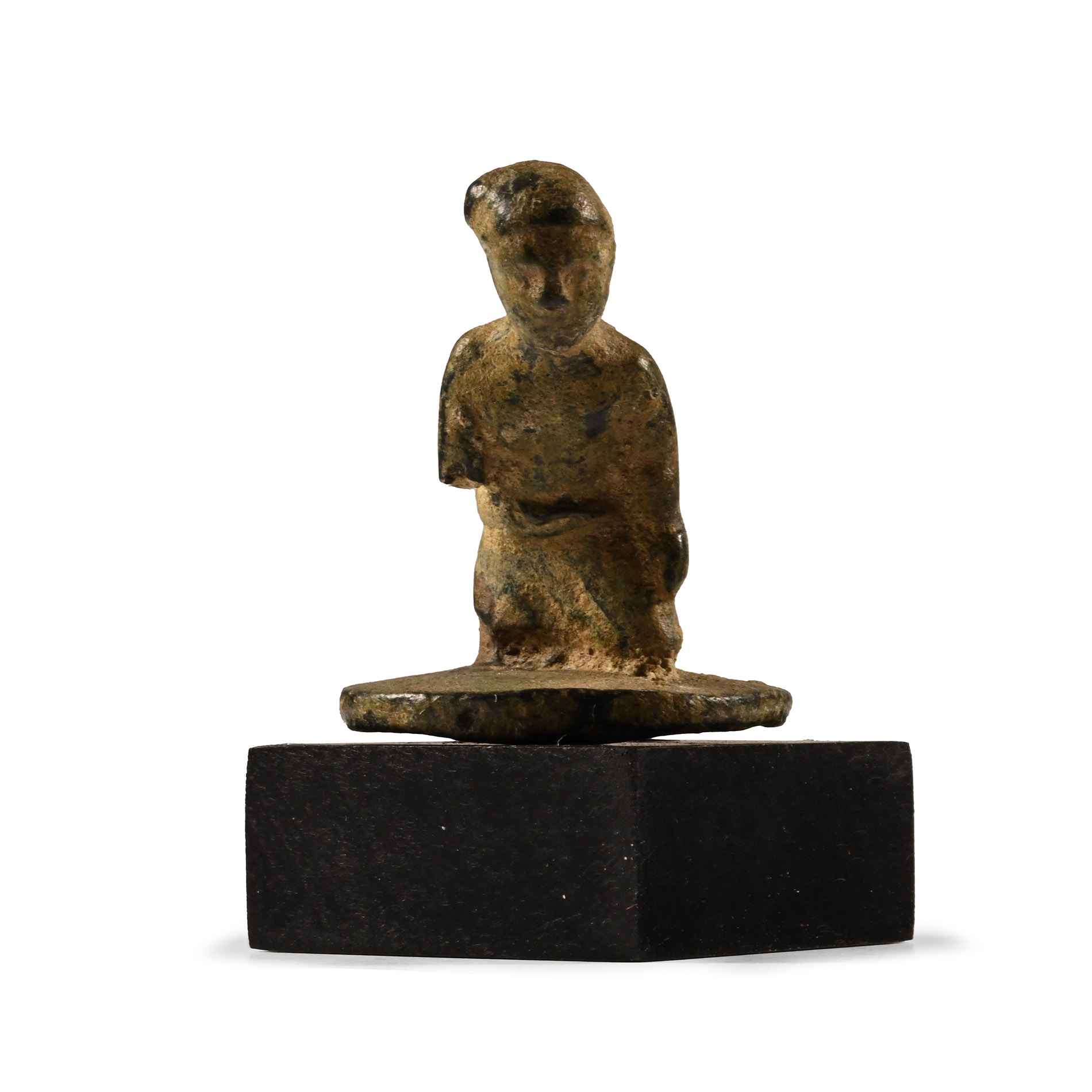
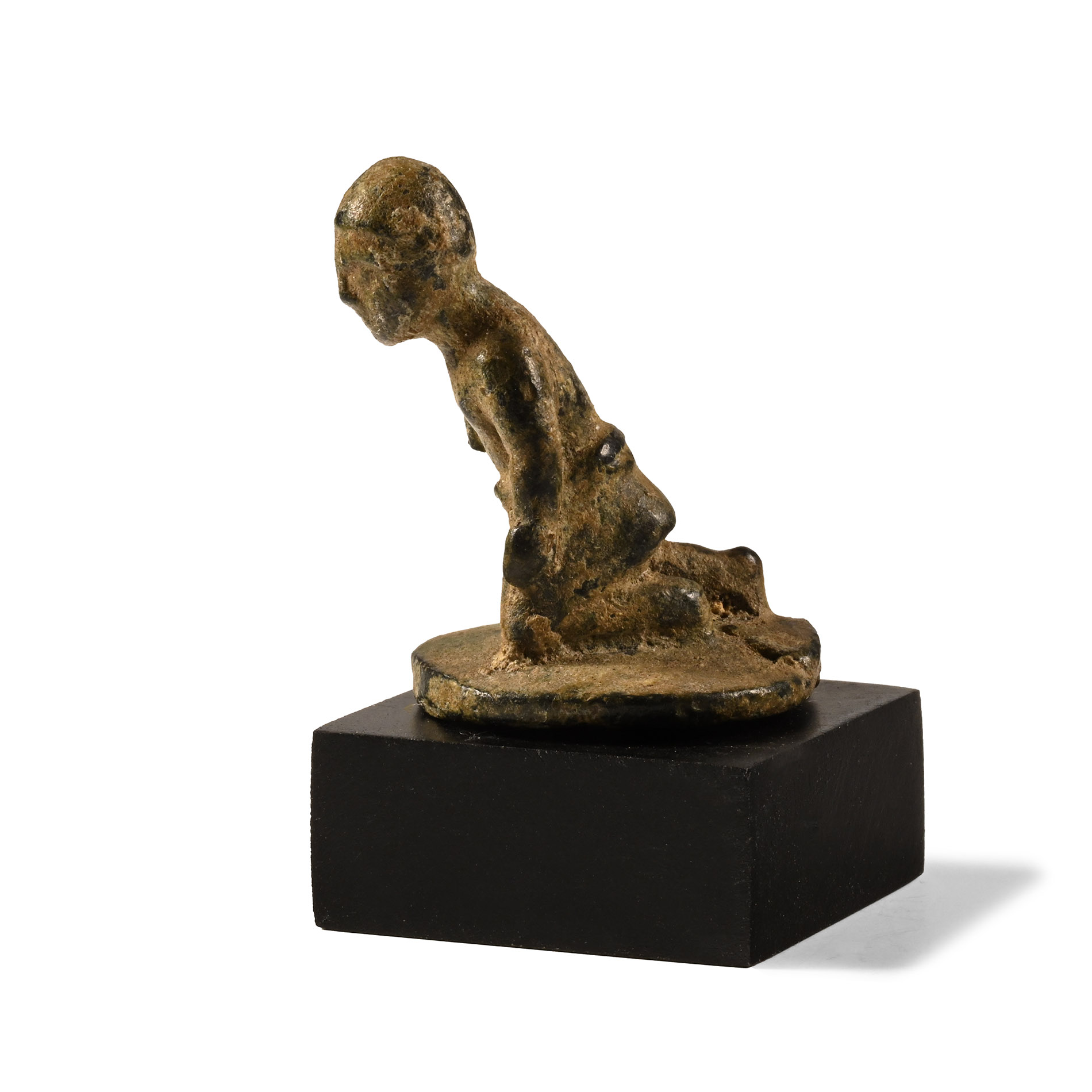
Roman Bronze Statuette of a Germanic Captive
LATE 2ND CENTURY A.D.
2 1/4 in. (80 grams total, 58 mm including stand).
Modelled in the round in kneeling pose with weight thrust forward, arms at the sides, bare-chested and wearing a short kilt with thick belt; the hair drawn up in the Swabian knot style above the right ear; mounted on a custom-made display stand. [No Reserve]
ProvenanceFrom a collection acquired on the UK art market from various auction houses and collections mostly before 2000.
From an important Cambridgeshire estate; thence by descent.
Cf. Beutler, F. et al., Der Adler Roms. Carnuntum und der Armee der Cäsaren, Bad-Deutsch Altenberg, 2017, item 1005, for similar.
FootnotesStatuettes of foreign ‘barbarian’ prisoners of this type have been found along the Danube. Their spread coincides with the Marcomannic wars of the Emperor Marcus Aurelius. The Swabian knot in this warrior’s hair has parallels with the warrior depicted on the contemporary Sarcophagus of Portonaccio, which represents a battle between Romans and Germanic Gauls.
CONDITIONTimeLine Auctions follows a vetting process to ensure the authenticity and legality of all items, reinforcing our commitment to integrity and responsible trading. Each antiquity, antique, and coin lot undergoes thorough examination by a vetting committee of at least ten external specialists, professional trade association members, scientists, and archaeologists: Our Vetting Process
AUCTIONS:
TimeLine is a leading auction house specialising in antiquities, ancient art, collectables, natural history, coins, medals, and books. Our auctions offer museums, collectors, historians, and enthusiasts the opportunity to acquire unique and historically significant pieces.
-
Roman and Other Counter Collection
1st century A.D. and laterSold for (Inc. bp): £338
Comprising plano-convex, discoid and other types in bone and glass. 20 grams total, 17-23 mm
Found on the Thames foreshore, UK. Acquired from Red House Antiques, York, 2009. Ian Wilkinson collection, Nottinghamshire, UK. -
Romano-British Grey Ware Vessel
2nd-3rd century A.D.Sold for (Inc. bp): £65
Squat ceramic jug with dimple base, broad shoulder, flared mouth and single strap handle. 188 grams, 13 cm wide
Found UK. From the collection of a late East Anglian teacher and antiquarian who retired to the Isle of Wight in Hampshire, UK. He amassed a large collection of objects between the 1960s-1980s. -
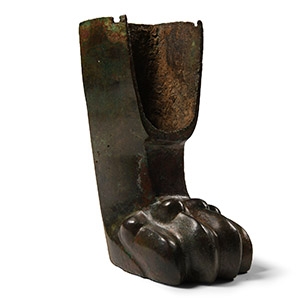
Roman Bronze Gryphon Lectus Foot
1st-2nd century A.D.Sold for (Inc. bp): £364
Hollow-formed foot for a lectus couch, the upper square in plan with tongue-shaped opening to the forward face, and vertical strap to the reverse; the foot with four curved claws, bulb knuckles above; open to the underside 558 grams, 11.2 cm
Acquired from Munich and London, 1990s. From the collection of a London, UK, gentleman.
