
Loading, please wait...
LOT 0875
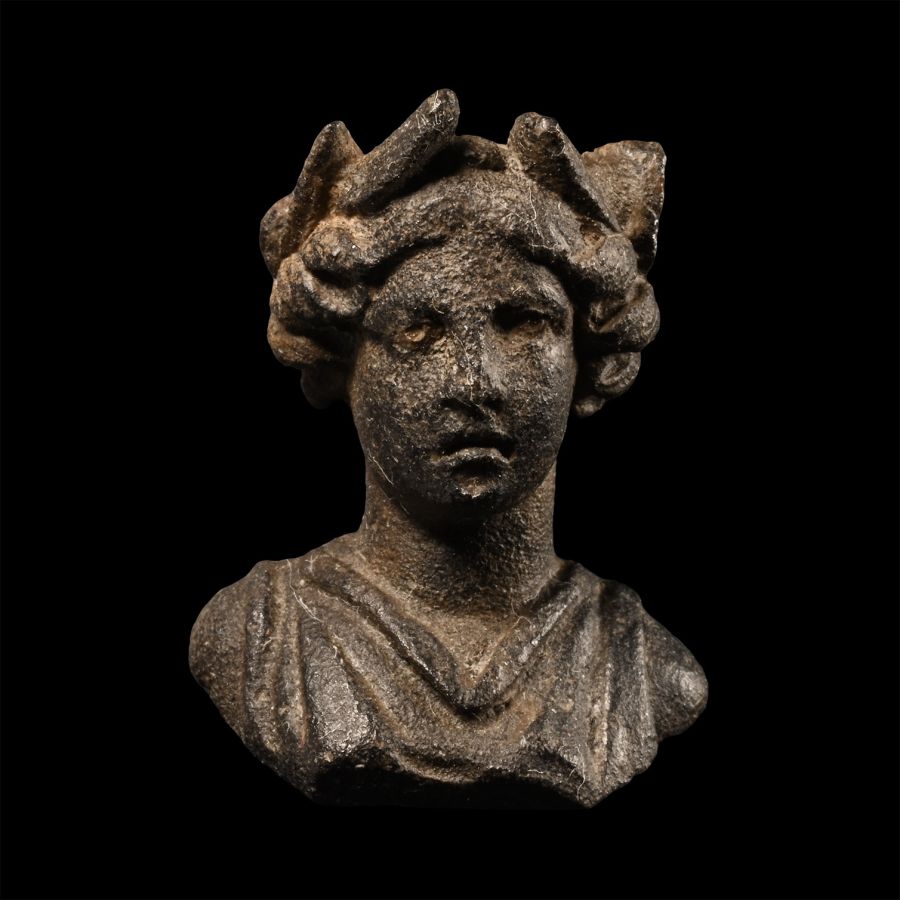
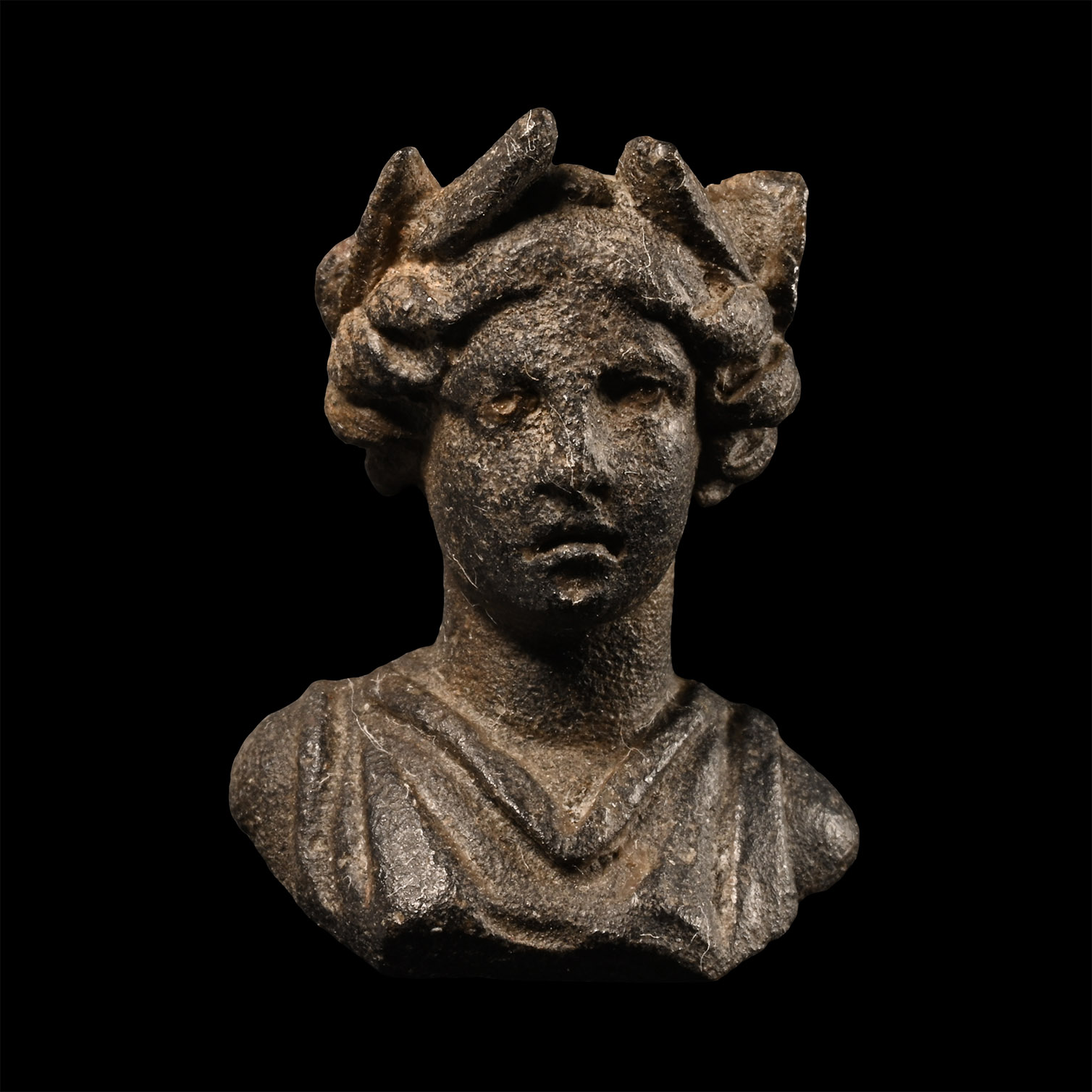
Roman Bronze Statuette Head of Apollo
1ST-2ND CENTURY A.D.
1 1/4 in. (31 grams, 32 mm).
With delicately modelled youthful features, thick hair framing the face adorned with a laurel-wreath secured at the rear, traces of silvering to the eyes; ledge base; possibly Apollo the sun-god, or a lar (guardian spirit). [No Reserve]
ProvenanceFrom a collection acquired on the UK art market from various auction houses and collections mostly before 2000.
From an important Cambridgeshire estate; thence by descent.
Cf. Durham, E., Metal Figurines in Roman Britain, vol. 2, Reading, 2010, pl.60 for full-length figure from lakenheath, England, with similar features.
FootnotesThe use of domestic gods continued in the Roman Empire also in later times. Of particular interest is a group of sculptures discovered in the Theodosian Palace in Stobi. The finds consist of marble and bronze statuettes and reliefs that were deposited in one of the ornamental basins located in the peristyle. Four of the smaller bronze sculptures— a lar, Apollo, Venus, and a satyr— may have formed the contents of a lararium. The palace was in use until the 5th century A.D., but the sculptures consists of heirloom and reused pieces dated at 2nd-1st century B.C. However, an unusual feature of this bronze assemblage is the fact that they date overwhelmingly to the 3rd century A.D.
CONDITIONTimeLine Auctions follows a vetting process to ensure the authenticity and legality of all items, reinforcing our commitment to integrity and responsible trading. Each antiquity, antique, and coin lot undergoes thorough examination by a vetting committee of at least ten external specialists, professional trade association members, scientists, and archaeologists: Our Vetting Process
AUCTIONS:
TimeLine is a leading auction house specialising in antiquities, ancient art, collectables, natural history, coins, medals, and books. Our auctions offer museums, collectors, historians, and enthusiasts the opportunity to acquire unique and historically significant pieces.
-
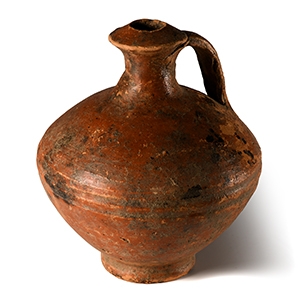
Roman Terracotta Wine Flagon
1st-2nd century A.D.Sold for (Inc. bp): £169
With globular body, thick basal ring, tall columnar neck with biconical collar, single strap handle to the rear. 275 grams, 13.5 cm high
Ex German art market, 2000s. Acquired from an EU collector living in London. From the collection of Surrey, UK, gentleman. -
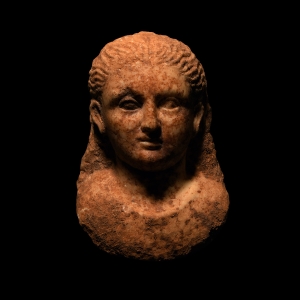
Roman Marble Head of a Young Man
2nd-3rd century A.D.Estimate: £4,000 - 6,000 (‡+bp*)
Opening Bid: £2,000
Worked in high-relief with hairstyle typical of the transitional period from the Consulate to the Empire; oval face with a prominent forehead, oval eyelids and clearly defined lines around the eyes; hair arranged in vertical lines combed back from the forehead; pronounced lips, typical rendering of the wide auricles; the lower part of the tunic visible with a well defined round edge around the neck; mounted on a custom-made display stand. 5.94 kg total, 22.5 cm high including stand
Acquired from Gallery Gryphos, Munich, 1992. European private collection. Accompanied by an academic report by Dr Raffaele D’Amato. This lot has been checked against the Interpol Database of stolen works of art and is accompanied by search certificate number no.11996-211878.
The head was probably pertinent to a series of funerary family portraits. It has realistic modelling of male features, which speaks of a portrait in reduced dimensions or a reference to a well-known person in the environment where it was exhibited. The portrait is worked only on the front, leaving the back, as well as the lower part of the sculpture, roughly treated. -
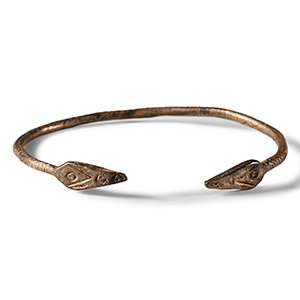
Roman Silver Snake-Headed Bracelet
Circa 1st-3rd century A.D.Sold for (Inc. bp): £111
With scale detail to the slender shank, lozenge-shaped snake-head finials. 7.5 grams, 60 mm
Formerly in a private French collection. Ex property of a Buckingham gentleman, acquired on the French art market.
