
Loading, please wait...
LOT 0701
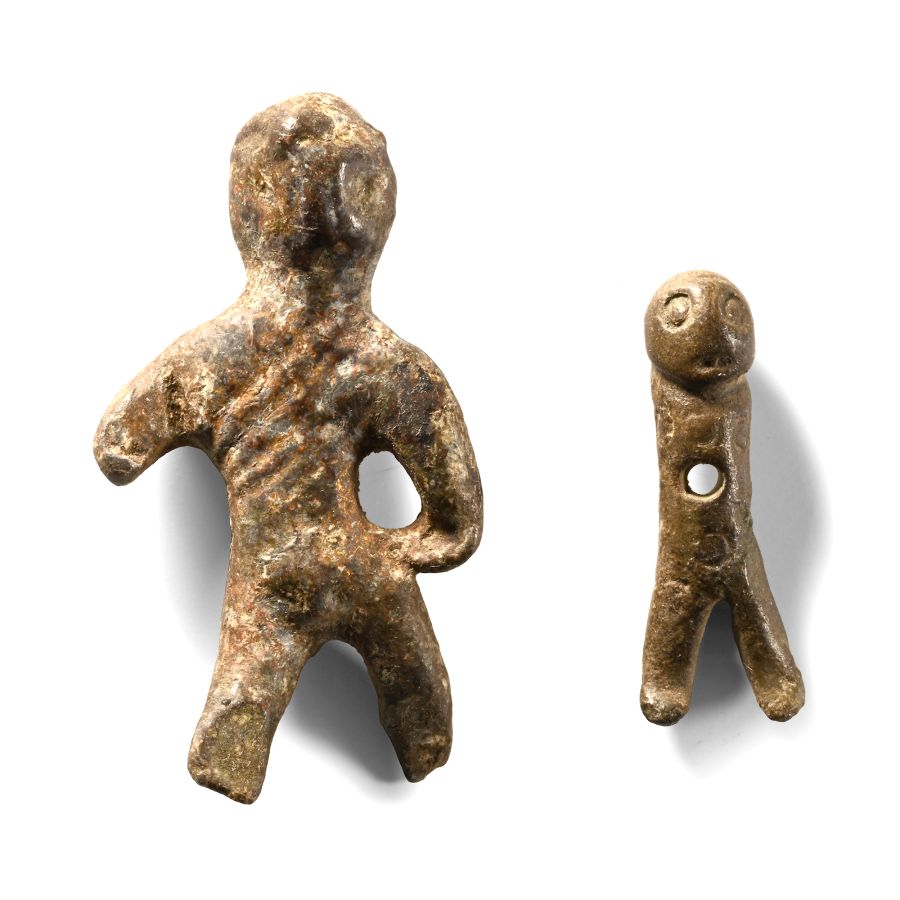
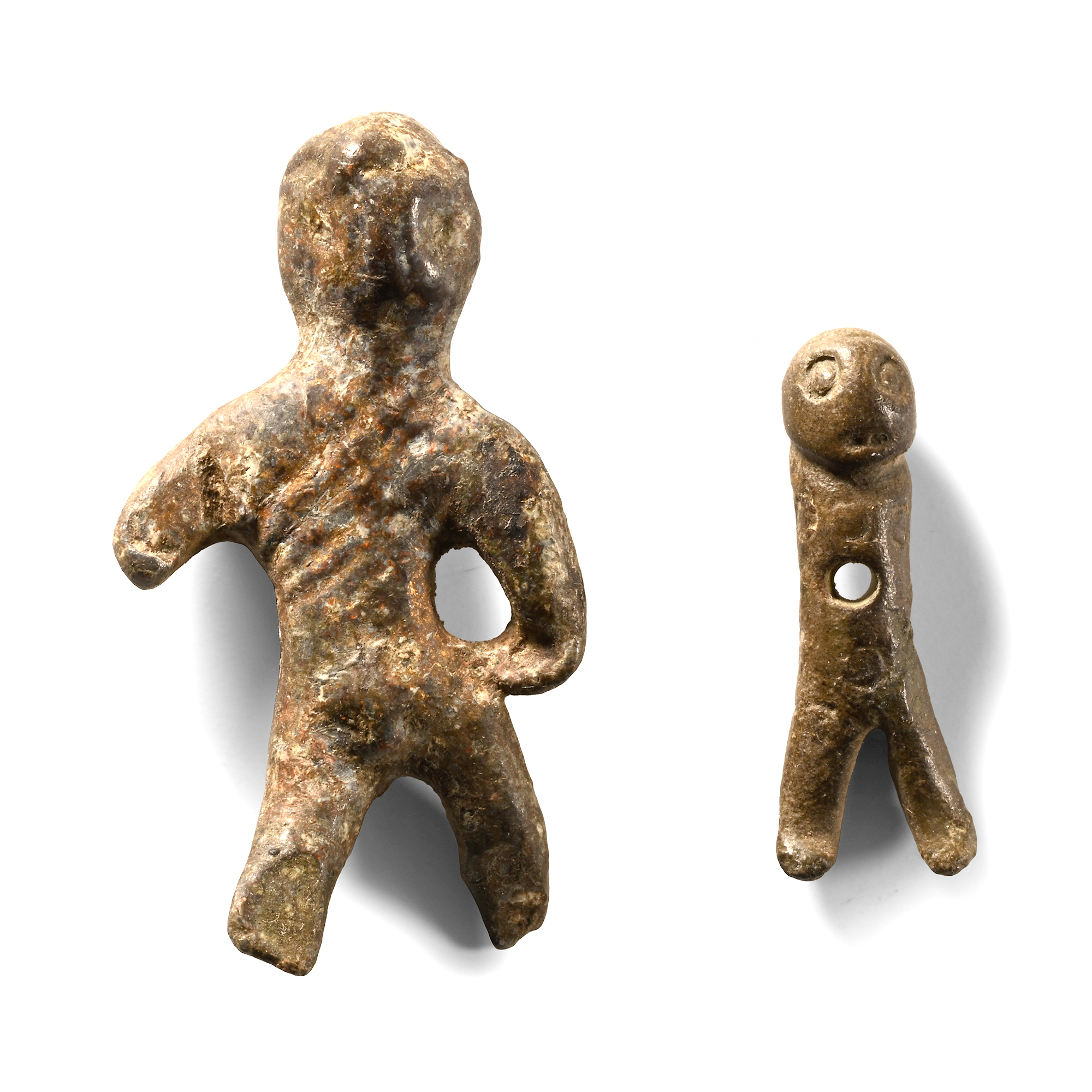
Roman Bronze Statuette Group
2ND CENTURY B.C-1ST CENTURY A.D.
1 1/8 - 1 3/4 in. (42 grams total, 30-47 mm).
Comprising: small figure pierced at the middle wit pellet detailing to face and body, legs spread; figure in active pose with slanting stripes across the body, possibly intended for Hercules; probably votives for deposition at a temple. [2, No Reserve]
ProvenanceFrom a collection acquired on the UK art market from various auction houses and collections mostly before 2000.
From an important Cambridgeshire estate; thence by descent.
See Durham, E., Metal Figurines in Roman Britain, vol. 2, Reading, 2010, for discussion.
CONDITIONTimeLine Auctions follows a vetting process to ensure the authenticity and legality of all items, reinforcing our commitment to integrity and responsible trading. Each antiquity, antique, and coin lot undergoes thorough examination by a vetting committee of at least ten external specialists, professional trade association members, scientists, and archaeologists: Our Vetting Process
AUCTIONS:
TimeLine is a leading auction house specialising in antiquities, ancient art, collectables, natural history, coins, medals, and books. Our auctions offer museums, collectors, historians, and enthusiasts the opportunity to acquire unique and historically significant pieces.
-
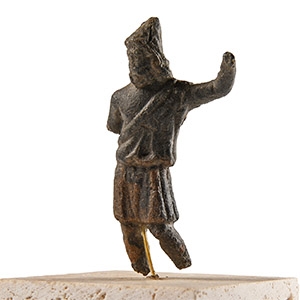
Roman Bronze Vulcan Statuette
1st-2nd century A.D.Sold for (Inc. bp): £312
Standing wearing a tunic draped from the left shoulder and a conical hat, left arm extended at shoulder-height; mounted on a custom-made stand. 110 grams total, 71 mm including stand
From a collection acquired on the UK art market from various auction houses and collections mostly before 2000. From an important Cambridgeshire estate; thence by descent. -
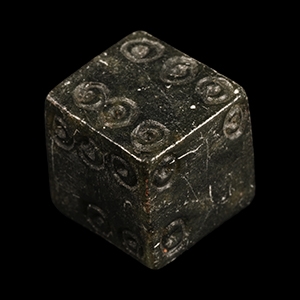
Large Romano-British 'Yorkshire' Jet Gaming Dice
1st-4th century A.D.Sold for (Inc. bp): £416
Cuboid with ring-and-dot markings disposed 1:6, 2:5, 3:4. 7.87 grams, 14 mm
Found Yorkshire, UK. Ex N. Du Quesne Bird collection. Acquired 8 July 1996. From the important private collection of dice and gaming pieces of Colin Narbeth, London, UK, collection no.50. Accompanied by a Colin Narbeth catalogue identification card. -
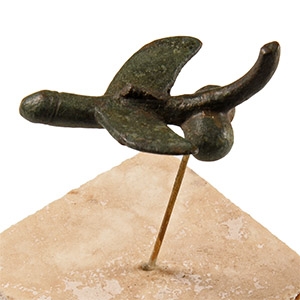
Roman Bronze Flying Phallus
2nd-3rd century A.D.Sold for (Inc. bp): £234
Amuletic model phallus with swept lateral wings; mounted on a custom-made stand. 99 grams total, 67 mm high including stand
From a collection acquired on the UK art market from various auction houses and collections mostly before 2000. From an important Cambridgeshire estate; thence by descent.
