
Loading, please wait...
LOT 0810
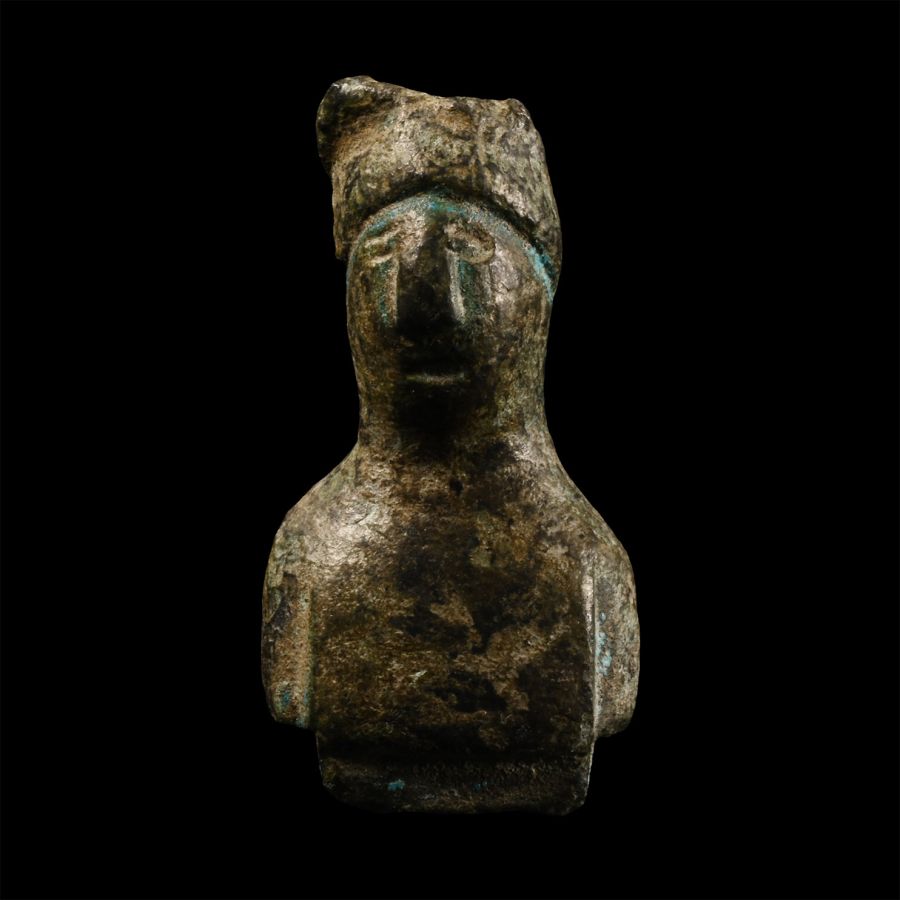
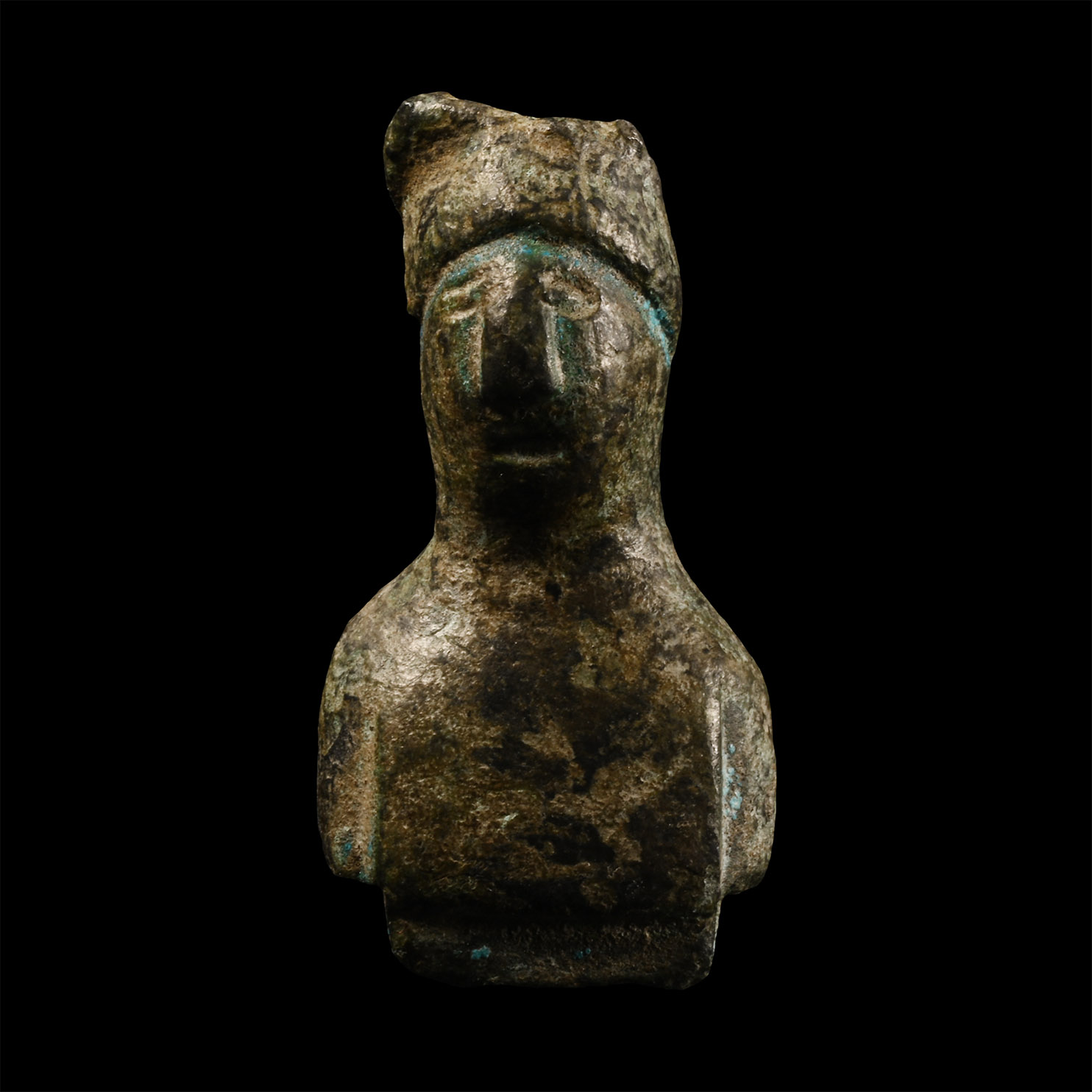
Roman Bronze Statuette Bust of Demeter
3RD-4TH CENTURY A.D.
1 1/4 in. (11.1 grams, 32 mm).
Bust with dressed hair, punched eyes and mouth, raised chest; slightly hollow to the reverse. [No Reserve]
ProvenanceFrom a collection acquired on the UK art market from various auction houses and collections mostly before 2000.
From an important Cambridgeshire estate; thence by descent.
TimeLine Auctions follows a vetting process to ensure the authenticity and legality of all items, reinforcing our commitment to integrity and responsible trading. Each antiquity, antique, and coin lot undergoes thorough examination by a vetting committee of at least ten external specialists, professional trade association members, scientists, and archaeologists: Our Vetting Process
AUCTIONS:
TimeLine is a leading auction house specialising in antiquities, ancient art, collectables, natural history, coins, medals, and books. Our auctions offer museums, collectors, historians, and enthusiasts the opportunity to acquire unique and historically significant pieces.
-
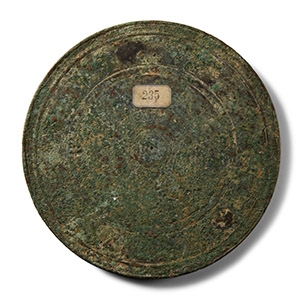
Roman Bronze Mirror
1st-2nd century A.D.Sold for (Inc. bp): £260
Discoid plaque with one polished face, slightly raised rim, incised concentric rings, old label '235' to one side '258' to the other. 127 grams, 10.3 cm
Ex Louis-Gabriel Bellon (1819?-1899), France. Acquired from Jack-Philippe Ruellan, 4 April 2009, no.258. -
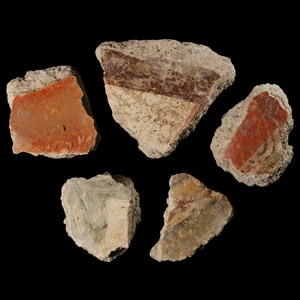
Roman Fresco Wall Plaster Collection
1st century B.C.Sold for (Inc. bp): £111
Second style, painted in red, blue and cream and decorated in contrasting colours. 631 grams total, 6.3-10.5 cm
Acquired in the 19th century. Ex Jeger collection, Switzerland.
These small fragments, with analogies with the fragments from Pompeii, seem to belong to the second style of Roman painting, where several simpler walls had an entirely yellow socle or a yellow socle with a darker main zone (more common in the middle phase of the style). -
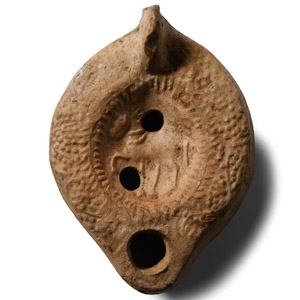
Roman Buffware Oil Lamp with Horse and Rider
Circa 2nd century A.D.Sold for (Inc. bp): £130
Comprising a ring handle, filling-hole and air hole in lower discus; the discus with a horse advancing left mounted by a cavalryman with a flying cloak. 44 grams, 73 mm
From a collection acquired on the UK art market from various auction houses and collections mostly before 2000. From an important Cambridgeshire estate; thence by descent.
The main charateristic of the type (Bussiere form D I 3) is the form of the nozzle, which is tangent to the lamp rim (nozzle form Bussiere 3).
