
Loading, please wait...
LOT 0666
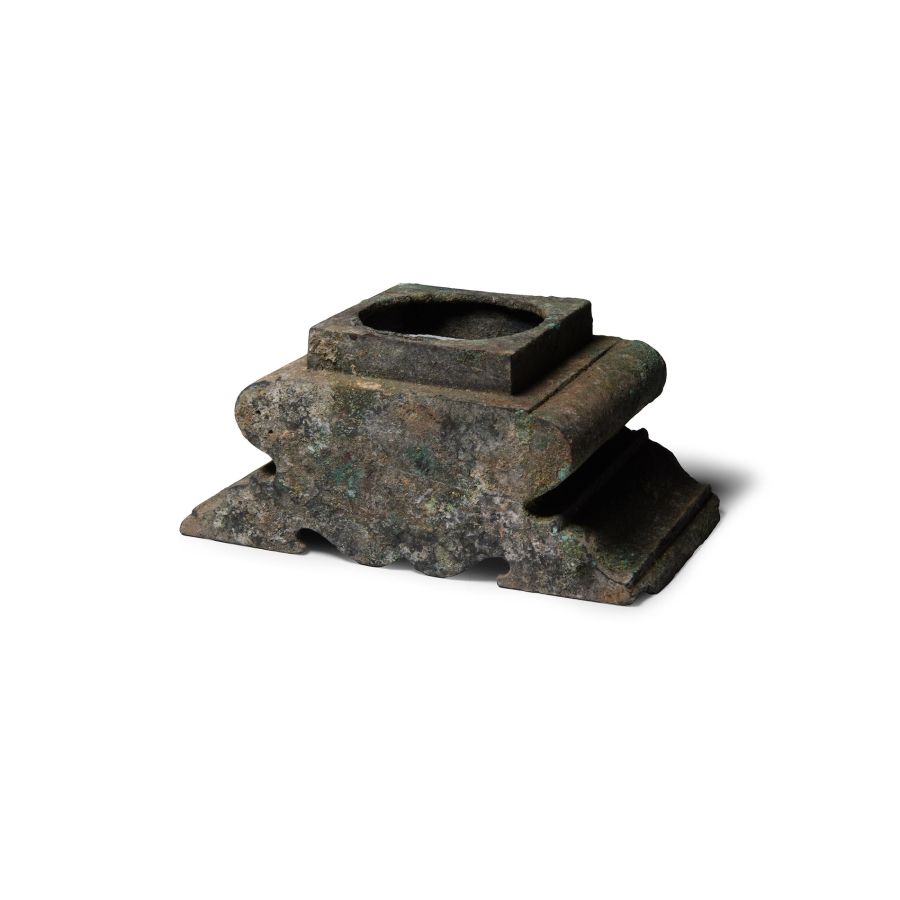
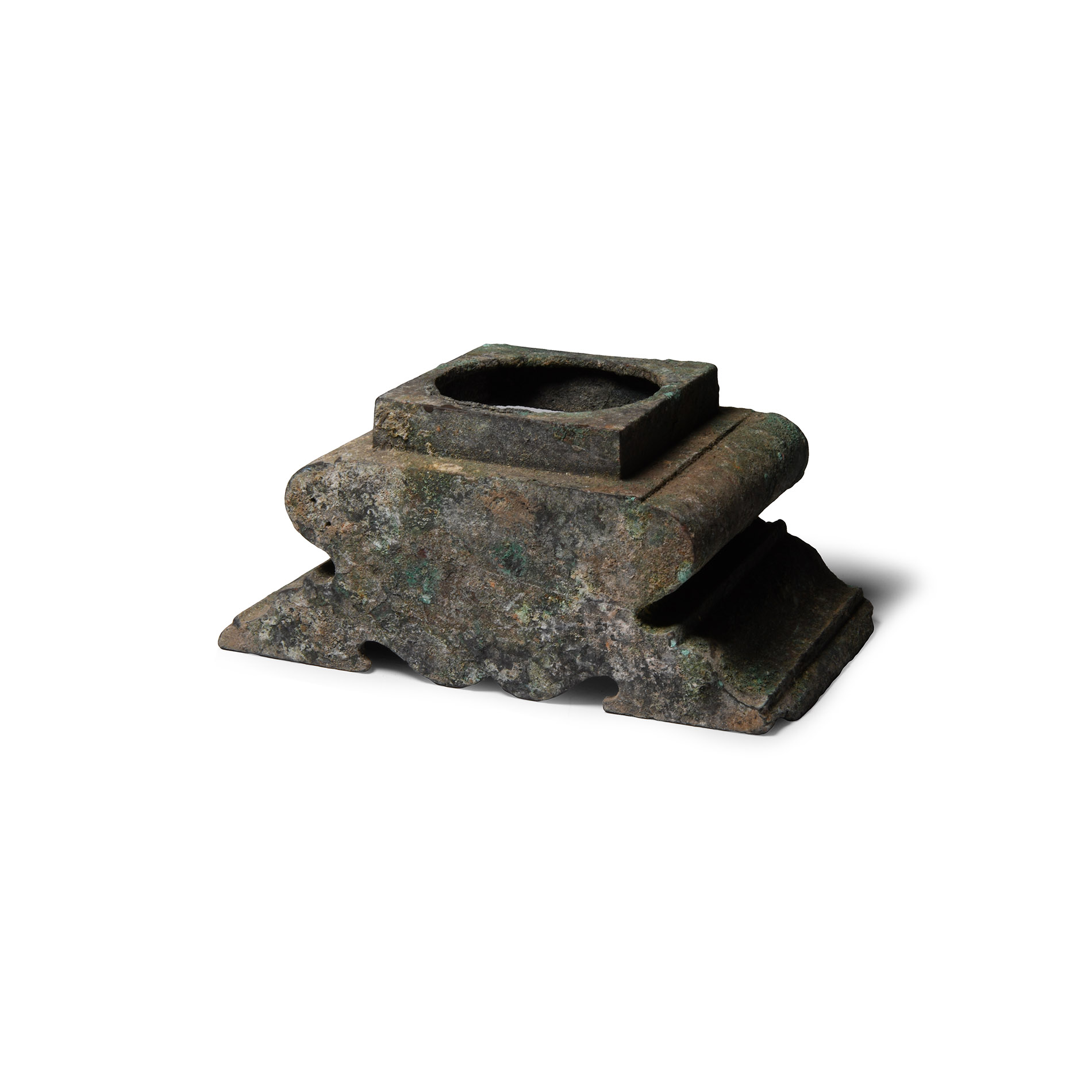
Roman Bronze Statue Base
CIRCA 2ND-3RD CENTURY A.D.
5 3/4 in. (556 grams, 14.5 cm).
Featuring moulded legs and scalloped lower edge to front face; circular hole to the top; hollow-formed.
ProvenanceAcquired 1990s-early 2000s.
East Anglian private collection.
Cf. Bolla, M., 'Bronzi figurati romani da luoghi di culto dell'Italia Settentrionale,' in LANX 20 (2015), pp. 49‐143, fig.10, p.57.
FootnotesSome bronze supports found in the dedication shrines in temples are peculiar: they often have no frames of architectural derivation and have a central hole to the top. These bases seem to have not been intended for statuettes but for objects that may have needed support on a wall due to their height, possibly military standards, numerous fragments of which have been found in the Northern Italian regions. If this hypothesis is correct, this base could confirm the dedication of 'standards' as ex voto, positioned in the temple as a place for the conservation of military insignia.
CONDITIONTimeLine Auctions follows a vetting process to ensure the authenticity and legality of all items, reinforcing our commitment to integrity and responsible trading. Each antiquity, antique, and coin lot undergoes thorough examination by a vetting committee of at least ten external specialists, professional trade association members, scientists, and archaeologists: Our Vetting Process
AUCTIONS:
TimeLine is a leading auction house specialising in antiquities, ancient art, collectables, natural history, coins, medals, and books. Our auctions offer museums, collectors, historians, and enthusiasts the opportunity to acquire unique and historically significant pieces.
-
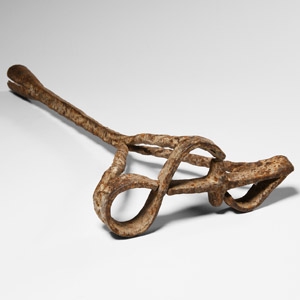
Late Roman Iron Branding Signaculum
5th-6th century A.D.Estimate: £100 - 140 (+bp*)
Opening Bid: £40
Featuring an elaborate monogram composed of Greek letters M and O, supported by decoratively twisted prongs; tapering cylindrical socket. 521 grams, 37.5 cm
Acquired 1990s-early 2000s. East Anglian private collection.
Branding stamps or signacula, in particular those with large single letters, were used for marking livestock to identify the ownership, the breed, the quality and other features of the animal. The signacula were usually made in bronze, but iron examples are also preserved. -
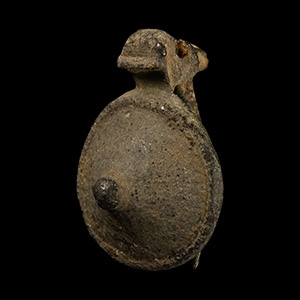
Roman Miniature Bronze Turretted Brooch
1st-4th century A.D.Sold for (Inc. bp): £13
Composed of a roughly conical body and pin lug above; detached pin. 2.27 grams, 21 mm
Found Essex, UK. -
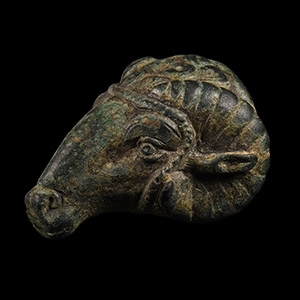
Roman Bronze Ram's Head Finial
1st century B.C.-3rd century A.D.Sold for (Inc. bp): £1,105
Naturalistically modelled in the round, coat formed of tightly-curled tufts, notched and curled horns; neck formed as oval-shaped socket. 87 grams, 37 mm
‘The Ancient Menagerie Collection’ formerly the property of a Cambridgeshire lady, collected since the 1990s and acquired from auctions and dealers throughout Europe and the USA, now ex London collection.
