
Loading, please wait...
LOT 0796
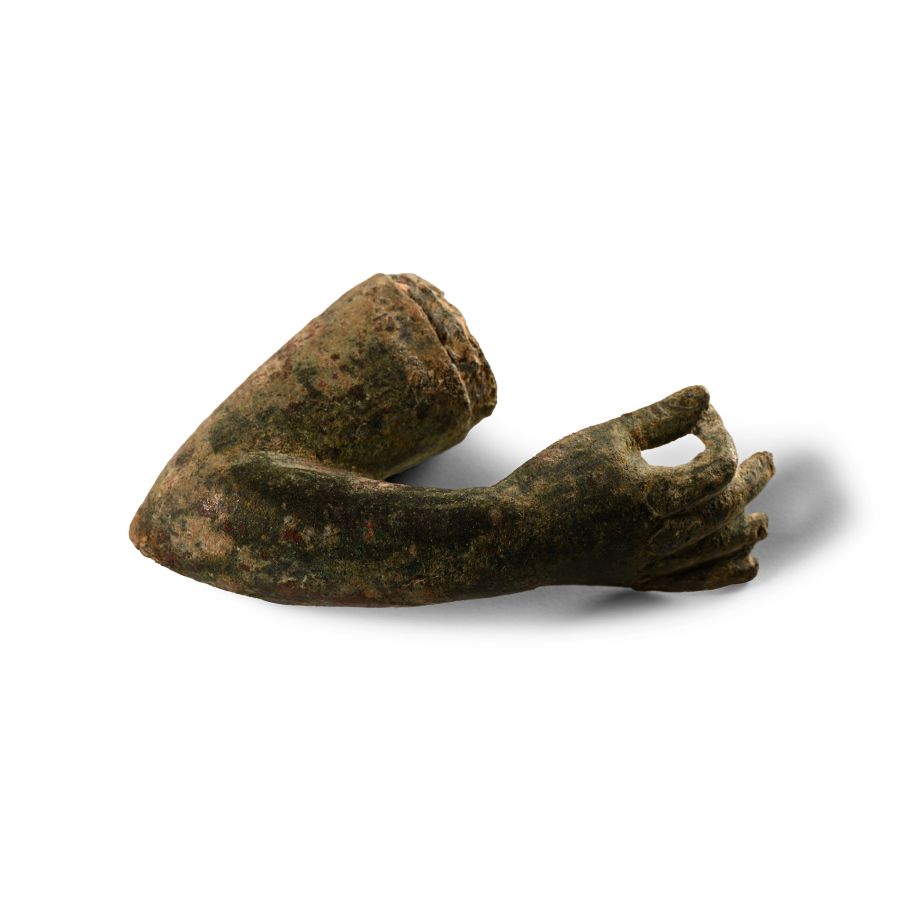
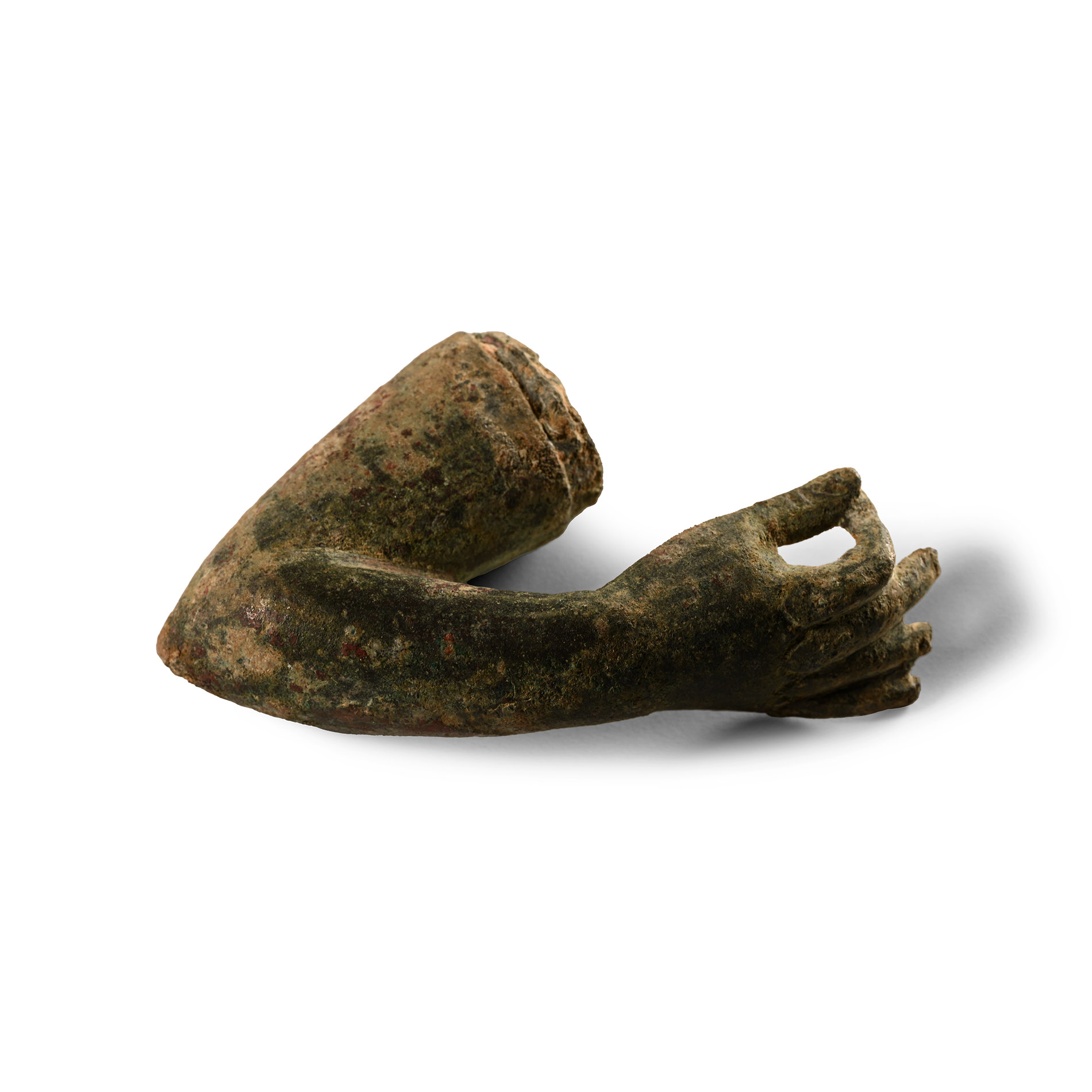
Roman Bronze Statue Arm
1ST-3RD CENTURY A.D.
2 1/2 in. (58 grams, 62 mm).
Right arm from a small statue of a female with long, slender fingers; socket to the upper end; the thumb and forefinger closed.
ProvenancePrivate collection of Mr S.A., Switzerland, 1990s, thence by descent.
LiteratureCf. Boucher, S. & Tassinari, S. Musée de la Civilisation Gallo-Romaine a Lyon: Bronzes Antiques I. Inscriptions, Statuaire, Vaisselle, Lyon, 1976, item 78, for type.
CONDITIONTimeLine Auctions follows a vetting process to ensure the authenticity and legality of all items, reinforcing our commitment to integrity and responsible trading. Each antiquity, antique, and coin lot undergoes thorough examination by a vetting committee of at least ten external specialists, professional trade association members, scientists, and archaeologists: Our Vetting Process
AUCTIONS:
TimeLine is a leading auction house specialising in antiquities, ancient art, collectables, natural history, coins, medals, and books. Our auctions offer museums, collectors, historians, and enthusiasts the opportunity to acquire unique and historically significant pieces.
-
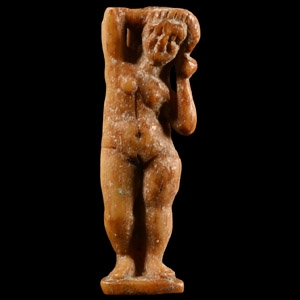
Roman Bone Venus Statuette
2nd-3rd century A.D.Sold for (Inc. bp): £195
Modelled in the round, Venus standing nude with hands raised to dress her hair; dorsal pillar pierced at shoulder height for suspension. 4.9 grams, 40 mm
From a collection acquired on the UK art market from various auction houses and collections mostly before 2000. From an important Cambridgeshire estate; thence by descent.
The iconography of Venus Anadyomene was one of the most commonly used images of the goddess in classical sculpture, and was still popular during the late Roman Empire. The best example of this is the Louvre Venus Anadyomene (Ma 3537) of the 4th century A.D., found in the 19th century at Saint George de la Montagne near Bordeaux, inside a rich aristocratic house and coming from Aphrodisias, an ancient place of statuary production for export. -
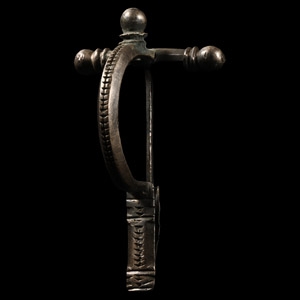
Roman Silver Crossbow Brooch
3rd century A.D.Sold for (Inc. bp): £312
With round-section crossbar and collared knop finials, deep D-section bow with vertical band of triangles extending along the outer face and onto the rectangular footplate with chamfered long edges; separate collared knop above the bow; hinged pin housed in catchplate to reverse. 16.5 grams, 60 mm
On the European art market before 2000. Ex collection of a Surrey, UK, gentleman; acquired on the UK art market.
This early form of crossbow brooch shows its origins in the P-shaped bow brooch type. -
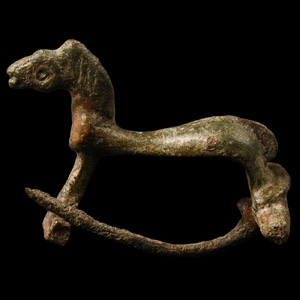
Roman Bronze Horse Brooch
2nd-3rd century A.D.Sold for (Inc. bp): £72
Bow-brooch with hinged pin and fusiform headplate, the bow formed as the body of a horse with spur forming the arched neck and head, catch for the forelegs. 9.98 grams, 41 mm
From a collection acquired on the UK art market from various auction houses and collections mostly before 2000. From an important Cambridgeshire estate; thence by descent.
