
Loading, please wait...
LOT 0668
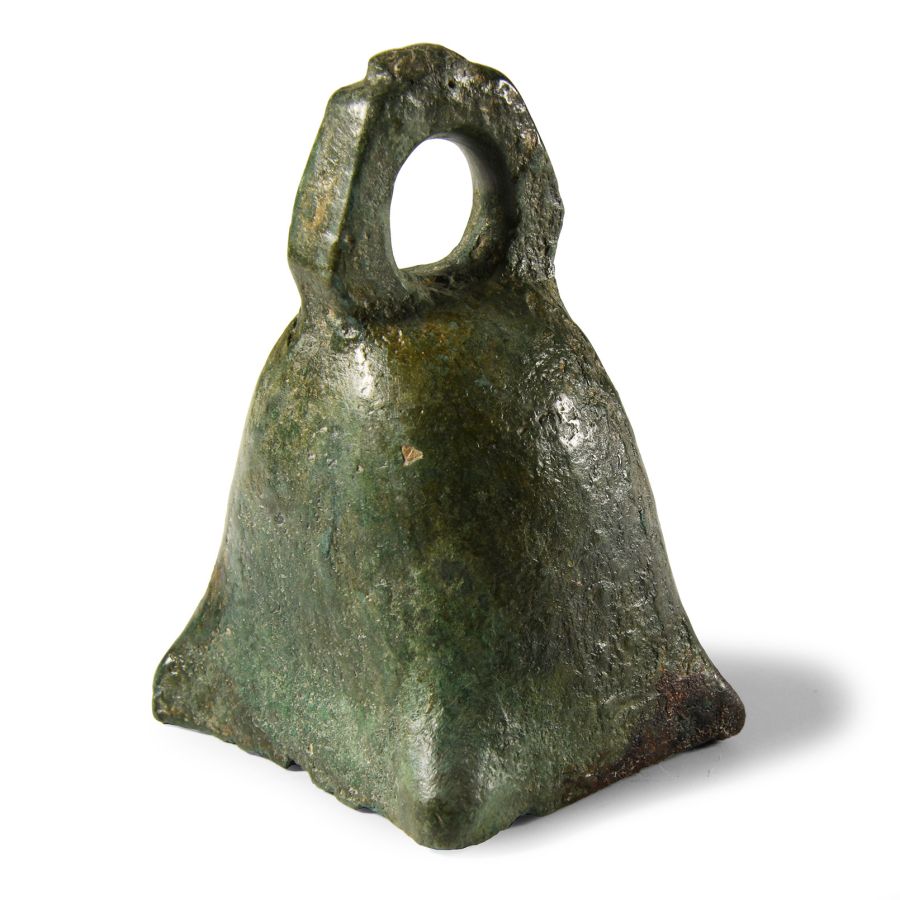
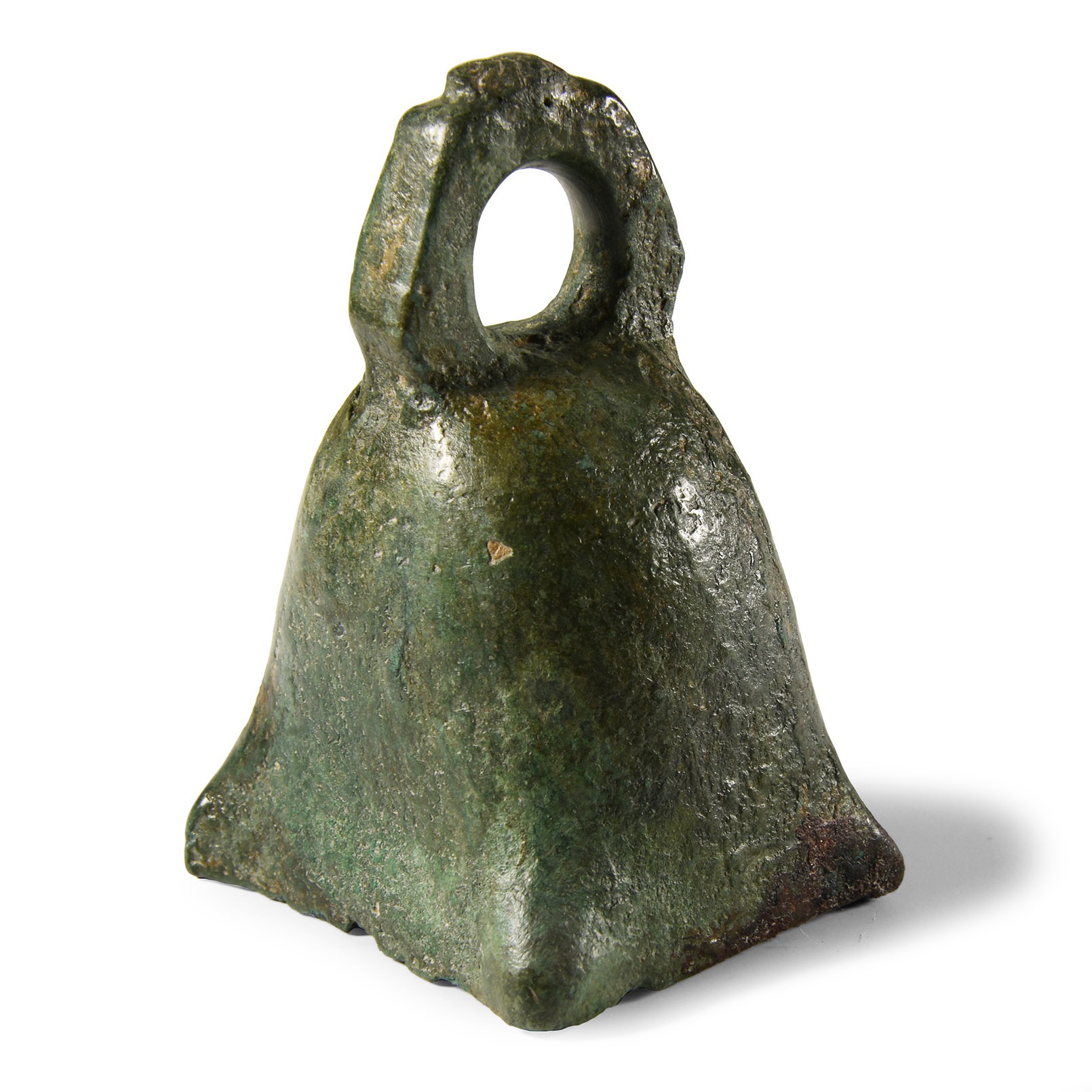
Roman Bronze Square-Shaped Bell
CIRCA 1ST CENTURY A.D.
3 1/4 in. (162 grams, 82 mm).
Of quadrilateral form, with a rectangular cross-section at base, tapering to a rounded dome with large integral suspension loop with five facets to the outer face; clanger absent. [No Reserve]
ProvenanceAcquired before 2000.
From the collection of a European gentleman living in the UK.
Cf. The Metropolitan Museum, New York, accession numbers 98.11.34; 89.4.2429 and 89.4.1614, for similar.
FootnotesThe Romans used bells in ritual and secular contexts, when they could be suspended from the necks of animals, worn for talismanic protection or as anklets by servants.
CONDITIONTimeLine Auctions follows a vetting process to ensure the authenticity and legality of all items, reinforcing our commitment to integrity and responsible trading. Each antiquity, antique, and coin lot undergoes thorough examination by a vetting committee of at least ten external specialists, professional trade association members, scientists, and archaeologists: Our Vetting Process
AUCTIONS:
TimeLine is a leading auction house specialising in antiquities, ancient art, collectables, natural history, coins, medals, and books. Our auctions offer museums, collectors, historians, and enthusiasts the opportunity to acquire unique and historically significant pieces.
-
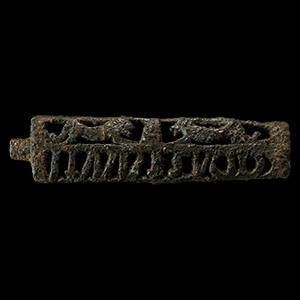
Roman Decorated and Inscribed Animal Hilt
3rd-4th century A.D.Sold for (Inc. bp): £715
Openwork rectangular bifacial dagger- or knife-hilt with lobe pommel and blade-socket; Side A: two rectangular openwork panels, above an inverted openwork inscription 'VTERE FELIX' and below two opposed running hounds; Side B: two opposed running hounds above inverted inscription: 'CONSTANTI' (use [this] with good fortune for Constantine). 87 grams, 11 cm
Private collection 1990s. Ex London, UK, gallery. -
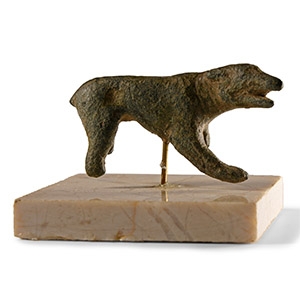
Roman Bronze Hound Statuette
1st-2nd century A.D.Sold for (Inc. bp): £72
Modelled in the round in advancing pose with head lowered and mouth open, low-relief collar to the neck; mounted on a custom-made stand. 80 grams total, 52 mm including stand
From a collection acquired on the UK art market from various auction houses and collections mostly before 2000. From an important Cambridgeshire estate; thence by descent. -
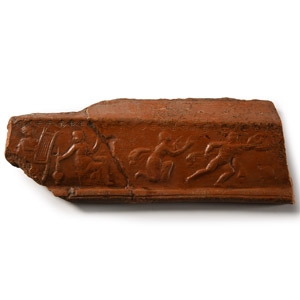
Roman Redware Pottery Sherd with Achilles and Thetis
4th-5th century A.D.Sold for (Inc. bp): £169
From the upper part of a vessel, displaying a frieze of profile images and figural scenes from Graeco-Roman mythology: a musician in late Roman garments playing a harp (Orpheus?), a seated woman weaving with a distaff in her hand (Penelope?), a kneeling naked woman imploring a naked warrior fighting with shield and spear (Achilles and Thetis?). 202 grams, 18 cm
Acquired 1960s-1990s. From the late Alison Barker collection, a retired London barrister.
This terra sigillata fragment appears to have been part of a large tray. Elements of dying paganism were still used to celebrate the deeds of the new imperial heroes. Note the detailed late Roman clothing of the harpist, with a chlamys-paludamentum on the right shoulder and the tunic decorated with clavi and orbiculi.
