
Loading, please wait...
LOT 0653
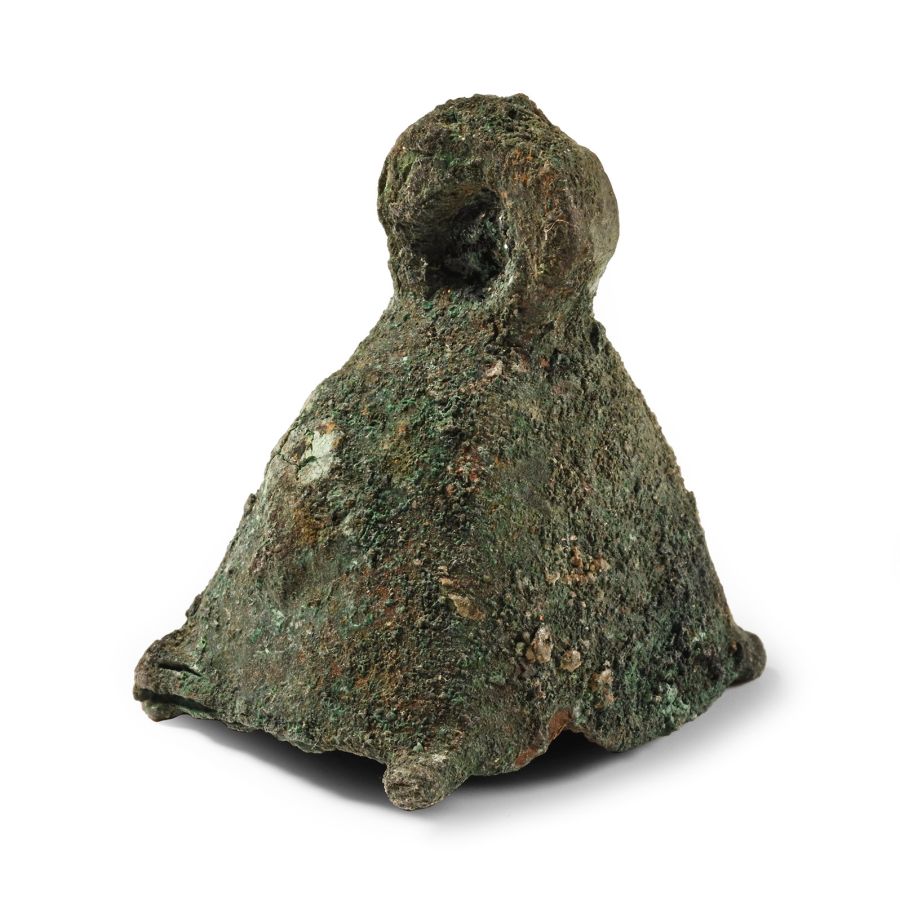
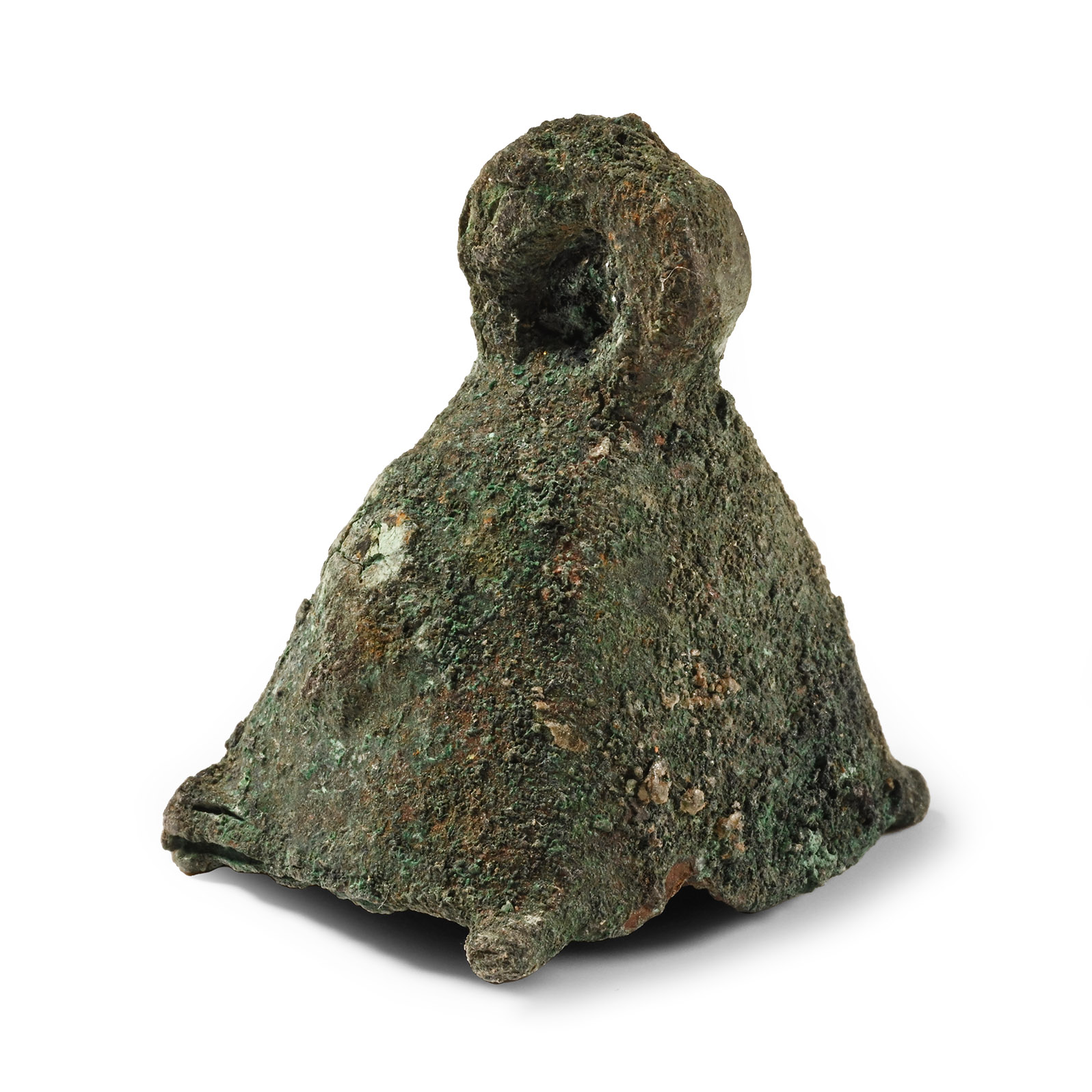
Roman Bronze Square Bell
1ST-4TH CENTURY A.D.
1 5/8 in. (43.1 grams, 42 mm).
With integral loop and four spurs to the lower edge; remains of ferrous clapper in situ. [No Reserve]
ProvenanceEx German art market, 2000s.
Acquired from an EU collector living in London.
From the collection of Surrey, UK, gentleman.
TimeLine Auctions follows a vetting process to ensure the authenticity and legality of all items, reinforcing our commitment to integrity and responsible trading. Each antiquity, antique, and coin lot undergoes thorough examination by a vetting committee of at least ten external specialists, professional trade association members, scientists, and archaeologists: Our Vetting Process
AUCTIONS:
TimeLine is a leading auction house specialising in antiquities, ancient art, collectables, natural history, coins, medals, and books. Our auctions offer museums, collectors, historians, and enthusiasts the opportunity to acquire unique and historically significant pieces.
-
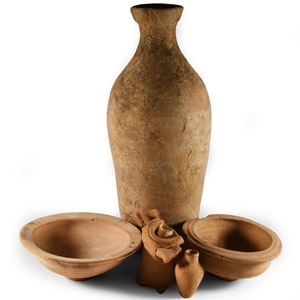
Romano-British Mixed Pottery Sherd Group
3rd century B.C.-1st century A.D.Sold for (Inc. bp): £130
Including a bell-shaped amphora, bowl with carinated profile and other items. 4.6 kg total, 6.5-40 cm
Found UK. From the collection of a late East Anglian teacher and antiquarian who retired to the Isle of Wight in Hampshire, UK. He amassed a large collection of objects between the 1960s-1980s. -
.jpg)
Over Life-Size Gallo-Roman Limestone Head of an Athlete
3rd-4th century A.D.Sold for (Inc. bp): £5,720
With short hair, cut and combed in regular lines, furrowed brow and wide deep-set eyes, small fleshy mouth, intense and powerful expression; weather-worn surface; mounted on a later 18th century stand. 16.35 kg total, 35 cm including stand
Acquired in the 1930s. From the family collection of Mr F. Morand, France. From the M.J. collection, Wales, UK. Accompanied by an academic report by Dr Raffaele D'Amato. This lot has been checked against the Interpol Database of stolen works of art and is accompanied by a search certificate number no.12070-217746.
The head shows a late Roman appearance in its features and hairstyle. The expression, the short thick neck and the style of the hair combined with the somewhat uncouth and forceful expression may indicate a local Gallo-Roman character. -
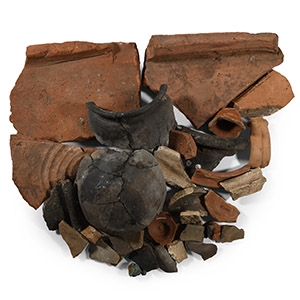
Roman Mixed Pottery Sherd Group
1st-4th century A.D.Sold for (Inc. bp): £7
Including fragments of terracotta tile, bowl rims and bases, and other items. 4 kg total, 1-23.5 cm
From the collection of a late East Anglian teacher and antiquarian who retired to the Isle of Wight in Hampshire, UK. He amassed a large collection of objects between the 1960s-1980s.
