
Loading, please wait...

LOT 0128
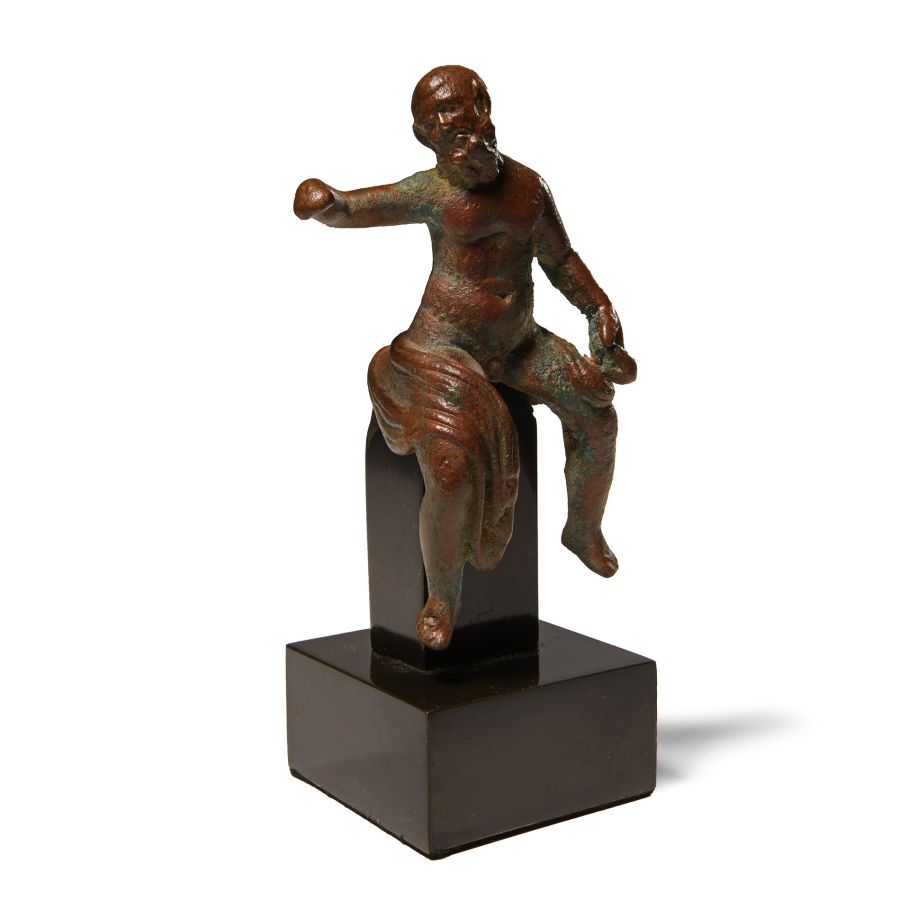
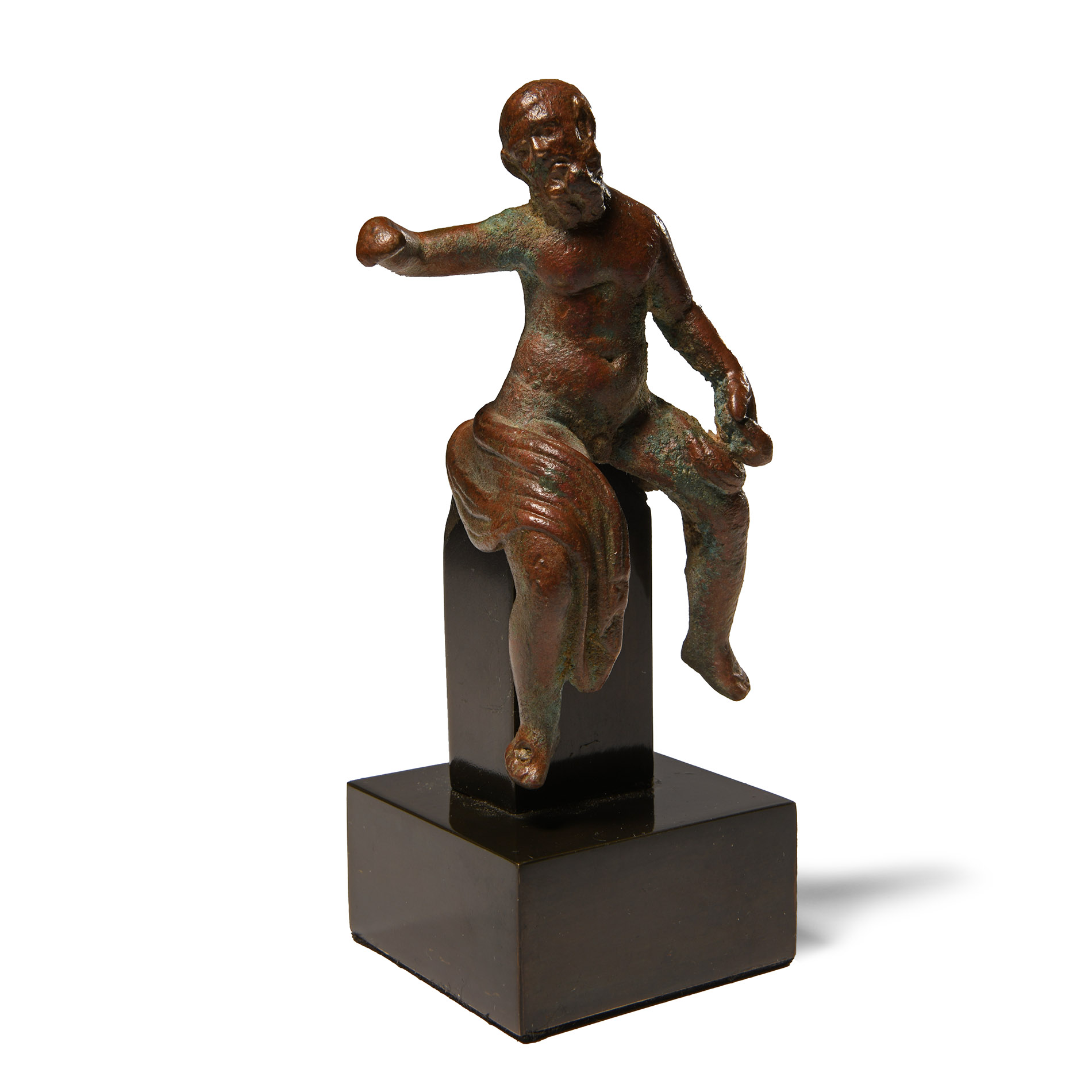
Roman Bronze Silenus Rider Figurine
1ST-3RD CENTURY A.D.
3 7/8 in. (5 1/2 in.) (200 grams, 98 mm (362 grams total, 14 cm high including stand)).
Modelled in the round as a figure of a nude male with legs spread as if bestriding a horse; the bald head tilted an turned towards the right shoulder, with pointed ears, fleshy features and a full beard; a textile covering draped around the right thigh and lower body gathered in the left hand; the legs spread and feet dangling, with later holes for attachment pegs; the right arm extended perpendicular to the body and the hand bent round; the base of the spine with vestigial tail and the cloth draped as if on a horse's rump; mounted on a custom-made stand. [No Reserve]
ProvenanceLondon art market, 1992.
LiteratureCf. Rolland, H., Bronzes Antiques de Haute Provence, Paris, 1965, item 140, for type.
FootnotesThe figure represents either Silenus himself, the aged and semi-bestial companion of Dionysus, or a Seilenos - a member of the feral group of which he was the leader. The attitude of the figure, with the right arm extended and the head tilted, suggests that there should have been an accompanying female figure to whom Silenus was paying full attention. As a devotee of Dionysus, Silenus is often shown with Bacchantes, female celebrants in the cult of wine-drinking, music and other pleasurable pursuits.
CONDITIONTimeLine Auctions follows a vetting process to ensure the authenticity and legality of all items, reinforcing our commitment to integrity and responsible trading. Each antiquity, antique, and coin lot undergoes thorough examination by a vetting committee of at least ten external specialists, professional trade association members, scientists, and archaeologists: Our Vetting Process
AUCTIONS:
TimeLine is a leading auction house specialising in antiquities, ancient art, collectables, natural history, coins, medals, and books. Our auctions offer museums, collectors, historians, and enthusiasts the opportunity to acquire unique and historically significant pieces.
-
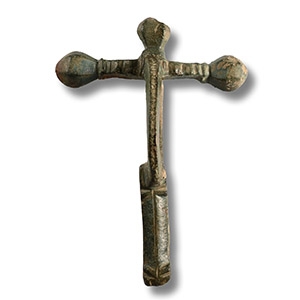
Roman Bronze Crossbow Brooch
4th century A.D.Sold for (Inc. bp): £65
With three onion-shaped knops on the crossbar and stepped upper face, narrow bow, rectangular footplate with catch to the reverse, hinged pin. 31.3 grams, 69 mm
Ex German art market, 2000s. Acquired from an EU collector living in London. From the collection of Surrey, UK, gentleman. -
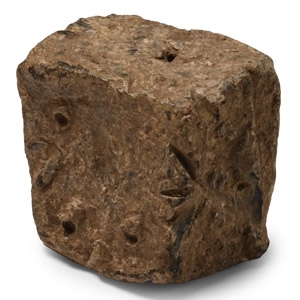
Roman 'Wiltshire' Lead Dice Gaming Piece
1st-4th century A.D.Sold for (Inc. bp): £46
Cuboid with impressed point markings disposed 1:5, 2:3, 4:6; with old collector's record card. 44.8 grams, 22 mm
Found Wiltshire, UK. From the important private collection of dice and gaming pieces of Colin Narbeth, London, UK, collection no.65. Accompanied by a Colin Narbeth catalogue identification card. -
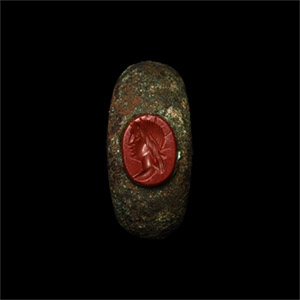
Roman Bronze Ring with Bust of Sol Gemstone
2nd century A.D.Sold for (Inc. bp): £156
With inset jasper gemstone, intaglio profile bust of Sol with radiate crown; supplied with a museum-quality impression. 4.36 grams, 21.88 mm overall, 16.61 mm internal diameter (approximate size British I 1/2, USA 4 1/2, Europe 8.07, Japan 7)
Private collection, England.
