
Loading, please wait...
LOT 0913
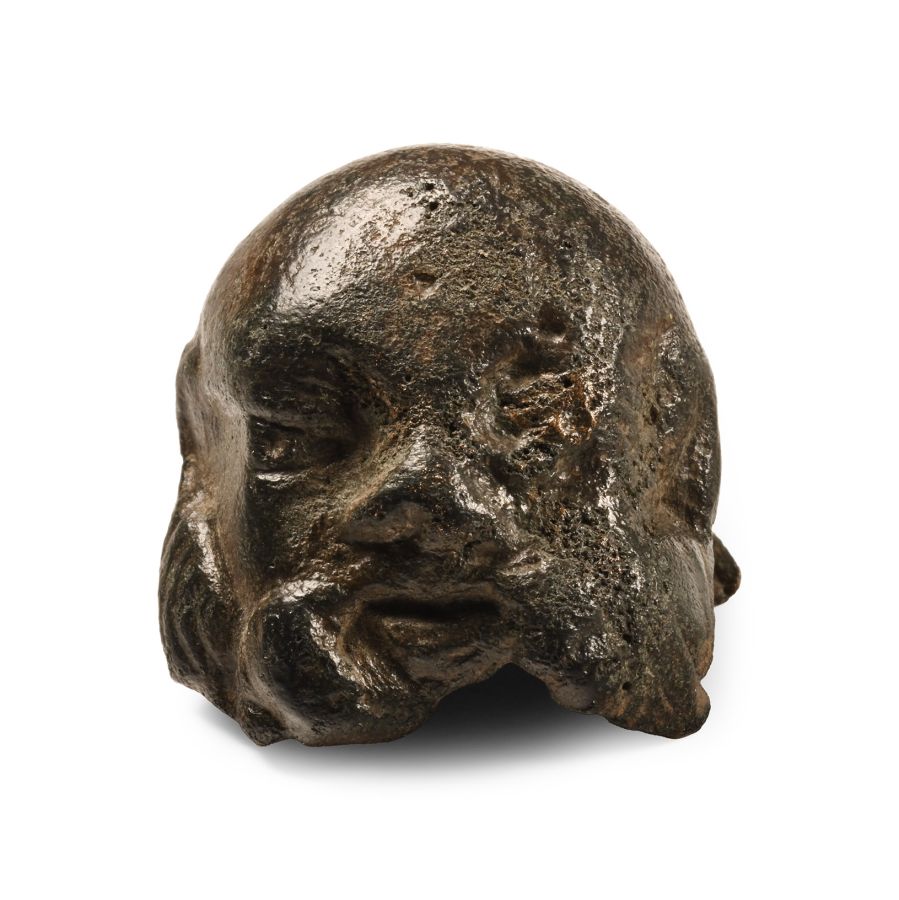
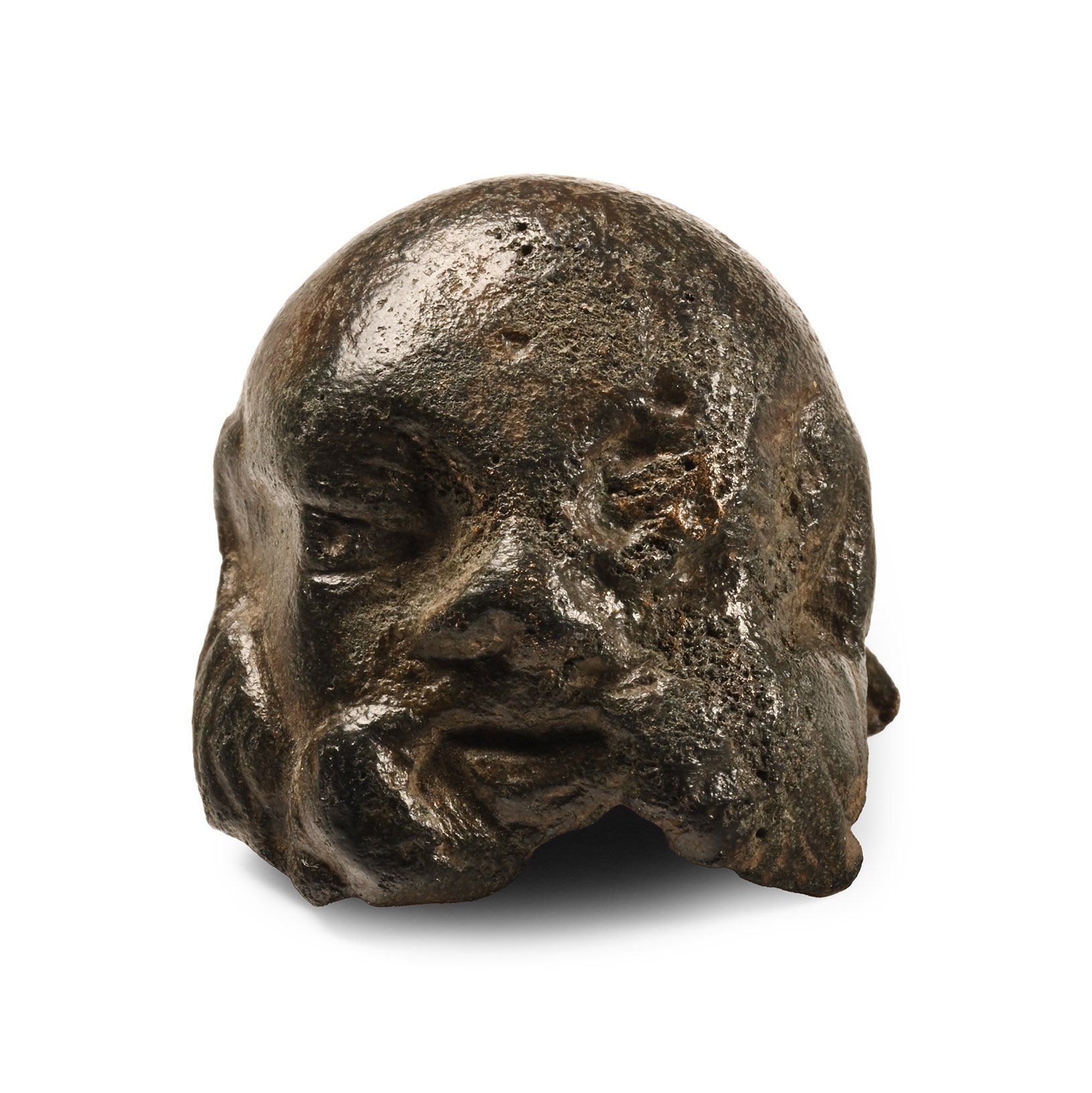
Roman Bronze Silenus Head Mount
1ST-3RD CENTURY A.D.
1 in. (17.14 grams, 23 mm).
Hollow-formed head with flaccid features, rim to reverse and mounting bar. [No Reserve]
ProvenanceFrom a Suffolk, UK, collection, 1990s-2000s.
CONDITIONTimeLine Auctions follows a vetting process to ensure the authenticity and legality of all items, reinforcing our commitment to integrity and responsible trading. Each antiquity, antique, and coin lot undergoes thorough examination by a vetting committee of at least ten external specialists, professional trade association members, scientists, and archaeologists: Our Vetting Process
AUCTIONS:
TimeLine is a leading auction house specialising in antiquities, ancient art, collectables, natural history, coins, medals, and books. Our auctions offer museums, collectors, historians, and enthusiasts the opportunity to acquire unique and historically significant pieces.
-
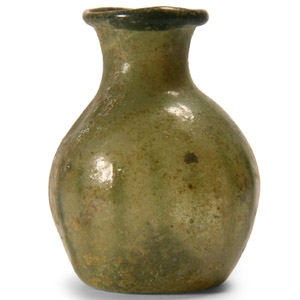
Late Roman Green Glass Vessel
4th-6th century A.D.Sold for (Inc. bp): £124
Bulbous in profile with dimpled underside, blown construction, everted rolled rim. 13.2 grams, 64 mm
Acquired from Allan Cherry, Bournemouth, UK, 2006. Ian Wilkinson collection, Nottinghamshire, UK.
Similar flasks and bottles were produced in Roman Asia Minor; this is a typical example of a type found in all corners of the empire. These were decorated in many ways including applying additional pieces of glass, by cutting the surface, or (as in our case) by moulding the vessels when they were blown. -
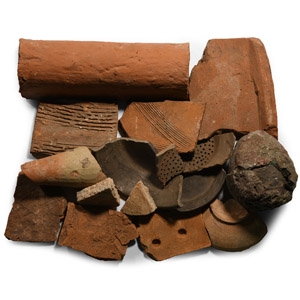
Romano-British Pottery Sherd Collection
1st-4th century A.D.Sold for (Inc. bp): £20
Including roof-ridge channel, floor tile, bowl rim and other items. 6.4 kg total, 6-28.5 cm
Found UK. From the collection of a late East Anglian teacher and antiquarian who retired to the Isle of Wight in Hampshire, UK. He amassed a large collection of objects between the 1960s-1980s. -
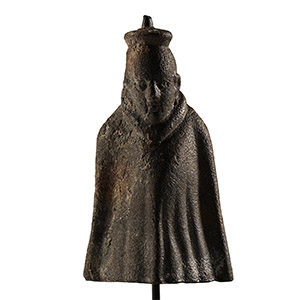
Roman Bronze Grotesque Figure with Paenula
2nd century A.D.Sold for (Inc. bp): £468
Hollow-formed with short hair and a beret, wearing a paenula military cloak extending to the hips; mounted on a custom-made display stand. 110 grams total, 90 mm including stand
From a collection acquired on the UK art market from various auction houses and collections mostly before 2000. From an important Cambridgeshire estate; thence by descent.
Telesphorus, dressed in the Gallo-Roman manner with the long hooded military cloak (folded on his back), was the subject of many votive statuettes in Roman Gaul. Son of Aesculapius, god of medicine, he certainly had a connection with the world of healing and medical care, and was associated with his sister Hygeia. He belonged to the Celtic pantheon and was spread to the East by the Galatians of Asia Minor. His cult then spread to the West, particularly in the Hadrianic period, as attested by his images found on the Wall at Birdoswald.
