
Loading, please wait...
LOT 0742
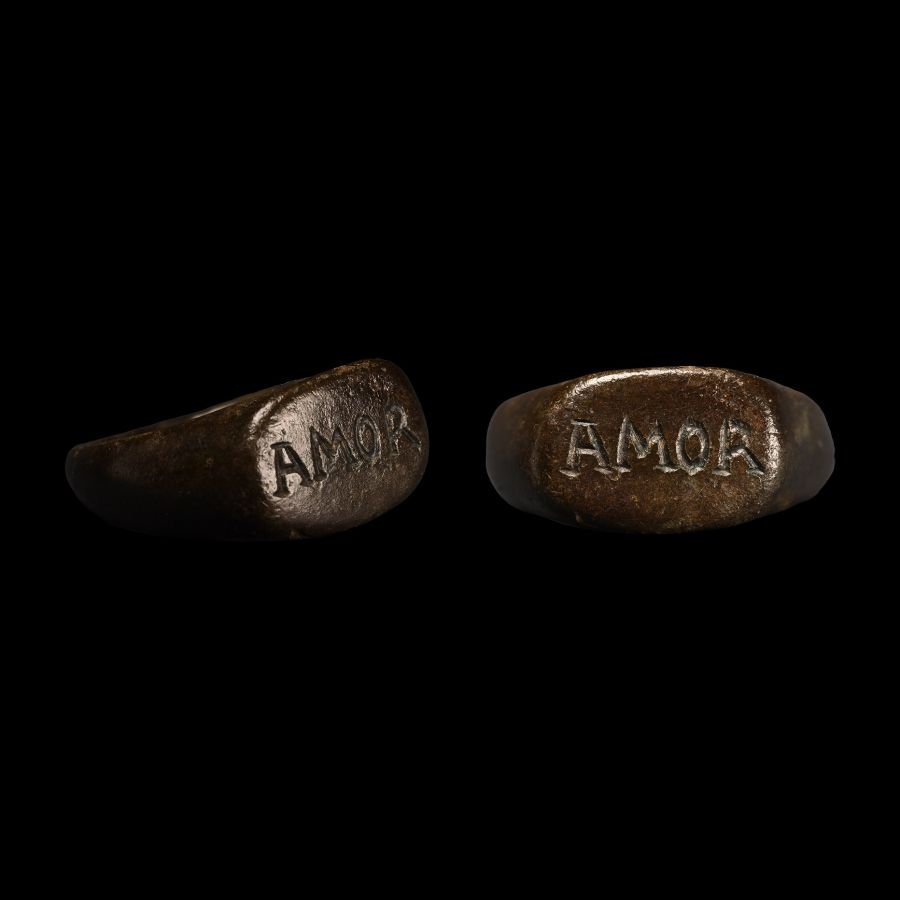
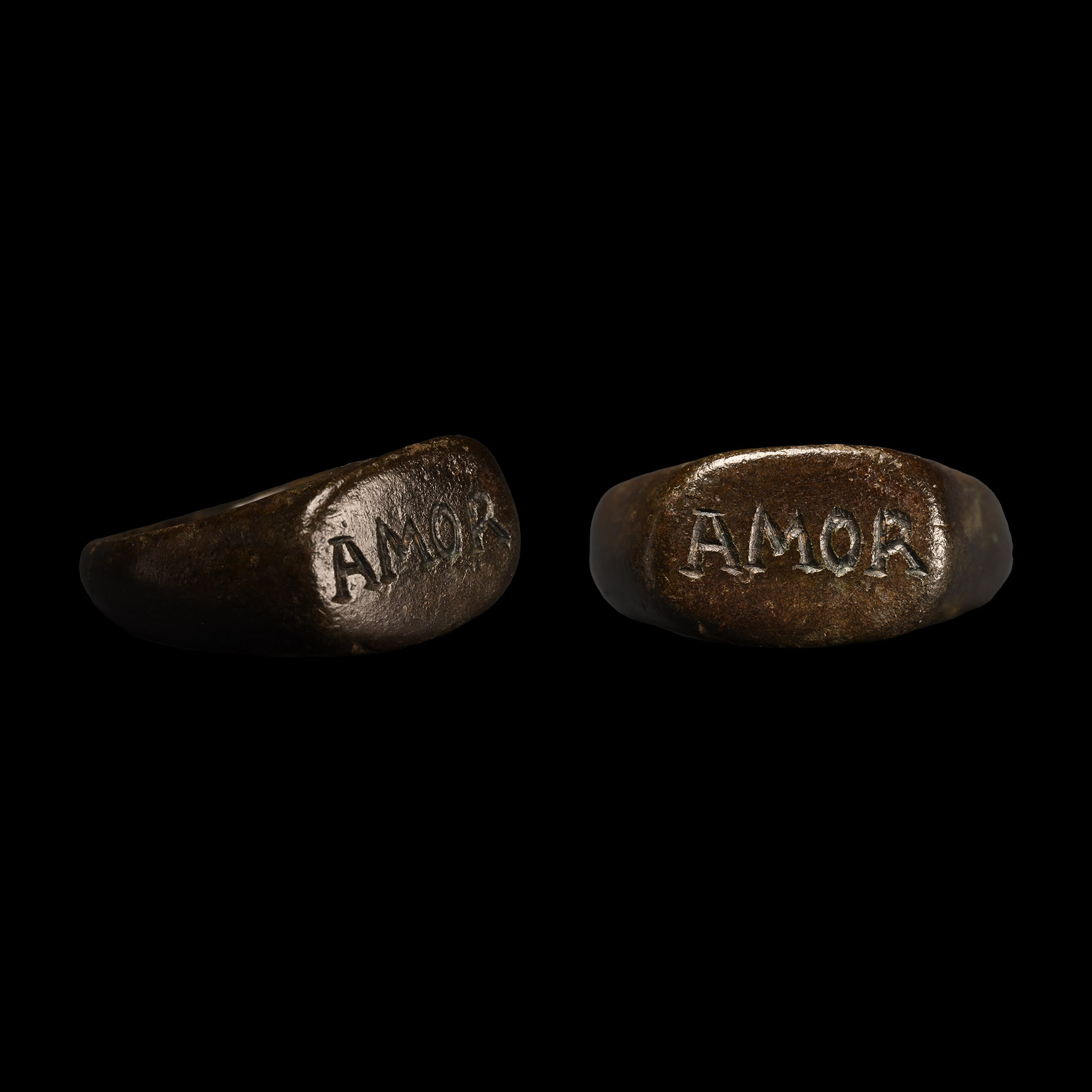
Roman Bronze Signet Ring with AMOR
1ST-3RD CENTURY A.D.
1 in. (8.37 grams, 23.06 mm overall, 17.39 mm internal diameter (approximate size British N, USA 6 1/2, Europe 13.72, Japan 13)).
Ellipsoid bezel with incised 'AMOR' legend. [No Reserve]
ProvenanceEx German art market, 2000s.
Acquired from an EU collector living in London.
From the collection of Surrey, UK, gentleman.
TimeLine Auctions follows a vetting process to ensure the authenticity and legality of all items, reinforcing our commitment to integrity and responsible trading. Each antiquity, antique, and coin lot undergoes thorough examination by a vetting committee of at least ten external specialists, professional trade association members, scientists, and archaeologists: Our Vetting Process
AUCTIONS:
TimeLine is a leading auction house specialising in antiquities, ancient art, collectables, natural history, coins, medals, and books. Our auctions offer museums, collectors, historians, and enthusiasts the opportunity to acquire unique and historically significant pieces.
-
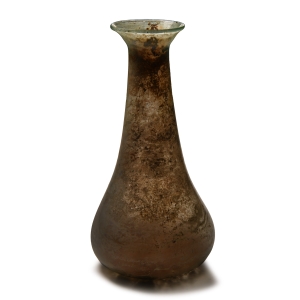
Large Roman Glass Bottle
1st-3rd century A.D.Estimate: £300 - 400 (+bp*)
Opening Bid: £150
An aqua glass flask with piriform body, dimpled base, tapering tubular neck with everted rolled rim. 63 grams, 19 cm
Acquired on the German art market, 1989-1995. with The Museum Gallery, 19 Bury Place, London, WC, UK, 1998-2003. Property of a London based academic, 2003-present. -
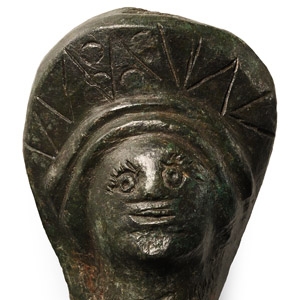
Roman Bronze Figural Attachment
3rd-4th century A.D.Sold for (Inc. bp): £33
Piriform mount with stylised facial features, broad band of hair with incised zigzag and roundels, hollow to the reverse. 71.6 grams, 66 mm
Ex German art market, 2000s. Acquired from an EU collector living in London. From the collection of Surrey, UK, gentleman. -
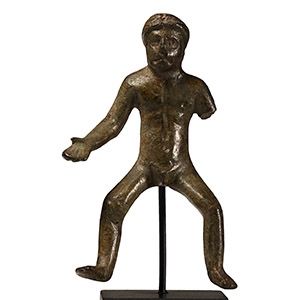
Gallo-Roman Bronze Statuette of a Rider God
1st century B.C.-1st century A.D.Sold for (Inc. bp): £182
Modelled in the round as a nude horseman with legs spread, musculature suggested to the chest and abdomen, shoulder-length hair with wavy locks, almond-shaped eyes and snub nose; right hand extended palm-upwards; mounted on a custom-made display stand. 154 grams total, 11 cm including stand
From a collection acquired on the UK art market from various auction houses and collections mostly before 2000. From an important Cambridgeshire estate; thence by descent.
The type has similarities with representations of Mercury on horseback, who is shown in an identical position. Images of Romano-Celtic rider-gods, possibly associated with the Roman god of war Mars, used similar iconography. There are a number of such rider statuettes from Roman Britain and Gaul, potentially votive offerings to a deity.
