
Loading, please wait...
LOT 0652
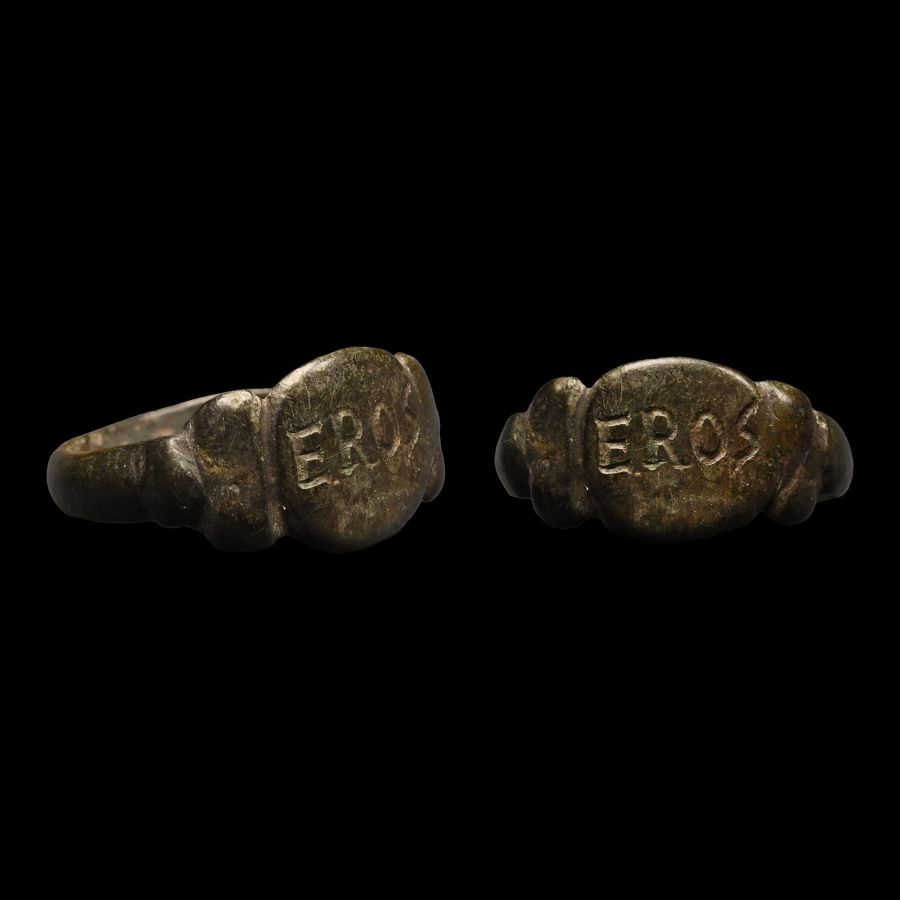
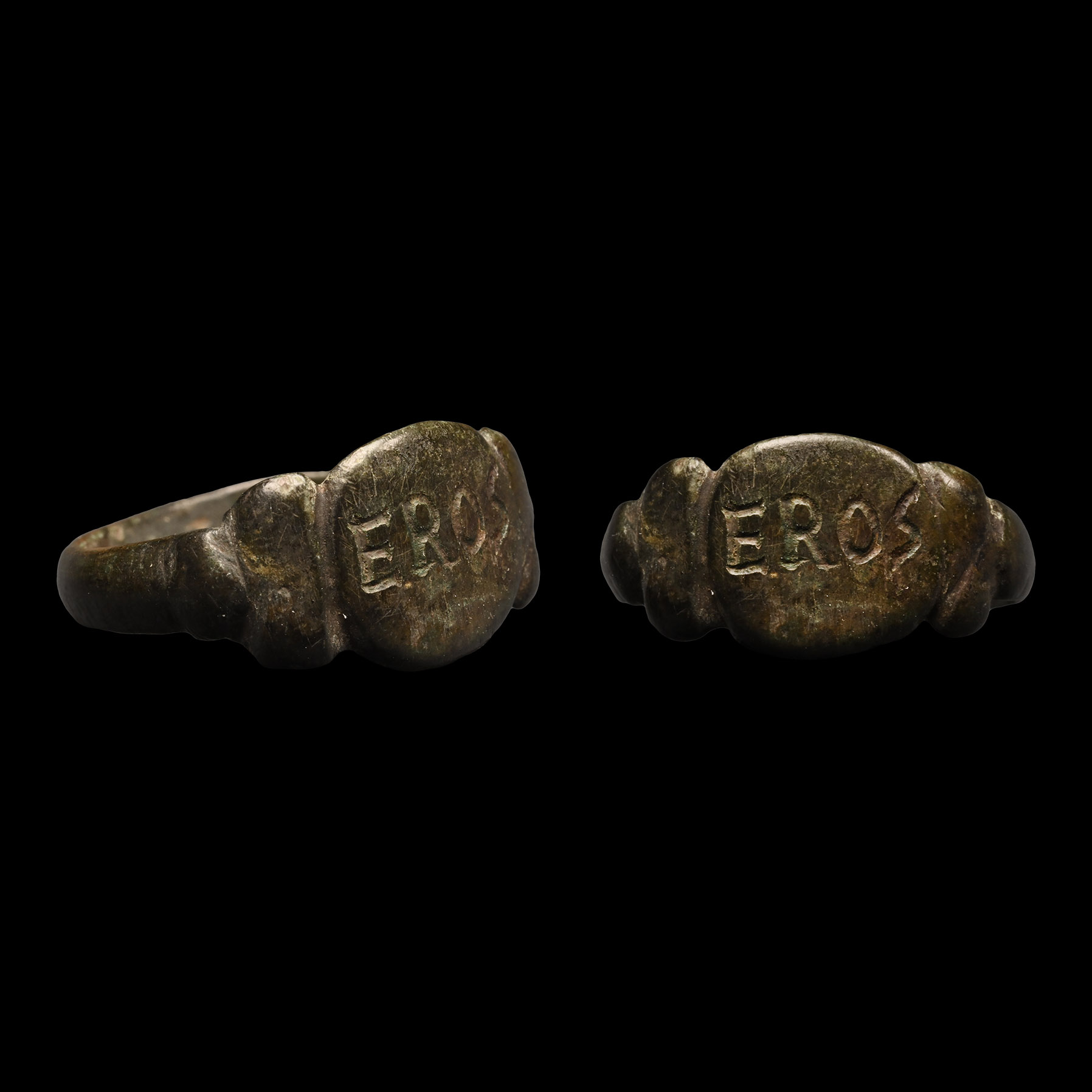
Roman Bronze Signet Ring for EROS
3RD-4TH CENTURY A.D.
3/4 in. (3.56 grams, 21.30 mm overall, 18.34 mm internal diameter (approximate size British Q, USA 8, Europe 17.49, Japan 16)).
With cluster of bulbs to each shoulder, discoid bezel with 'EROS' inscription. [No Reserve]
ProvenanceEx German art market, 2000s.
Acquired from an EU collector living in London.
From the collection of Surrey, UK, gentleman.
TimeLine Auctions follows a vetting process to ensure the authenticity and legality of all items, reinforcing our commitment to integrity and responsible trading. Each antiquity, antique, and coin lot undergoes thorough examination by a vetting committee of at least ten external specialists, professional trade association members, scientists, and archaeologists: Our Vetting Process
AUCTIONS:
TimeLine is a leading auction house specialising in antiquities, ancient art, collectables, natural history, coins, medals, and books. Our auctions offer museums, collectors, historians, and enthusiasts the opportunity to acquire unique and historically significant pieces.
-
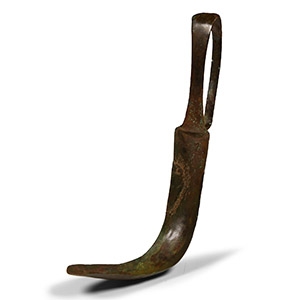
Roman Bronze Strigil
2nd century B.C.-1st century A.D.Sold for (Inc. bp): £780
With C-section profile to the blade, rectangular handle with flare to the upper end, old notch to one edge, repaired. 46 grams, 19 cm
Ex collection Dr. Kuhn-Lucht, Germany. with Kölner Munzkabinett, Cologne, before 2016. Private European collection.
An emblematic instrument of the ancient sporting world, the strigil was mainly used by athletes as a scraper for personal hygiene. After training, which took place in the gymnasiums on tracks and arenas covered with sand, athletes and young people rubbed their skin with olive oil. They then used one of these distinctive scrapers remove the sand-oil mixture before washing in water. These actions are reproduced on famous statues (including Apoxyomenos, one of Lysippus’ masterpieces), on reliefs (such as funerary steles) as well as on countless vase paintings. In Attic and Italian red-figure imagery, the strigil is often depicted on perfume vases, like the aryballos and alabastron. -
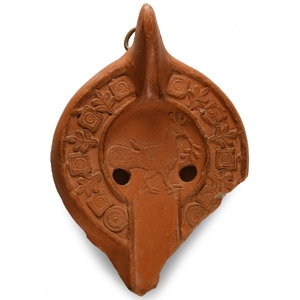
Roman Redware Lamp Sherd with Bird
4th-5th century A.D.Sold for (Inc. bp): £65
With flange handle to the rear, band of fronds and squares to the shoulder, dove with olive branch in its beak to the discus. 83 grams, 12.1 cm
Acquired 1960s-1990s. From the late Alison Barker collection, a retired London barrister. -
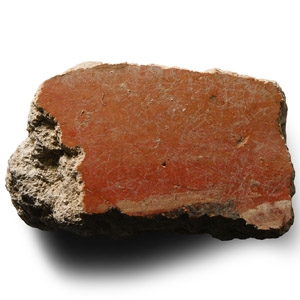
Roman 'Pompeii Red' Fresco Wallplaster
1st century A.D.Sold for (Inc. bp): £72
Fragment of wall plaster with rendered surface painted red with yellow and white detailing to the edge; impression of timber laths to the reverse; old inked inscription: 'SIDI BOU ALI' to verso. 234 grams, 11.3 cm
Acquired early 1900s. Swiss family collection. Acquired at Birmingham Coin & Antiquities Fair, circa 2004. Ian Wilkinson collection, Nottinghamshire, UK.
The ancient city of Sousse (today Sidi Bou Ali) was the Roman centre of Ulssipira, famous for its wonderful mosaics. However, as across Roman Tunisia, remains of frescoed houses have also been preserved. The ‘Pompeian red’ was used for walls as well as columns, such as those in the ‘house of the red columns’, Acholla, where the peristyle was formed by a narrow courtyard with stuccoed columns painted red.
