
Loading, please wait...
LOT 0146
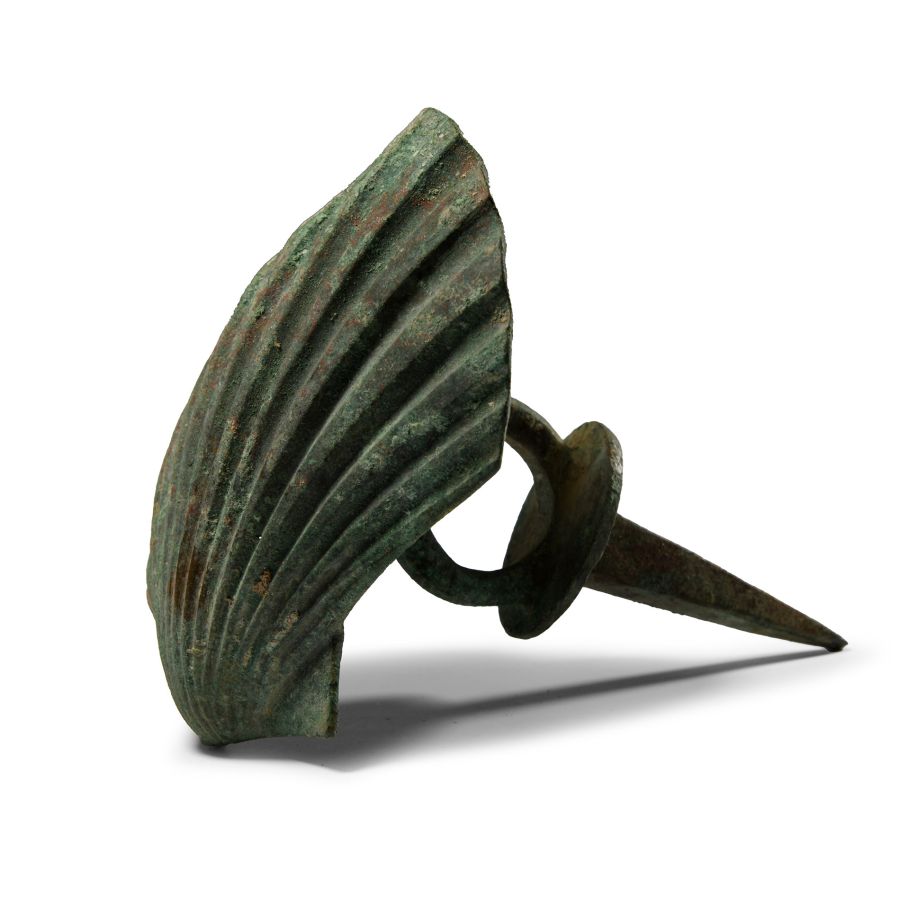
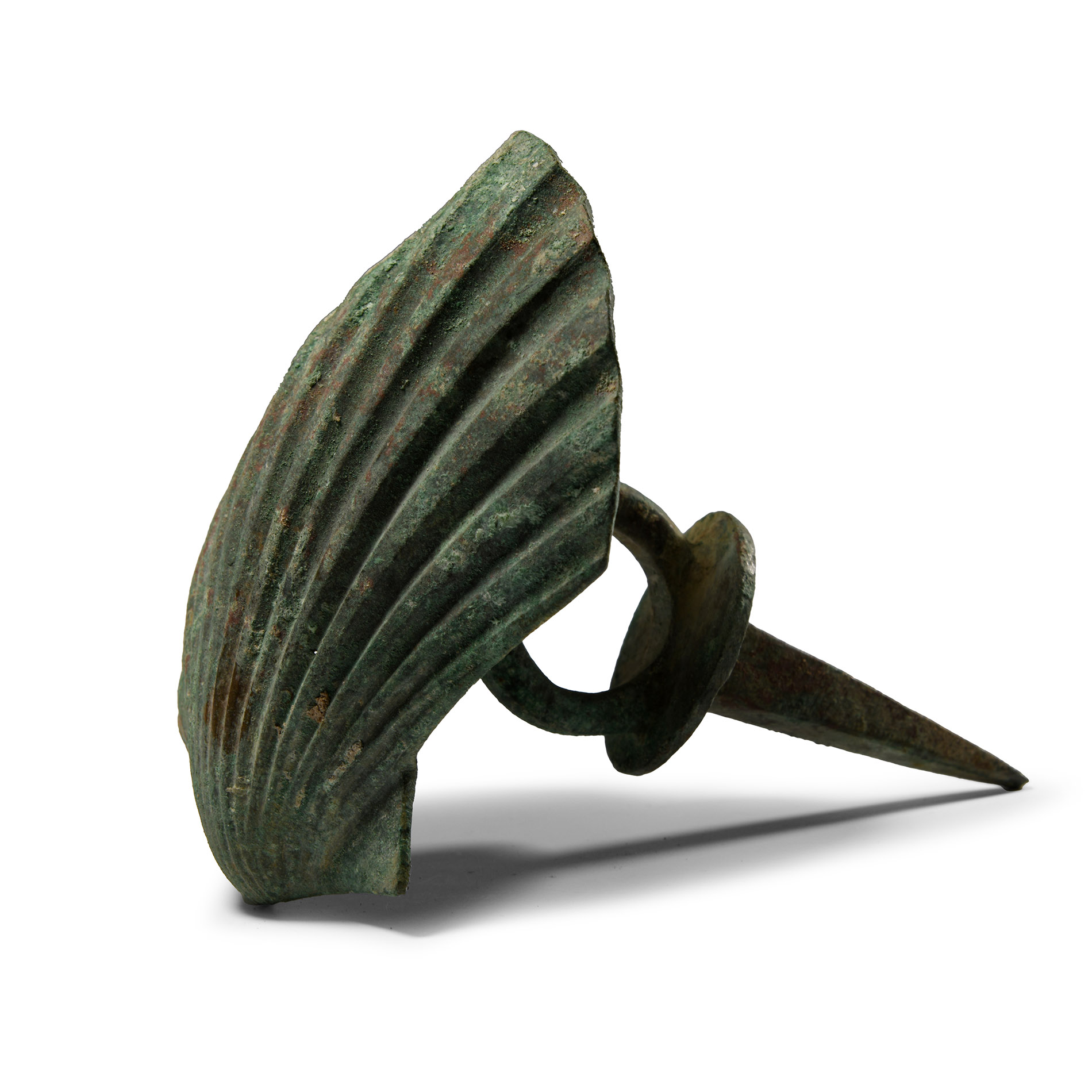
Roman Bronze Scallop Shell Chariot Mount
2ND CENTURY A.D.
5 in. (351 grams, 12.7 cm).
Formed as a scallop shell with integral staple and spurs developing to a ring with disc above and square-section mounting spike.
ProvenanceAcquired in the 1960s.
Private collection, Rosenheim, Germany.
Private collection, England.
Cf. Boucher, S., Inventaire des Collections Publiques Françaises - 17 Vienne: Bronzes Antiques, Paris, 1971, items 658ff, pp.200-201.
CONDITIONTimeLine Auctions follows a vetting process to ensure the authenticity and legality of all items, reinforcing our commitment to integrity and responsible trading. Each antiquity, antique, and coin lot undergoes thorough examination by a vetting committee of at least ten external specialists, professional trade association members, scientists, and archaeologists: Our Vetting Process
AUCTIONS:
TimeLine is a leading auction house specialising in antiquities, ancient art, collectables, natural history, coins, medals, and books. Our auctions offer museums, collectors, historians, and enthusiasts the opportunity to acquire unique and historically significant pieces.
LOT 0146
Roman Bronze Scallop Shell Chariot Mount
Estimate £1,000 - 1,400€1,160 - 1,620 (for guidance only)$1,350 - 1,890 (for guidance only)
-
Late Roman Glass Pendant with Profile Bust
Mid 4th-early 5th century A.D.Sold for (Inc. bp): £117
Discoid in plan with pierced lug above, impressed profile bust with pointillé hair; repaired. 1.47 grams, 24 mm
Collected from 1970-1999. From the collection of the late Mr S.M., London, UK. -
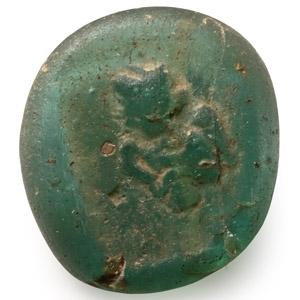
Roman Green Glass Weight
1st-4th century A.D.Sold for (Inc. bp): £39
Discoid with stepped profile, reserved bust of a winged putto holding a lyre. 2.5 grams, 17 mm
Collected from 1970-1999. From the collection of the late Mr S.M., London, UK. -
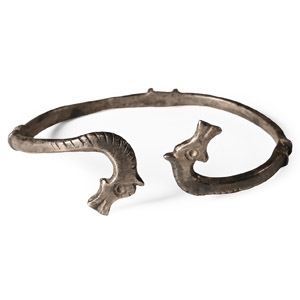
Roman Silver Horse-Headed Bracelet
3rd-4th century A.D.Sold for (Inc. bp): £221
Penannular bracelet with D-section shank, paired projecting flanges, horse-head finials placed tête-bêche each with ring-and-dot eye and notched mane. 9.9 grams, 59 mm
Property of the vendor's grandfather, thence by family descent, circa 1985. From the private collection of a New York, USA gentleman.
