
Loading, please wait...
LOT 0761
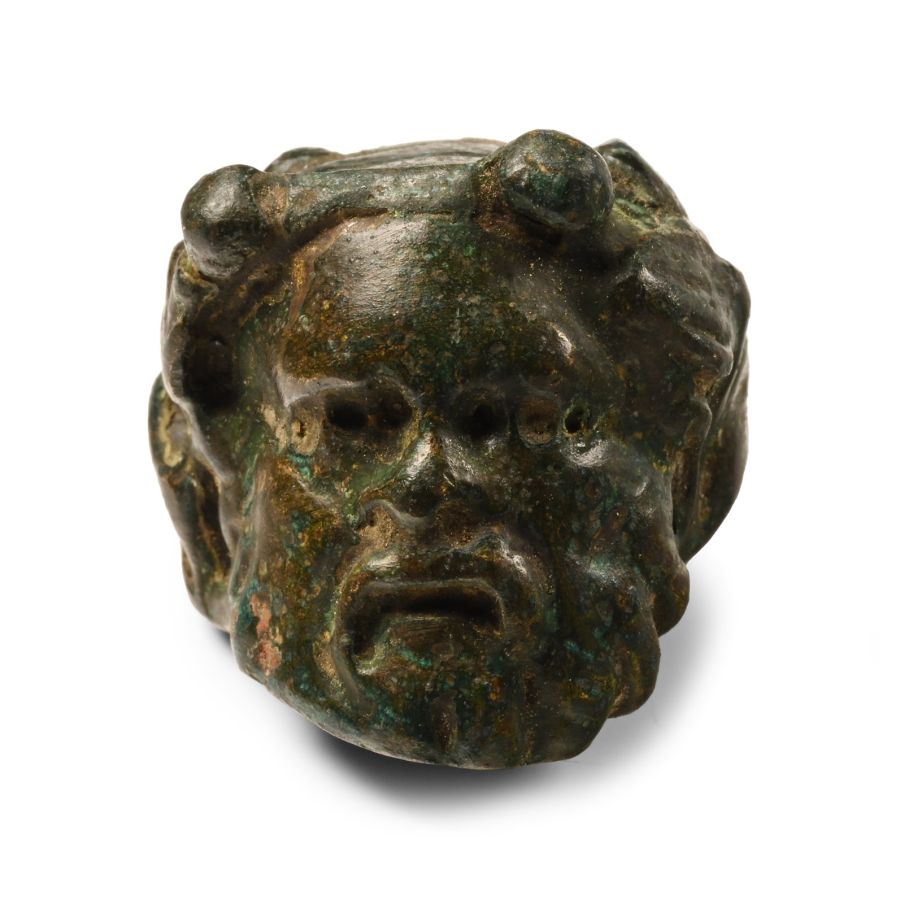
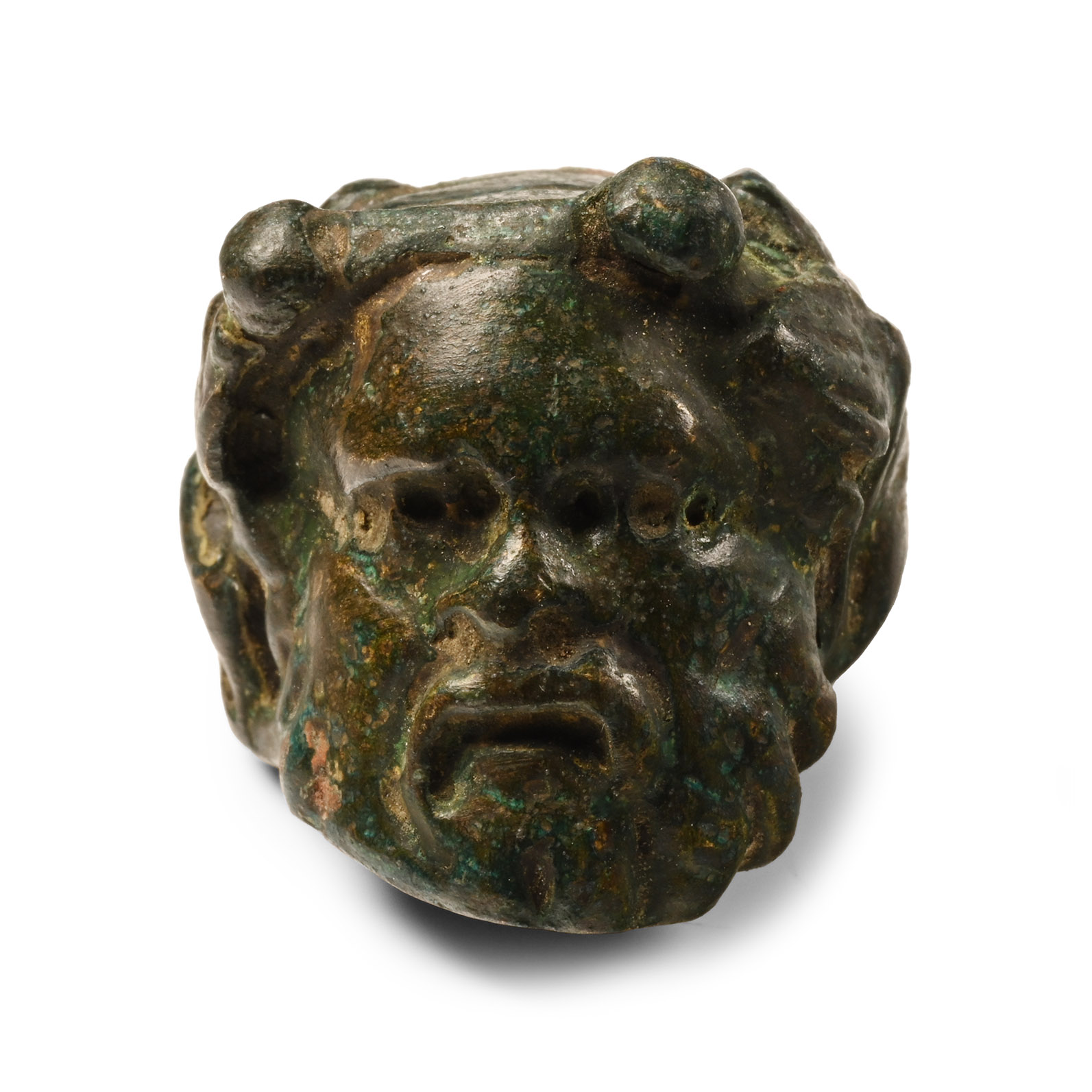
Roman Bronze Satyr Attachment
2ND-3RD CENTURY A.D.
1 in. (34.7 grams, 25 mm).
The satyr (Greek Silenus) modelled in the round with a laurel crown on the head, full beard and abundant hair to the sides of the head, hollow underside. [No Reserve]
ProvenanceEx German art market, 2000s.
Acquired from an EU collector living in London.
From the collection of Surrey, UK, gentleman.
TimeLine Auctions follows a vetting process to ensure the authenticity and legality of all items, reinforcing our commitment to integrity and responsible trading. Each antiquity, antique, and coin lot undergoes thorough examination by a vetting committee of at least ten external specialists, professional trade association members, scientists, and archaeologists: Our Vetting Process
AUCTIONS:
TimeLine is a leading auction house specialising in antiquities, ancient art, collectables, natural history, coins, medals, and books. Our auctions offer museums, collectors, historians, and enthusiasts the opportunity to acquire unique and historically significant pieces.
-
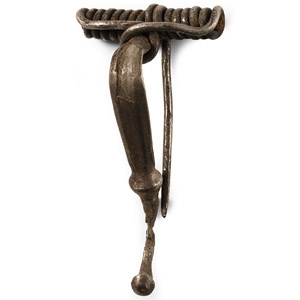
Roman Silver Bow Brooch
2nd-4th century A.D.Sold for (Inc. bp): £98
Of P-shaped type with bulb above the footplate and knop finial, tightly-wound coil and integral pin. 6.42 grams, 42 mm
Ex German art market, 2000s. Acquired from an EU collector living in London. From the collection of Surrey, UK, gentleman. -
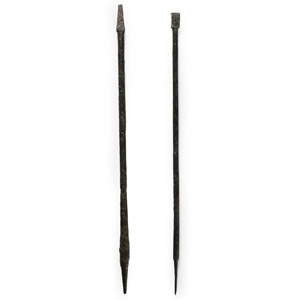
Roman Iron Stylus Pair
Circa 1st century A.D.Sold for (Inc. bp): £195
Each with one pointed and one chiselled finial. 17.4 grams total, 14.5 - 14.8 cm
Found City of London, UK. Acquired from mudlark Steve Brooker in the early 2000s. Ian Wilkinson collection, Nottinghamshire, UK, formed since 1985. -
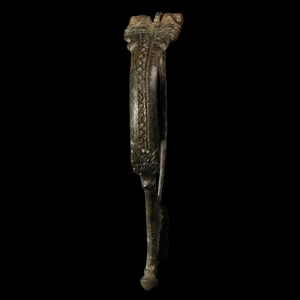
Large Roman Bronze Bow Brooch
1st-2nd century A.D.Sold for (Inc. bp): £59
With wide bow decorated with annular motifs ending to a stylised animal head from which the triangular catch-plate emerges. 36 grams, 10.5 cm
Ex German art market, 2000s. Acquired from an EU collector living in London. From the collection of Surrey, UK, gentleman.
