
Loading, please wait...
LOT 0712
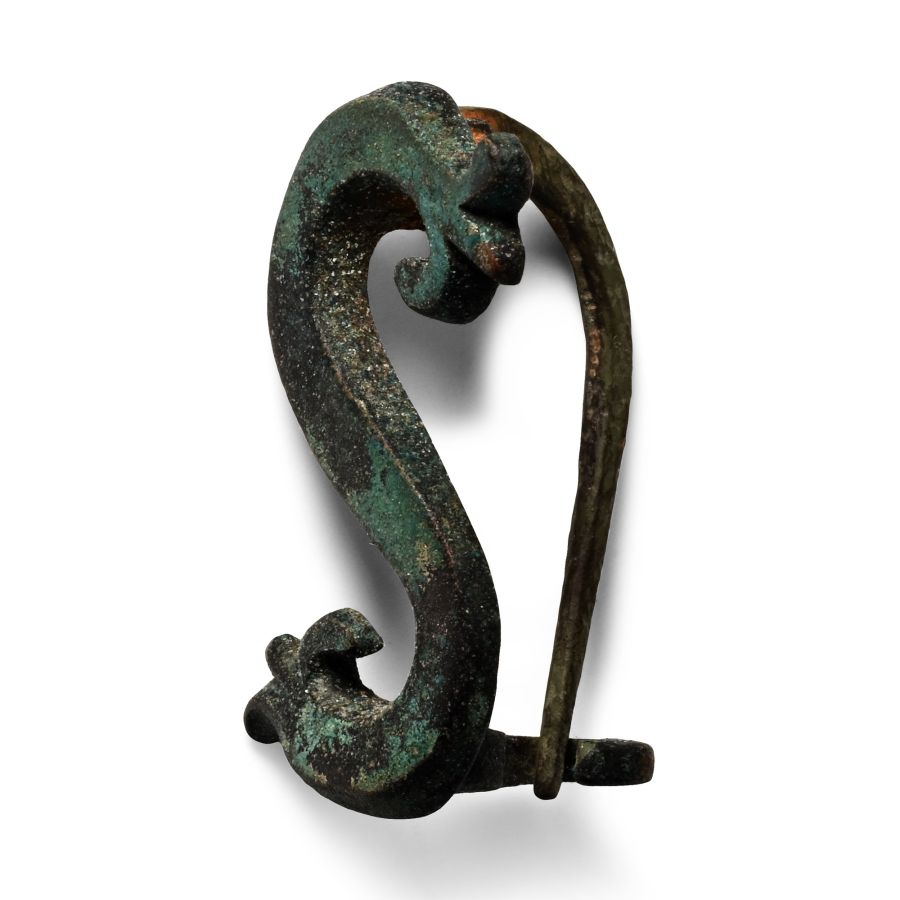
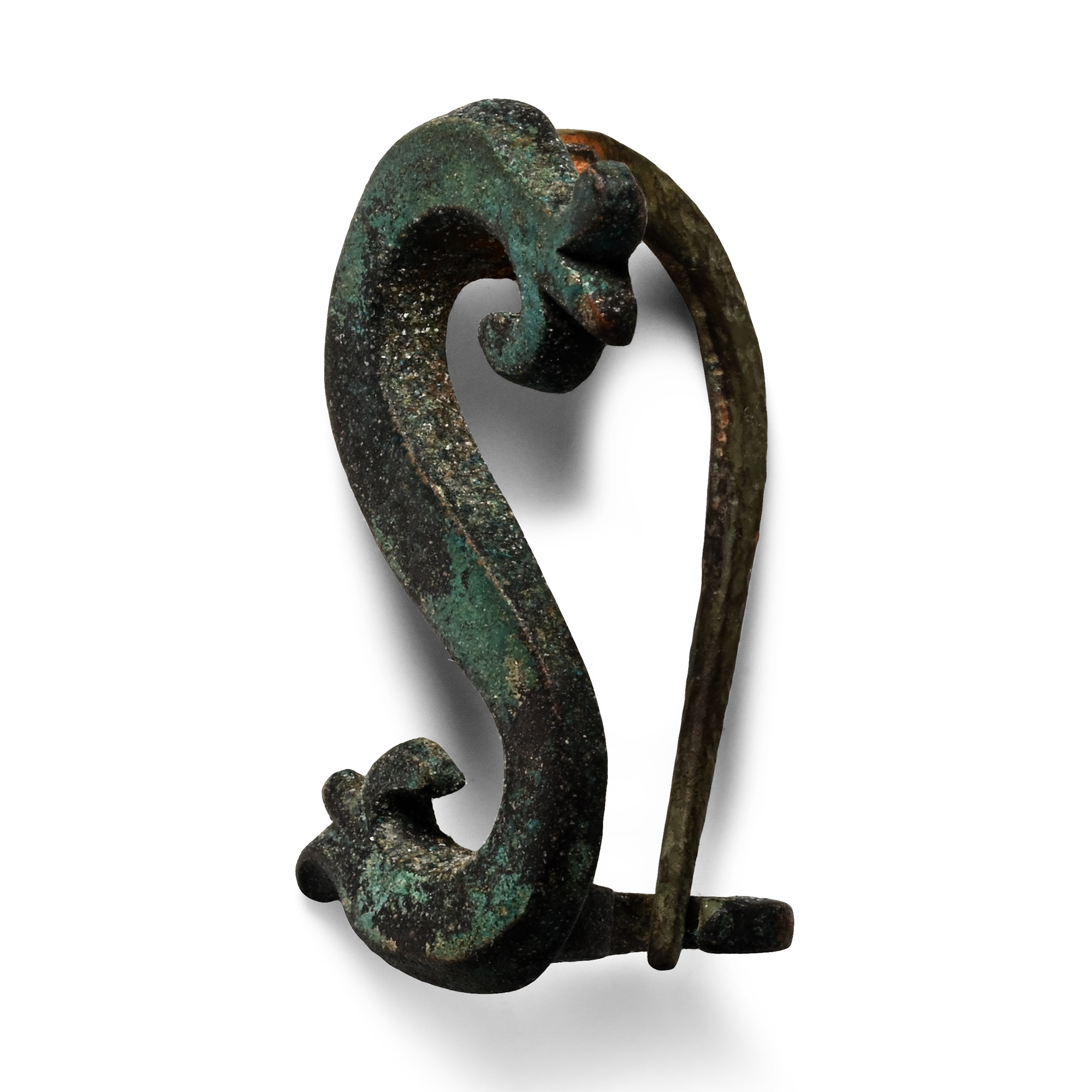
Roman Bronze S-Shaped Plate Brooch
2ND CENTURY A.D.
1 3/8 in. (10 grams, 35 mm).
Plate brooch with S-scrolled bar, trefoil finial to each end; hinged pin and catch to the reverse. [No Reserve]
ProvenanceEx DRG Coins and Antiquities, Bishops Stortford, Essex, UK.
From the private collection of a West London, UK, gentleman, formed since the early 2000s.
Accompanied by a hand written dealer's ticket.
Cf. Hattatt, R., Ancient Brooches and Other Artefacts, Oxford, 1989, item 1626, for type.
CONDITIONTimeLine Auctions follows a vetting process to ensure the authenticity and legality of all items, reinforcing our commitment to integrity and responsible trading. Each antiquity, antique, and coin lot undergoes thorough examination by a vetting committee of at least ten external specialists, professional trade association members, scientists, and archaeologists: Our Vetting Process
AUCTIONS:
TimeLine is a leading auction house specialising in antiquities, ancient art, collectables, natural history, coins, medals, and books. Our auctions offer museums, collectors, historians, and enthusiasts the opportunity to acquire unique and historically significant pieces.
-
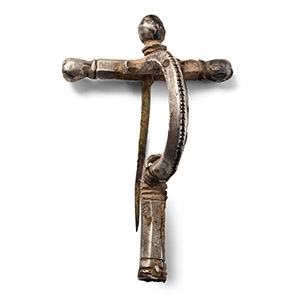
Roman Silver Crossbow Brooch
Circa 4th century A.D.Sold for (Inc. bp): £286
Of early type with lemon-shaped knop above the round-section crossbar, facetted bow with impressed crow's foot motifs to the outer edge and faceted knop finials, D-section footplate with lateral chamfered edges and catchplate to reverse, hinged pin behind the crossbar. 43 grams, 80 mm
From the collection of a gentleman, acquired on the London art market in the 1990s. -
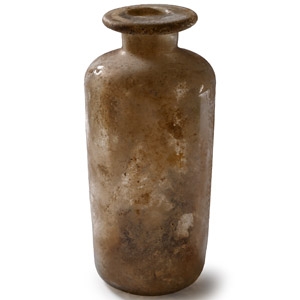
Roman Glass Bottle
3rd-4th century A.D.Estimate: £200 - 300 (+bp*)
Opening Bid: £110
Mould-blown bottle comprising a flat-based tubular body and short neck with returned flange rim. 94.2 grams, 14 cm
From an important London collection of glass, 1990s. This lot is accompanied by an illustrated lot declaration signed by the Head of the Antiquities Department, Dr Raffaele D'Amato.
Most of similar examples of Roman bottles have been found in the Eastern Mediterranean. Earliest examples have been found in Roman Lusitania (Pombalinho-Santarem). The type lasted until the 4th century A.D. (Samaria-Sebaste, Israel). -
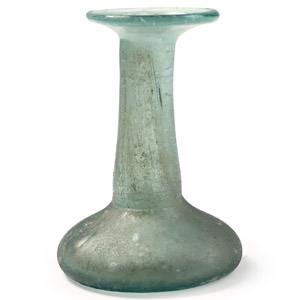
Roman Short Blue Glass Flask
1st-4th century A.D.Sold for (Inc. bp): £169
Comprising a wide shallow body and tall neck with trumpet mouth. 71.3 grams, 79 mm
Ex German art market, 2000s. Acquired from an EU collector living in London. From the collection of a Surrey, UK, gentleman.
