
Loading, please wait...
LOT 0872
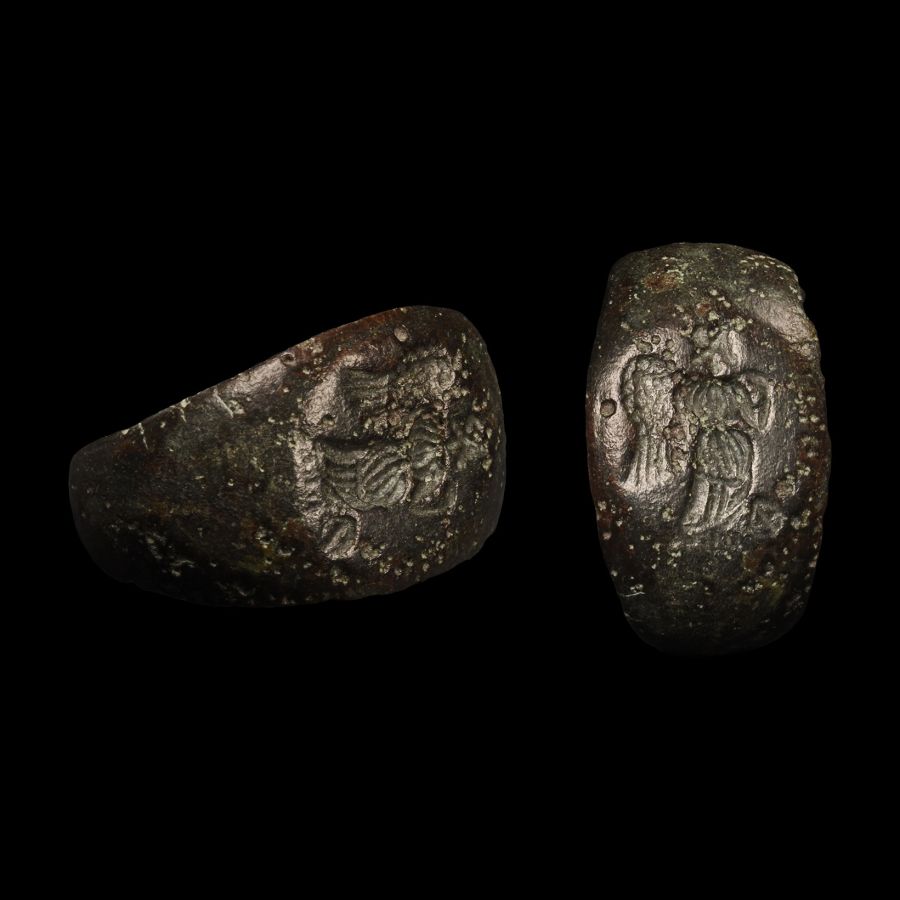
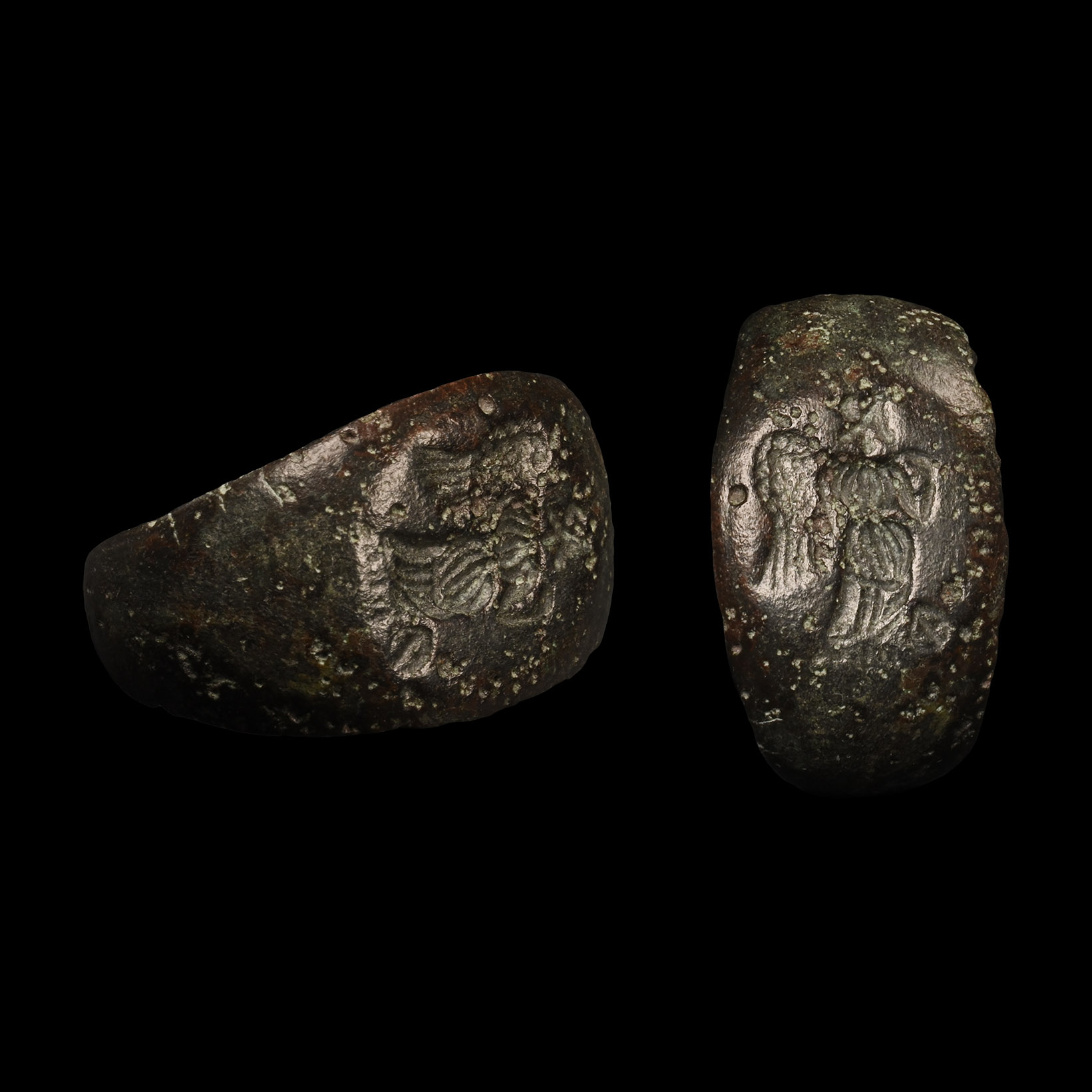
Roman Bronze Ring with Victory Motif
1ST-3RD CENTURY A.D.
1 in. (5.29 grams, 23.46 mm overall, 19.82 mm internal diameter (approximate size British N 1/2, USA 6 3/4, Europe 14.35, Japan 13)).
With broad plaque, central impressed motif of Victory standing with wings to rear. [No Reserve]
ProvenanceEx German art market, 2000s.
Acquired from an EU collector living in London.
From the collection of Surrey, UK, gentleman.
TimeLine Auctions follows a vetting process to ensure the authenticity and legality of all items, reinforcing our commitment to integrity and responsible trading. Each antiquity, antique, and coin lot undergoes thorough examination by a vetting committee of at least ten external specialists, professional trade association members, scientists, and archaeologists: Our Vetting Process
AUCTIONS:
TimeLine is a leading auction house specialising in antiquities, ancient art, collectables, natural history, coins, medals, and books. Our auctions offer museums, collectors, historians, and enthusiasts the opportunity to acquire unique and historically significant pieces.
-
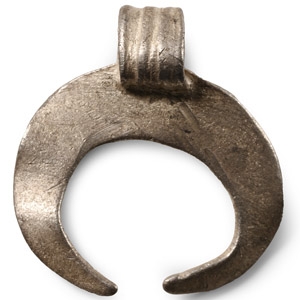
Roman Silver Lunar Pendant
2nd-3rd century A.D.Sold for (Inc. bp): £111
With a flat-section crescentic body and applied ribbed suspension loop. 2.31 grams, 21 mm
Ex German art market, 2000s. Acquired from an EU collector living in London. From the collection of Surrey, UK, gentleman. -
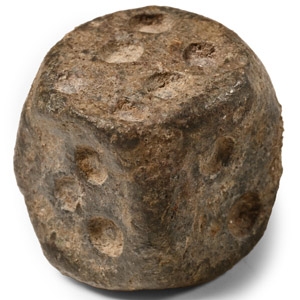
large Roman Lead Gaming Dice
1st-4th century A.D.Sold for (Inc. bp): £85
Cuboid with irregular impressed point markings disposed 1:3, 2:4, 5:6. 20 grams, 14 mm
Acquired 21 July 1997. From the important private collection of dice and gaming pieces of Colin Narbeth, London, UK, collection no.89. Accompanied by a Colin Narbeth catalogue identification slip. -
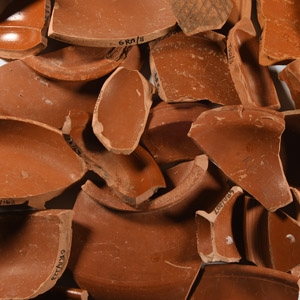
Romano-British Samian Ware Sherd Group
1st century A.D.Sold for (Inc. bp): £52
Including burnished rim and base fragments, all but two with inked or pencilled reference notations including 'Col' for Colchester, 'GRA' and BLACKFRIARS LEZ/52'. 1.12 kg total, 5.5-13.5 cm
Found UK. From the collection of a late East Anglian teacher and antiquarian who retired to the Isle of Wight in Hampshire, UK. He amassed a large collection of objects between the 1960s-1980s.
