
Loading, please wait...
LOT 0857
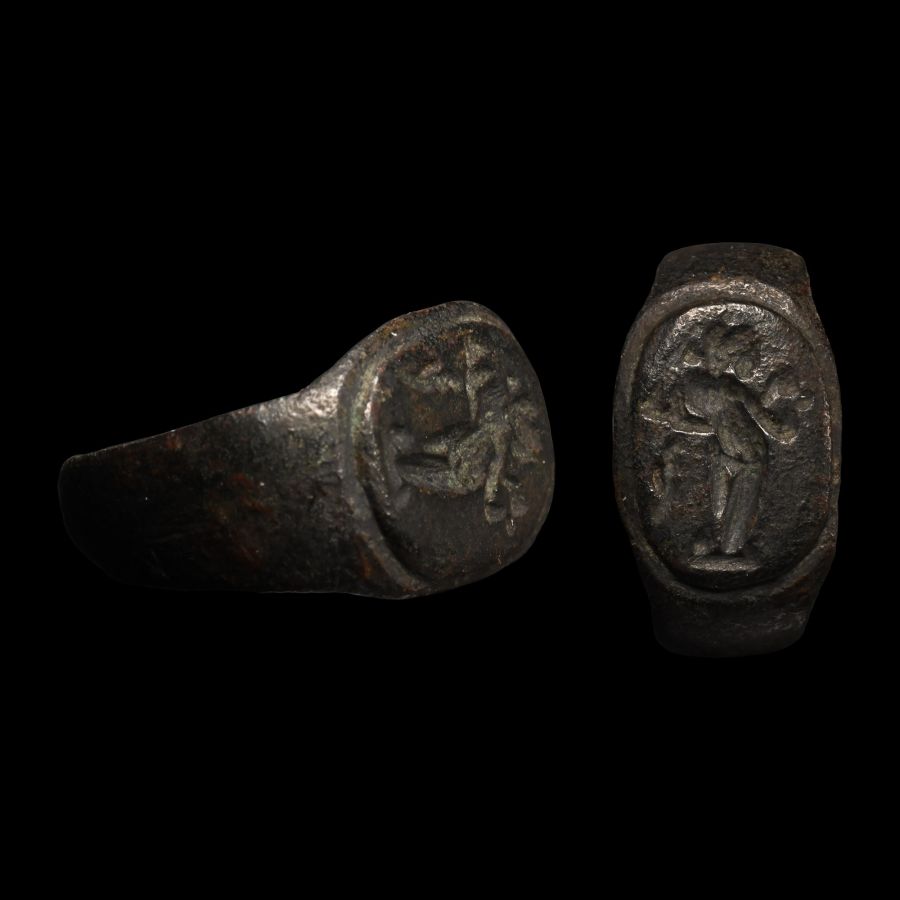
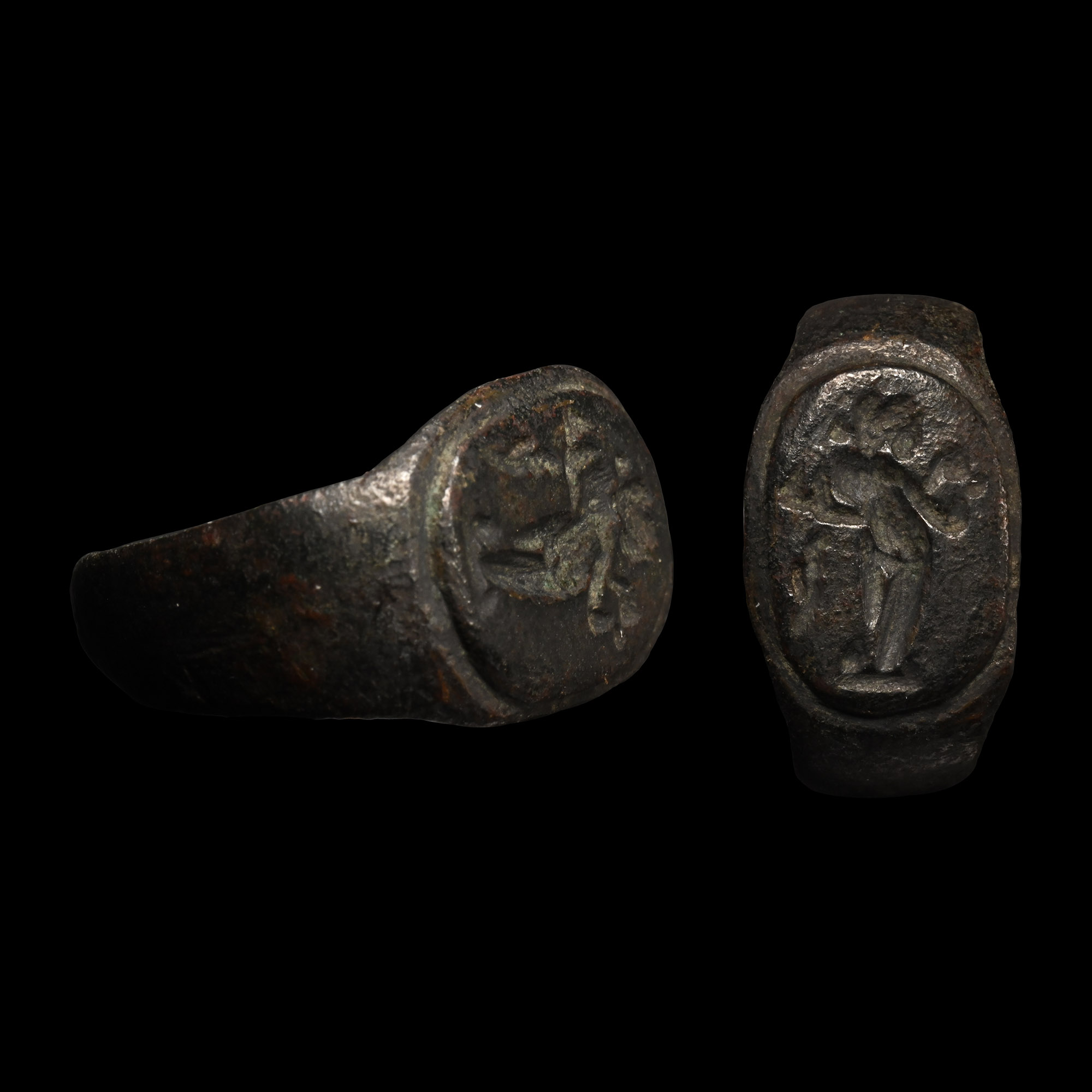
Roman Bronze Ring with Standing Goddess
2ND-4TH CENTURY A.D.
3/4 in. (3.39 grams, 21.26 mm overall, 18.03 mm internal diameter (approximate size British M 1/2, USA 6 1/4, Europe 13.09, Japan 12)).
Comprising a D-section hoop (split), and an oval bezel with standing goddess, possibly Venus. [No Reserve]
ProvenanceEx German art market, 2000s.
Acquired from an EU collector living in London.
From the collection of a Surrey, UK, gentleman.
This lot is accompanied by an illustrated lot declaration signed by the Head of the Antiquities Department, Dr Raffaele D'Amato.
TimeLine Auctions follows a vetting process to ensure the authenticity and legality of all items, reinforcing our commitment to integrity and responsible trading. Each antiquity, antique, and coin lot undergoes thorough examination by a vetting committee of at least ten external specialists, professional trade association members, scientists, and archaeologists: Our Vetting Process
AUCTIONS:
TimeLine is a leading auction house specialising in antiquities, ancient art, collectables, natural history, coins, medals, and books. Our auctions offer museums, collectors, historians, and enthusiasts the opportunity to acquire unique and historically significant pieces.
-
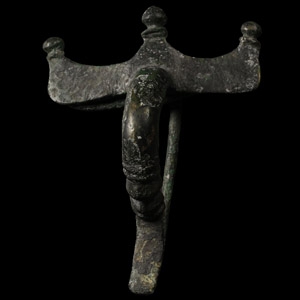
Roman Bronze Bow Brooch
2nd century A.D.Estimate: £100 - 140 (+bp*)
Opening Bid: £50
P-shaped bow brooch with three onion-shaped knops to the upper edge of the headplate, chord and pin to reverse, deep bow with ribbed section above junction with the rectangular foot; catch to reverse. 38.4 grams, 69 mm
Ex important German collection, 1990s. This lot is accompanied by an illustrated lot declaration signed by the Head of the Antiquities Department, Dr Raffaele D’Amato. This lot is accompanied by an illustrated lot declaration signed by the Head of the Antiquities Department, Dr Raffaele D'Amato. -
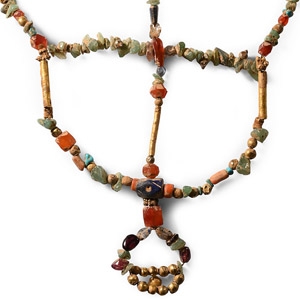
Roman Gold and Other Bead Necklace
1st-4th century A.D.Estimate: £1,800 - 2,400 (‡+bp*)
Opening Bid: £810
Restrung necklace of three strands connected by a median vertical column; comprising mainly gold tubular beads with ribbing to the outer face, polyhedral carnelian beads, irregular green glass beads, square-section lapis lazuli beads and other types; the lower node a larger polyhedral lapis lazuli bead with loop of barrel-shaped gold beads and other types. 78 grams, 57 cm
Acquired in the 1980s. Private collection, Switzerland, thence by descent. Private collection, since the late 1990s. This lot has been checked against the Interpol Database of stolen works of art and is accompanied by a search certificate number no.12678-234685. This lot has been cleared against the Art Loss Register database, and is accompanied by an illustrated lot declaration signed by the Head of the Antiquities Department, Dr Raffaele D'Amato. -
.jpg)
Roman Gold Ring with Eros Gemstone
1st-2nd century A.D.Sold for (Inc. bp): £1,105
Hollow-formed shank, integral plaque with inset glass disc, low-relief Eros face in three-quarter view. 2.35 grams, 21.19 mm overall, 15.00 mm internal diameter (approximate size British D 1/2, USA 2, Europe 1.78, Japan 1)
Acquired in 1992. Private collection, Switzerland, thence by descent. Private collection, since the late 1990s. This lot is accompanied by an illustrated lot declaration signed by the Head of the Antiquities Department, Dr Raffaele D'Amato.
