
Loading, please wait...
LOT 0865
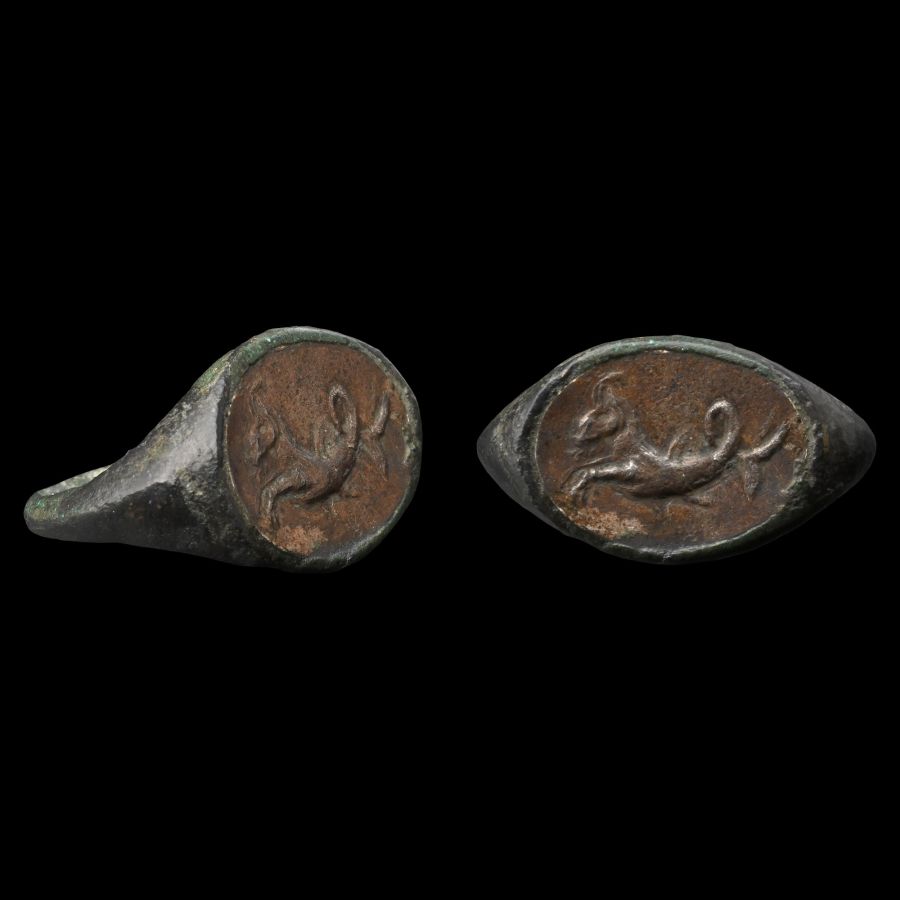
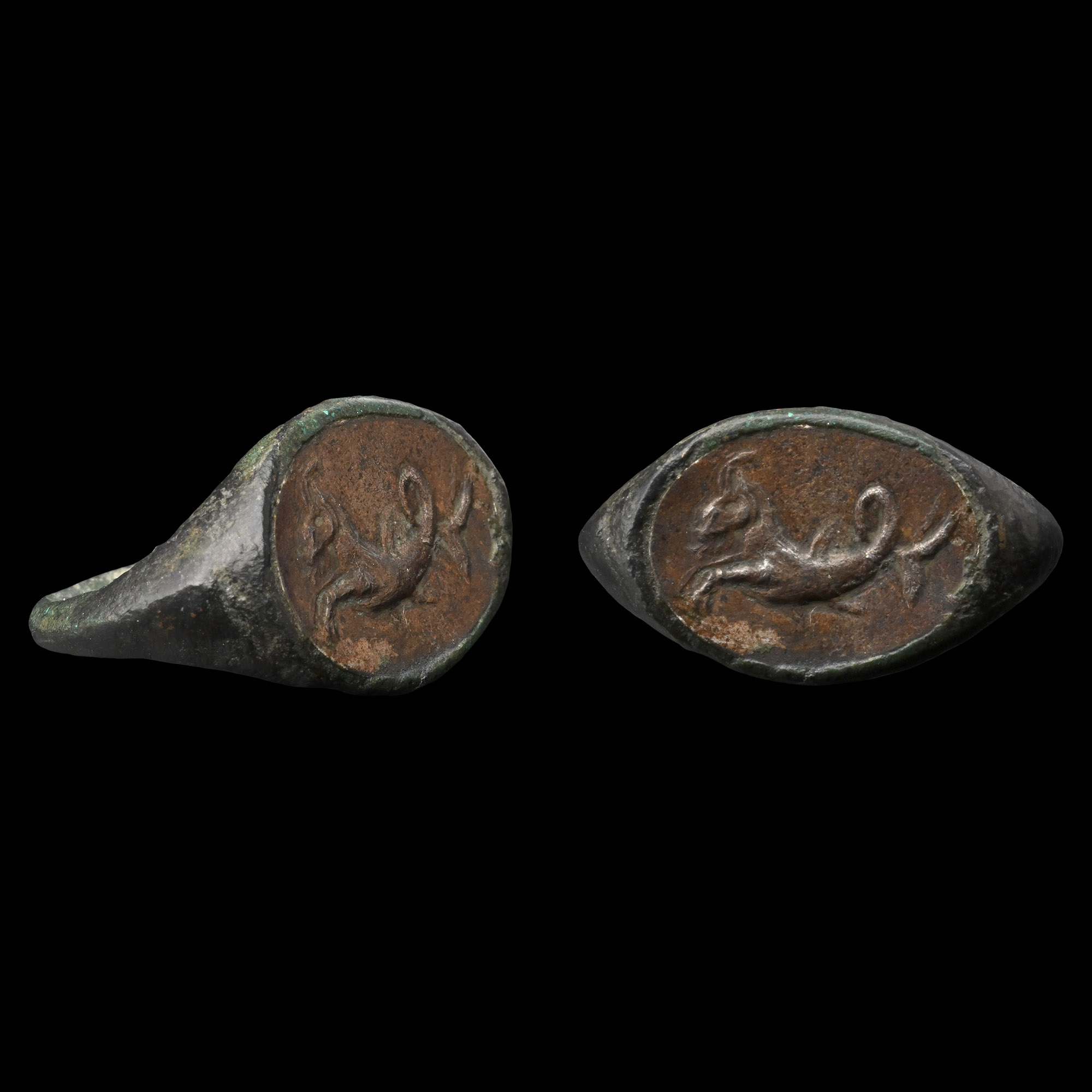
Roman Bronze Ring with Silver Plaque with Hippocamp
2ND-3RD CENTURY A.D.
1 in. (6.94 grams, 26.75 mm overall, 21.19 mm internal diameter (approximate size British K 1/2, USA 51/2, Europe 10.58, Japan 10)).
Comprising a narrow shank and tapering shoulders, a flat plaque with an inset silver panel, low-relief hippocamp motif. [No Reserve]
ProvenanceFrom a private Tyneside collection, formed since the early 2000s.
LiteratureCf. Ruseva-Slokoska, L., Roman Jewellery, Sofia, 1991, item 271, for type.
CONDITIONTimeLine Auctions follows a vetting process to ensure the authenticity and legality of all items, reinforcing our commitment to integrity and responsible trading. Each antiquity, antique, and coin lot undergoes thorough examination by a vetting committee of at least ten external specialists, professional trade association members, scientists, and archaeologists: Our Vetting Process
AUCTIONS:
TimeLine is a leading auction house specialising in antiquities, ancient art, collectables, natural history, coins, medals, and books. Our auctions offer museums, collectors, historians, and enthusiasts the opportunity to acquire unique and historically significant pieces.
-
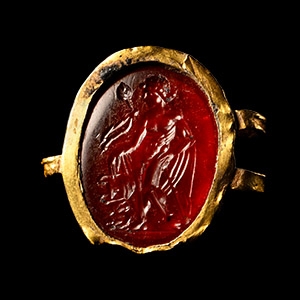
Roman Gold Pendant with Carnelian Intaglio of Goddess Venus
1st-2nd century A.D.Sold for (Inc. bp): £2,600
Gold cell with flange rim and three lateral loops; inset intaglio of a cloaked goddess (Venus) with a distaff and diadem, caressing a hare. 5.68 grams, 22 mm
From the collection of a deceased Lady collector, 1970s. This lot has been checked against the Interpol Database of stolen works of art and is accompanied by search certificate number no.12957-243670.
Symbol of fertility and of good luck, the hare became a popular motif in the pre-Roman Era on the coins of Messina, Etruscan art and coins and Calenian pottery. The hare was a sacred animal to Venus (Aphrodite), often depicted in her worship and associated with love and fertility. -
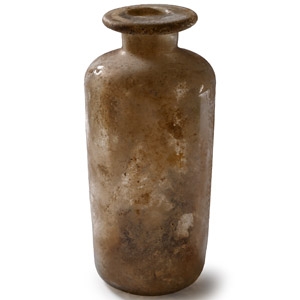
Roman Glass Bottle
3rd-4th century A.D.Estimate: £200 - 300 (+bp*)
Opening Bid: £110
Mould-blown bottle comprising a flat-based tubular body and short neck with returned flange rim. 94.2 grams, 14 cm
From an important London collection of glass, 1990s. This lot is accompanied by an illustrated lot declaration signed by the Head of the Antiquities Department, Dr Raffaele D'Amato.
Most of similar examples of Roman bottles have been found in the Eastern Mediterranean. Earliest examples have been found in Roman Lusitania (Pombalinho-Santarem). The type lasted until the 4th century A.D. (Samaria-Sebaste, Israel). -
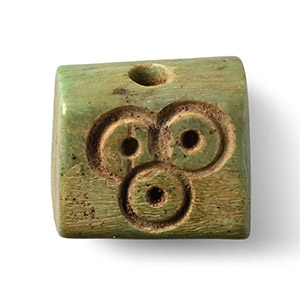
Roman Bone Bead
1st-2nd century A.D.Sold for (Inc. bp): £46
Rectangular in plan with transverse piercing, three ring-and-dot marks to each broad face. 1.65 grams, 13 mm
From a collection of gaming items, formed 1980-1990s.
