
Loading, please wait...
LOT 0829
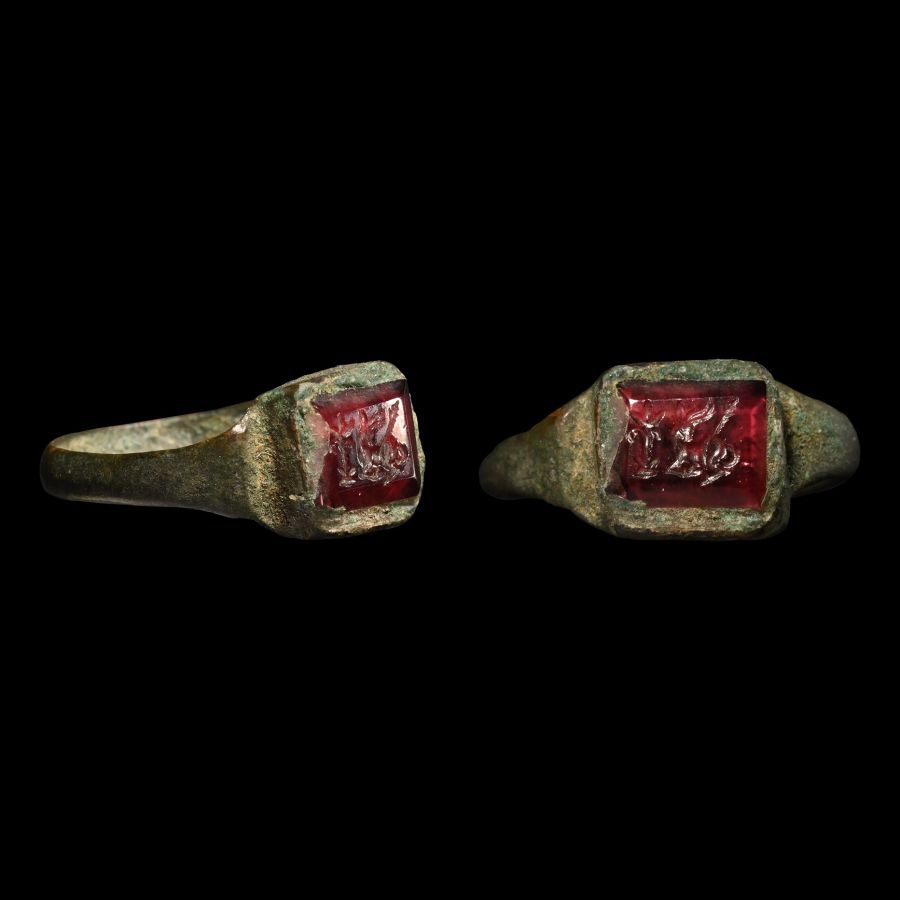
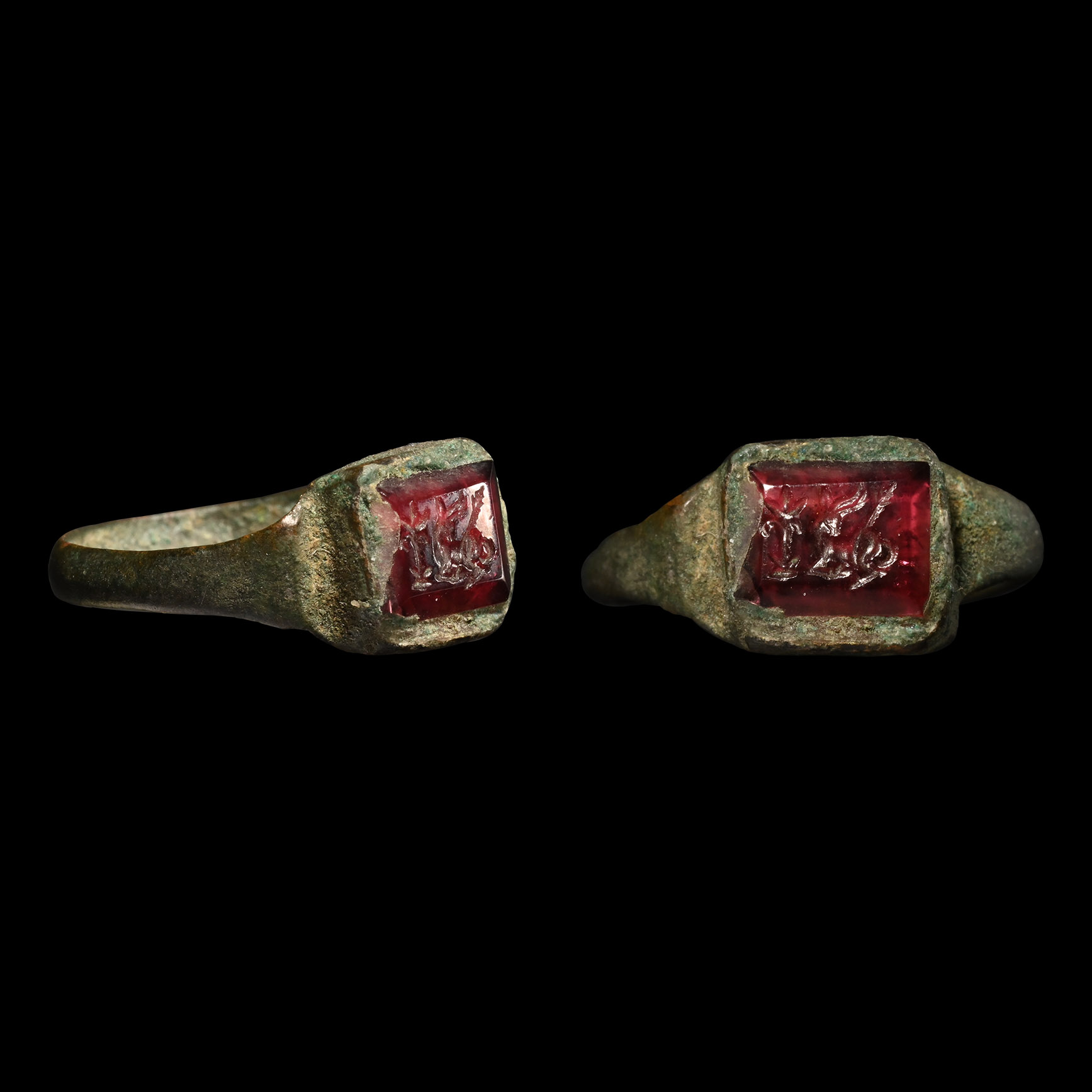
Roman Bronze Ring with Recumbent Deer Facing Back Gemstone
2ND-4TH CENTURY A.D.
7/8 in. (2.30 grams, 21.32 mm overall, 16.00 mm internal diameter (approximate size British K, USA 5 1/4, Europe 9.95, Japan 9)).
With a slender D-section hoop, square raised bezel set with red carnelian intaglio, engraved with a recumbent deer before a small tree, its head resting on its back and a long arrow piercing its back.
ProvenancePrivate collection formed since the 1940s.
UK art market.
Property of an Essex, UK, gentleman.
The iconography may refer to a version of a tradition in which Heracles shot the Ceryneian hind before it crossed the river Ladon.
CONDITIONTimeLine Auctions follows a vetting process to ensure the authenticity and legality of all items, reinforcing our commitment to integrity and responsible trading. Each antiquity, antique, and coin lot undergoes thorough examination by a vetting committee of at least ten external specialists, professional trade association members, scientists, and archaeologists: Our Vetting Process
AUCTIONS:
TimeLine is a leading auction house specialising in antiquities, ancient art, collectables, natural history, coins, medals, and books. Our auctions offer museums, collectors, historians, and enthusiasts the opportunity to acquire unique and historically significant pieces.
LOT 0829
Roman Bronze Ring with Recumbent Deer Facing Back Gemstone
Sold for (Inc. bp): £124
-
.jpg)
Larger Than Life-Size Roman Bronze Sandaled Foot
2nd-3rd century A.D.Sold for (Inc. bp): £39,000
Modelled in the round and originally part of a monumental statue, the naturalistic right foot encased in a trochades leather sandal with median reversed tongue secured with side straps and thick looped laces; the thick platform sole slightly curved, toes and nails well defined; mounted on a substantial custom-made display stand. 5.84 kg total, foot: 30 cm wide
German art market. European private collection, 1970s-early 2000s. Acquired from the above; thence by descent. Private collection, London, UK. Accompanied by an academic report by Dr Raffaele D’Amato. This lot has been checked against the Interpol Database of stolen works of art and is accompanied by search certificate number no.12176-221443.
The detailed bronze foot with a possible variant of the Greek trochades sandal, known to be a traveller's sandal, is all that remains of the once monumental statue. The trochades was a sturdy traveller's open boot of Greek origin with a flat sole. In the Consular Age it was also used by officers and guardsmen. Roman sandals consisted usually of a leather sole attached to the foot with interlacing thongs. -
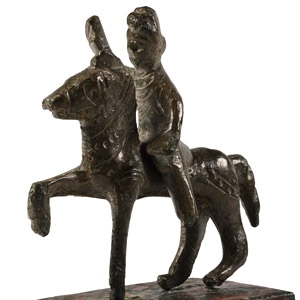
Romano-Celtic Bronze Horse and Rider
Circa 1st-2nd century A.D.Estimate: £300 - 400 (+bp*)
Opening Bid: £125
Modelled in the round, male with legs in straddling pose wearing a tight-fitting coat, left hand thrust forward and right arm raised with hand open; head with shoulder-length hair, horse in prancing pose with incised bridle, crupper and other harness and impressed pellets for medallions; provided with a contemporary stand. 113 grams total, 6.5 cm high
Private collection, Chichester, acquired before 2000. -
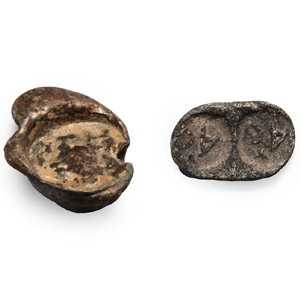
Roman Lead Sealing Group
1st-4th century A.D.Sold for (Inc. bp): £13
Comprising: one domed with an animal(?); one oval with two impressed roundels, each with 'AC'. 8.7 grams total, 14-18 mm
Collected from 1970-1999. From the collection of the late Mr S.M., London, UK.
