
Loading, please wait...
LOT 0907
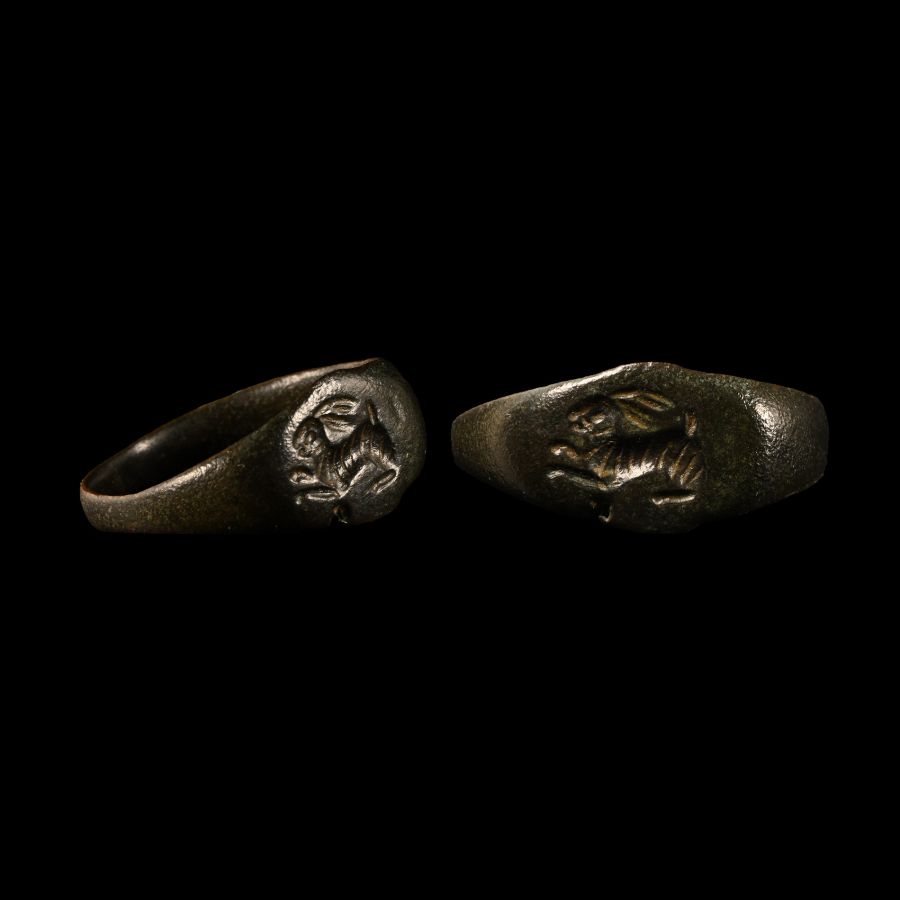
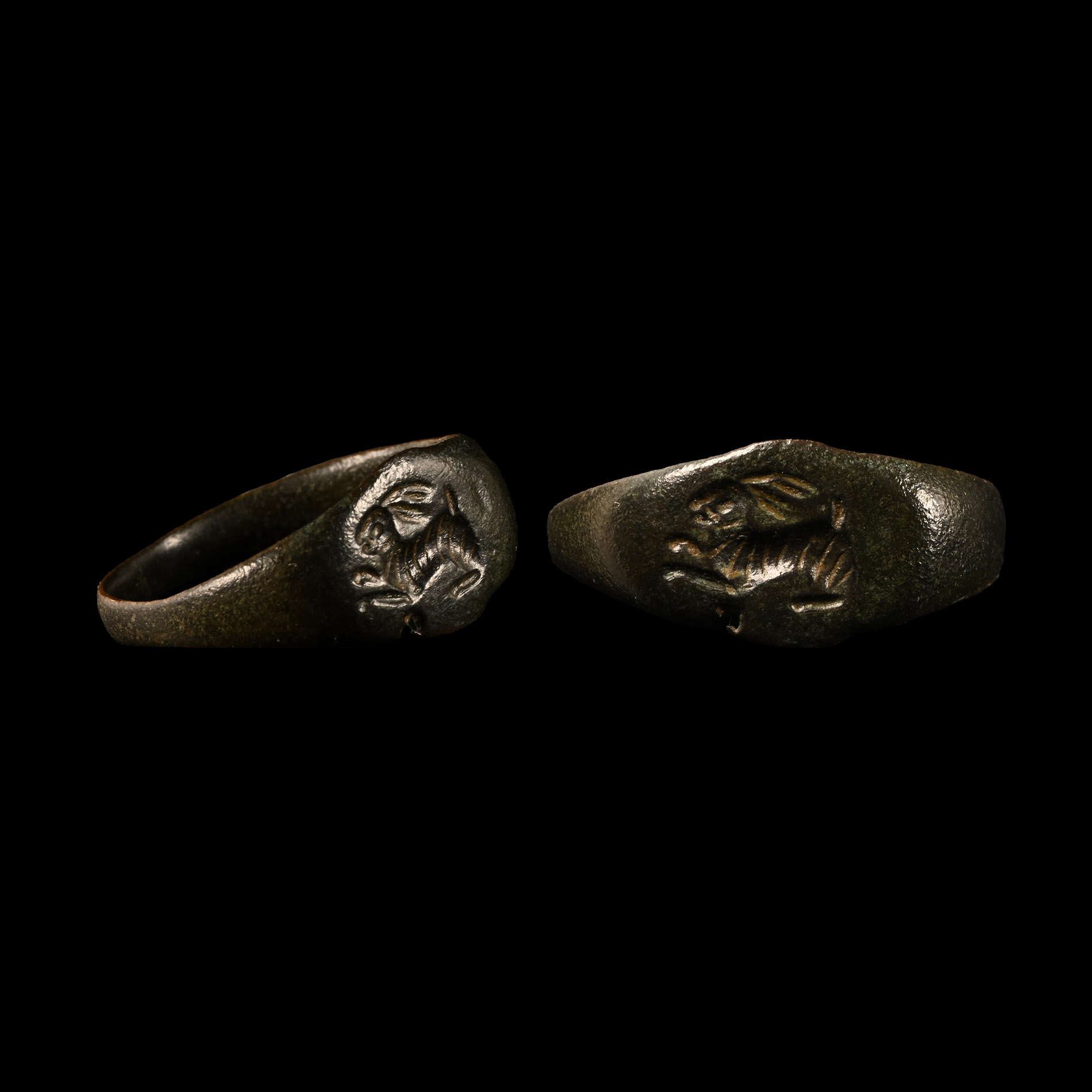
Roman Bronze Ring with Rabbit
3RD CENTURY A.D.
3/4 in. (2.63 grams, 20.35 mm overall, 18.78 mm internal diameter (approximate size British P 1/2, USA 7 3/4, Europe 16.86, Japan 16)).
With integral ellipsoid bezel, intaglio crouching rabbit motif.
ProvenanceEx German art market, 2000s.
Acquired from an EU collector living in London.
From the collection of Surrey, UK, gentleman.
Cf. Ruseva-Slokoska, L., Roman Jewellery, Sofia, 1991, item 196, for type.
CONDITIONTimeLine Auctions follows a vetting process to ensure the authenticity and legality of all items, reinforcing our commitment to integrity and responsible trading. Each antiquity, antique, and coin lot undergoes thorough examination by a vetting committee of at least ten external specialists, professional trade association members, scientists, and archaeologists: Our Vetting Process
AUCTIONS:
TimeLine is a leading auction house specialising in antiquities, ancient art, collectables, natural history, coins, medals, and books. Our auctions offer museums, collectors, historians, and enthusiasts the opportunity to acquire unique and historically significant pieces.
-
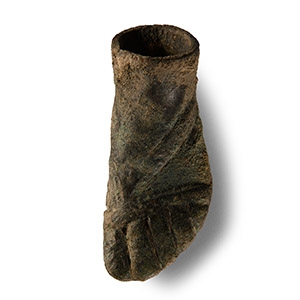
Roman Bronze Mercury Votive Foot
1st-2nd century A.D.Sold for (Inc. bp): £85
Hollow-formed with raised posture, low-relief detailed strapping. 92 grams, 70 mm
Property of a Gloucestershire, UK, collector. Property of an East Sussex, UK, gentleman. -
.jpg)
Roman Silver Statuette Collection
2nd-3rd century A.D.Sold for (Inc. bp): £221
Modelled standing on polygonal bases, comprising: a male figure with full head of hair and beard, dressed in a floor-length robe and holding a patera; a male figure dressed in full-length robe, wearing a hat and holding a palm(?), one arm absent; a female figure standing in floor-length robes, possibly holding a cornucopia and rudder, suspension loop to reverse. 24.5 grams total, 24-38 mm
Fine condition.
Acquired in the late 1980s-early 1990s. From an important North West London collection. -
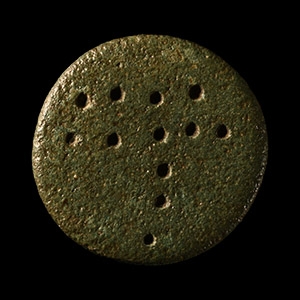
Romano-British 'Published' Bronze Gaming Counter
Circa 1st century A.D. or laterSold for (Inc. bp): £293
Discoid in form with twelve impressed dots, two parallel lines and one perpendicular. 4.5 grams, 18 mm
Found Cirencester, UK, prior to 1999. Acquired 4 February 1999. From the important private collection of dice and gaming pieces of Colin Narbeth, London, UK, collection no.59. Accompanied by a copy of the relevant Celtic & Roman Artefacts book pages where this object is published.
