
Loading, please wait...
LOT 0898
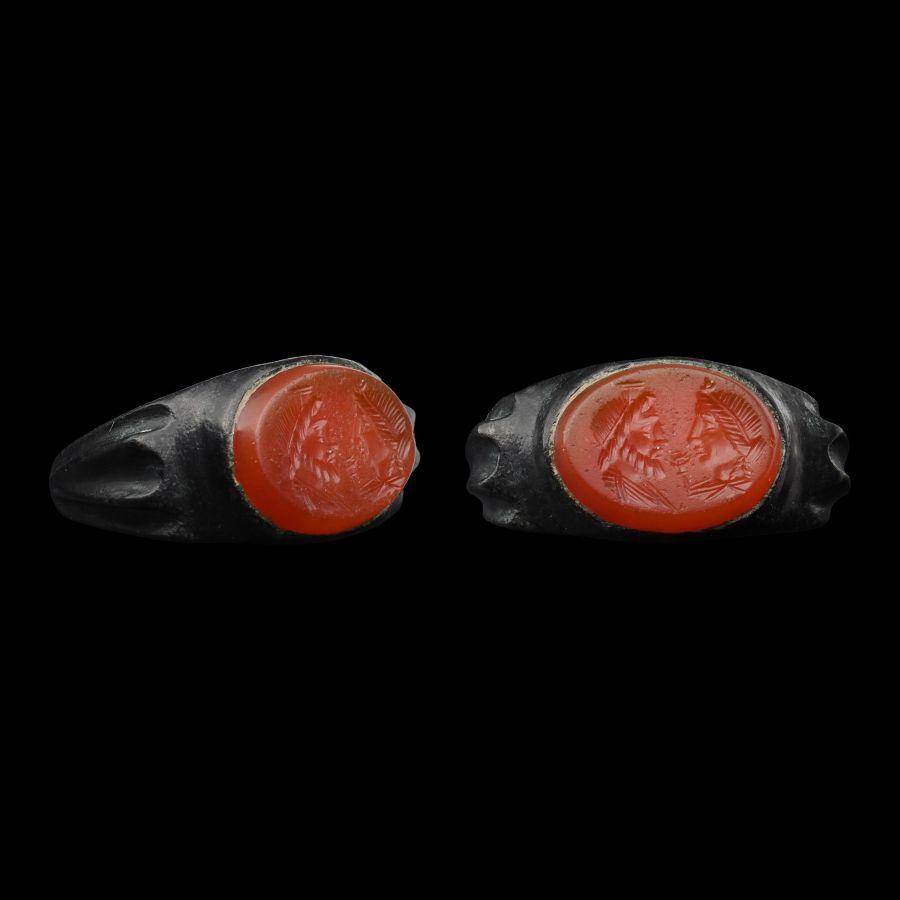
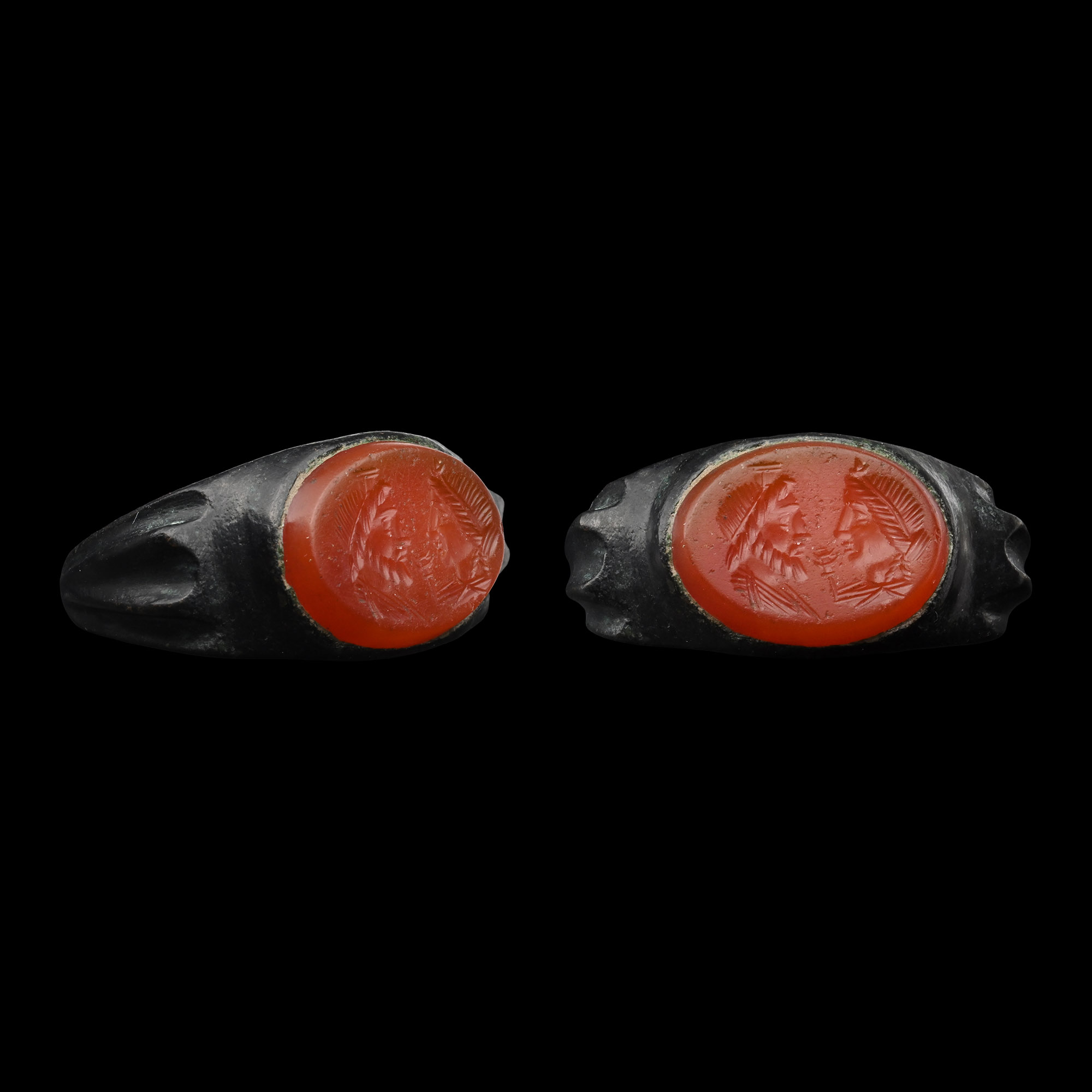
Roman Bronze Ring with Isis and Serapis Gemstone
2ND-3RD CENTURY A.D. AND LATER
1 1/4 in. (14.46 grams, 30.01 mm overall, 21.80 x 18.99 mm internal diameter (approximate size British U, USA 10, Europe 22.52, Japan 21)).
With shank widening to the fluted shoulders; flat bezel set with a later oval carnelian intaglio engraved with the bust of Isis with corkscrew locks falling to shoulders, sun-disc in horns headdress and carrying a lotus flower sceptre; Serapis facing with beard and kalathos headdress. [No Reserve]
ProvenanceFrom the collection of a European gentleman living in South London; acquired 1970-1980.
CONDITIONTimeLine Auctions follows a vetting process to ensure the authenticity and legality of all items, reinforcing our commitment to integrity and responsible trading. Each antiquity, antique, and coin lot undergoes thorough examination by a vetting committee of at least ten external specialists, professional trade association members, scientists, and archaeologists: Our Vetting Process
AUCTIONS:
TimeLine is a leading auction house specialising in antiquities, ancient art, collectables, natural history, coins, medals, and books. Our auctions offer museums, collectors, historians, and enthusiasts the opportunity to acquire unique and historically significant pieces.
-
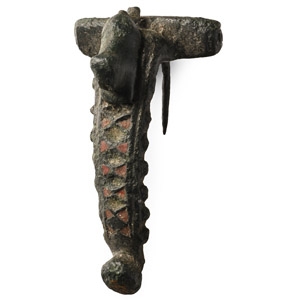
Romano-British Enamelled Bronze 'Sawfish Type' Bow Brooch with Lion
2nd century A.D.Sold for (Inc. bp): £59
Comprising a T-shaped bow with crude three-dimensional lion and red triangles of enamel. 12.7 grams, 40 mm
Found Norfolk, UK. From a Kent collection formed in the 1990s. -
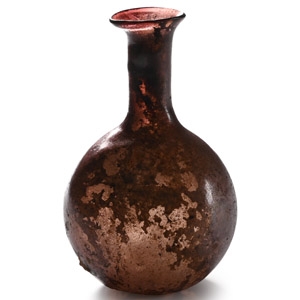
Roman Aubergine Glass Bottle
1st century B.C-1st century A.D.Estimate: £300 - 400 (+bp*)
Opening Bid: £165
With bulbous body, tubular neck, broad everted rim; extensive iridescence. 10.6 grams, 70 mm
From an important London collection of glass, 1990s. This lot is accompanied by an illustrated lot declaration signed by the Head of the Antiquities Department, Dr Raffaele D'Amato.
Similar bottles were found in the Cemetery of Ein-Gedi in the Judaean Desert, in a settlement abandoned in 40-37 B.C, and in Homs, Syria, dated to the first half of the first century A.D. These are among the first earliest datable blown bottles. -
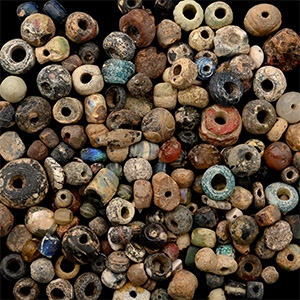
Ancient Glass and Other Bead Collection
Early 1st millennium A.D.Sold for (Inc. bp): £156
Including annular, tabular, polyhedral and other types. 94 grams total, 4-16 mm
From an old deceased estate. Property of an East London lady collector, acquired at auction before 1995.
