
Loading, please wait...
LOT 0835
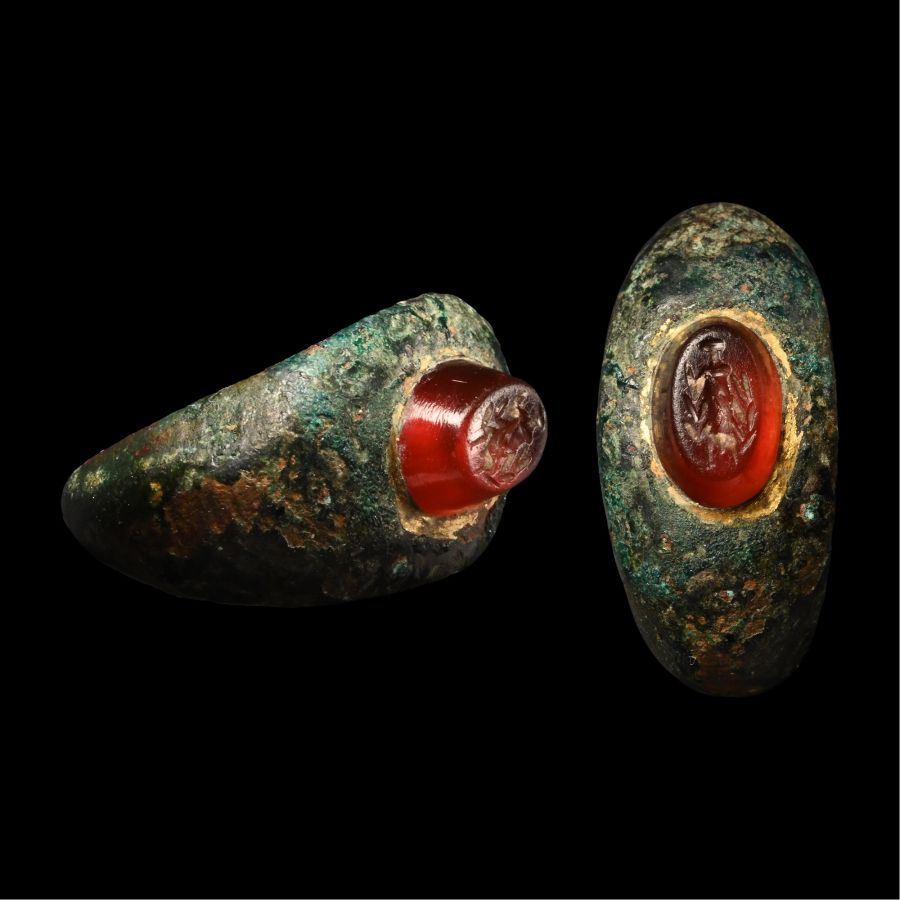
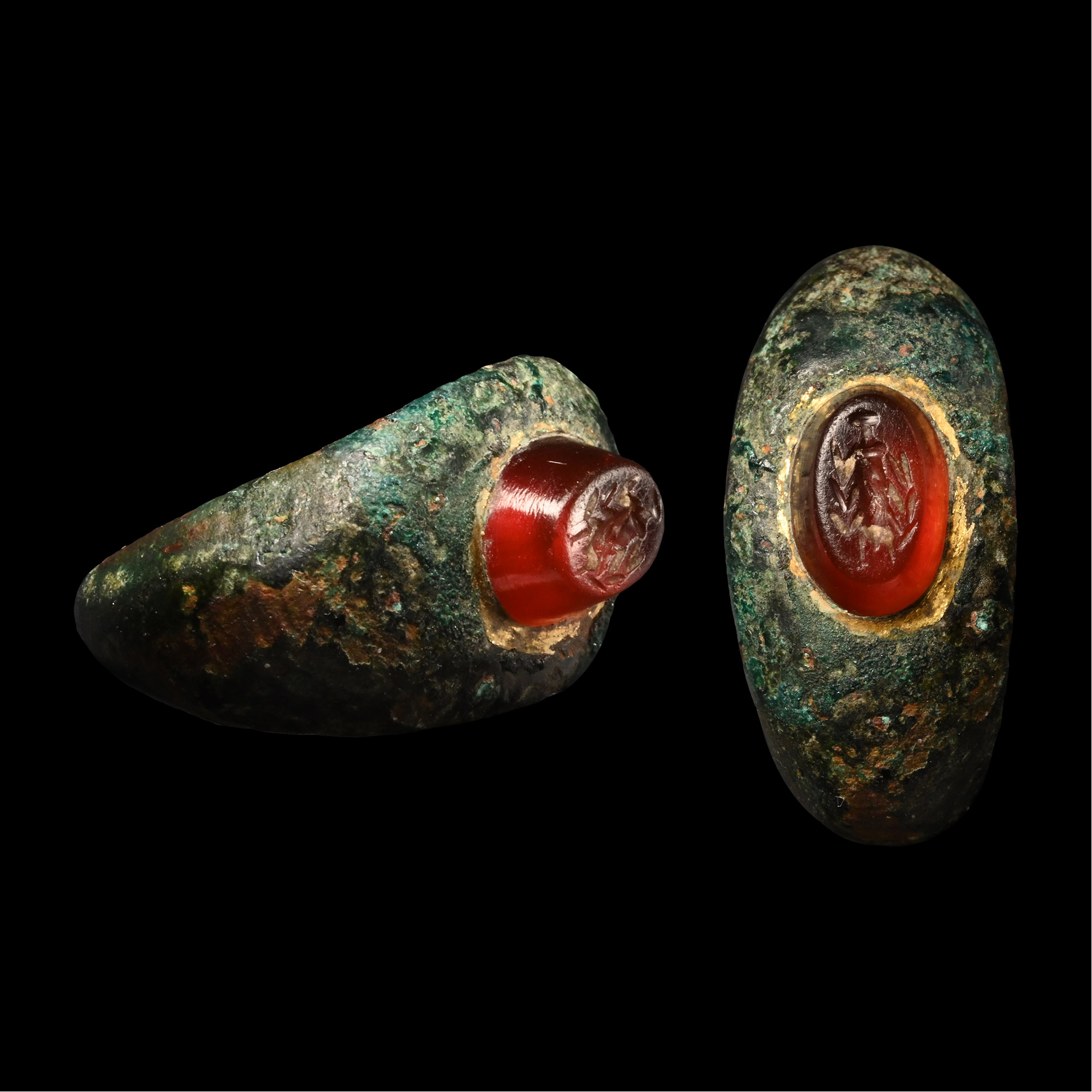
Roman Bronze Ring with Insect Intaglio
2ND-3RD CENTURY A.D.
7/8 in. (7.45 grams, 23.82 mm overall, 15.81 mm internal diameter (approximate size British E 1/2, USA 2 1/2, Europe 3, Japan 3)).
Comprising a D-section hoop with expanding shoulders, gilt bezel set with an oval glass gem with engraved insect.
ProvenanceEx German art market, 2000s.
Acquired from an EU collector living in London.
From the collection of a Surrey, UK, gentleman.
This lot is accompanied by an illustrated lot declaration signed by the Head of the Antiquities Department, Dr Raffaele D'Amato.
TimeLine Auctions follows a vetting process to ensure the authenticity and legality of all items, reinforcing our commitment to integrity and responsible trading. Each antiquity, antique, and coin lot undergoes thorough examination by a vetting committee of at least ten external specialists, professional trade association members, scientists, and archaeologists: Our Vetting Process
AUCTIONS:
TimeLine is a leading auction house specialising in antiquities, ancient art, collectables, natural history, coins, medals, and books. Our auctions offer museums, collectors, historians, and enthusiasts the opportunity to acquire unique and historically significant pieces.
-
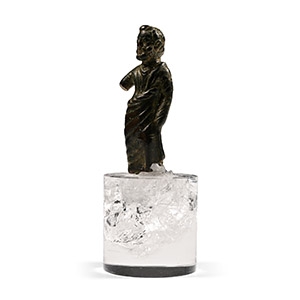
Roman Bronze Statuette of Bearded Divinity
1st-2nd century A.D.Sold for (Inc. bp): £156
Modelled in the round wearing a tight-fitting toga, with carefully dressed hair; supplied with a custom-made stand. 54 grams total, 77 mm including stand
From a West German private collection. Ex Swiss private collection, Basel; acquired from Gerhard Hirsch, München. Acquired from the Swiss art market in Basel. Private collection, Bern, Switzerland. This lot is accompanied by an illustrated lot declaration signed by the Head of the Antiquities Department, Dr Raffaele D'Amato. -
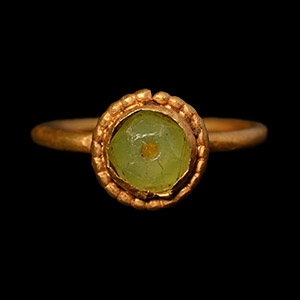
Roman Gold Ring with Green Stone
5th-7th century A.D.Sold for (Inc. bp): £338
Comprising a slender hoop, applied drum-shaped bezel with beaded wire collar, inset agate polyhedral bead. 1.62 grams, 17.98 mm overall, 12.43 x 11.02 mm internal diameter (approximate size British -, USA -, Europe -, Japan -)
Acquired in the mid 1980s-1990s. Private collection, Switzerland, thence by descent. Private collection, since the late 1990s. Accompanied by a copy of an Art Loss Register certificate, no.S00029671. This lot is accompanied by an illustrated lot declaration signed by the Head of the Antiquities Department, Dr Raffaele D'Amato. -
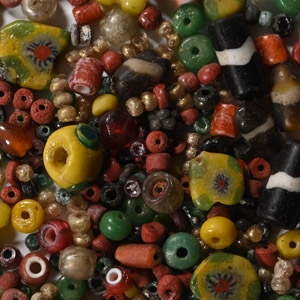
Roman Mixed Glass Bead Group
1st-4th century A.D. and laterSold for (Inc. bp): £111
Including oblate, fusiform, tabular, mosaic and other types. 15 grams total, 2-13 mm
UK gallery, early 2000s. This lot is accompanied by an illustrated lot declaration signed by the Head of the Antiquities Department, Dr Raffaele D'Amato.
The mass production of glass in Ancient Rome prompted the development of glass jewellery of unique qualities. The ancient Romans considered jewellery to be an essential accessory, being a public display of the wealth of high social classes. Roman jewellery at first followed trends set by the Etruscans, using gold and glass beads, but as the power and spread of the Roman Empire increased, jewellery designs became increasingly elaborate, incorporating elements from different cultural styles.
