
Loading, please wait...
LOT 0757
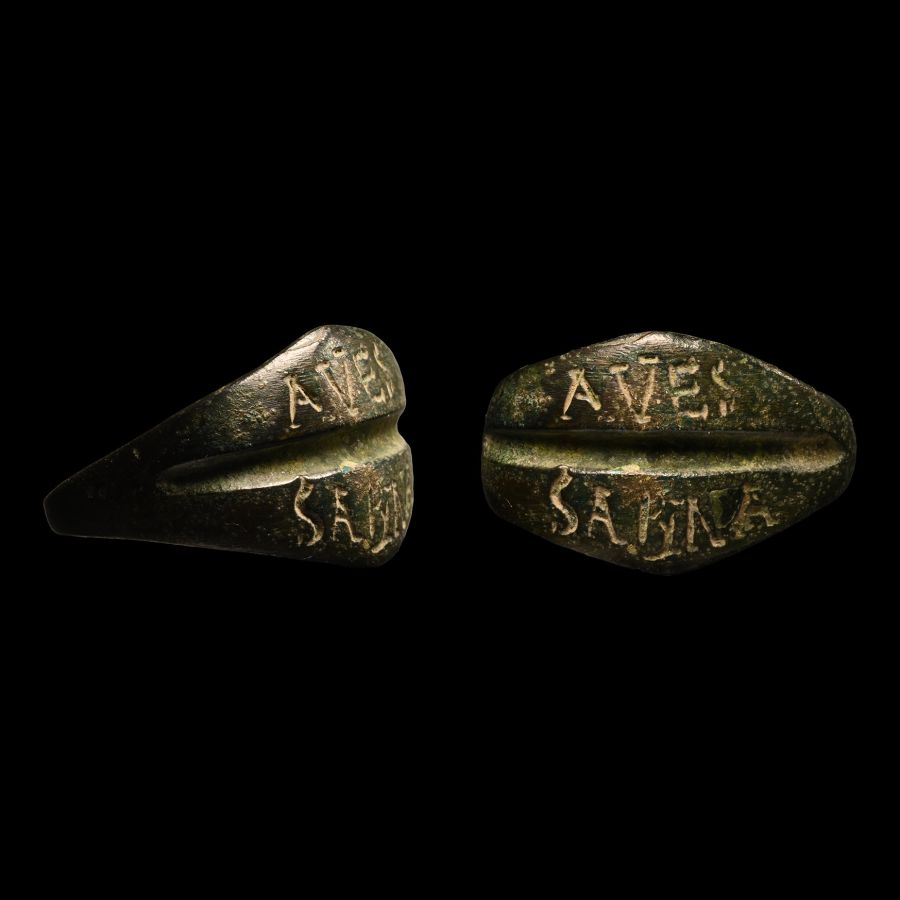
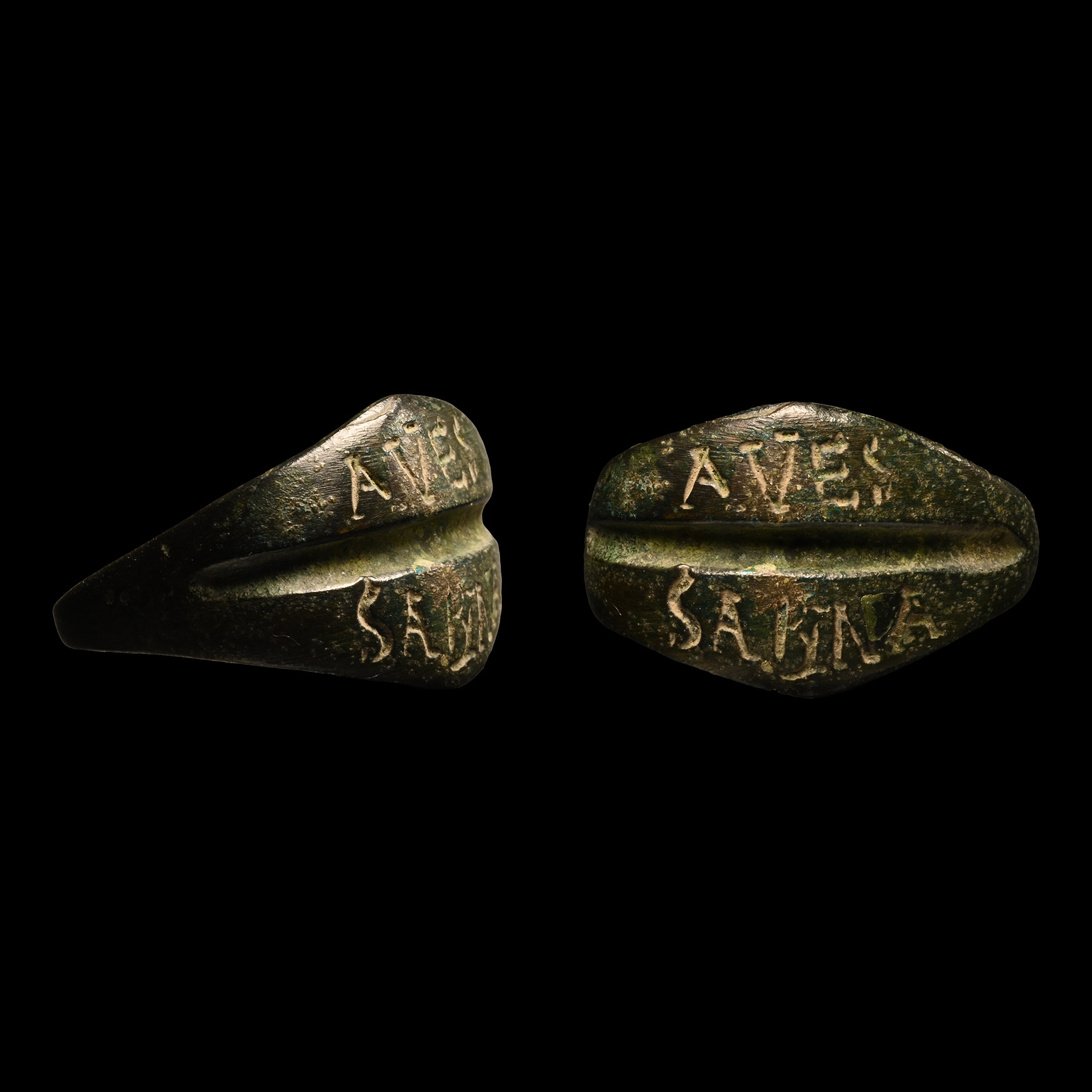
Roman Bronze Ring with Inscription
2ND-3RD CENTURY A.D.
3/4 in. (3.12 grams, 19.64 mm overall, 16.74 mm internal diameter (approximate size British J, USA 4 3/4, Europe 8.69, Japan 8)).
With a narrow hoop (split) and wide hoop divided by a deep groove, inscribed with 'AVES SABINA' (= enjoy Sabina).
ProvenanceEx German art market, 2000s.
Acquired from an EU collector living in London.
From the collection of Surrey, UK, gentleman.
TimeLine Auctions follows a vetting process to ensure the authenticity and legality of all items, reinforcing our commitment to integrity and responsible trading. Each antiquity, antique, and coin lot undergoes thorough examination by a vetting committee of at least ten external specialists, professional trade association members, scientists, and archaeologists: Our Vetting Process
AUCTIONS:
TimeLine is a leading auction house specialising in antiquities, ancient art, collectables, natural history, coins, medals, and books. Our auctions offer museums, collectors, historians, and enthusiasts the opportunity to acquire unique and historically significant pieces.
-
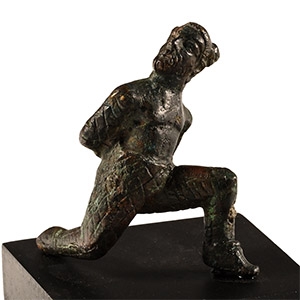
Roman Bronze Statuette of a Germanic Captive
Late 2nd century A.D.Sold for (Inc. bp): £975
Modelled with arms held behind the back, legs astride and left knee bent, head angled upwards over the right shoulder; the trousers and sleeves with incised crosshatched pattern, plain shoes; the hair drawn up in the 'Swabian knot' style above the right ear; mounted on a custom-made display stand. 93 grams total, 62 mm including stand
From a collection acquired on the UK art market from various auction houses and collections mostly before 2000. From an important Cambridgeshire estate; thence by descent.
Statuettes of foreign ‘barbarian’ prisoners of this type have been found along the Danube. Their spread coincides with the Marcomannic wars of the Emperor Marcus Aurelius. The Swabian knot in this warrior’s hair has parallels with the warrior depicted on the contemporary Sarcophagus of Portonaccio, which represents a battle between Romans and Germanic Gauls. -
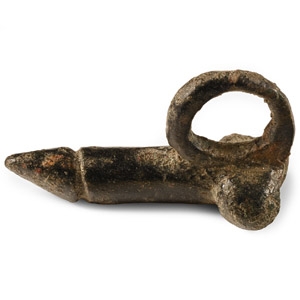
Roman Bronze Phallic Pendant
1st-3rd century A.D.Sold for (Inc. bp): £65
Comprising a thick, elongated body with lateral testes, large suspension loop above. 12.2 grams, 33 mm
Ex German art market, 2000s. Acquired from an EU collector living in London. From the collection of Surrey, UK, gentleman. -
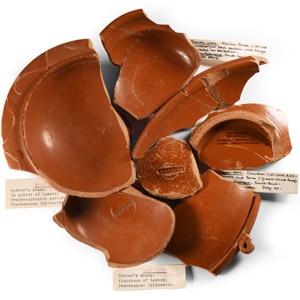
Romano-British 'Colchester' Samian Ware Sherd Group with Makers' Stamps
1st-2nd century A.D.Sold for (Inc. bp): £390
Including sherds of rim and base with inked accession numbers; some with impressed stamps; inked collector's notes including 'Base Sherd / Potter's Stamp: Patrici.M. / (Patricius of Lezoux) / Provenance: Colchester'; with three display cards. 540 grams total, 6.5-16 cm
Found Colchester, Essex, UK, and Gaul. From the collection of a late East Anglian teacher and antiquarian who retired to the Isle of Wight in Hampshire, UK. He amassed a large collection of objects between the 1960s-1980s. Accompanied by two old handwritten collection display cards noting the provenance as from 'South Gaul' and two original typed slips noting the provenance as 'Colchester'.
