
Loading, please wait...
LOT 0660
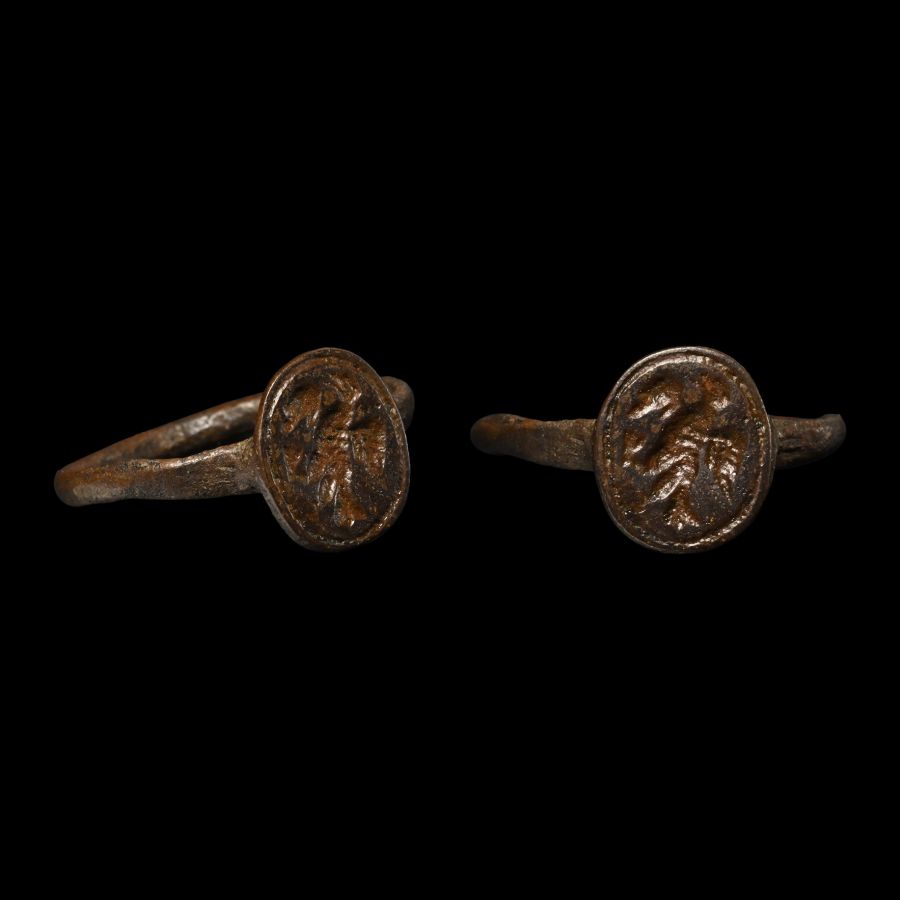
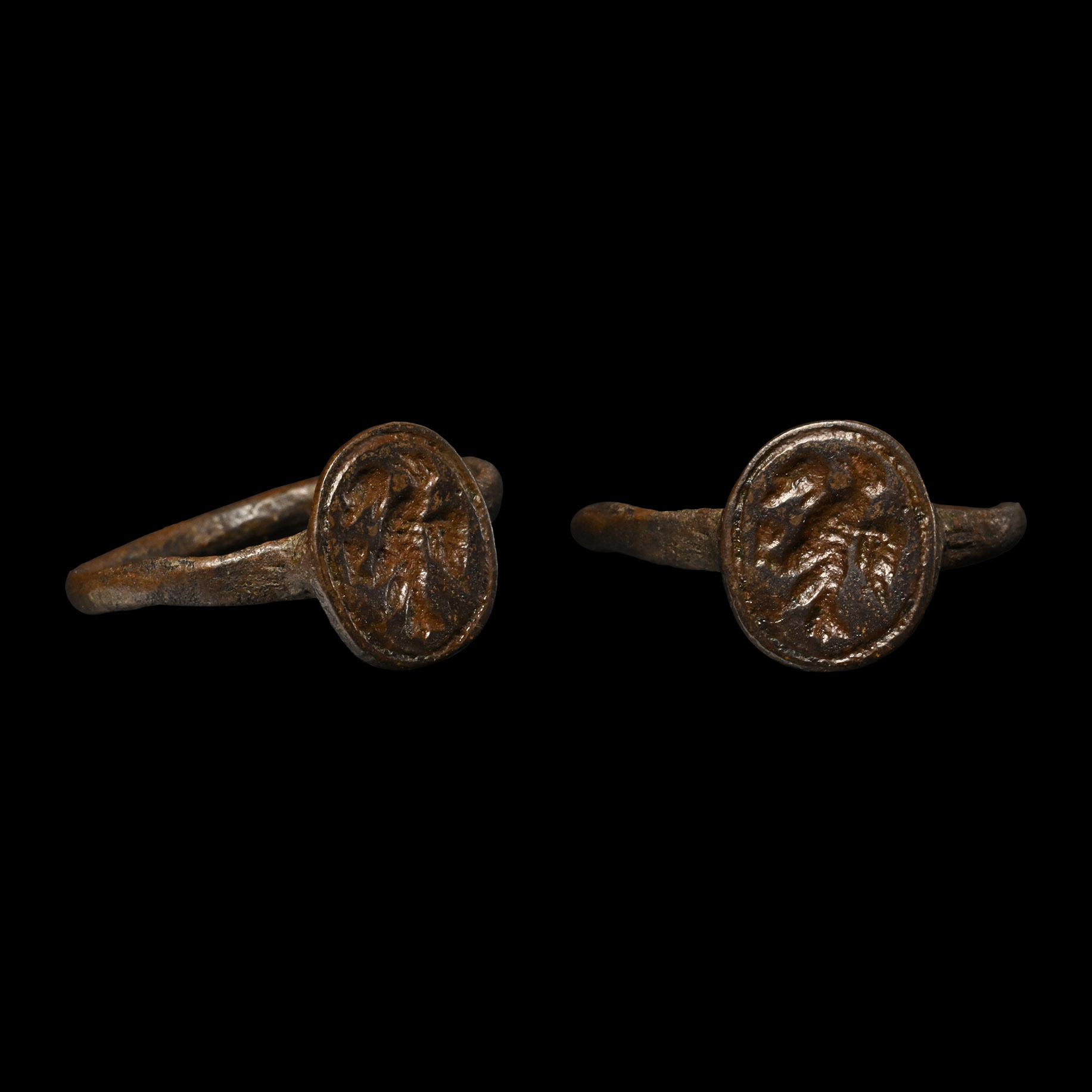
Roman Bronze Ring with Eagle
4TH-5TH CENTURY A.D.
1 in. (2.39 grams, 22.03 mm overall, 19.62 mm internal diameter (approximate size British Q, USA 8, Europe 17.49, Japan 16)).
With a slender hoop supporting a discoid bezel, intaglio motif of an eagle in flight. [No Reserve]
ProvenancePrivate collection formed since the 1940s.
UK art market.
Property of an Essex, UK, gentleman.
TimeLine Auctions follows a vetting process to ensure the authenticity and legality of all items, reinforcing our commitment to integrity and responsible trading. Each antiquity, antique, and coin lot undergoes thorough examination by a vetting committee of at least ten external specialists, professional trade association members, scientists, and archaeologists: Our Vetting Process
AUCTIONS:
TimeLine is a leading auction house specialising in antiquities, ancient art, collectables, natural history, coins, medals, and books. Our auctions offer museums, collectors, historians, and enthusiasts the opportunity to acquire unique and historically significant pieces.
-
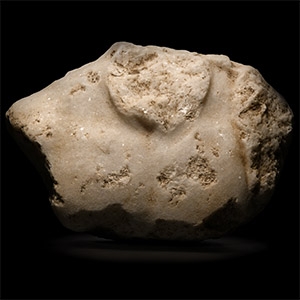
Roman Marble Male Bust
1st-3rd century A.D.Sold for (Inc. bp): £975
With a portion of the upper pectoral muscles still visible, part of a cloak (chlamys) gathered on the left shoulder. 9.95 kg, 29 cm wide
From an English private collection, 1970s-late 1990s. English private collection.
The original statue or bust represented an athletic type, probably a hero or a demigod, or the god of war, Ares. However, the presence of the cloak resting on the left shoulder could also recall statues of divinities, such as Zeus with his left arm raised, or Asklepios, or Hermes. -
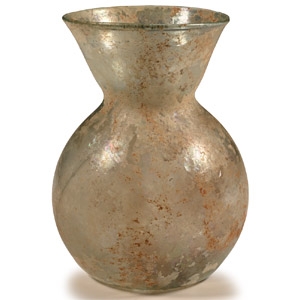
Roman Flared Glass Vessel
3rd-4th century A.D.Sold for (Inc. bp): £195
With dimple base, globular body, pinched neck and flared mouth with thickened rim; some iridescence to the pale blue-green glass. 47 grams, 12 cm
Ex London, UK, collection, 1980-1990s. -
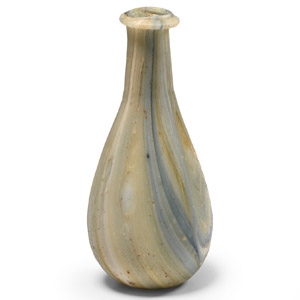
Roman Colour-Banded Mosaic Glass Bottle
Early-mid 1st century A.D.Sold for (Inc. bp): £1,430
From fused canes of opaque white, yellow, pale blue and dark blue, then inflated; the pear-shaped body with a flat base and cylindrical neck, the rim folded out. 20 grams, 76 mm
American private collection, 1990s. with Christie's, New York, 16 June 2006, no.4. From the private collection of Sheik Al Thani. Accompanied by a copy of the Christie's lot listing.
