
Loading, please wait...
LOT 0594
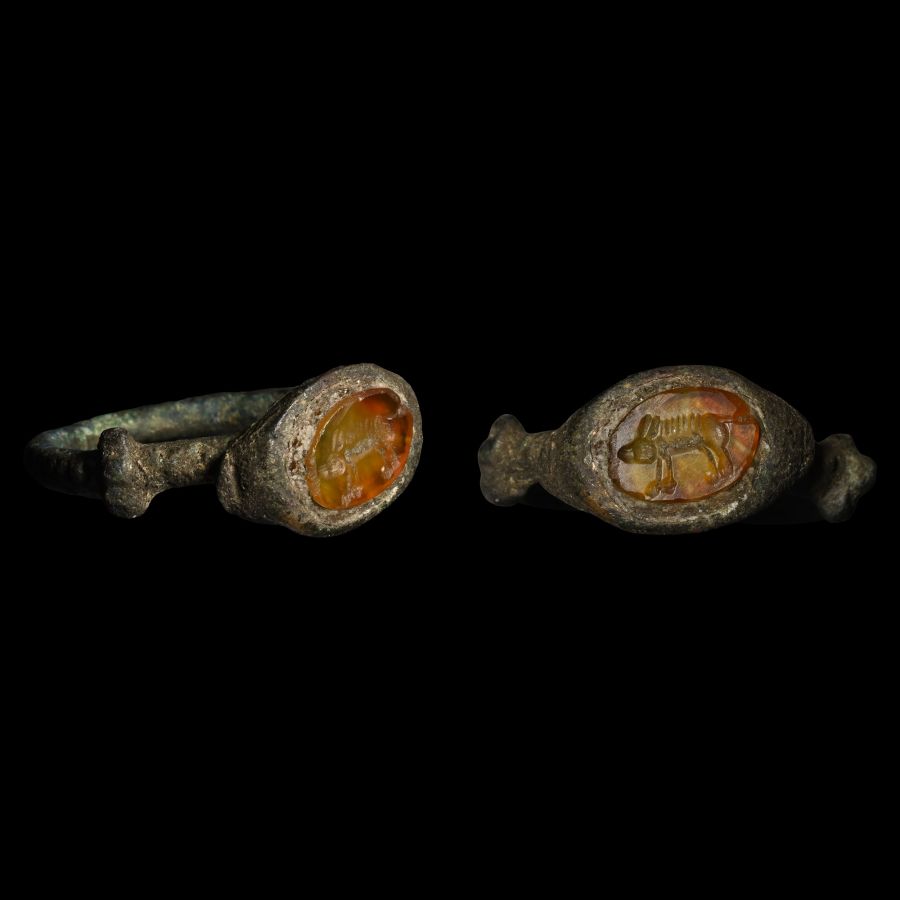
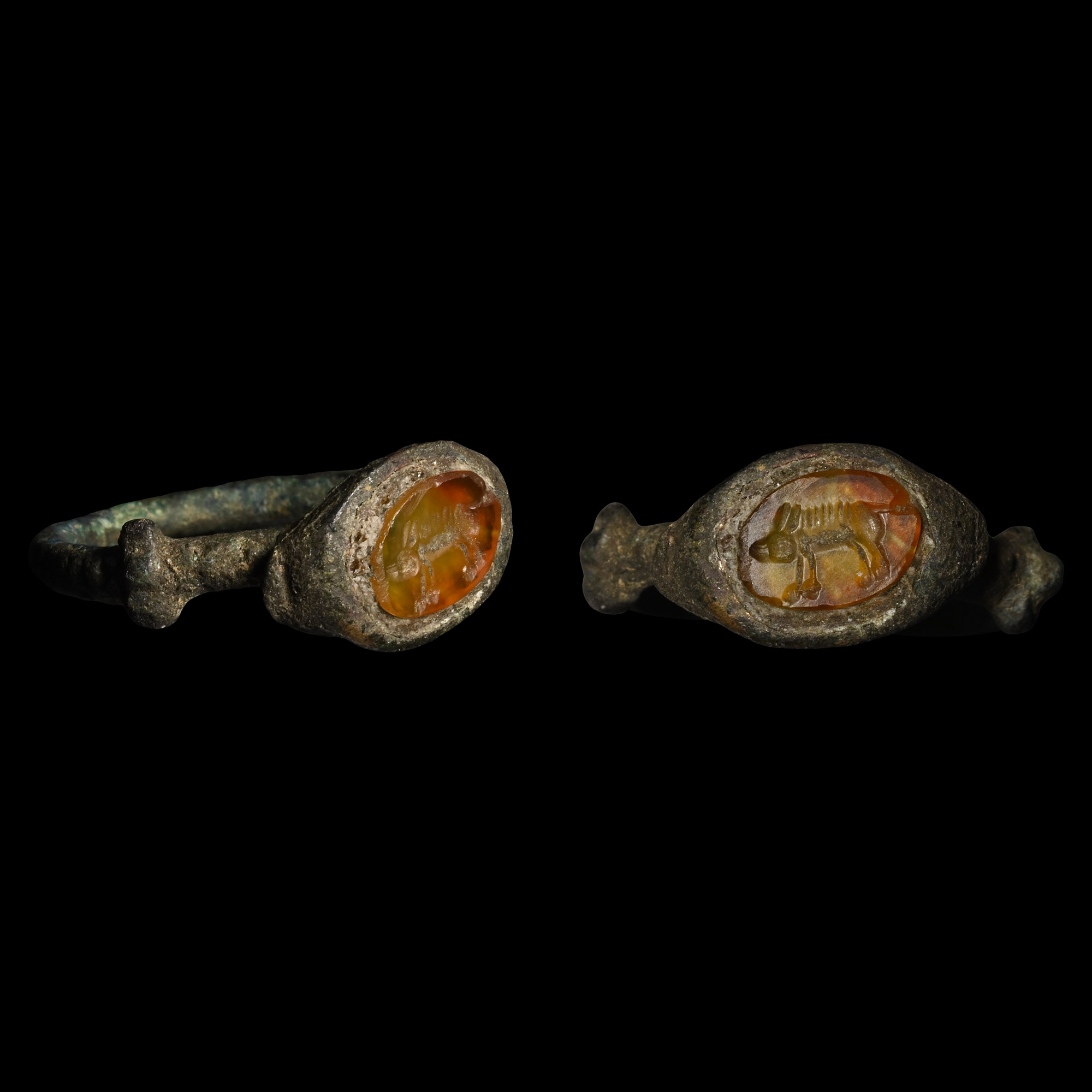
Roman Bronze Ring with Boar Gemstone
3RD-4TH CENTURY A.D.
1 in. (4.77 grams, 25.49 mm overall, 17.28 mm internal diameter (approximate size British N 1/2, USA 6 3/4, Europe 14.35, Japan 13)).
Comprising a round-section hoop with pelletted shoulders, lentoid-shaped bezel set with carnelian intaglio engraved with a standing boar. [No Reserve]
ProvenanceAcquired on the UK art market before 2000.
Property of an Essex, UK, gentleman.
This lot is accompanied by an illustrated lot declaration signed by the Head of the Antiquities Department, Dr Raffaele D'Amato.
TimeLine Auctions follows a vetting process to ensure the authenticity and legality of all items, reinforcing our commitment to integrity and responsible trading. Each antiquity, antique, and coin lot undergoes thorough examination by a vetting committee of at least ten external specialists, professional trade association members, scientists, and archaeologists: Our Vetting Process
AUCTIONS:
TimeLine is a leading auction house specialising in antiquities, ancient art, collectables, natural history, coins, medals, and books. Our auctions offer museums, collectors, historians, and enthusiasts the opportunity to acquire unique and historically significant pieces.
-
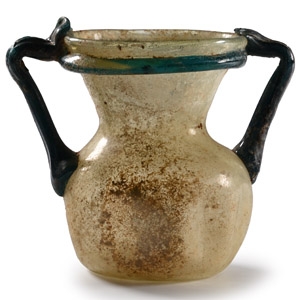
Roman Glass Handled Jar
1st-4th century A.D.Estimate: £350 - 450 (+bp*)
Opening Bid: £175
With dimpled base, bulbous body with opposed dimples to the sidewall, applied flange to the neck, applied trails forming lateral handles. 39.4 grams, 78 mm wide
From an important London collection of glass, 1990s. This lot is accompanied by an illustrated lot declaration signed by the Head of the Antiquities Department, Dr Raffaele D'Amato. -
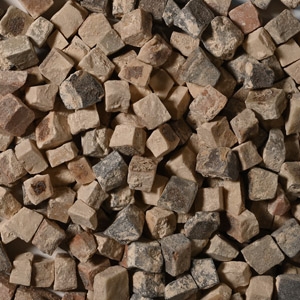
Roman Mosaic Stone Tesserae Group
1st-4th century A.D.Sold for (Inc. bp): £624
A mixed group of two hundred and fifty single tesserae of various colours and sizes, mostly cuboid. 357 grams total, 8-13 mm
From a collection acquired on the UK art market from various auction houses and collections mostly before 2000. From an important Cambridgeshire estate; thence by descent. This lot is accompanied by an illustrated lot declaration signed by the Head of the Antiquities Department, Dr Raffaele D'Amato.
Roman mosaics were made from small cubes of natural stone and terracotta possibly cut from tile or brick. Each of these small cubes was called a tessera (several tesserae) from the Latin word for dice. -
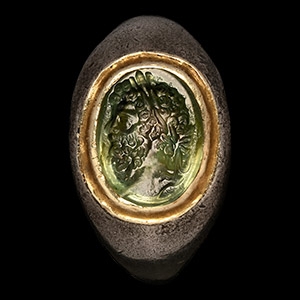
Roman Aquamarine Gemstone with Portrait of Emperor Septimius Severus in Silver and Gold Ring
2nd-3rd century A.D.Sold for (Inc. bp): £9,100
With the bust of the emperor facing left, laurel wreath in his curly hair with ribbons falling behind his head, beard with characteristic forked tip, mounted in a large broad silver hoop widening to an oval bezel inset with a gold border. 18.89 grams, 28.88 mm overall, 21.34 mm internal diameter (approximate size British X 1/2, USA 11 3/4, Europe 26.92, Japan 25)
English private collection, 1980s-1990s. with Christie's, London, 7 October 2010, no.204. European private collection, acquired in 2010. Accompanied by copies of the relevant Christie's catalogue pages. Accompanied by an academic report by Dr Raffaele D’Amato. This lot has been checked against the Interpol Database of stolen works of art and is accompanied by a search certificate number no.12609-234621. This lot has been cleared against the Art Loss Register database, and is accompanied by an illustrated lot declaration signed by the Head of the Antiquities Department, Dr Raffaele D'Amato.
Comparison with contemporary coinage confirms that this bust with its prominent nose, chin, curly hair and forked tip beard, represents Septimius Severus (193-211 A.D.), and the image certainly conveys the strong character of the commander who led the Roman army to victory, not only in Europe but also in the Middle East. A similar portrait can be seen on the cameo in the Museum of Fine Arts, Boston (accession no.99.368). In the Boston cameo the emperor is likewise seen in profile, facing right, and his beard, with the forked tip, is identical. Another good comparison is with the cameo of the Imperial family preserved at the Cabinet des Medailles, Paris (Petruccioli, 2011, fig.230). Cameos and rings of this typology were often gifted and gifted to members of the Imperial entourage, and were a great instrument of Imperial propaganda.
