
Loading, please wait...
LOT 0775
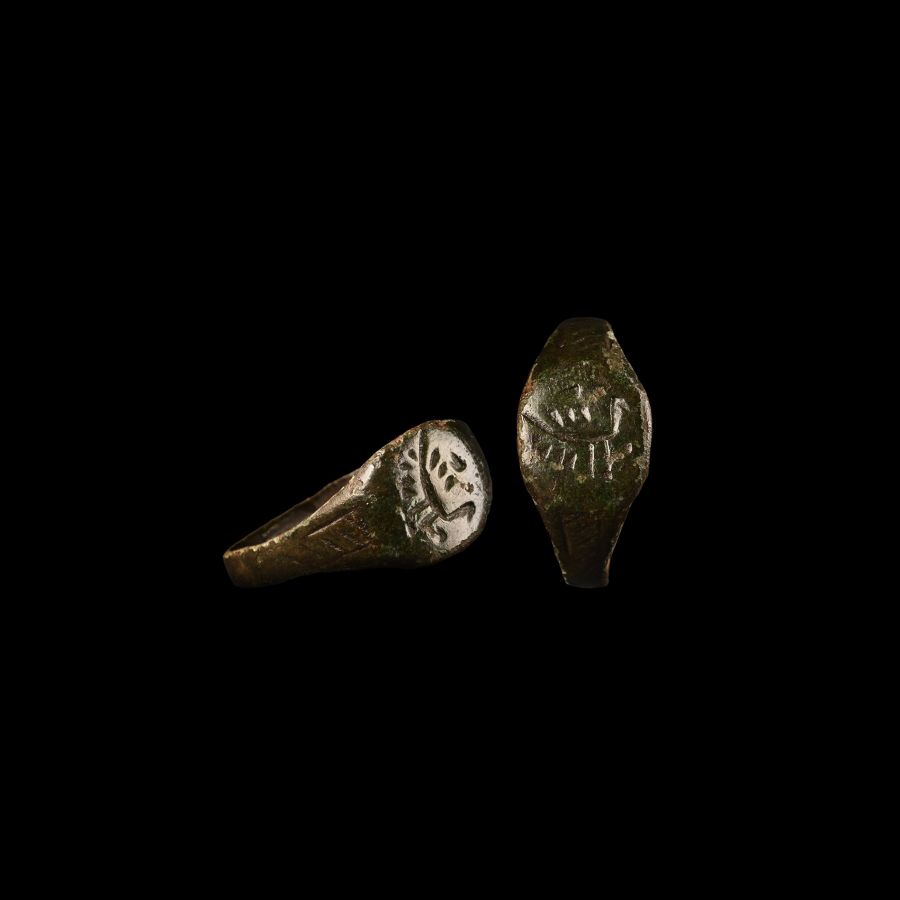
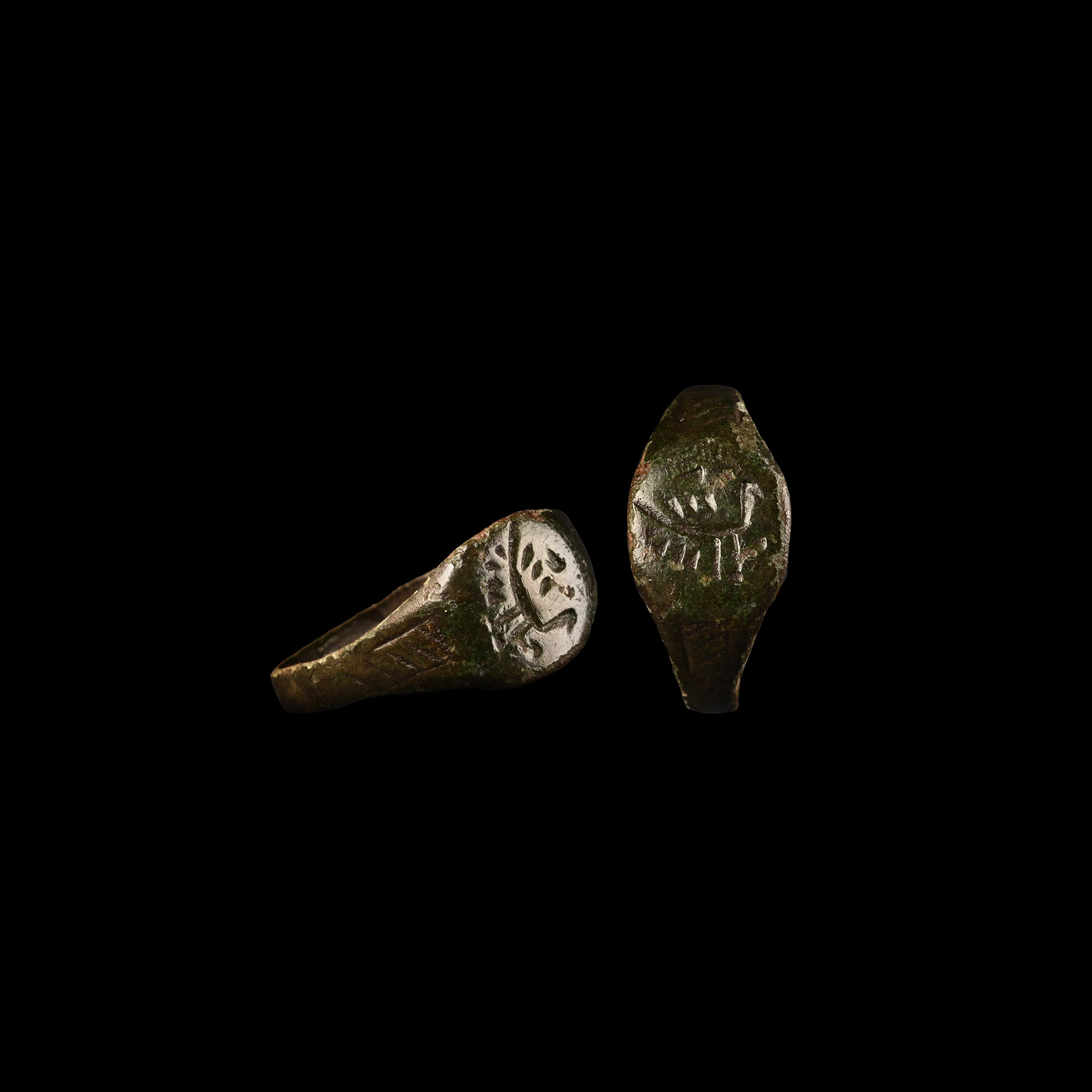
Roman Bronze Ring with Bird
2ND-4TH CENTURY A.D.
3/4 in. (1.94 grams, 19.42 mm overall, 17.48 mm internal diameter (approximate size British N 1/2, USA 6 3/4, Europe 14.35, Japan 13)).
Discoid bezel with incuse peacock motif. [No Reserve]
ProvenancePrivate collection formed since the 1940s.
UK art market.
Property of an Essex gentleman.
Cf. Chadour, A.B., Rings. The Alice and Louis Koch Collection, volume I, Leeds, 1994, item 457, for type.
CONDITIONTimeLine Auctions follows a vetting process to ensure the authenticity and legality of all items, reinforcing our commitment to integrity and responsible trading. Each antiquity, antique, and coin lot undergoes thorough examination by a vetting committee of at least ten external specialists, professional trade association members, scientists, and archaeologists: Our Vetting Process
AUCTIONS:
TimeLine is a leading auction house specialising in antiquities, ancient art, collectables, natural history, coins, medals, and books. Our auctions offer museums, collectors, historians, and enthusiasts the opportunity to acquire unique and historically significant pieces.
-
Roman Enamelled Bronze Disc Brooch
Circa 2nd century A.D.Sold for (Inc. bp): £65
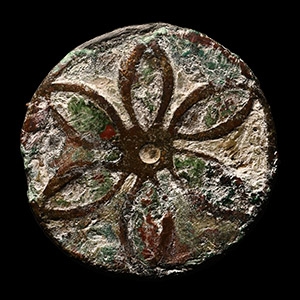
Complete with pin lug, pin and catchplate to reverse, displaying a floral design with remains of polychrome enamelling. 12.16 grams, 32 mm
Acquired from Gary Edwards at York Antiques Centre. Accompanied by a certificate of authenticity signed by Gary Edwards. -
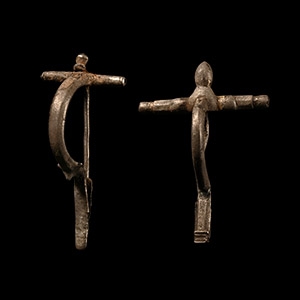
Roman Silver Bow Brooch Group
3rd-4th century A.D.Sold for (Inc. bp): £156
Comprising: brooch formed with stepped crossbar and facetted central knop, slender bowl and facetted rectangular footplate; pin and catchplate to reverse; brooch with round-section arms and globular knop, facetted bow with three projections to base, slender footplate with worn remains of incised hatching. 13.6 grams total, 47-51 mm
From the collection of an EU gentleman formed in the 1990s. Acquired on the UK art market. -
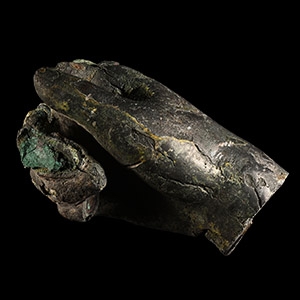
Roman Bronze Hand
1st-2nd century A.D.Sold for (Inc. bp): £221
Modelled in a gripping position with thumb placed over the forefinger; hollow-formed. 262 grams, 83 mm
Acquired on the UK art market, 1982-1989.
