
Loading, please wait...
LOT 0888
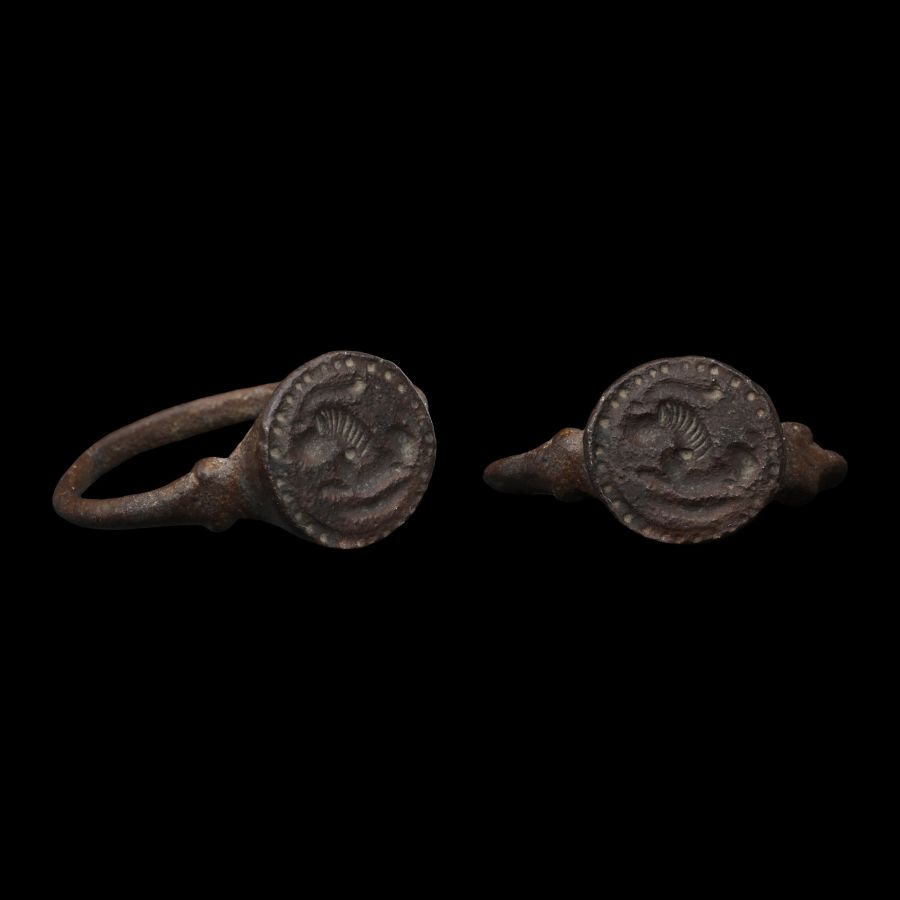
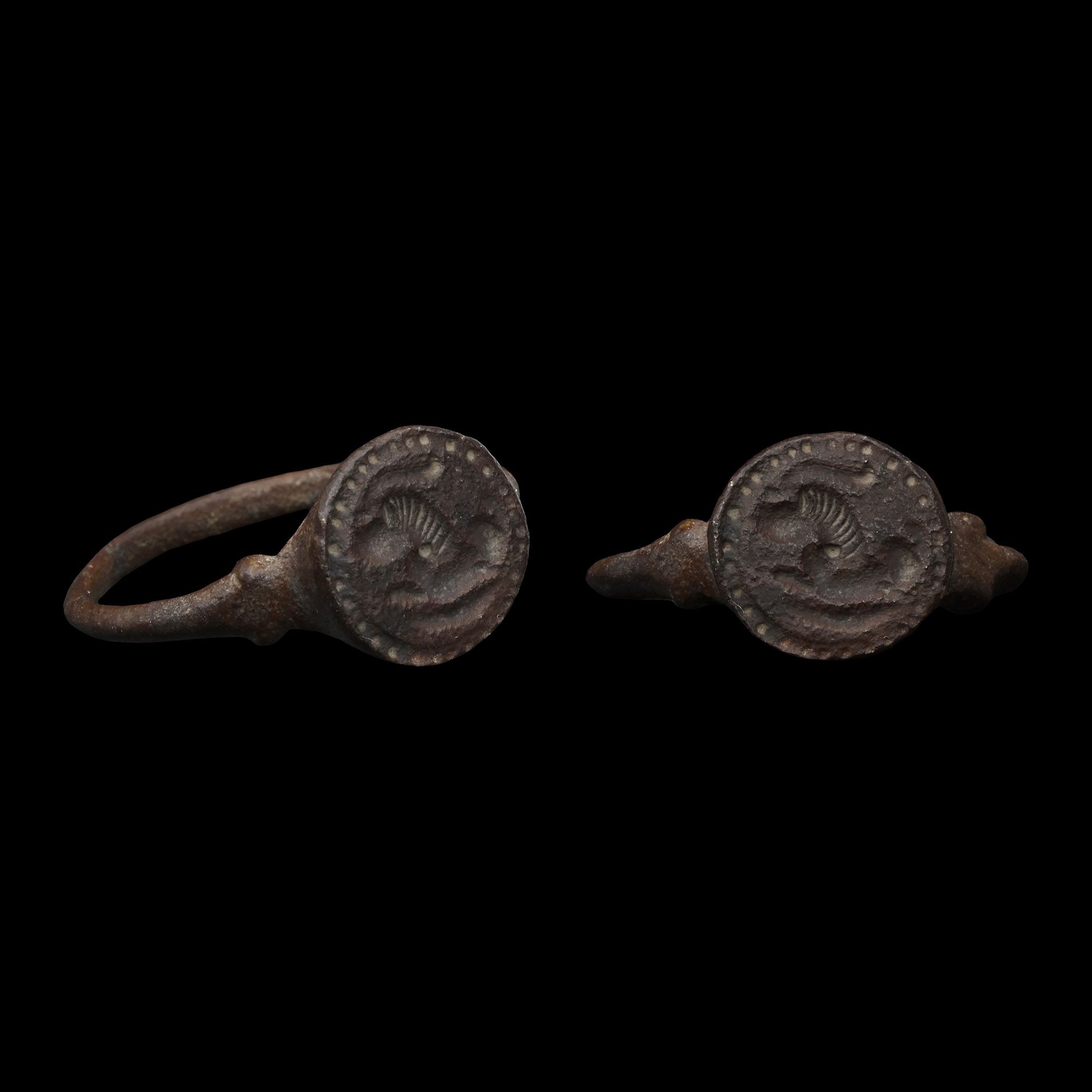
Roman Bronze Ring with Animal
3RD-5TH CENTURY A.D.
1 in. (4.88 grams, 24.90 mm overall, 19.78 x 18.85 mm internal diameter (approximate size British S, USA 9, Europe 20, Japan 19)).
Slender hoop with discoid bezel, piecrust design on the outer edge surrounding a zoomorphic motif. [No Reserve]
ProvenanceEx German art market, 2000s.
Acquired from an EU collector living in London.
From the collection of a Surrey, UK, gentleman.
TimeLine Auctions follows a vetting process to ensure the authenticity and legality of all items, reinforcing our commitment to integrity and responsible trading. Each antiquity, antique, and coin lot undergoes thorough examination by a vetting committee of at least ten external specialists, professional trade association members, scientists, and archaeologists: Our Vetting Process
AUCTIONS:
TimeLine is a leading auction house specialising in antiquities, ancient art, collectables, natural history, coins, medals, and books. Our auctions offer museums, collectors, historians, and enthusiasts the opportunity to acquire unique and historically significant pieces.
-
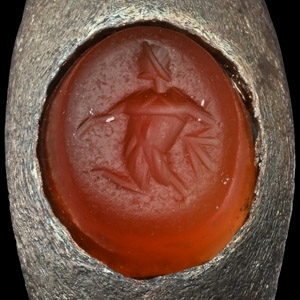
Roman Silver Ring with Harpy Gemstone
2nd-3rd century A.D.Sold for (Inc. bp): £98
D-section hoop with flared shoulders, inset carnelian with intaglio of a Harpy. 5.81 grams, 22.21 mm overall, 17.71 mm internal diameter (approximate size British F 1/2, USA 3, Europe 4.3, Japan 4)
Ex Shiraz Antiques, London, W1, in 1998. -
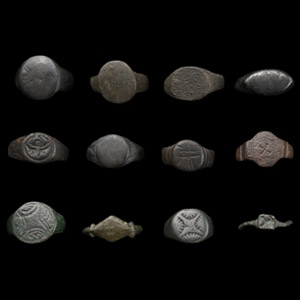
Roman to Medieval Bronze Ring Group
1st-16th century A.D.Sold for (Inc. bp): £130
Comprising twelve rings, most with a decorative bezel. 63.1 grams total, 20-24 mm
Ex German art market, 2000s. Acquired from an EU collector living in London. From the collection of a Surrey, UK, gentleman. -
.jpg)
Roman Gemstone and Glass Pendant Collection
2nd-3rd century A.D.Sold for (Inc. bp): £208
Comprising: a fragment of a glass pendant with impressed image of an advancing lion, crescent moon above; a conical agate intaglio with a profile of theatre mask; an oval carnelian intaglio with a dove holding an olive branch; a jasper intaglio with standing Asclepius holding a snake-staff. 4.35 grams total, 10-17 mm
Norfolk family collection, 1940s-1960s; thence by descent.
