
Loading, please wait...
LOT 0920
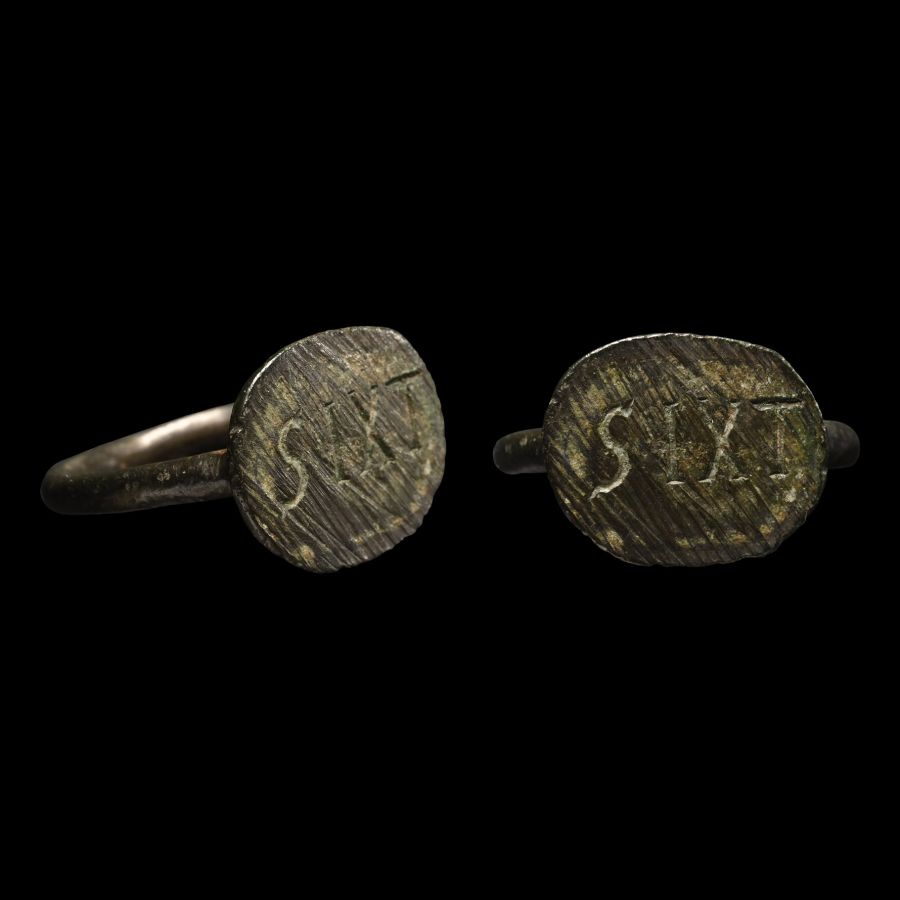
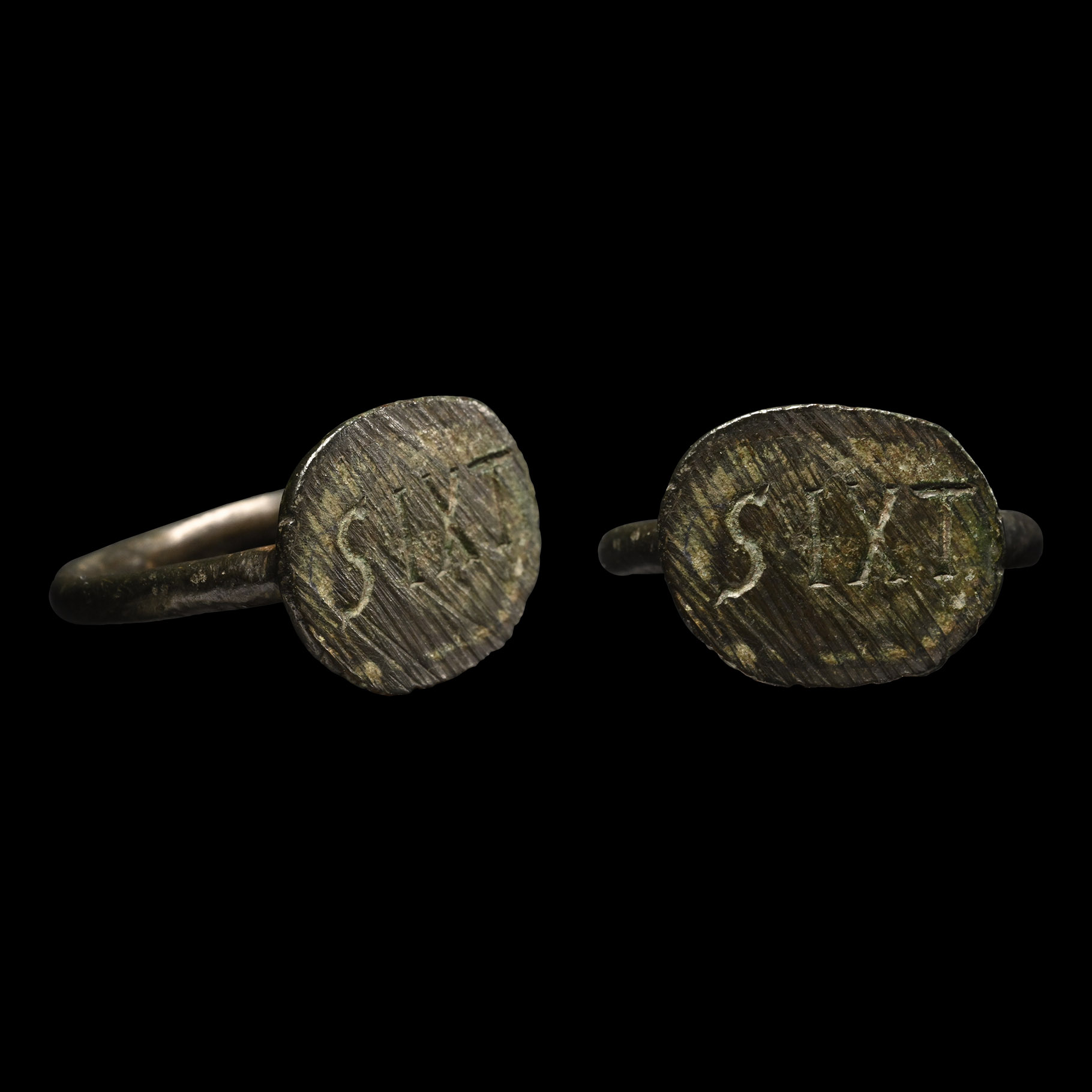
Roman Bronze Ring for 'Sixtus'
2ND-4TH CENTURY A.D.
3/4 in. (3.34 grams, 21.50 mm overall, 18.12 mm internal diameter (approximate size British O, USA 7, Europe 14.98, Japan 14)).
Ellipsoid bezel with 'SIXT' in seriffed capitals. [No Reserve]
ProvenanceEx German art market, 2000s.
Acquired from an EU collector living in London.
From the collection of Surrey, UK, gentleman.
Cf. Chadour, A.B., Rings. The Alice and Louis Koch Collection, volume I, Leeds, 1994, item 459, for type.
FootnotesThe Roman personal name 'Sixtus' is usually assumed to be an adaptation of Greek 'Ξυστος' meaning 'polished. However, in Latin, it originally indicated the sixth child born in the family.
CONDITIONTimeLine Auctions follows a vetting process to ensure the authenticity and legality of all items, reinforcing our commitment to integrity and responsible trading. Each antiquity, antique, and coin lot undergoes thorough examination by a vetting committee of at least ten external specialists, professional trade association members, scientists, and archaeologists: Our Vetting Process
AUCTIONS:
TimeLine is a leading auction house specialising in antiquities, ancient art, collectables, natural history, coins, medals, and books. Our auctions offer museums, collectors, historians, and enthusiasts the opportunity to acquire unique and historically significant pieces.
-
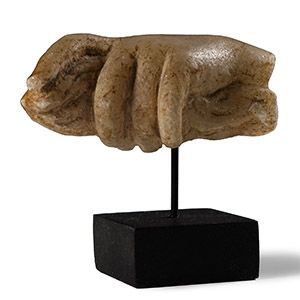
Roman Marble Statue Hand of Jupiter
1st century B.C.-2nd century A.D.Sold for (Inc. bp): £468
Left hand, likely from a larger statue of the god Jupiter, modelled gripping a thunderbolt; thumb and forefinger positioned on the top and side, the remaining three digits curled beneath; mounted on a custom-made display stand. 118 grams total, 74 cm wide including stand
From an important English collection, 1980s. Private collection, England. -
.jpg)
Roman Terracotta Oil Lamp with Erotic Scene
2nd century A.D.Sold for (Inc. bp): £1,040
With broad discus and short nozzle, low-relief scene with two lovers on a bed. 66 grams, 85 mm
From a London collection of erotica, formerly in the collection of the late Mr S.M., London, UK. -
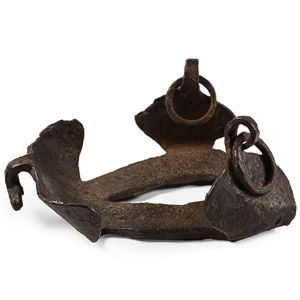
Iron 'Hippo Sandal' Military Horse Shoe
1st-4th century A.D.Sold for (Inc. bp): £286
Iron shoe with lateral curved plates with attachment rings rear panel with bar also for attachment. 363 grams, 15 cm
From the collection of the famous author, writer and speaker, Gordon Bailey, Essex, UK; formed since 1968.
Hipposandals (soleae ferreae) were used on horses with injured hooves, a sort of equine orthopaedic shoe used by the mulomedicus, i.e. a Roman military veterinarian. Another important function was that to protect the hooves of the horse from injuries and damages from hard objects. The hippo sandal of type 1 was formed from a sub-oval plate which tapered towards the front and rear with projections at the front, back and on either side. The heel was upturned at about 45 degrees and flared outwards. It would have terminated with a downward facing hook, now missing. The base of the sole was flat.
