
Loading, please wait...
LOT 0951
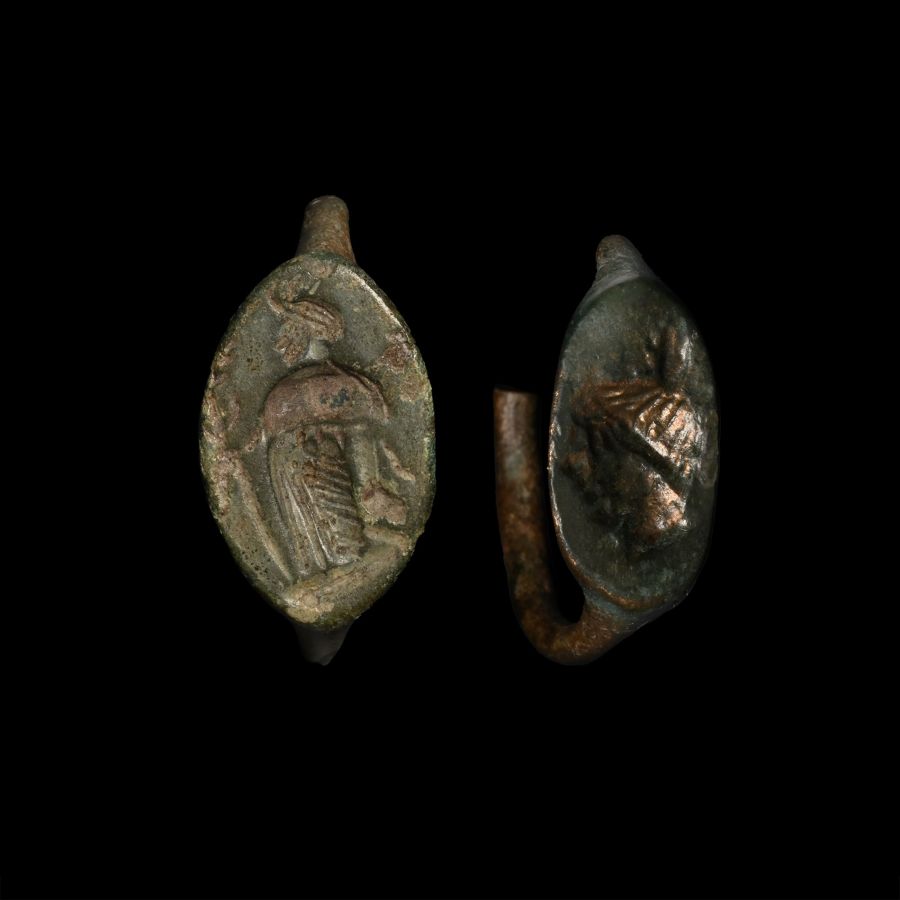
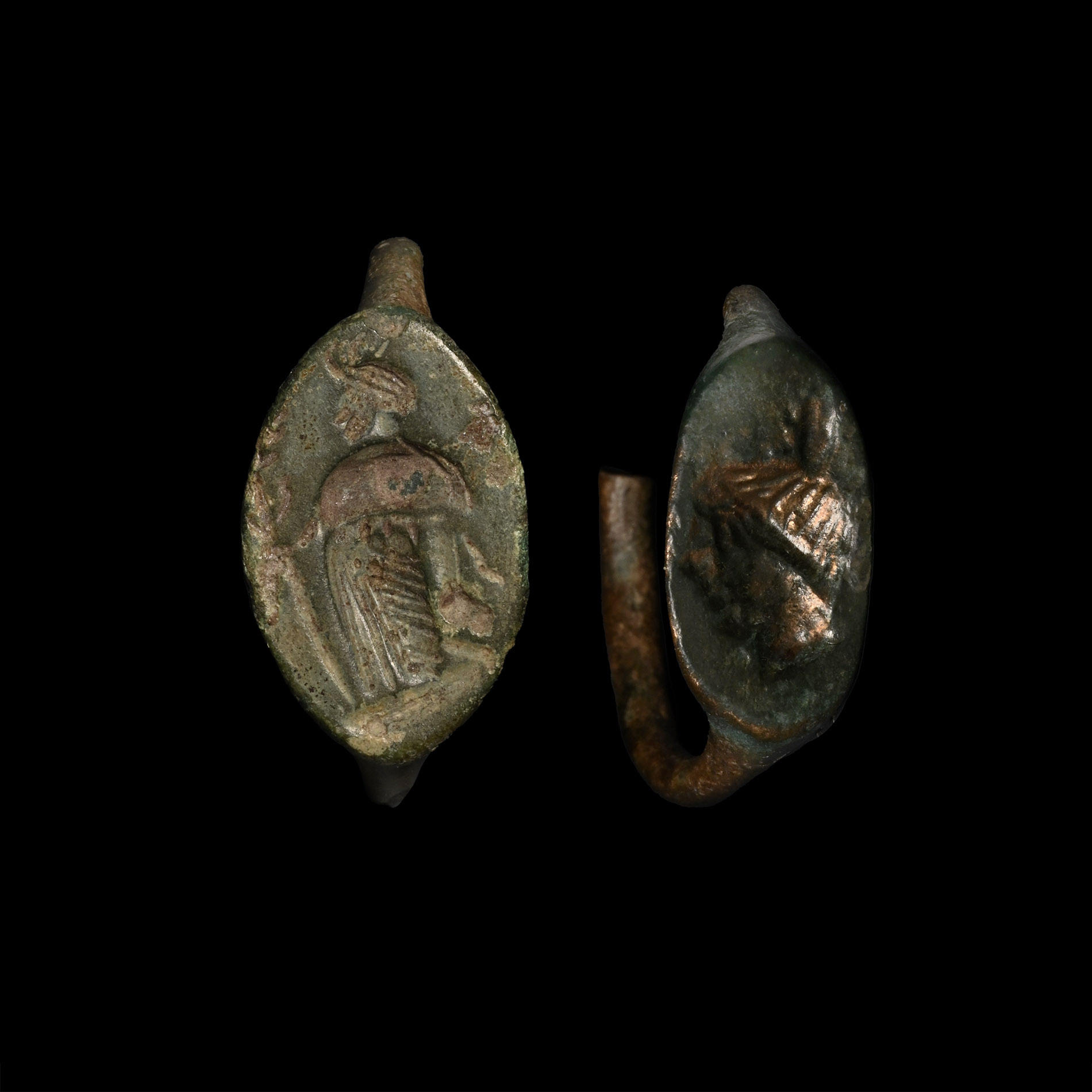
Roman Bronze Ring Bezel Group
1ST CENTURY B.C.-1ST CENTURY A.D.
3/4 in. (4.51 grams total, 20-21 mm).
Comprising: vesica-shaped bezel with incise togate standing figure with sceptre; ellipsoid bezel with profile bust. [2, No Reserve]
ProvenanceProperty of the vendor's grandfather, thence by family descent, circa 1985.
From the private collection of a New York, USA gentleman.
TimeLine Auctions follows a vetting process to ensure the authenticity and legality of all items, reinforcing our commitment to integrity and responsible trading. Each antiquity, antique, and coin lot undergoes thorough examination by a vetting committee of at least ten external specialists, professional trade association members, scientists, and archaeologists: Our Vetting Process
AUCTIONS:
TimeLine is a leading auction house specialising in antiquities, ancient art, collectables, natural history, coins, medals, and books. Our auctions offer museums, collectors, historians, and enthusiasts the opportunity to acquire unique and historically significant pieces.
-
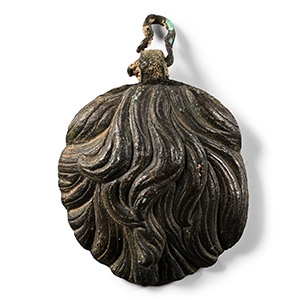
Roman Bronze Oil Lamp Lid
1st-2nd century A.D.Sold for (Inc. bp): £156
A domed lid with a loop to the edge; the upper face with intricate hair design showing voluminous, carefully rendered curls. 61 grams, 72 mm
From the collection of a gentleman, acquired on the London art market in the 1990s. -
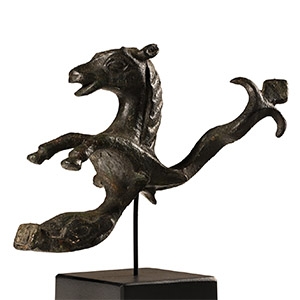
Roman Bronze Hippocampus and Dolphin Statuette
2nd-3rd century A.D. or laterSold for (Inc. bp): £416
Comprising a hippocampus with raised head, arched neck and forelegs extended, curved body coiling sideways and with trefoil finial; beneath its chest, a dolphin with lateral raised panels for eyes, the nose forming a point of attachment; possibly a bowl mount with the dolphin's nose attached and the hippocamp's hooves resting on the rim; mounted on a custom-made stand. 480 grams total, 13 cm wide including stand
From a collection acquired on the UK art market from various auction houses and collections mostly before 2000. From an important Cambridgeshire estate; thence by descent. -

Roman Bronze Ring with Palm Branch
2nd-3rd century A.D.Sold for (Inc. bp): £33
With an expanding flat-section hoop, hatching to the shoulders, wide bezel with an upright palm branch. 3.00 grams, 20.28 mm overall, 17.34 mm internal diameter (approximate size British N, USA 6 1/2, Europe 13.72, Japan 13)
Private collection formed since the 1940s. UK art market. Property of an Essex, UK, gentleman.
