
Loading, please wait...
_900x900.jpg "Roman Bronze Reclining Hercules Statuette")
_200x200.jpg "Roman Bronze Reclining Hercules Statuette")
.jpg "Roman Bronze Reclining Hercules Statuette")
LOT 0162
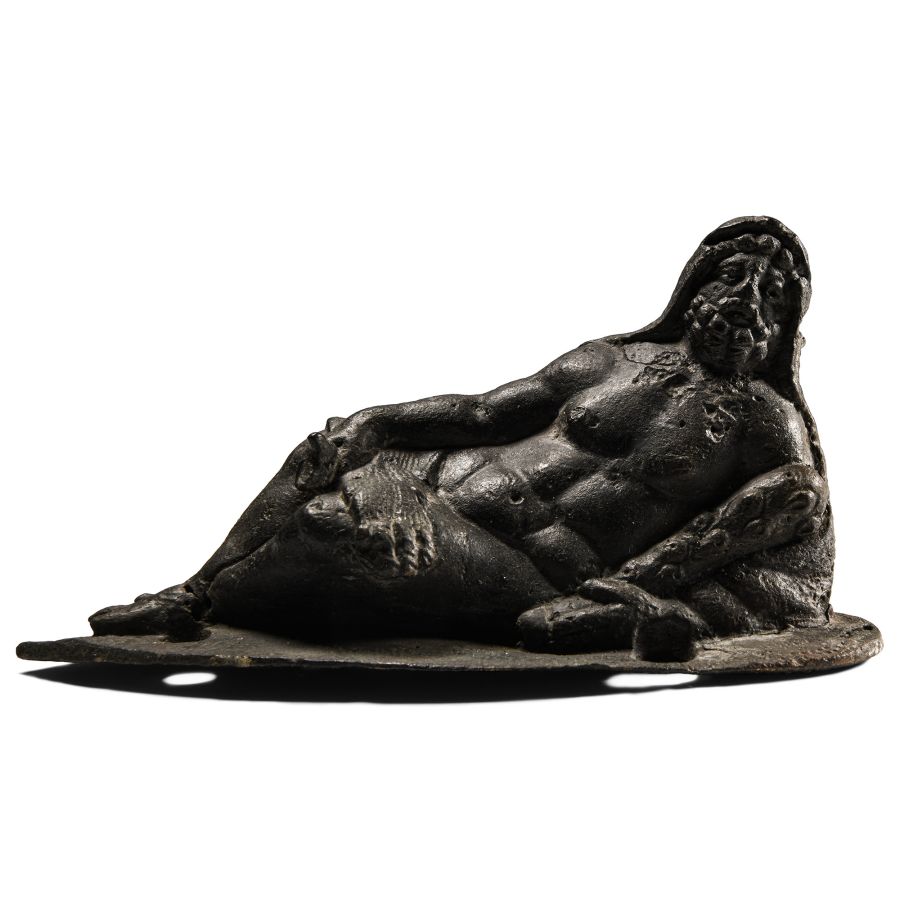
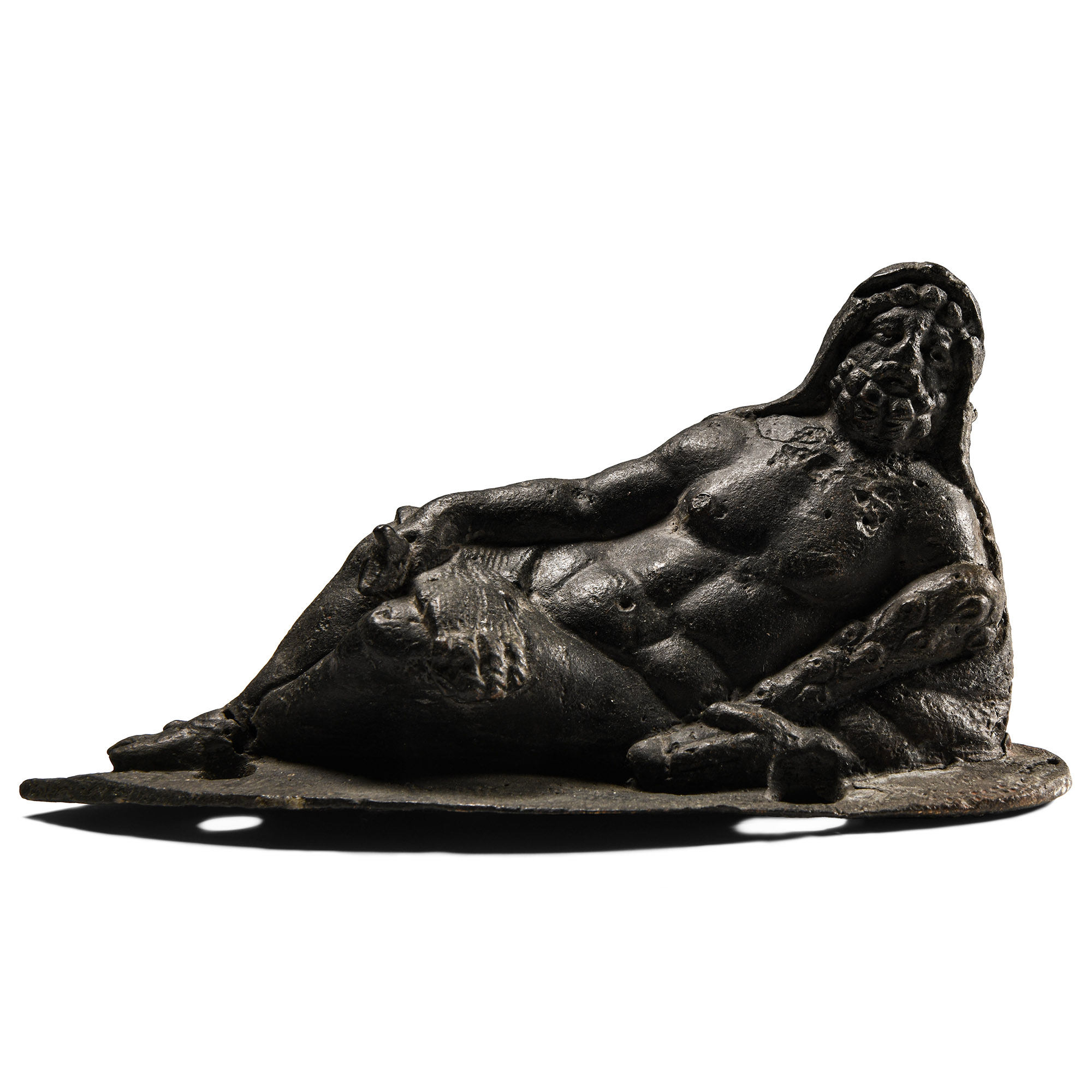
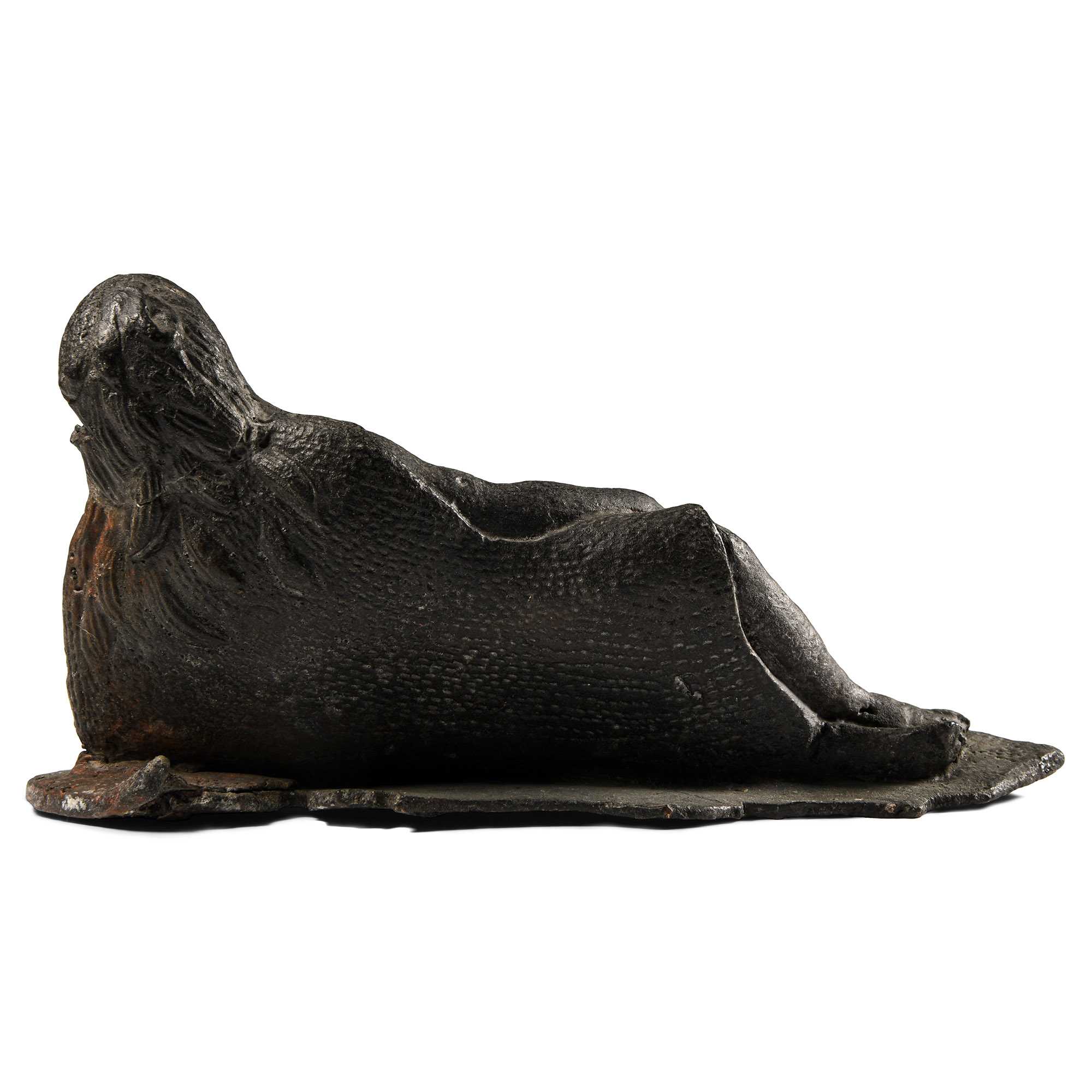
Roman Bronze Reclining Hercules Statuette
2ND-3RD CENTURY A.D.
9 3/4 in. (4.28 kg total, 25 cm wide including stand).
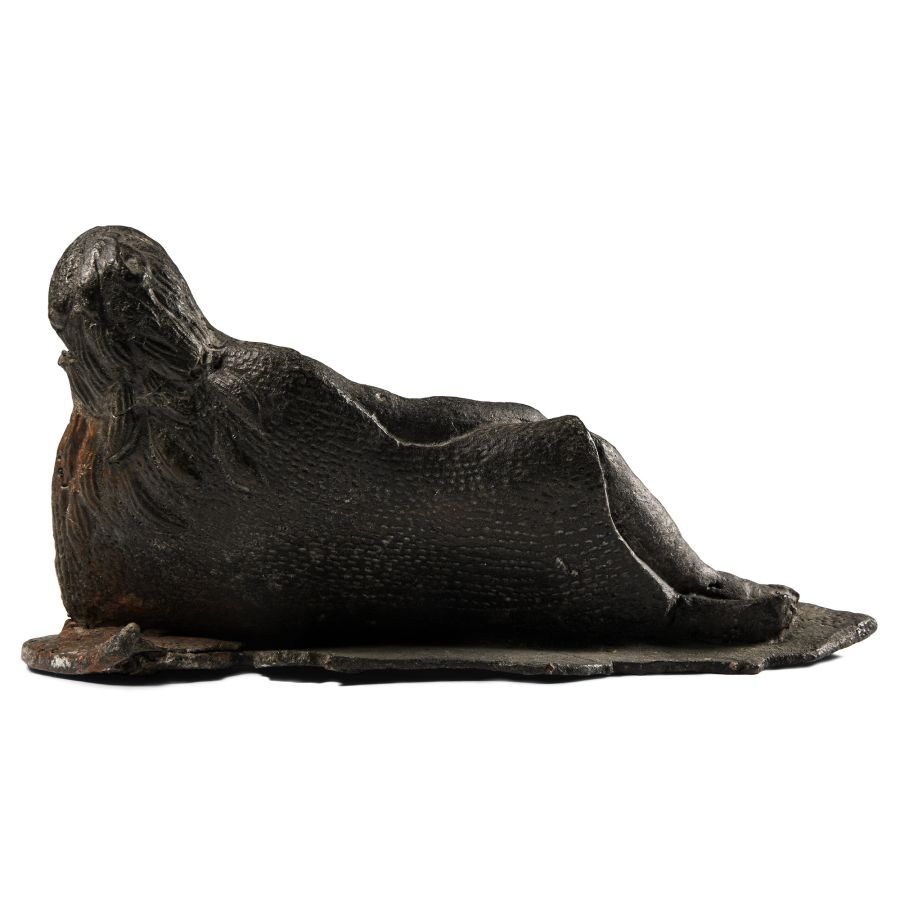
Hollow-formed figure of Hercules resting with his weight on his left arm, cradling his club; lionskin mantle drawn over his head and covering his shoulders, back and thighs; right arm resting on his right thigh, holding a corner of the mantle; scaphoid base with attachment holes; mounted on a custom-made display stand. [No Reserve]
ProvenanceFrom a collection acquired on the UK art market from various auction houses and collections mostly before 2000.
From an important Cambridgeshire estate; thence by descent.
Cf. for the reclining Hercules in Sieveking, J., Munchner Jarhbuch der bildenten Kunst, N.F.I., 1, Munchen, 1924, 13f.; also Comstock, M., Vermeule Cornelius, Greek, Etruscan & Roman Bronzes in the Museum of Fine Arts Boston, New York, 1971, p.102, no.107, for the image of a recling young Herakles; for a similar Hercules as chariot fitting see cf. V.I.Ignatov, Funeral complexes with carts in the Roman province of Thrace (mid 1st - 3rd century c.), Sofia, 2018, pl.16, no.5.1.2.6.
FootnotesThis bronze was probably a chariot decoration. Hercules is represented here in mature age, bearded and with a cap and body covered by the skin of the Nemean Lion, killed in the first of his labours. This kind of image of Hercules was mainly widespread in the second to third century A.D., when emperors like Commodus and Maximianus Herculius identified themselves as the new Hercules at the top of the Roman state.
CONDITIONTimeLine Auctions follows a vetting process to ensure the authenticity and legality of all items, reinforcing our commitment to integrity and responsible trading. Each antiquity, antique, and coin lot undergoes thorough examination by a vetting committee of at least ten external specialists, professional trade association members, scientists, and archaeologists: Our Vetting Process
AUCTIONS:
TimeLine is a leading auction house specialising in antiquities, ancient art, collectables, natural history, coins, medals, and books. Our auctions offer museums, collectors, historians, and enthusiasts the opportunity to acquire unique and historically significant pieces.
-
Roman Bronze Statue Arm
1st-3rd century A.D.Sold for (Inc. bp): £338
Right arm from a small statue of a female with long, slender fingers; socket to the upper end; the thumb and forefinger closed. 58 grams, 62 mm
Private collection of Mr S.A., Switzerland, 1990s, thence by descent. -
Roman Carnelian Gemstone with Eagle
Circa 2nd-3rd century A.D.Sold for (Inc. bp): £260
Ellipsoid cloison with intaglio eagle with wings spread in the act of taking off; supplied with a museum-quality impression. 0.96 grams, 14 cm
Acquired on the London art market in the late 1980s-1990s. From the family collection of an East London, UK, gentleman. -
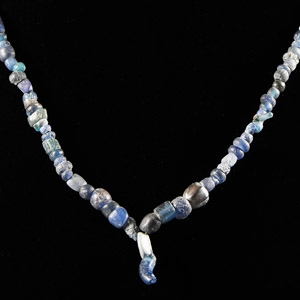
Roman Deep Blue Glass and Other Bead Necklace String
1st century A.D. and laterSold for (Inc. bp): £52
Assorted old blue glass beads restrung to a Y-shape with a crescentic-shaped pendant. 16.1 grams, 50 cm long
UK gallery, early 2000s.
The mass production of glass in Ancient Rome prompted the development of glass jewellery of unique qualities. The ancient Romans considered jewellery to be an essential accessory, being a public display of the wealth of high social classes. Roman jewellery at first followed trends set by the Etruscans, using gold and glass beads, but as the power and spread of the Roman Empire increased, jewellery designs became increasingly elaborate, incorporating elements from different cultural styles.
